Tag: George Gershwin

  • Time Magazine’s Composer Covers

    Time Magazine’s Composer Covers

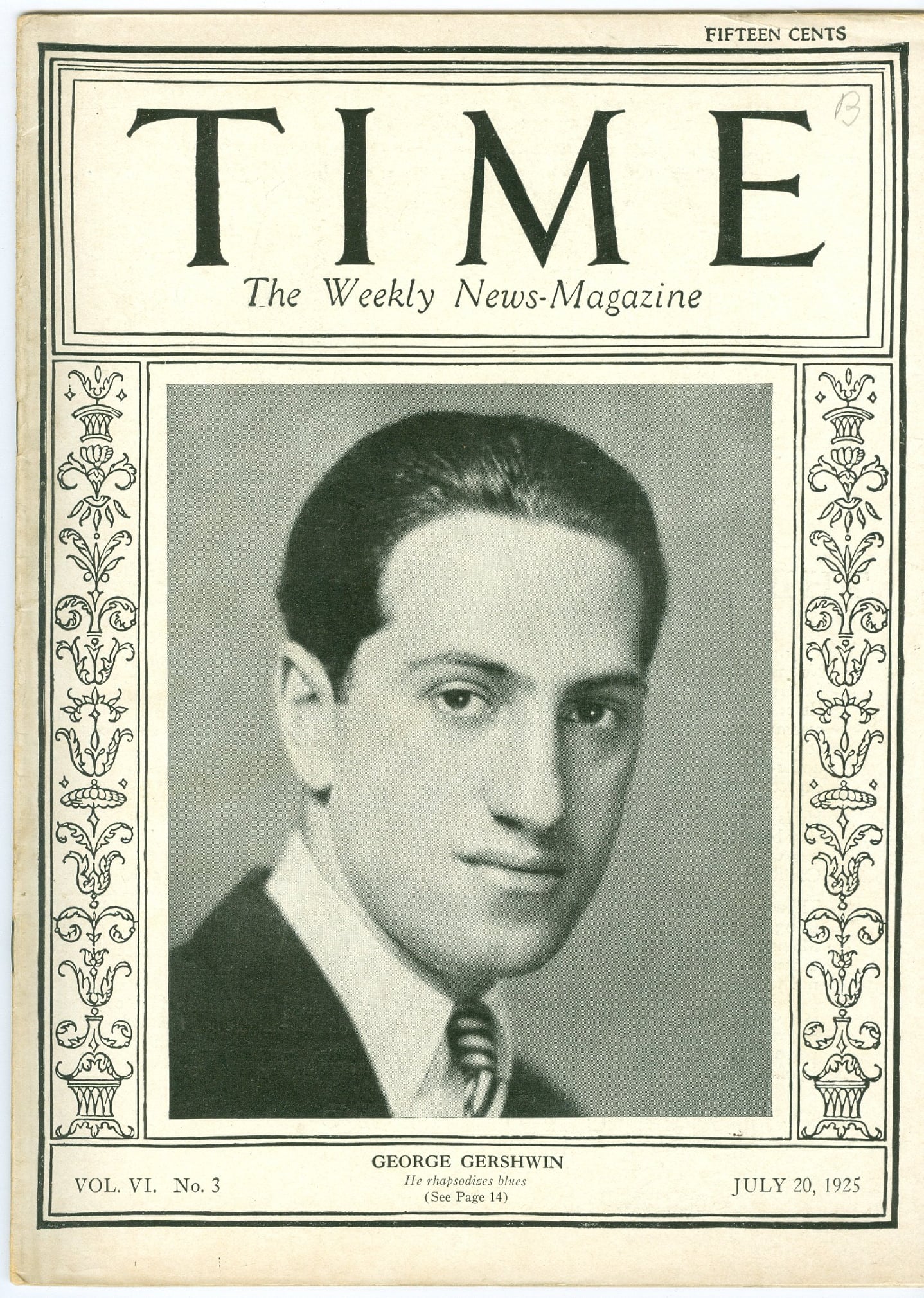
    Due to my hectic weekend in Ticonderoga, I was unable to honor Dmitri Shostakovich and George Gershwin on their birthdays. It did occur to me that both were featured on the cover of Time Magazine, which gave me the idea to compile ten Time covers of famous composers (which I am only just getting around to posting). Happy belated birthdays, boys!

    Shostakovich, born September 25, 1906 (died August 9, 1975)
    Gershwin, born September 26, 1898 (died July 11, 1937)

    Interestingly, both appeared on the cover on July 20, seventeen years apart!

    It’s sobering to be reminded of a time when classical music was still accepted as a part of our broader culture. I wonder who the last living composer was to be featured on the cover of Time?

    Andrew Lloyd Webber got a cover in 1988. No John Williams?


    Clockwise from left: Gershwin (July 20, 1925), Shostakovich (July 20, 1942), Richard Strauss (January 24, 1927), and Richard Strauss (July 25, 1938). More in the gallery.

  • Schoenberg Riddle Mystery Enigma

    Schoenberg Riddle Mystery Enigma

    Winston Churchill’s assessment of Russia in 1939 could have just as easily been applied to Arnold Schoenberg. He was a riddle, wrapped in a mystery, inside an enigma – a man cloaked in irony and contradiction.

    For one thing, his very name, “Schoenberg,” translates as “beautiful mountain,” yet those who would characterize his music as such are distinctly in the minority.

    He was the greatest prophet of dodecaphonic music, who claimed an artistic kinship with Johannes Brahms.

    He preached the death of tonality, even as he orchestrated his share of Viennese operettas and arranged Strauss waltzes for performance by his friends.

    He was a Jew, who converted to Lutheranism, but swung back hard to Judaism, in defiance of Hitler, with the rise of the Nazis.

    He was probably the least “popular” composer in the world, but his tennis partner was none other than George Gershwin. The two also shared a love of painting.

    Schoenberg was a triskaidekaphobe, who died on Friday the 13th. It was all right to count to twelve, apparently, but never to thirteen.

    Adding to this beautiful mountain of contradictions, Schoenberg, like that other titan of 20th century music, Igor Stravinsky, wound up living in Hollywood.

    Both men were suspicious of the movies (and each other), yet both were hoping to break into films. Stravinsky wrote cues for “The Song of Bernadette,” “Jane Eyre,” and “The North Star” (ultimately scored by Copland). None of his music was used in the pictures – Stravinsky was too slow and demanded too much money – but some of it was recycled in his concert works.

    Likewise, Schoenberg was courted for a film adaptation of “The Good Earth,” but his proposed $50,000 fee put an end to that.

    Twelve-tone music did eventually make it into the movies, thanks to composers like Leonard Rosenman and David Raksin. Rosenman’s landmark score for “The Cobweb” (1955) is credited as the first predominantly twelve-tone score written for a motion picture. Raksin, the composer of “Laura,” also employed a tone row in the Edgar Allan Poe mystery, “The Man with a Cloak” (1951).

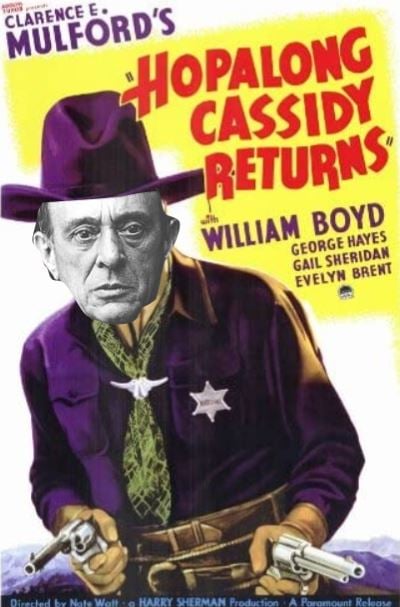
    Interestingly, Schoenberg, the creator of “Pierrot Lunaire” and “Moses und Aaron,” was also a great fan of Hopalong Cassidy. Like Walt Whitman, an admittedly strange comparison, Schoenberg contained multitudes.

    Happy birthday, Arnie!


    “Variations for Orchestra,” conducted by Bruno Maderna

    “Pierrot Lunaire”

    With goats!

    A kinder, gentler Schoenberg – the Suite for String Orchestra, given its premiere in Los Angeles in 1935:

    Stravinsky in Hollywood

    Schoenberg in home movies – on the tennis court, naturally – with Gershwin and others. (Gershwin appears around 2:20.)

    Leonard Rosenman’s “The Cobweb”

  • 9/11 Anniversary Musical Tribute to NYC

    9/11 Anniversary Musical Tribute to NYC

    This week on “Picture Perfect,” on the 20th anniversary of 9/11, it’s a multifaceted portrait of Manhattan.

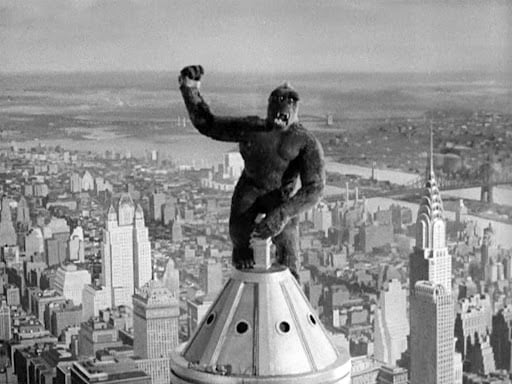
    Enjoy selections from “All About Eve” and “Street Scene” (both by Alfred Newman),” “Taxi Driver” (Bernard Herrmann), “Breakfast at Tiffany’s” (Henry Mancini), and “King Kong” (Max Steiner). Also, Oscar Levant will perform George Gershwin’s “Second Rhapsody,” from the 1931 film “Delicious.”

    It’s a collage of realism and romance, tragedy and comedy, seediness and sophistication. Join me for “Indomitable New York,” on “Picture Perfect,” music for the movies. The Big Apple never falls, this Saturday evening at 6:00 EDT, on WWFM – The Classical Network and wwfm.org.

  • Gershwin’s Genius: July 4th on The Lost Chord

    Gershwin’s Genius: July 4th on The Lost Chord

    Happy Independence Day! This Sunday night on “The Lost Chord,” cap your Fourth of July celebrations with an hour of vintage recordings of the music of George Gershwin.

    Gershwin occupied a unique place in American music, rising from Tin Pan Alley scrapper to Broadway royalty. From there, he conquered the concert hall and even the opera house, with his blend of popular song, jazz, blues, spirituals and European classical forms.

    Like Franz Schubert a hundred years before, Gershwin managed to churn out an astonishing amount of music over a comparatively brief span. His songs, in particular, have been of enduring interest. His gift of lyricism and invention defied early critics as he bestrode the worlds of popular and classical music like an American colossus.

    Sadly, at the peak of his success, he died of a brain tumor at the age of 38.

    We’ll sample Gershwin’s artistry in recordings of the era, including several songs performed by Al Jolson, Fred Astaire and Ella Logan. (So many excellent recordings to choose from!)

    We’ll also hear the world premiere recording of “An American in Paris” – performed by the Victor Symphony Orchestra (really members of the Philadelphia Orchestra), with the composer himself on the celesta – and the Concerto in F, performed as part of a memorial concert at the Hollywood Bowl, with the composer’s friend, Oscar Levant, as soloist.

    Three of these recordings date from 1937, the year of the composer’s death. All are from his era. I hope you’ll join me for “Vintage Gershwin,” this Sunday night at 10:00 EDT, on WWFM – The Classical Network and wwfm.org.


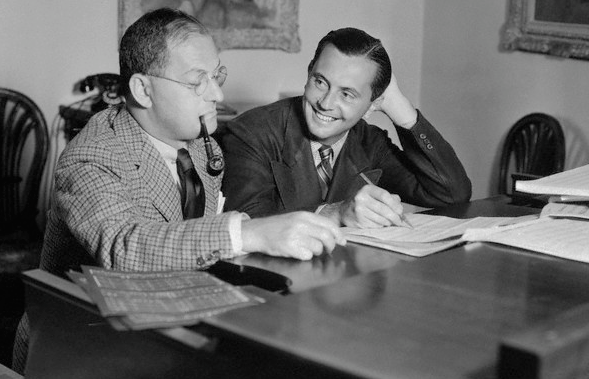
    PHOTO: (left to right) Astaire with George and Ira Gershwin

  • Dance Movie Music to Beat the Winter Blues

    Dance Movie Music to Beat the Winter Blues

    Slip on your dancing shoes and chase away the winter blues. This week on “Picture Perfect,” get those toes tapping with music from movies that include a prominent role for the dance.

    “The Tales of Beatrix Potter” (1971) was inspired by the popular children’s stories, with anthropomorphized animals in hounds-tooth vests and that sort of thing. Conceived for film by Frederick Ashton, it features a buoyant pastiche score by John Lanchery, drawn from various sources, including works of Sir Arthur Sullivan, Michael Balfe, Leon Minkus and Jacques Offenbach.

    Then relive the nightmare vision of “The Red Shoes” (1948). Written, directed and produced by the team of Michael Powell and Emeric Pressburger, this feverish dance film stars Scottish ballerina Moira Shearer. At its center is a story within the story, inspired by the Hans Christian Anderson tale about a girl whose vanity lends demonic power to her ruby footwear, with tragic consequences.

    The music is by Brian Easdale, who conducted his own score. However, for the film’s ballet sequence, Easdale specifically requested the services of Sir Thomas Beecham, who leads the Royal Philharmonic Orchestra.

    Screenwriter Ben Hecht worked on an astonishing number of Hollywood classics, including “Scarface,” “The Front Page,” “Nothing Sacred,” “His Girl Friday,” and Alfred Hitchcock’s “Spellbound.” Alongside his dozens of screen credits are uncredited contributions for work on films like “Stagecoach,” “Gone with the Wind,” “The Shop Around the Corner,” and “The Thing from Another World.” Because of his versatility, speed, and reliability, he became known as “the Shakespeare of Hollywood.”

    Twice, he was given free rein to direct his own projects. One of these was a quirky ballet-noir, called “Specter of the Rose” (1946). The plot concerns an unbalanced ballet superstar, played by Ivan Kirov – who looks all the world like Steve Martin – who is suspected of murdering his first wife, his former dance partner. If so, will history repeat itself, with his new bride? With dialogue stylized to the point of absurdity, It’s a film that has to be seen to be believed. The music is by Trenton-born “Bad Boy of Music” George Antheil.

    Much more considered is Luchino Visconti’s adaptation of Giuseppe di Lampedusa’s novel, “The Leopard” (1963). Burt Lancaster stars as a fading aristocrat around the time of Italian unification. The film’s memorable ballroom sequence occupies the last third of its three-hour running time. Nino Rota supplied the music.

    Finally, no show which purports to be about dance in the movies would be complete without music representative of Fred Astaire. Therefore, we’ll conclude with the funhouse dance sequence from “A Damsel in Distress” (1937). No Ginger Rogers in this one – rather Joan Fontaine, George Burns, and Gracie Allen. The energetic score is by George Gershwin.

    Regain your tone with tunes from these movies about the dance, on “Picture Perfect,” music for the movies, this Saturday evening at 6:00 EST, on WWFM – The Classical Network and wwfm.org.

Tag Cloud

Aaron Copland (92) Beethoven (95) Composer (114) Film Music (119) Film Score (143) Film Scores (255) Halloween (94) John Williams (185) KWAX (229) Leonard Bernstein (99) Marlboro Music Festival (125) Movie Music (134) Opera (198) Philadelphia Orchestra (86) Picture Perfect (174) Princeton Symphony Orchestra (106) Radio (87) Ralph Vaughan Williams (85) Ross Amico (244) Roy's Tie-Dye Sci-Fi Corner (290) The Classical Network (101) The Lost Chord (268) Vaughan Williams (102) WPRB (396) WWFM (881)

DON’T MISS A BEAT

Receive a weekly digest every Sunday at noon by signing up here


RECENT POSTS