Tag: George Gershwin

  • Vernon Duke Autumn in New York Composer

    Vernon Duke Autumn in New York Composer

    It’s autumn in New York!

    Vernon Duke (né Vladimir Dukelsky) was born in what is now Belarus on this date in 1903. In Kyiv, he studied composition under Reinhold Gliere. He left the USSR in 1920, traveling to New York, where he was befriended by George Gershwin. In fact, it was Gershwin who suggested a name-change to something a bit more comprehensible to American audiences. (Gershwin himself was born Jacob Gershowitz.)

    For a time, Duke ping-ponged back and forth to Europe, where he fulfilled a commission by Serge Diaghilev (for the ballet “Zephyr and Flora”). The work impressed Sergei Prokofiev, and the two became fast friends. Dukelsky’s Symphony No. 1 was given its premiere in Paris, under Serge Koussevitzky, on the same program as excerpts from Prokofiev’s “The Fiery Angel.”

    Around the same time, Duke began contributing material to musical comedies in London. This laid the groundwork for a return to New York in 1929. There, he continued to composed “serious” works, while insinuating himself into the Broadway scene. A number of his songs – “April in Paris,” “Autumn in New York,” “Taking a Chance on Love,” “I Can’t Get Started” – have since become standards.

    When Gershwin died in 1937, Duke stepped in to complete his unfinished score for “The Goldwyn Follies,” for which he contributed a couple of ballets (choreographed by George Balanchine) and the song, “Spring Again.” His greatest success came in 1940, with the Broadway show, “Cabin in the Sky.”

    Here’s a rare concert broadcast of his Symphony No. 3:

    A number of his concert works have been recorded in recent years, including this Piano Concerto for Arthur Rubinstein:

    His Cello Concerto, performed by Samuel Magill, then of the Metropolitan Opera Orchestra:

    “Autumn in New York”

    “Brooklyn Barcarolle”


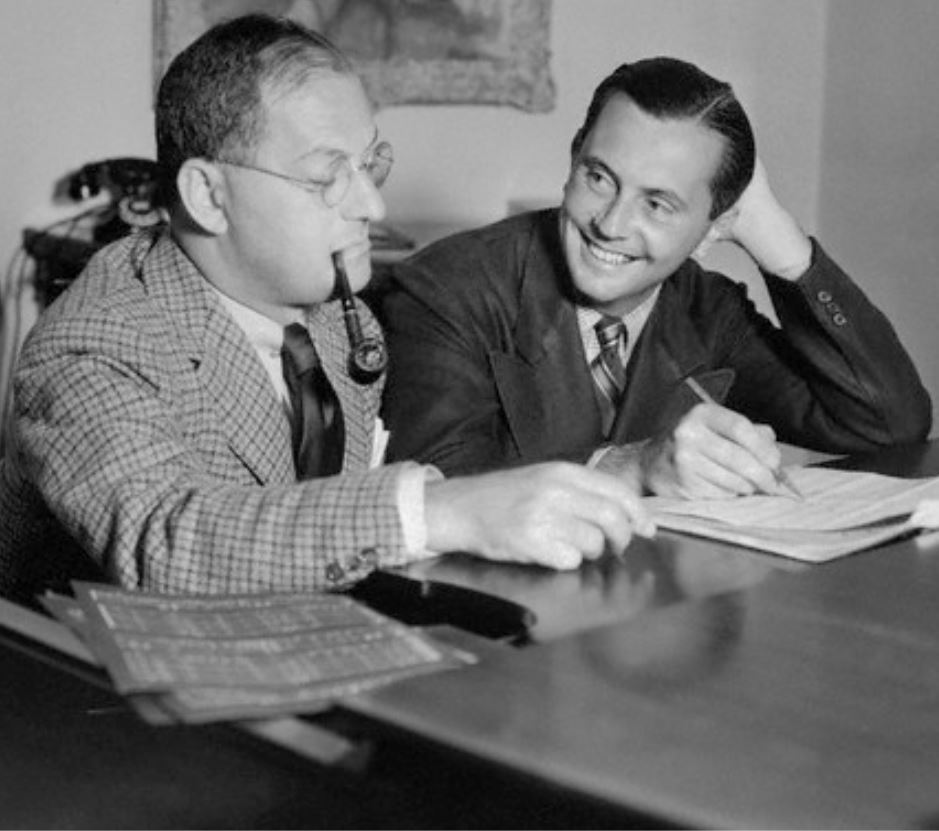
    PHOTO: Duke (right) with Ira Gershwin

  • George Gershwin American Original

    George Gershwin American Original

    He began his career as a song plugger on New York’s Tin Pan Alley. He was “discovered” by Al Jolson, who gave him his biggest hit. He composed a string of successful stage musicals with lyrics by his brother, Ira.

    Though he had classical training, he was turned away by both Nadia Boulanger and Maurice Ravel, on the grounds that they didn’t want to spoil his natural voice. He played tennis with Arnold Schoenberg, who also refused him lessons. He kept an autographed photo of Alban Berg in his apartment, next to one of Jack Dempsey.

    His musical, “Of Thee I Sing,” was the first to win a Pulitzer Prize. His opera, “Porgy and Bess,” was a failure at its premiere. His songs graced elegant screen comedies of the 1930s. In the concert hall, he was America’s most authentic voice.

    George Gershwin died of a brain tumor in 1937, at the age of 38. Reportedly, his last words were “Fred Astaire.”

    All just the tip of the ice afloat in bathtub gin for this multifaceted American original. Happy 125, George!


    Gershwin documentary that aired on the History Channel and was distributed by A&E – back when A&E was still A&E!


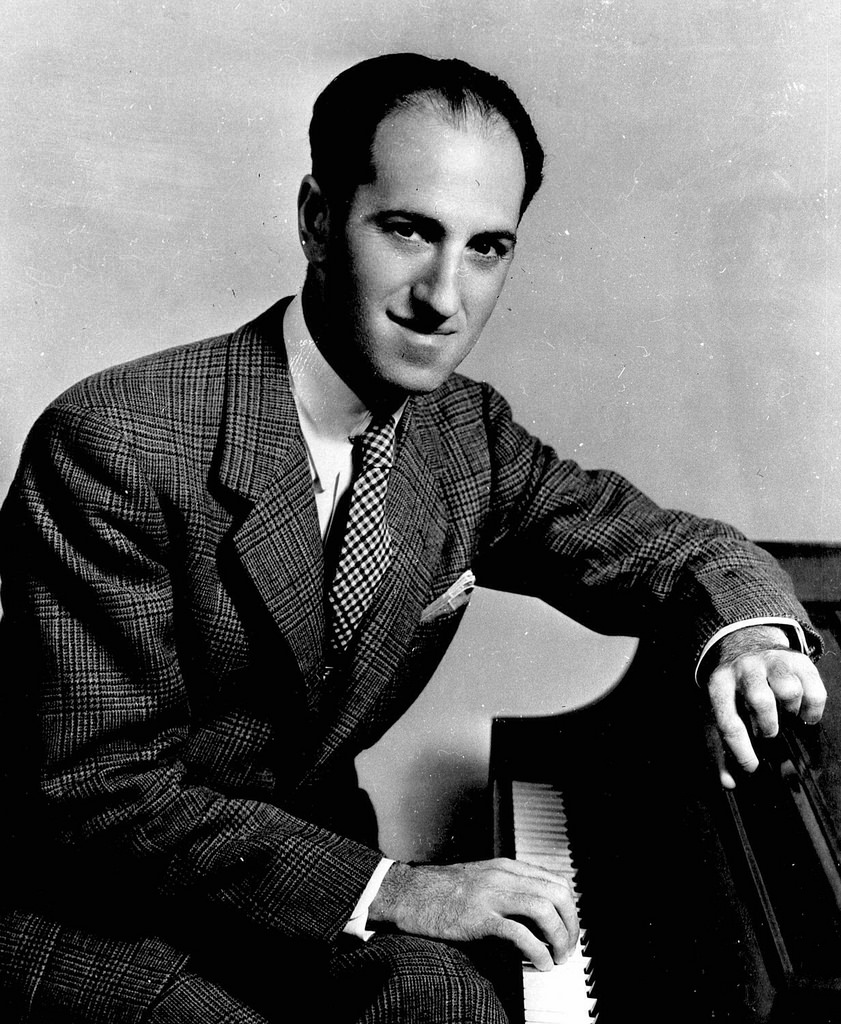
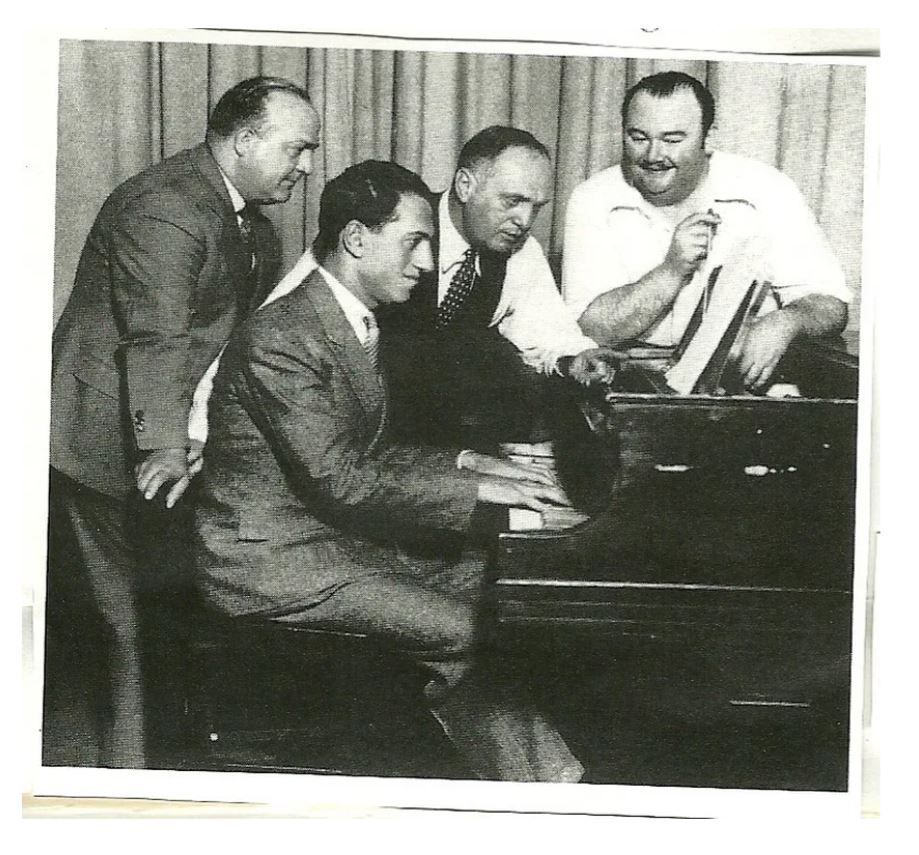
    Clockwise from left: George himself; at the keyboard with Fred Astaire and Ira; painting a portrait of Arnold Schoenberg

  • Rosh Hashanah Gershwin’s Jewish Soul

    Rosh Hashanah Gershwin’s Jewish Soul

    Shana tova! Rosh Hashanah began last night at sundown. To my Jewish friends, best wishes for a good and sweet 5783. Apples and honey all around.

    This year’s observance happens to coincide with the birthday of George Gershwin (born Jacob Gershowitz to Jewish immigrant parents who settled on New York City’s Lower East Side).

    Many sources claim that Gershwin, while culturally Jewish, was not particularly observant. Nevertheless, Kitty Carlisle recollected a zany Seder at the Gershwin home with Oscar Levant in attendance; Gershwin was an active supporter of Jewish charities; allegedly he wouldn’t marry Kay Swift, his lover of over ten years, because she wasn’t Jewish (Gershwin’s mother disapproved); and following his untimely death at the age of 38, he was remembered in bicoastal Jewish funeral services.

    Furthermore, sharp-eared listens with some familiarity with Jewish tradition have identified Jewish themes and motifs in his music. It’s been remarked that you could keep Gershwin out of shul, but you couldn’t keep shul out of Gershwin. Here’s an interesting article on the subject.

    George Gershwin’s Jewish Music

    Sadly, we’ll never know what an abandoned opera on Szymon Ansky’s “The Dybbuk” would have sounded like. (It was scrapped because of copyright issues.)

    Early on, Gershwin expressed interest in writing for the Yiddish theater. He even made some piano rolls of Yiddish songs. Here’s one from 1917, a rendition of a 1903 Yiddish theater tune by Meyerowitz titled “Gott un Sein Mishpet Is Gerecht.”

    Happy birthday, George Gershwin, and have a sweet New Year!

  • Schoenberg: Beyond the Twelve-Tone Legend

    Schoenberg: Beyond the Twelve-Tone Legend

    Okay, pointy heads! It’s back to school – the Second Viennese School – for the birthday of Arnold Schoenberg.

    The dour high priest of twelve-tone music was full of surprises. I venture to guess that many would be nonplussed to learn that the greatest prophet of dodecaphonic music claimed artistic kinship with Johannes Brahms. But then, some conductors (notably Karajan and Solti) have tried to interpret him that way. Even so, he remains one of the most hated composers among concertgoers who prefer programs of unsullied Beethoven and Dvořák.

    Schoenberg may have preached the death of tonality, but he composed at least three Romantic masterpieces, “Verklärte Nacht” (“Transfigured Night”), “Pelleas und Melisande,” and the opulent oratorio “Gurrelieder,” before venturing into Expressionism with works like his Chamber Symphony No. 1. In the meantime, he also orchestrated his share of Viennese operettas and arranged Strauss waltzes for performance by his friends.

    By the time he came to America, Schoenberg was probably the least “popular” composer in the world (if one of the most influential), but at his new home in Los Angeles his tennis partner was none other than George Gershwin. The two also shared a love of painting.

    Adding to this “beautiful mountain” of contradictions, Schoenberg, like that other titan of 20th century music, Igor Stravinsky, made a game attempt to break into films. He was courted to write music for the 1937 big screen adaptation of Pearl Buck’s “The Good Earth,” but his proposed fee of $50,000 put an end to that.

    Schoenberg did once prophesy that one day “grocer’s boys would whistle serial music on their rounds.” Maybe he actually meant cereal music. While to my knowledge that has yet to pass, I did once catch myself walking down the street humming the Golden Calf music from “Moses und Aron.”

    Happy birthday, Arnold Schoenberg!


    Schoenberg remembers his friend, George Gershwin

    Gershwin films Schoenberg

    Schoenberg home movies (Gershwin appears at the 30-second mark)

    Schoenberg in private

    Schoenberg on Alban Berg

    “Gurrelieder,” Part I (1900-03, 1910)

    Chamber Symphony No. 1 (1909)

    “Pierrot Lunaire” (1912)

    “Variations for Orchestra” (1926-8), conducted by Bruno Maderna

    “Moses und Aron” (1930-32), The Golden Calf

    A kinder, gentler Schoenberg – the Suite for String Orchestra (1935)


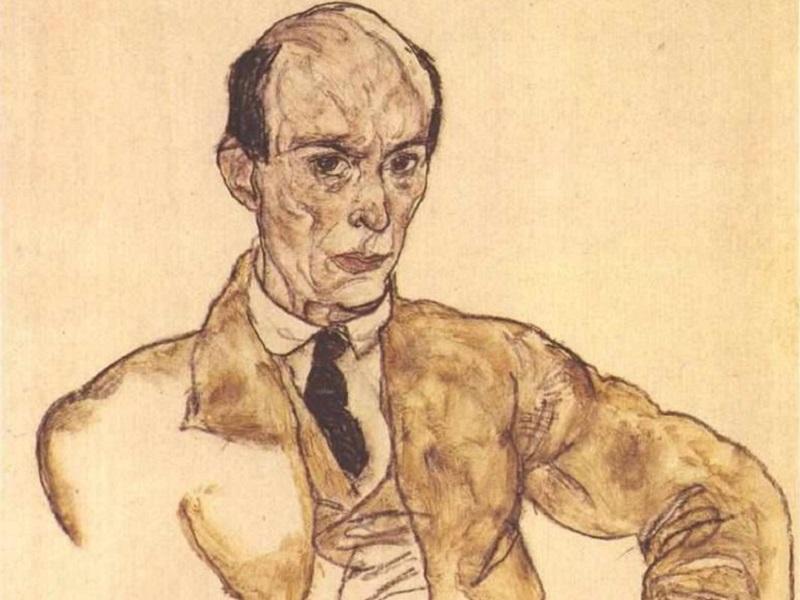
    TWELVE IMAGES FOR TWELVE TONES: As this gallery demonstrates, Schoenberg wasn’t always the grim, humorless figure his portraits would suggest (images identified when you click through)

  • Vernon Duke Autumn in New York

    Vernon Duke Autumn in New York

    It’s autumn in New York!

    Vernon Duke (né Vladimir Dukelsky) was born in what is now Belarus on this date in 1903. In Kiev, he studied composition under Reinhold Gliere. He left the USSR in 1920, traveling to New York, where he was befriended by George Gershwin. In fact, it was Gershwin who suggested a name-change to something a bit more comprehensible to American audiences. (Gershwin himself was born Jacob Gershowitz.)

    For a time, Duke ping-ponged back and forth to Europe, where he fulfilled a commission by Serge Diaghilev (for the ballet “Zephyr and Flora”). The work impressed Sergei Prokofiev, and the two became fast friends. Dukelsky’s Symphony No. 1 was given its premiere in Paris, under Serge Koussevitzky, on the same program as excerpts from Prokofiev’s “The Fiery Angel.”

    Around the same time, Duke began contributing material to musical comedies in London. This laid the groundwork for a return to New York in 1929. There, he continued to composed “serious” works, while insinuating himself into the Broadway scene. A number of his songs – “April in Paris,” “Autumn in New York,” “Taking a Chance on Love,” “I Can’t Get Started” – have since become standards.

    When Gershwin died in 1937, Duke stepped in to complete his unfinished score for “The Goldwyn Follies,” for which he contributed a couple of ballets (choreographed by George Balanchine) and the song, “Spring Again.” His greatest success came in 1940, with the Broadway show, “Cabin in the Sky.”

    Here’s a rare concert broadcast of his Symphony No. 3:

    A number of his concert works have been recorded in recent years, including this Piano Concerto for Arthur Rubinstein:

    The Metropolitan Opera’s Samuel Magill is soloist in Duke’s Cello Concerto:

    “Autumn in New York”

    “Brooklyn Barcarolle”


    PHOTO: Duke (right) with Ira Gershwin

Tag Cloud

Aaron Copland (92) Beethoven (95) Composer (114) Film Music (119) Film Score (143) Film Scores (255) Halloween (94) John Williams (185) KWAX (229) Leonard Bernstein (99) Marlboro Music Festival (125) Movie Music (134) Opera (198) Philadelphia Orchestra (86) Picture Perfect (174) Princeton Symphony Orchestra (106) Radio (87) Ralph Vaughan Williams (85) Ross Amico (244) Roy's Tie-Dye Sci-Fi Corner (290) The Classical Network (101) The Lost Chord (268) Vaughan Williams (102) WPRB (396) WWFM (881)

DON’T MISS A BEAT

Receive a weekly digest every Sunday at noon by signing up here


RECENT POSTS