Tag: George Gershwin

  • Broadway Musicals Celebrate July 4th

    Broadway Musicals Celebrate July 4th

    With the Fourth of July still six days away, I was trying to come up with a way to honor some aspect of the country’s rich musical heritage – it is, after all, the last weekend before the holiday – but I didn’t want to start clobbering everybody with Sousa marches just yet.

    I found my solution on Broadway: both of my specialty shows today are connected in some way or another to classic American musical theater.

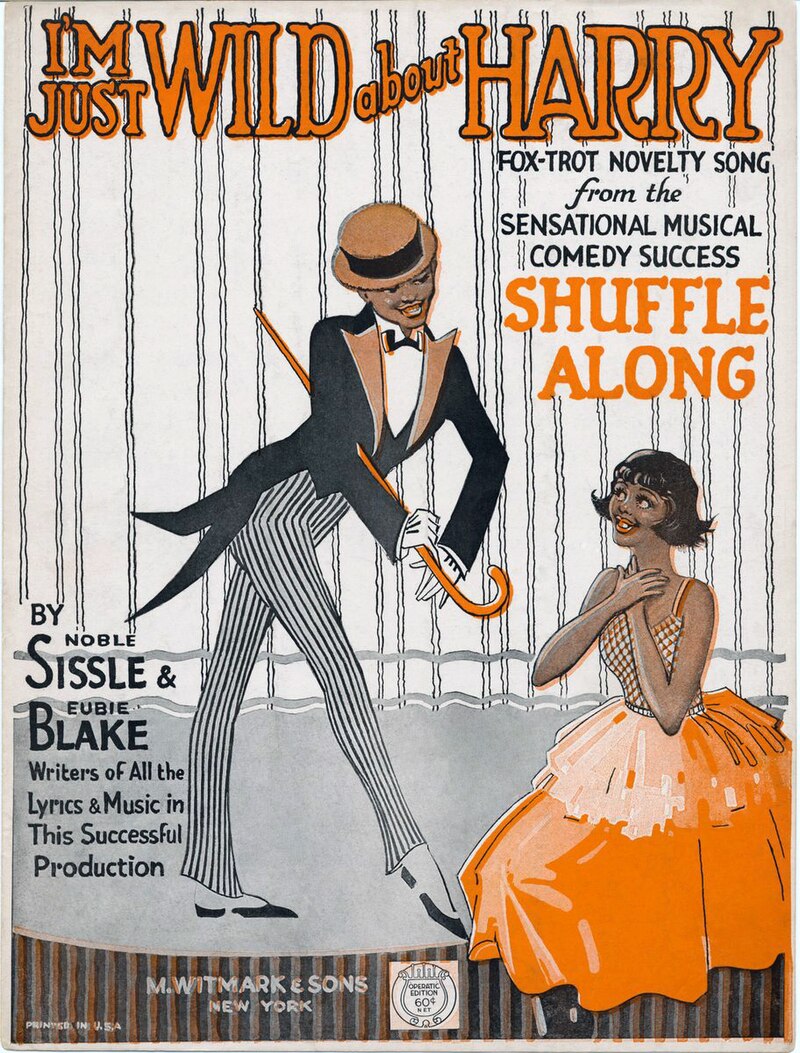
    The playlist on “Sweetness and Light,” the light music show, is constructed on works that were actually staged on the Great White Way, including Eubie Blake & Noble Sissle’s “Shuffle Along” (the 1921 all-Black musical that spawned the breakout hit “I’m Just Wild about Harry”), Leonard Bernstein’s “On the Town” (the ballet music, before it was distilled into the familiar “Three Dance Episodes,” with a 24-year-old Bernstein conducting), George Gershwin’s “Porgy and Bess” (conceived by the composer as an opera, but produced on Broadway several times over the decades before finally being elevated to the pantheon), and Richard Rodgers & Lorenz Hart’s “On Your Toes” (the climactic “Slaughter on Tenth Avenue” sequence, which we’ll enjoy on Rodgers’ birthday).

    We’ll get your toes tapping, for the most part, but also include a grand piano fantasy on themes from “Porgy” by Earl Wild.

    It’s showtime, this Saturday morning at 11:00 EDT/8:00 PDT.

    Then later, on “The Lost Chord,” a program that revives unusual and neglected repertoire, we’ll come at the same source from a different perspective, as we’ll hear concert works by composers of notable Broadway hits.

    Vladimir Dukelsky was born in what is now Belarus, but when he settled in the United States, his friend, George Gershwin suggested a name change. Thereafter, he was known as Vernon Duke. As Duke, he composed such standards as “April in Paris” and “Autumn in New York,” and he had a hit show in “Cabin in the Sky.”

    As Dukelsky, he had works championed by Serge Koussevitzky and choreographed by Léonide Massine and George Balanchine. We’ll hear a Piano Concerto he composed at the age of 19 at the request of Arthur Rubinstein.

    Meredith Willson is best-known for his Broadway smashes “The Music Man” and “The Unsinkable Molly Brown,” but he emerged from the classical music world, as a flutist who played with John Philip Sousa and the New York Philharmonic. We’ll hear Willson’s Symphony No. 2, subtitled “The Missions of California.”

    I hope you’ll join me in giving my regards to Broadway with “Broadway Lights” on “Sweetness and Light” (at 11:00 a.m. EDT/8:00 a.m. PDT), and “Broad Talents from Broadway” on “The Lost Chord” (at 7:00 p.m. EDT/4:00 p.m. PDT), both of them on KWAX, the radio station of the University of Oregon!

    Stream them, wherever you are, at the link:

    https://kwax.uoregon.edu/


    IMAGES: “Shuffle Along” sheet music and (top to bottom) Sissle & Blake, Rodgers & Hart, and Meredith & Rini Willson

  • Gershwin & Schoenberg An Unlikely Friendship

    Gershwin & Schoenberg An Unlikely Friendship

    Who’d a thunk the High Priest of Dodecaphonic Music would be such an admirer of popular success George Gershwin? You know, the guy that gave us “Swanee,” “I Got Rhythm,” and “Embraceable You,” and also “Rhapsody in Blue,” “An American in Paris,” and “Porgy and Bess.” And that furthermore the admiration would be reciprocated?

    In this Arnold Schoenberg sesquicentennial year (he was born on September 13, 1874), we mark Gershwin’s birthday anniversary (born on this date in 1898) with a glimpse into classical music’s most unlikely mutual admiration society.

    Gershwin and Schoenberg were tennis partners, both very serious about the game; they were painters (although Schoenberg abandoned the art to devote himself to music); and of course Gershwin hoped to study with Schoenberg, arguably the most influential avant-garde master of the 20th century.

    Sadly, just months after Gershwin painted Schoenberg’s portrait, he died of a brain tumor at the age of 38. The next day, Schoenberg eulogized his friend for broadcast over the radio.

    Interestingly, Gershwin’s friend and champion, the pianist Oscar Levant, did study composition with Schoenberg. Schoenberg was sufficiently impressed that he offered Levant a job as his assistant, but Levant turned him down, feeling he wasn’t worthy. Levant is still considered one of Gershwin’s foremost interpreters. Of course, he also appeared in the film version of “An American in Paris” with Gene Kelly.

    George and Arnie were like the Frog and Toad of Beverly Hills. Remembering the multifaceted George Gershwin on his birthday.


    Gershwin the painter

    https://smtd.umich.edu/ami/gershwin/?p=870

    Schoenberg paintings and drawings

    https://www.schoenberg.at/index.php/en/schoenberg-2/bildnerischeswerk

    Home movies of Schoenberg, filmed by Gershwin, set to a recording of Schoenberg’s String Quartet No. 4 that Gershwin sponsored. The nattily turned-out Gershwin can be seen with pipe and five o’clock shadow, winding the camera. Also, Schoenberg eulogizes Gershwin. All in three minutes!

    More Gershwin home movies, including images of Schoenberg, courtesy of the Library of Congress.

    Levant in “An American in Paris.” He’s the whole show in Gershwin’s Concerto in F.


    PHOTO: Gershwin paints Schoenberg

  • Schoenberg’s Ironic 150th Birthday

    Schoenberg’s Ironic 150th Birthday

    Even those who don’t enjoy his music will surely appreciate the irony that Arnold Schoenberg, whose twelve-tone method of composition continues to strike fear in the hearts of many, himself dreaded the number 13.

    Not only did his triskaidekaphobia likely hasten his demise – the superstitious Schoenberg died on Friday, July 13, 1951, at the age of 76 (he had been out of sorts all year, as his astrologer had alerted him that 7 + 6 = 13) – the irony is compounded, as today the world marks the sesquicentennial of his birth, on yet another Friday the 13th.

    Winston Churchill’s assessment of Russia in 1939 could just as easily have been applied to this most influential composer of the 20th century. Schoenberg was a riddle, wrapped in a mystery, inside an enigma – a man cloaked in irony and contradiction.

    For one thing, his very name, “Schoenberg,” translates as “beautiful mountain,” yet those who would characterize his music as such are distinctly in the minority.

    He was the greatest prophet of dodecaphonic music, yet he claimed an artistic kinship with Johannes Brahms.

    He preached the death of tonality, even as he orchestrated his share of Viennese operettas and arranged Strauss waltzes for performance by his friends.

    He was a Jew, who converted to Lutheranism, but swung back hard to Judaism, in defiance of Hitler.

    He was probably the least “popular” composer in the world, but his tennis partner was none other than George Gershwin. The two also shared a love of painting.

    Adding to this beautiful mountain of contradictions, Schoenberg, like that other titan of 20th century music, Igor Stravinsky, wound up living in Hollywood.

    Both men were suspicious of the movies (and each other), yet both were hoping to break into films. Stravinsky wrote cues for “The Song of Bernadette,” “Jane Eyre,” and “The North Star” (the latter ultimately scored by Copland). None of his music was used in the pictures – Stravinsky was too slow and demanded too much money – but some of it was recycled in his concert works.

    Likewise, Schoenberg was courted for a film adaptation of “The Good Earth,” but his proposed $50,000 fee put an end to that.

    Twelve-tone music did eventually make it into the movies, thanks to composers like Leonard Rosenman and David Raksin. Rosenman’s landmark score for “The Cobweb” (1955) is credited as the first predominantly twelve-tone score written for a motion picture. Raksin, the composer of “Laura,” also employed a tone row in the Edgar Allan Poe mystery, “The Man with a Cloak” (1951).

    Interestingly, Schoenberg, the creator of “Pierrot Lunaire” and “Moses und Aaron,” was also a great fan of Hopalong Cassidy. Like Walt Whitman, an admittedly strange comparison, Schoenberg contained multitudes.

    13 cheers for Arnold Schoenberg on the sesquicentennial of his birth!


    “Variations for Orchestra,” conducted by Bruno Maderna

    “Pierrot Lunaire”

    With goats!

    A kinder, gentler Schoenberg – the Suite for String Orchestra, given its premiere in Los Angeles in 1935:

    Schoenberg in home movies – on the tennis court, naturally – with Gershwin and others. (Gershwin appears around 2:20.)

    Still think Schoenberg’s not your bag? Put aside your trepidation and join me for an hour of his lighter music on “Sweetness and Light,” this Saturday morning at 11:00 EDT/8:00 PDT, on KWAX. Stream it wherever you are at the link!

    https://kwax.uoregon.edu/

  • Vintage Gershwin on the Lost Chord

    Vintage Gershwin on the Lost Chord

    This week on “The Lost Chord,” it’s very clear our love (for Gershwin) is here to stay!

    We’ll get a jump on the Fourth of July celebrations with an hour of vintage recordings of music by one of our most versatile composers.

    George Gershwin occupied a unique place in American music, rising from Tin Pan Alley scrapper to Broadway royalty. From there, he conquered the concert hall and even the opera house, with his blend of popular song, jazz, blues, spirituals and European classical forms.

    Like Franz Schubert a hundred years before, Gershwin managed to churn out an astonishing amount of music over a comparatively brief span. His songs, in particular, have been of enduring interest. His gift of lyricism and invention defied early critics as he bestrode the worlds of popular and classical music like an American colossus.

    Sadly, at the peak of his success, he died of a brain tumor at the age of 38.

    We’ll sample Gershwin’s artistry in recordings of the era, including several songs performed by Al Jolson, Fred Astaire, and Ella Logan. (So many excellent recordings to choose from!)

    We’ll also hear the world premiere recording of “An American in Paris” – performed by the Victor Symphony Orchestra (really members of the Philadelphia Orchestra), with the composer himself on the celesta – and the Concerto in F, performed as part of a memorial concert at the Hollywood Bowl, with the composer’s friend, Oscar Levant, as soloist.

    Three of these recordings date from 1937, the year of the composer’s death. All are from his era. I hope you’ll join me for “Vintage Gershwin,” this week on “The Lost Chord,” now in syndication on KWAX, the radio station of the University of Oregon!


    Clip and save the start times for all three of my recorded shows:

    PICTURE PERFECT, the movie music show – Friday at 8:00 PM EDT/5:00 PM PDT

    SWEETNESS AND LIGHT, the light music program – ALL NEW! – Saturday at 11:00 AM EDT/8:00 AM PDT

    THE LOST CHORD, unusual and neglected rep – Saturday at 7:00 PM EDT/4:00 PM PDT

    Stream them, wherever you are, at the link!

    https://kwax.uoregon.edu/

    PHOTO: (left to right) Astaire with George and Ira Gershwin

  • Gershwin’s Rhapsody in Blue at 100

    Gershwin’s Rhapsody in Blue at 100

    The most widely-recognized of American classics? Perhaps. Next to “Fanfare for the Common Man” and “The Stars and Stripes Forever,” I can think of few others. George Gershwin’s “Rhapsody in Blue” is 100 today.

    I once heard it performed on a New Year’s Day concert in Milan. As late as the mid ‘90s, it seemed European musicians still hadn’t acquired that innate ability to swing. But the world’s a lot smaller place now, and they seem to have gotten it.

    Here’s the first recording, with Gershwin at the piano and Paul Whiteman conducting. The work is abridged and played a little faster than we’re accustomed to hearing today, in large part to be able to fit it onto two sides of a 12-inch 78 rpm record.

    The first recording I acquired, on LP, was with Leonard Bernstein as conductor and pianist with the New York Philharmonic, made for Columbia Records in 1964. The performance really is more expansive than most. As the years went by, I enjoyed hearing different takes on the piece, some of them attempting to recreate its original jazz band debut.

    The work has been dismissed by cognoscenti as corny. In 1934, composer Constant Lambert derided it as “neither good jazz nor good Liszt.” As recently as two weeks ago, the New York Times ran an article under the title “The Worst Masterpiece,” with pianist Ethan Iverson making a straw man argument that Duke Ellington was a more important composer. Of course the “Rhapsody” is not true jazz, any more than Brahms’ Hungarian riffs could be construed as authentic Hungarian music. But it is 100 percent American.

    “Rhapsody in Blue” is one of those rare pieces of classical music whose appeal transcends genre. I have an uncle, who is by no means a classical music person, who is obsessed with the work. It’s a crowd-pleaser, and deservedly so. If anything, its winning combination of optimism, energy, and naiveté reminds us of America’s “better angels” (a phrase I borrow from Lincoln on his birthday). The work is as refreshing now as it ever was, even if, one hundred years on, it seems more and more like a distant dream. It’s still a dream to be celebrated.


    Bernstein, 1964

    Bernstein live, 1976

    Michael Tilson Thomas’ quite different conception

    Incorporating Gershwin’s 1925 piano roll

    Peter Nero and the Philly Pops at Independence Hall

    In Woody Allen’s “Manhattan”

    Paul Whiteman, who conducted the premiere of “Rhapsody in Blue,” introduces and leads it here, beginning at the 51-minute mark (with interlude for “voodoo drums???”) in the insane, pre-Code curio, “King of Jazz” (1930). Just don’t watch it too close to bed!

    Live footage of Gershwin playing “I Got Rhythm” in 1931


    PHOTO: (left to right) Ferde Grofé, Whiteman’s orchestrator and later composer of the “Grand Canyon Suite;” Gershwin at the piano; theatrical impresario Samuel “Roxy” Rothafel; and Whiteman, with his baton

Tag Cloud

Aaron Copland (92) Beethoven (95) Composer (114) Film Music (119) Film Score (143) Film Scores (255) Halloween (94) John Williams (185) KWAX (229) Leonard Bernstein (99) Marlboro Music Festival (125) Movie Music (134) Opera (198) Philadelphia Orchestra (86) Picture Perfect (174) Princeton Symphony Orchestra (106) Radio (87) Ralph Vaughan Williams (85) Ross Amico (244) Roy's Tie-Dye Sci-Fi Corner (290) The Classical Network (101) The Lost Chord (268) Vaughan Williams (102) WPRB (396) WWFM (881)

DON’T MISS A BEAT

Receive a weekly digest every Sunday at noon by signing up here


RECENT POSTS