Tag: Germaine Tailleferre

  • Everything Old is New Again on “The Lost Chord”

    Everything Old is New Again on “The Lost Chord”

    This week on “The Lost Chord,” what’s old is new again, as we enjoy a program of 20th century music by French composers who look back to their illustrious forebears.

    In the 1870s, following France’s defeat in the Franco-Prussian war, there was a rise in musical nostalgia, with composers doing their part to mend the wounded national dignity by looking back to the galant style of the Ancien Régime – an idealized Golden Age which stood outside of Gallic history, full of shepherds and shepherdesses, panpipes and periwigs. The movement gave rise to such works as Camille Saint-Saëns’ Septet and the “Suite dans le style ancien” by Vincent d’Indy.

    50 years later, a renewed fascination with music of the 18th century took root in the 1920s, in no small part because of Stravinsky’s sudden shift to neo-classicism. This was concurrent with the rise of Les Six, a loose collective of composers who had begun to flourish in Paris. We’ll hear three of their works that sprang from a shared affection for music of the Baroque.

    One of the group’s more prominent members, Darius Milhaud, composed his “Suite d’après Corrette,” a piece for winds after 18th century composer Michel Corrette (with tell-tale “cuckoo” finale), in 1937. Eleven years later, he followed it with “L’Apothéose de Molière,” the title evocative of the spirit of Jean-Baptiste Lully. However, in this instance, the source material was culled from works by the lesser-known Baroque violinist and composer Baptiste Anet, a pupil Corelli and an elite musician in the service of Louis XIV. We’ll hear both Milhaud pieces, presented back-to-back.

    Then we’ll have a work by one of his colleagues, the only female member of Les Six, Germaine Tailleferre. In 1964, Tailleferre paid tribute to the Baroque keyboard master Jean-Philippe Rameau, on the occasion of the bicentennial of his death. “Hommage à Rameau” falls into three movements and is scored for two pianos and percussion.

    Finally, we’ll turn to Jean Françaix, who was NOT a member of Les Six, although his musical aesthetic would have fit right in. Had he been born twenty years earlier, we might be talking about Les Sept! Françaix’s “Duo Baroque,” composed in 1980, is scored for the unusual combination of double bass and harp. It pays tribute to no specific composer – in fact, for the most part, it doesn’t even sound particularly Baroque – though it does share a certain charm, wit, and elegance characteristic of music of the 18th century.

    I hope you’ll join me for “Everything Old Is New Again,” on “The Lost Chord,” now in syndication on KWAX Classical Oregon!

    ——–

    Clip and save the start times for all three of my recorded shows:

    PICTURE PERFECT, the movie music show – Friday at 8:00 PM EST/5:00 PM PST

    SWEETNESS AND LIGHT, the light music program – Saturday at 11:00 AM EST/8:00 AM PST

    THE LOST CHORD, unusual and neglected rep – Saturday at 7:00 PM EST/4:00 PM PST

    Stream them, wherever you are, at the link!
    https://kwax.uoregon.edu

  • Germaine Tailleferre Les Six’s Forgotten Star

    Germaine Tailleferre Les Six’s Forgotten Star

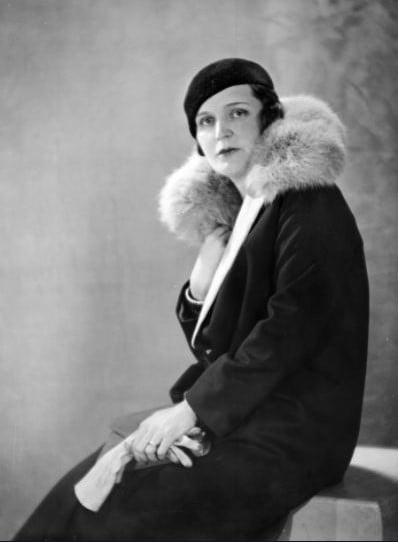
    Germaine Tailleferre was the only female member of Les Six, that loose collective of composers that rose to prominence in Paris in the late Nineteen-Teens and ‘20s, under the guidance of Jean Cocteau. Her famous colleagues included Francis Poulenc, Darius Milhaud, Arthur Honegger, and Georges Auric. Louis Durey, a hard-line communist who went on to set poems by Ho-Chi Minh and Mao Zedong, is the one nobody remembers. (I wonder why.)

    Tailleferre was strong-willed from the start. Her birth name was Taillefesse, but she changed it to spite her father, since the old man opposed her musical studies. However, she took piano lessons with her mother and was admitted into the Paris Conservatory. It was there that she met the rest of The Six and that the prizes began to pile up. She also earned the friendship and received the support of Maurice Ravel.

    In 1925, she married Ralph Barton, the American caricaturist, and moved to New York. Two years later, the couple returned to France, then divorced. Her career thrived in the 1920s and ‘30s. With the outbreak of World War II, however, she beat it back to the United States, leaving most of her scores at her home in Grasse, and passed the war years in Philadelphia. (Please, if anyone knows anything about her Philadelphia years, message me!)

    After the war, she again returned to France, where she resumed her career. As she got older, her pieces tended to be shorter, as she suffered from arthritis. She also wrote a lot for children and young pianists. She composed virtually right up until the time of her death in 1983, when she was 91 years-old. She wrote so much, in fact, that a lot of the music of her later years has never been published, and fresh discoveries from her output are being recorded all the time.

    Here’s an interesting write-up about Tailleferre and her relationship with Barton. The quote that headlines the piece is not by Tailleferre, but by Germaine Greer!

    https://interlude.hk/sex-fun-cars-cars-refuel-quicker-men-germaine-tailleferre-ralph-waldo-emerson-barton/

    Furthermore, I love that the video at the bottom of the page, of the composer’s “Six chansons françaises,” is age-restricted due to the fact that it’s illustrated with the painting of a nude. Mon Dieu!

    Happy birthday, Germaine Tailleferre!


    The Concertino for Harp and Orchestra (1927):

    The lovely and wistful “Arabesque” for clarinet and piano (1972):

    https://www.youtube.com/watch?v=i0E8tUzQezA See Less

    The Concerto for Piano and Orchestra (1924). The piece was given its U.S. premiere – in the presence of the composer – by Alfred Cortot and the Philadelphia Orchestra, conducted Leopold Stokowski.

    “Rêverie” (1964)

  • Germaine Tailleferre in Philadelphia

    Germaine Tailleferre in Philadelphia

    I find it fascinating that Germaine Tailleferre waited out World War II in Philadelphia. And yet I can never seem to find out very much about what she did while in exile.

    Tailleferre was the only female member of Les Six, that loose collective of composers that rose to prominence in Paris in the late ‘teens and 1920s, under the guidance of Jean Cocteau. Her famous colleagues included Francis Poulenc, Darius Milhaud, Arthur Honegger, and Georges Auric. Louis Durey, a hard-line communist who went on to set poems by Ho-Chi Minh and Mao Zedong, is the one nobody remembers. (I wonder why.)

    Tailleferre was strong-willed from the beginning. Her birth name was Taillefesse, but she changed it to spite her father, since the old man opposed her musical studies. However, she took piano lessons with her mother and was admitted into the Paris Conservatory. It was there that she met the rest of The Six and that the prizes began to pile up. She also earned the friendship and received the support of Maurice Ravel.

    In 1925, she married Ralph Barton, the American caricaturist, and moved to New York. Two years later, the couple returned to France, then divorced. Her career thrived in the 1920s and ‘30s. With the outbreak of World War II, however, she beat it back to the United States, leaving most of her scores at her home in Grasse, and, as I said, passed the war years in Philadelphia.

    After the war, she again returned to France, where she resumed her career. As she got older, her pieces tended to be shorter, as she suffered from arthritis. She also wrote a lot for children and young pianists. She composed virtually right up until the time of her death in 1983, when she was 91 years-old. She wrote so much, in fact, that a lot of the music of her later years has never been published, and fresh discoveries from her output are being recorded all the time.

    Happy birthday, Germaine Tailleferre! If anyone has any information about her activities in Philadelphia, I would be very curious to know.


    The Concertino for Harp and Orchestra (1927):

    The lovely and wistful “Arabesque” for clarinet and piano (1972):

    https://www.youtube.com/watch?v=i0E8tUzQezA See Less

    The Concerto for Piano and Orchestra (1924). The piece was given its U.S. premiere – in the presence of the composer – by Alfred Cortot and the Philadelphia Orchestra, conducted Leopold Stokowski.

  • Germaine Tailleferre’s Lost WWII Years

    Germaine Tailleferre’s Lost WWII Years

    I find it fascinating that Germaine Tailleferre waited out World War II in Philadelphia. And yet I can never seem to find out very much about what she did while in exile.

    Tailleferre was the only female member of Les Six, that loose collective of composers who rose to prominence in Paris in the late ‘teens and 1920s, under the guiding hand of Jean Cocteau. Her famous peers included Francis Poulenc, Darius Milhaud, Arthur Honegger, and Georges Auric. Louis Durey, a hard-line communist who went on to set poems by Ho-Chi Minh and Mao Zedong, is the one nobody remembers. (I wonder why.)

    Tailleferre was strong-willed from the beginning. Her birth name was Taillefesse, but she changed it to spite her father, since the old man opposed her musical studies. However, she took piano lessons with her mother and was admitted to the Paris Conservatory. It was there that she met her future colleagues and that the prizes began to pile up. She also earned the friendship and received the support of Maurice Ravel.

    In 1925, she married Ralph Barton, an American caricaturist, and moved to New York. Two years later, the couple returned to France, then divorced. Her career thrived in the 1920s and ‘30s. With the outbreak of World War II, however, she beat it back to the United States, leaving most of her scores at her home in Grasse, and, as I said, passed the war years in Philadelphia.

    After the war, she again returned to France, where she resumed her career. As she got older, her pieces tended to be shorter, as she suffered from arthritis. She also wrote a lot for children and young pianists. She composed virtually right up until the time of her death in 1983, when she was 91 years-old. She wrote so much, in fact, that a lot of the music of her later years has never been published, and fresh discoveries from her output are being recorded all the time.

    Happy birthday, Germaine Tailleferre! If anyone has any information on her activities in Philadelphia, I would be most curious to know.


    The Concertino for Harp and Orchestra:

    The lovely and wistful “Arabesque” for clarinet and piano:

Tag Cloud

Aaron Copland (92) Beethoven (95) Composer (114) Film Music (123) Film Score (143) Film Scores (255) Halloween (94) John Williams (187) KWAX (229) Leonard Bernstein (101) Marlboro Music Festival (125) Movie Music (138) Opera (202) Philadelphia Orchestra (89) Picture Perfect (174) Princeton Symphony Orchestra (106) Radio (87) Ralph Vaughan Williams (85) Ross Amico (244) Roy's Tie-Dye Sci-Fi Corner (290) The Classical Network (101) The Lost Chord (268) Vaughan Williams (103) WPRB (396) WWFM (881)

DON’T MISS A BEAT

Receive a weekly digest every Sunday at noon by signing up here


RECENT POSTS