Tag: Godzilla

  • Godzilla Kurosawa Mother’s Day Music

    Godzilla Kurosawa Mother’s Day Music

    Nothing says Mother’s Day like samurai warriors and radiation-induced thunder-lizards.

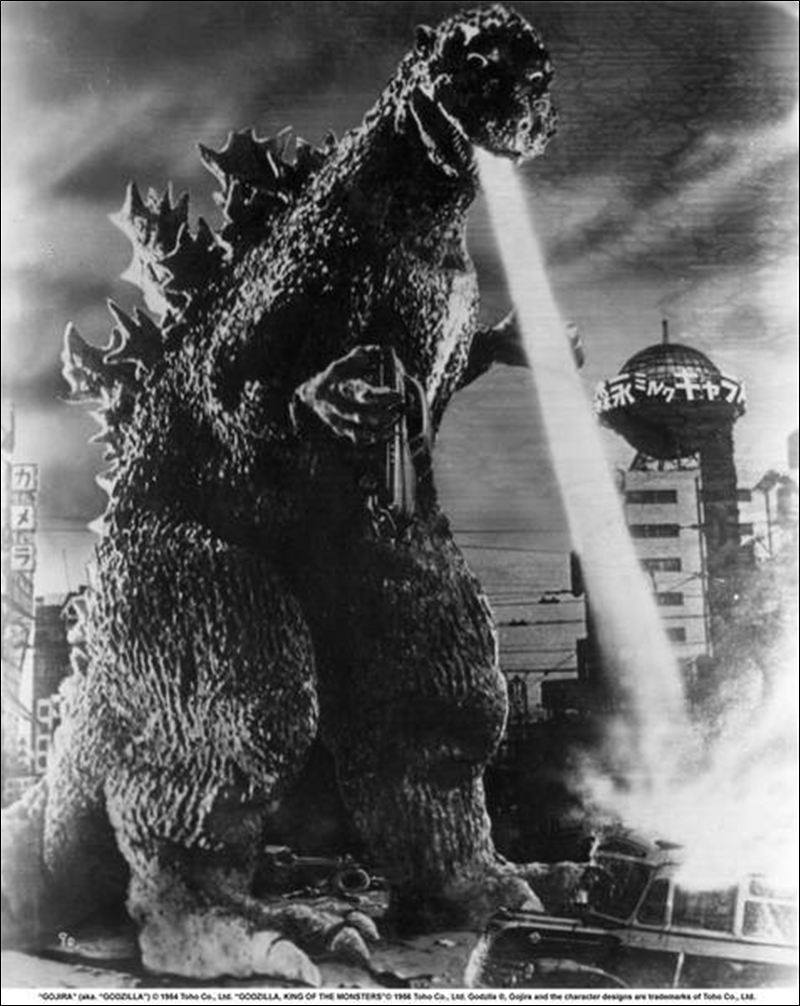
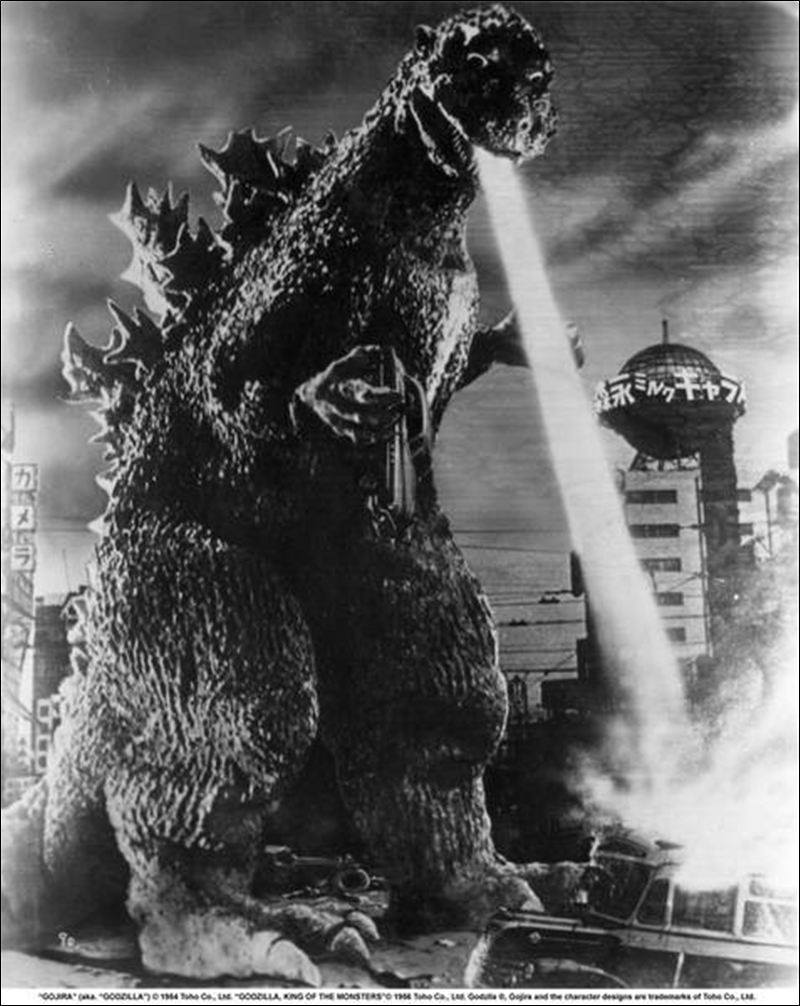
    This Sunday night on “The Lost Chord,” we’ll hear concert music by two Japanese composers – both close friends – who were best recognized internationally for their work in film. Akira Ifukube studied with Alexander Tcherepnin. Though his “Japanese Rhapsody” of 1935 won first prize in an international contest judged by Albert Roussel, Jacques Ibert, and Arthur Honegger, among others, financial considerations led him to write 250 film scores. Undoubtedly, he is best known for his music for Godzilla.

    Humiwo Hayasaka was Akira Kurosawa’s composer of choice, writing music for classic films such as “Rashomon” and “The Seven Samurai.” He wrote over 100 film scores in all, before his early death from tuberculosis at the age of 41. Prominent Japanese composer Toru Takemitsu (who later scored Kurosawa’s “Dodes’kaden”) claimed Hayasaka as a formative influence. We’ll hear Hayasaka’s Piano Concerto, composed in 1948. The first movement is a massive elegy for the composer’s brother and all the dead of the Second World War; and the second, a contrasting movement of conspicuous playfulness.

    Incidentally, Ifukube was also responsible for creating Godzilla’s trademark roar, which was produced by running a resin-covered leather glove along the loosened strings of a double bass. He emulated Godzilla’s footsteps by striking an amplifier box. Hear his distinctive roar tonight, as part of “Godzilla vs. Kurosawa,” Sunday at 10:00 EDT, on WWFM – The Classical Network and wwfm.org.
  • Giant Monster Movie Music King Kong Godzilla

    Giant Monster Movie Music King Kong Godzilla

    Super size me!

    With King Kong back in theaters, in “Kong: Skull Island,” we’re thinking big this week, on “Picture Perfect,” with outsized thrills from movies featuring gargantuan creatures.

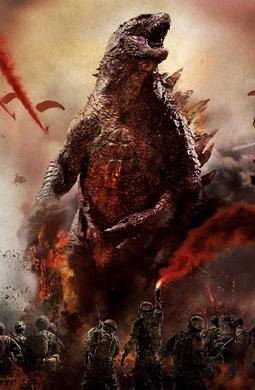
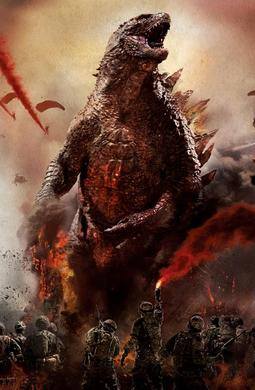
    We’ll begin with “Godzilla” (2014), the most recent incarnation of the pop-cultural icon, originally a metaphor for the destructive power of nuclear weapons, but now seemingly more of a jack-of-all-trades restorer of natural balance. Either way, it’s generally man’s overweening pride that brings on the destruction. The composer for this latest version was Alexandre Desplat.

    Then we’ll take a storm-swept hot air balloon to “Mysterious Island” (1961). Jules Verne’s novel becomes the framework for a series of battles between a band of castaways and giant creatures at an uncharted locale in the South Pacific. The great Ray Harryhausen provided the special effects – including giant bees, birds and crabs – and Bernard Herrmann underscored the outlandish situations to perfection.

    Henry Mancini gained world-fame for his breezy melodies for “Breakfast at Tiffany’s” and the “Pink Panther” films, but he got his start writing for B-movies of the 1950s. In “Tarantula” (1955), scientists conduct experiments on animals in order to develop a super food nutrient, as a preemptive strike against future overpopulation and world hunger. However, as the countryside becomes littered with cattle carcasses and pools of arachnid venom, clearly something has gone awry. Mancini collaborated on the score with 1950s science fiction maestro Herman Stein. Don’t go into it expecting “Moon River.”

    Finally, we’ll hear selections from literally the 800-pound gorilla of giant monster movies, “King Kong” (1933). Oscar Levant memorably described “Kong” as “a symphony accompanied by a movie.” The music was certainly a great part of the film’s initial – and enduring – success.

    Max Steiner’s concept and execution of the music for “Kong” was really the first of their kind. Thanks to “Kong” and other early efforts by Franz Waxman and Erich Wolfgang Korngold, a prototype of the Hollywood sound was formed, and the spectacular images onscreen, especially those characteristic of the fantasy and adventure genres, were expected to be accompanied by equally lavish and outlandish orchestras.

    No doubt, Hollywood would have figured it out eventually, yet it’s very gratifying to say, if it weren’t for “Kong,” there would be no “Ben-Hur,” there would be no “Star Wars,” there would be no “The Lord of the Rings.” At any rate, “Kong” got there first.

    I hope you’ll join me for these outsized musical adventures this week, on “Picture Perfect,” this Friday evening at 6:00 EST, on WWFM – The Classical Network and wwfm.org.

  • Giant Movie Monsters Music from Godzilla to Kong

    Giant Movie Monsters Music from Godzilla to Kong

    Super size me!

    We’re thinking big this week, on “Picture Perfect,” with outsized thrills from movies featuring gargantuan creatures.

    We’ll begin with “Godzilla” (2014), the most recent incarnation of the pop-cultural icon, originally a metaphor for the destructive power of nuclear weapons, but now seemingly more of a jack-of-all-trades restorer of natural balance. Either way, it’s generally man’s overweening pride that brings on the destruction. The composer for this latest version was Alexandre Desplat.

    Then we’ll take a storm-swept hot air balloon to “Mysterious Island” (1961). Jules Verne’s novel becomes the framework for a series of battles between a band of castaways and giant creatures at an uncharted locale in the South Pacific. The great Ray Harryhausen provided the special effects – including giant bees, birds and crabs – and Bernard Herrmann underscored the outlandish situations to perfection.

    Henry Mancini gained world-fame for his breezy melodies for “Breakfast at Tiffany’s” and the “Pink Panther” films, but he got his start writing for B-movies of the 1950s. In “Tarantula” (1955), scientists conduct experiments on animals in order to develop a super food nutrient, as a preemptive strike against future overpopulation and world hunger. However, as the countryside becomes littered with cattle carcasses and pools of arachnid venom, clearly something has gone awry. Mancini collaborated on the score with 1950s science fiction maestro Herman Stein. Don’t go into it expecting “Moon River.”

    Finally, we’ll hear selections from literally the 800-pound gorilla of giant monster movies, “King Kong” (1933). Oscar Levant memorably described “Kong” as “a symphony accompanied by a movie.” The music was certainly a great part of the film’s initial – and enduring – success.

    Max Steiner’s concept and execution of the music for “Kong” was really the first of their kind. Thanks to “Kong” and other early efforts by Franz Waxman and Erich Wolfgang Korngold, a prototype of the Hollywood sound was formed, and the spectacular images onscreen, especially those characteristic of the fantasy and adventure genres, were expected to be accompanied by equally lavish and outlandish orchestras.

    No doubt, Hollywood would have figured it out eventually, yet it’s very gratifying to say, if it weren’t for “Kong,” there would be no “Ben-Hur,” there would be no “Star Wars,” there would be no “The Lord of the Rings.” At any rate, “Kong” got there first.

    I hope you’ll join me for these outsized musical adventures this week, on “Picture Perfect,” tonight at 6 ET, with a repeat tomorrow morning at 6; or that you’ll listen to it later as a webcast at wwfm.org.

  • Godzilla Vegetarian? Morton Gould’s Dinosaur Music

    Godzilla Vegetarian? Morton Gould’s Dinosaur Music

    You mean to tell me Godzilla was a vegetarian?

    http://news.yahoo.com/blogs/sideshow/-world-s-biggest-dinosaur–discovered-in-argentina-203028038.html

    Which reminds me, were there two Morton Goulds? Gould was awarded the Pulitzer Prize in 1995 for his virtuosic “StringMusic.” I can only assume the awards committee was ignorant of the fact that, in 1993, he had composed a “hip-hop opera” titled “The Jogger and the Dinosaur.” Of course, Gould had never shied from incorporating popular music into his works, but it seems a bit of a stretch from rhumba to rap. Come to think of it, in 1956, he did compose the “Jekyll and Hyde Variations.” Sadly(?), there don’t appear to be any sound clips of “The Jogger and the Dinosaur” online.

    Instead, here’s “My Friend, the Brachiosaurus,” from John Williams’ score for “Jurassic Park.”

    https://www.youtube.com/watch?v=Nmx5TPoXPdI

  • Godzilla Music & Dinosaur Movie Soundtracks

    Godzilla Music & Dinosaur Movie Soundtracks

    Godzilla’s coming!

    Although I have a feeling we’re going be deprived of the out-of-sync dubbing and guy-in-a-rubber-suit-stomping-on-models that gave most of the earlier installments their charm, I am cautiously optimistic in that it looks as if at least they’ve tried to handle the latest incarnation with some integrity. We’ll see how overboard they go with the effects. But no superheroes or Transformers is a good sign. Also, it looks like they got some real actors. (R.I.P. Raymond Burr.)

    To mark the release of the new film, this week on “Picture Perfect,” the focus will be on music from dinosaur movies. I know, I know, Godzilla isn’t strictly speaking a dinosaur. How many dinosaurs have atomic breath? However, in researching the show, I did come across an amusing article in Smithsonian Magazine, in which paleontologists speculate what dinosaurs may have been a part of Godzilla’s DNA. Before his radioactive mutation that is. Here’s the link, if you’re interested:

    http://www.smithsonianmag.com/science-nature/what-kind-of-dinosaur-is-godzilla-45639768/?no-ist

    Curiously, the article was written in 2012, so as far as I can tell it’s not a piece of Hollywood merchandising, making it either an admirable display of scientific integrity or a slow day in the newsroom.

    We’ll hear music from the soundtrack for the new “Godzilla,” by Alexandre Desplat; also selections from “The Land Before Time,” by James Horner; “One Million Years B.C.,” by Mario Nascimbene; and “Jurassic Park,” by John Williams.

    I hope you’ll join me for Godzilla and friends, on “Picture Perfect,” this Friday evening at 6 ET. You can listen to it then, or later as a webcast, at http://www.wwfm.org.

    RRRRRRRRRRRAAAAAAAAAAAAGGGGGGHHHHHHHH!!!!!!!!!!

    PHOTOS: King of the Monsters; Queen of the Fur Bikini

Tag Cloud

Aaron Copland (92) Beethoven (95) Composer (114) Film Music (123) Film Score (143) Film Scores (255) Halloween (94) John Williams (187) KWAX (229) Leonard Bernstein (101) Marlboro Music Festival (125) Movie Music (138) Opera (202) Philadelphia Orchestra (89) Picture Perfect (174) Princeton Symphony Orchestra (106) Radio (87) Ralph Vaughan Williams (85) Ross Amico (244) Roy's Tie-Dye Sci-Fi Corner (290) The Classical Network (101) The Lost Chord (268) Vaughan Williams (103) WPRB (396) WWFM (881)

DON’T MISS A BEAT

Receive a weekly digest every Sunday at noon by signing up here


RECENT POSTS