This whole thing with “The Odyssey” is getting so surreal. Just when it seems we are living in the most anti-intellectual period of our country’s modern history (and we are), and that nobody reads anymore (according to one survey, 40 percent of Americans read fewer than four books last year), much less has any interest in the past (at our peril: history doesn’t repeat, but it often rhymes, and humans of every era have something to tell us about ourselves), suddenly Nolan mania strikes a flint that not only sparks the interest of legions of Americans to revisit Homer, or to read him for the first time, it also has them unearthing scholarly minutiae to share on social media and even looking into learning Greek!
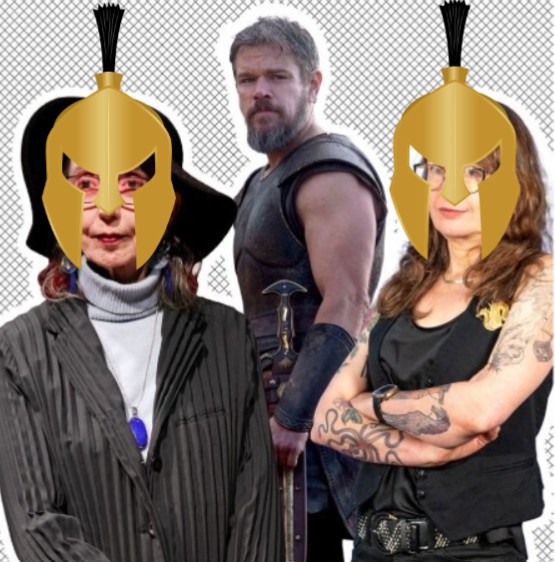
Earlier this week, a clash of the titans was brewing between “Odyssey” translator Emily Wilson (Philadelphia’s biggest celebrity scholar/rock star since Camille Paglia), who publicly trashed Nolan’s adaptation (while expressing gratitude, kind of, for the spike in sales of her books), and Princeton’s own Joyce Carol Oates, frequently shortlisted for the Pulitzer Prize for Literature. Oates took umbrage with Wilson’s unscholarly tone in her assessment of Nolan’s film in the London Review of Books, which Oates described as crude and uncollegial. While the puny fight their culture wars on social media, the gods clash on Olympus!
Of course, before the movie even came out, keyboard gladiators were spilling into the arena to have it out over what they perceived as the “woke” concepts and casting of this new version.
I have to say, I enjoyed the movie. I wish I could say I loved it, but they just don’t make movies in a style that I can really embrace anymore. However, it has stuck with me, and I derived further pleasure from thinking about it later, and how the director put his own spin on the story and developed his own themes. It’s not MY “Odyssey,” exactly, but it’s a consistent, thoughtful interpretation.
I do wish the Greeks had ransacked Poseidon’s temple (after all, Poseidon was the protector of Troy), as it would make sense that an angry god of the sea would contribute significantly to Odysseus’ difficulties on his journey home. But instead Nolan changes it to Athena, which makes no sense from a Homeric standpoint, as the goddess of wisdom is Odysseus’ biggest champion.
It does, however, support Nolan’s personalized, more contemporary vision. In the film, “Athena” signifies something more than what at first she seems. Still, I miss the goddess’ spirit and flashing eyes from the original telling. What can I say? I was forged during the last gasp of the Age of Heroism.
Be all that as it may, I am just elated that suddenly “The Odyssey” is so important to everyone, that everyone is so engaged (or so enraged) that people are ready to go to battle over it. That’s the kind of passion we need right now. The populous SHOULD feel strongly about the great works. Of course, they should also read them before making themselves sound like idiots by expressing uninformed opinions. It’s refreshing to see all this care, be it enthusiasm or rage, being lavished on a piece of literary art.
What’s next? An adaptation of the Hindu epic “The Ramayana” is headed for international release in November, complete with vertiginous CGI sequences and Hans Zimmer score. I wish it had employed less of both, but I might have to see it (even though, like “The Lord of the Rings,” I’ll probably hate it).
https://www.youtube.com/watch?v=1zip1rNaNYs&
Tag: Greek Mythology
-
“Odyssey” Mania is Real!
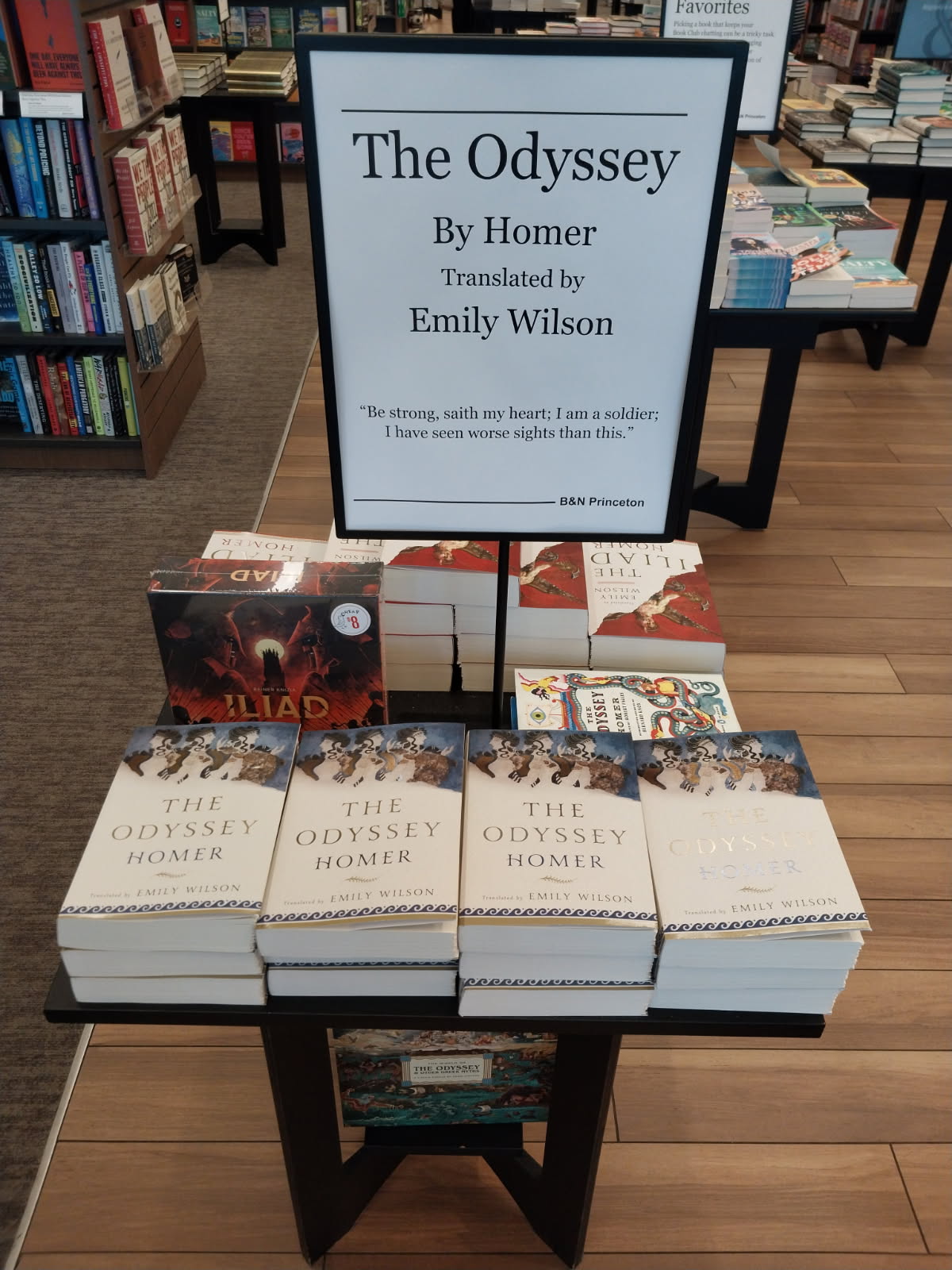
“Odyssey” mania is real! Here are some souvenirs from a trip to the Princeton Barnes & Noble last week. You’ll note a table devoted to Emily Wilson’s translations of “The Iliad” and “The Odyssey.” Someone snuck in a copy of the Robert Fagles’ version. He was, after all, born in Philly and served on the Princeton faculty.
Also, an endcap of other “Odyssey” translations from the B&N bargain bin and related mythological material.
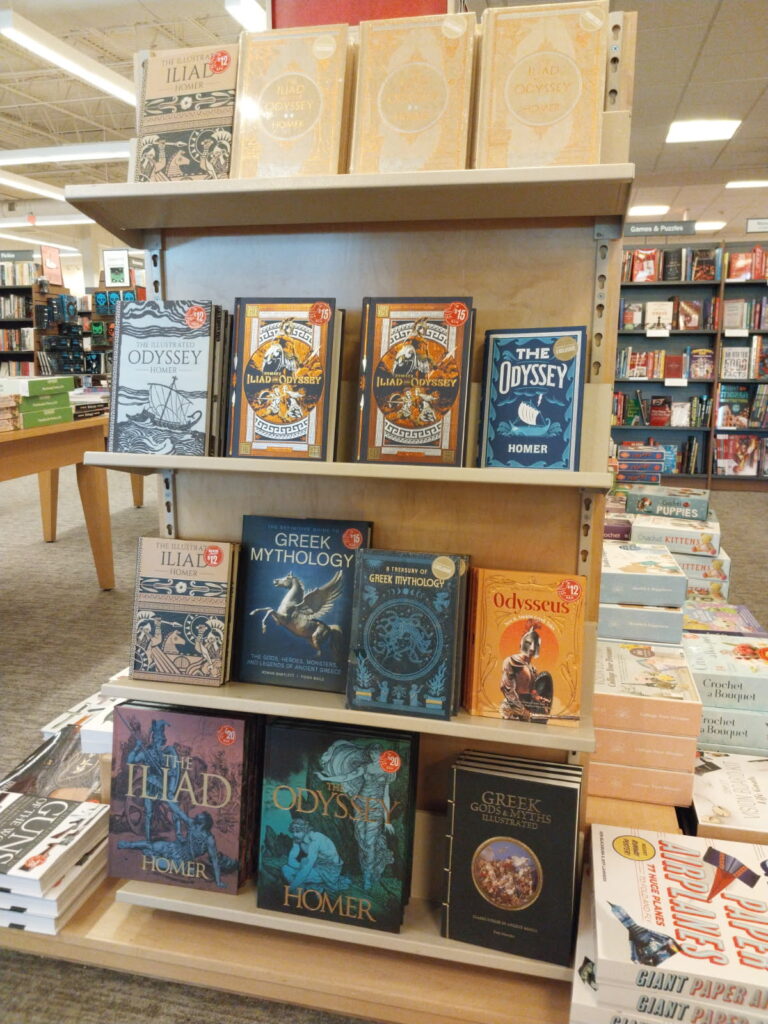
And finally, an impressive display of “Odyssey” books and bric-a-brac.
The other photo was taken yesterday at Princeton Public Library. I was amused to find this plug for Matt Damon survival movies in their collection. The internet is alive with debate about which are better, Matt Damon movies in which he is saved, or those in which he saves himself. The man has established quite the interesting subgenre. When we think John Wayne, we think westerns. When we think Errol Flynn, we think swashbucklers. When we think Matt Damon, we think SAVE HIM!
Last night, I revisited Kirk Douglas’ “Ulysses.” It really is ridiculously entertaining for a 1950s sword-and-sandal adaptation – from Italy, no less, with all the actors dubbed! There are few actors anymore who can fill the screen like Douglas and Anthony Quinn (as Antinous), the latter giving a very different interpretation, and on quite a different level, from Robert Pattinson (who, granted, is wholly believable in the new version as a scheming coward).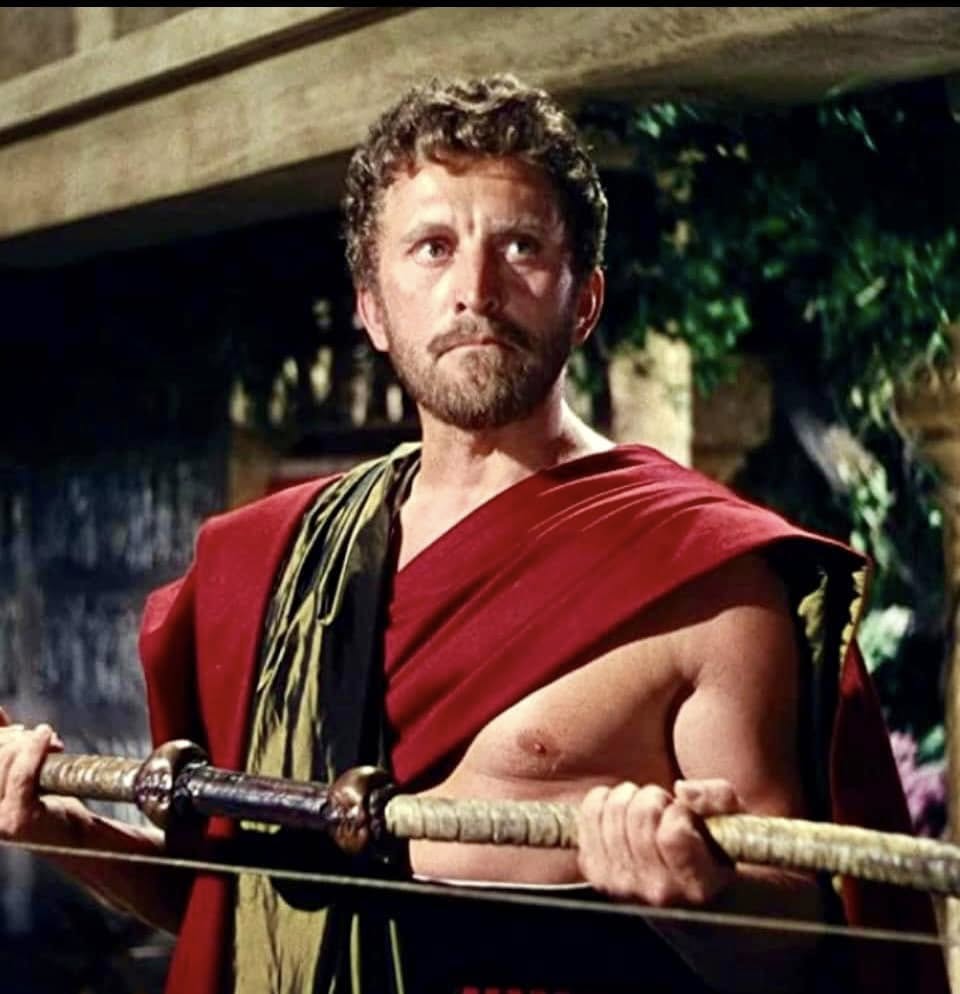
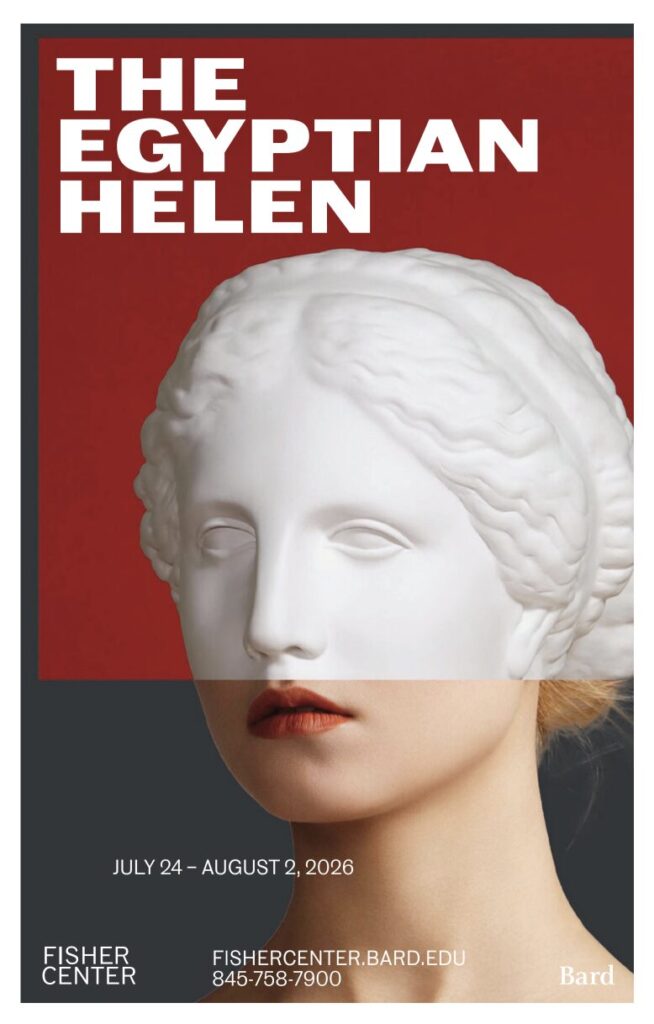
Off today to Bard College, in Annandale-on-Hudson, NY, to take in a performance of Richard Strauss’ opera “The Egyptian Helen” – about the troubled reconciliation of Helen of Troy and her husband, Menelaus, following the Trojan War. The opera runs through August 2, with a livestream on Friday, July 31, at 4 p.m. Often Bard archives these things online not long after the run, so watch for it, and check out some of their past performances. For more information, visit https://fishercenter.bard.edu/series/the-egyptian-helen/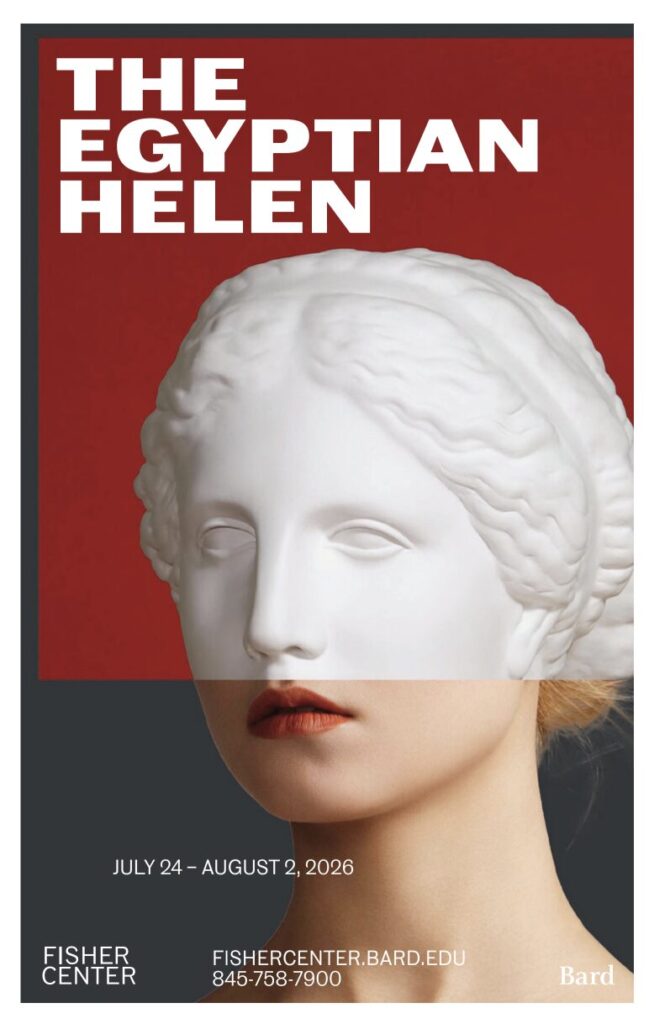
The Classics are everywhere these days, and I’m riding the wave all the way to Ithaca!
Past Bard operas and related material archived here:
https://www.youtube.com/playlist?list=PLfzbP01j_SLj4B4A46l-jLPjzWdSxt_wS -
Summer of Classical Myth from Bard Homer and Bard College
Say what you want about Christopher Nolan, he sure can open a movie. I was at Barnes & Noble yesterday, and there was a table devoted to “The Odyssey,” an “Odyssey” endcap, and a massive display of “Odyssey”-related gift items. Furthermore, people are actually reading the thing. What other director has that kind of sway?
Nolan repeats the feat of a few summers ago, when “Barbenheimer” was all the rage – moviegoers participating in incongruous, ironic, de facto double features of “Barbie” and Nolan’s “Oppenheimer.” Now, he’s triggered the Summer of Homer.
Wholly by coincidence – because, really, Classical mythology never really goes away – Richard Strauss’ rarely-heard opera “Die ägyptische Helena ” (“The Egyptian Helen”), about the troubled relationship of Helen of Troy and her husband Menelaus (whom she abandoned for Paris, precipitating the Trojan War), will be revived at Bard College this week.
The work was the fifth of six collaborations between Strauss and librettist Hugo von Hofmannsthal (that also yield “Elektra,” “Der Rosenkavalier,” “Ariadne auf Naxos,” “Die Frau ohne Schatten,” and “Arabella”), and Hofmannsthal’s personal favorite.
Their treatment, inspired not only by Homer, but also Euripides and Herodotus, humanizes and contemporizes these figures of Classical mythology, who struggle with timeless issues of memory, fidelity, and restoration of trust. But there are also oracles, elves, elixirs, and an Omniscient Seashell. The action and themes are colored or motivated by humor, jealousy, rage, philosophical musings, equanimity, warmth, and reconciliation.
The opera will be performed at the campus’ state-of-the-art, Frank Gehry-designed Fisher Center for the Performing Arts, July 24-August 2, as part of Bard SummerScape, the college’s annual festival of the arts, which will also encompass the Bard Music Festival, this year focusing on “Mozart and His World,” August 7-16.
A livestream of “The Egyptian Helen” will be offered on July 31 at 4 p.m. EDT.
Bard College is located in Annandale-on-Hudson, NY. For me, it’s about a 2 ½ hour drive – certainly a commitment, though I’d hardly call it an odyssey.
For tickets and information visit
https://fishercenter.bard.edu/what-we-do/summerscape/ -
Classical Weekend with Classic Ross Amico
With Christopher Nolan’s “The Odyssey” sailing into theaters today, interest in Classical mythology is renewed. I mean, I think it’s always been a fascination for school children, but thanks to that early inculcation, it remains with us for the rest of our lives – sometimes pushed to the backs of our brains, but who doesn’t remember with affection the Greek heroes, their imposing quests and impossible challenges, the fickle gods, the peculiar trysts, the triumphs and turns of fortune, and perhaps most of all, the grotesque monsters?
“The Odyssey” is an excuse for me to revisit these youthful enthusiasms, as I make Classical mythology the focus of all three of my radio shows this weekend (with air times and streaming information posted below).
First, today, on “Picture Perfect,” it’s a mythological mash-up of music from fantasy films, including selections from “Helen of Troy” (Max Steiner), “Clash of the Titans” (Laurence Rosenthal), “Hercules” (Pino Donaggio), and “Jason and the Argonauts” (Bernard Herrmann).
Then, tomorrow morning on “Sweetness and Light,” it’s an ambrosial assortment of pieces inspired by Orpheus and Eurydice, Daphnis and Chloe, Hercules, and a riot of nymphs, satyrs, and fauns, vividly evoked by Jacques Offenbach, Howard Hanson, Cécile Chaminade, George Frideric Handel, Camille Saint-Saëns, and Maurice Ravel.
Finally, indomitable Odysseus makes his belated return from the Trojan War to Ithaca on “The Lost Chord,” in works by Ernst Boehe (“Departure and Shipwreck” from the symphonic cycle “From Odysseus’ Voyages”) and Benjamin Britten (the radio play “The Rescue of Penelope,” narrated with gusto by Dame Janet Baker), on “Home Sweet Homer.”
So much for moderation. Join me for a triple helping of Classical classics. I’ll be stringing my bow and launching arrows down a gallery of axe-heads, in celebration of “The Odyssey,” on “Picture Perfect,” “Sweetness and Light,” and “The Lost Chord” – all three originating from KWAX Classical Oregon!
——–
Clip and save the start times of my recorded shows:
PICTURE PERFECT, the movie music show – Friday at 8:00 PM EST/5:00 PM PST
SWEETNESS AND LIGHT, the light music program – Saturday at 11:00 AM EST/8:00 AM PST
THE LOST CHORD, unusual and neglected rep – Saturday at 7:00 PM EST/4:00 PM PST
Stream them, wherever you are, at the link!
https://kwax.uoregon.edu/
——–
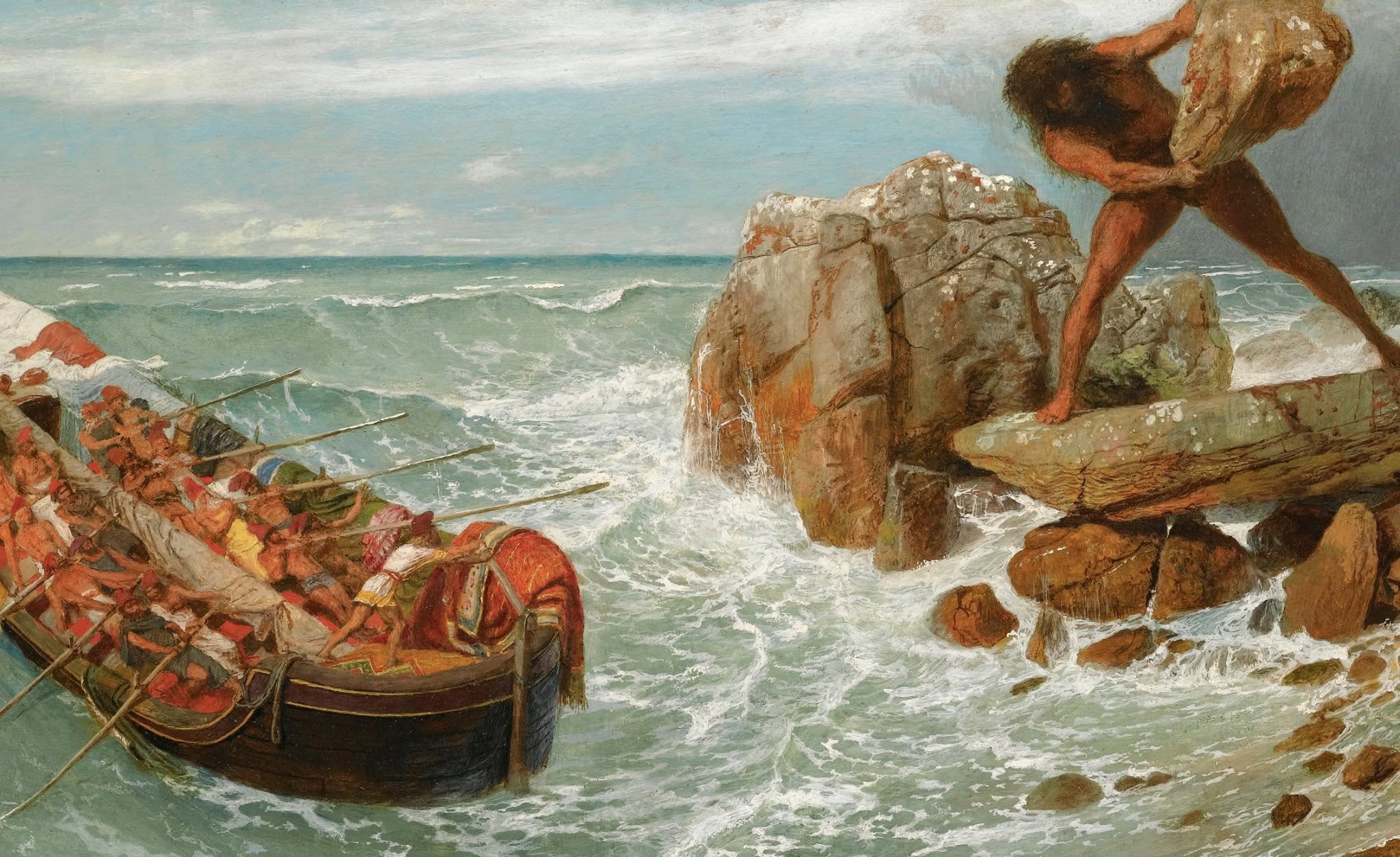
IMAGE: “Odysseus and Polyphemus” (1896) by Arnold Böcklin -
Greek Myths in Music Medusa Penelope & More
Medusa. Penelope. The Sirens. The Fates. Pandora.
This Sunday night on “The Lost Chord,” we’ll complete our set of mythological bookends that began with “Picture Perfect” on Friday evening – a mythological mash-up of film scores from movies based on classical myths – with a program devoted to two works inspired by familiar tales from Greek mythology.
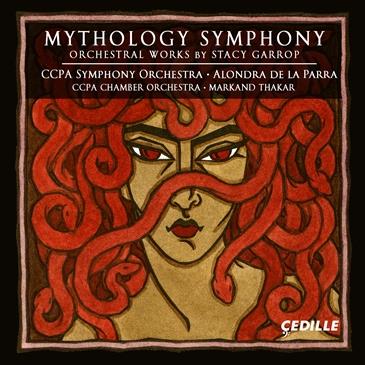
Female characters from the classical myths provide the inspiration for Stacy Garrop’s “Mythology Symphony.” The movements of Garrop’s symphony – really more of a collection of symphonic poems – were composed between 2007 and 2013, on separate commissions from the Detroit Symphony Orchestra (“Becoming Medusa”), the Albany Symphony Orchestra (“The Lovely Sirens” and “The Fates of Man”), and the Chicago College of the Performing Arts, Roosevelt University (“Penelope Waits” and “Pandora Undone”), where Garrop was associate professor of composition from 2000 to 2016.
Likewise, archetypes from Homer inform Princeton composer Sarah Kirkland Snider’s post-genre song cycle “Penelope.” Inspired by “The Odyssey,” Snider’s work originated as a music-theater monodrama, composed in 2007-08, on texts by playwright Ellen McLaughlin. A woman’s husband, a veteran of an unnamed war, returns home after 20 years. He suffers from brain damage and memory loss. The woman reads to him from Homer’s epic as together they journey through the healing process.
The cycle explores the subjects of memory, identity, and what it means to come home, alongside the terrors and traumas of war. Musically, “Penelope” straddles the worlds of chamber music and indie rock, with any demarcations between the two skillfully blurred and blended. We’ll hear selections from Snider’s song cycle to round out the hour.
Enduring myths of the ancient world are viewed from fresh perspectives this week, on “Myth Conceptions,” this Sunday night at 10:00 EDT, on WWFM – The Classical Network and wwfm.org.
Tag Cloud
Aaron Copland (94) Beethoven (95) Composer (114) Film Music (149) Film Score (143) Film Scores (255) Halloween (97) John Williams (197) KWAX (232) Leonard Bernstein (105) Marlboro Music Festival (125) Movie Music (164) Mozart (91) Opera (215) Philadelphia Orchestra (90) Picture Perfect (174) Princeton Symphony Orchestra (110) Radio (90) Ross Amico (244) Roy's Tie-Dye Sci-Fi Corner (290) The Classical Network (101) The Lost Chord (269) Vaughan Williams (107) WPRB (397) WWFM (881)