I’m sorry, I’ve been so busy lately, and if I don’t get started on these posts first thing in the morning, it’s very hard for me to write anything of consequence that reads well. Generally speaking, the earlier I write, the better. Best is when it’s so early, I can’t even think. Just sit down with a cup of coffee and let those fingers go.
But life is such that I can’t always do that. Which is why, for Gustav Mahler’s birthday, here I am at 11:00 a.m., sharing a video of Yoda, Gandalf, and Voldemort conducting the “Resurrection” Symphony. Hey, don’t let it be said that I don’t do my part to popularize the classics.
And it’s not like it’s that farfetched. Dismiss the concept, if you’d like, as puerile nonsense, but it would take wizards of this magnitude to translate the work’s emotional grandeur into images worthy of its transcendent power, even if the music itself is more seismic, uplifting, and transformative than anything that could possibly be expressed on a motion picture screen.
Let me know which of the three you think has the best technique, if you’re so inclined, and happy birthday, Gustav Mahler.
Tag: Gustav Mahler
-
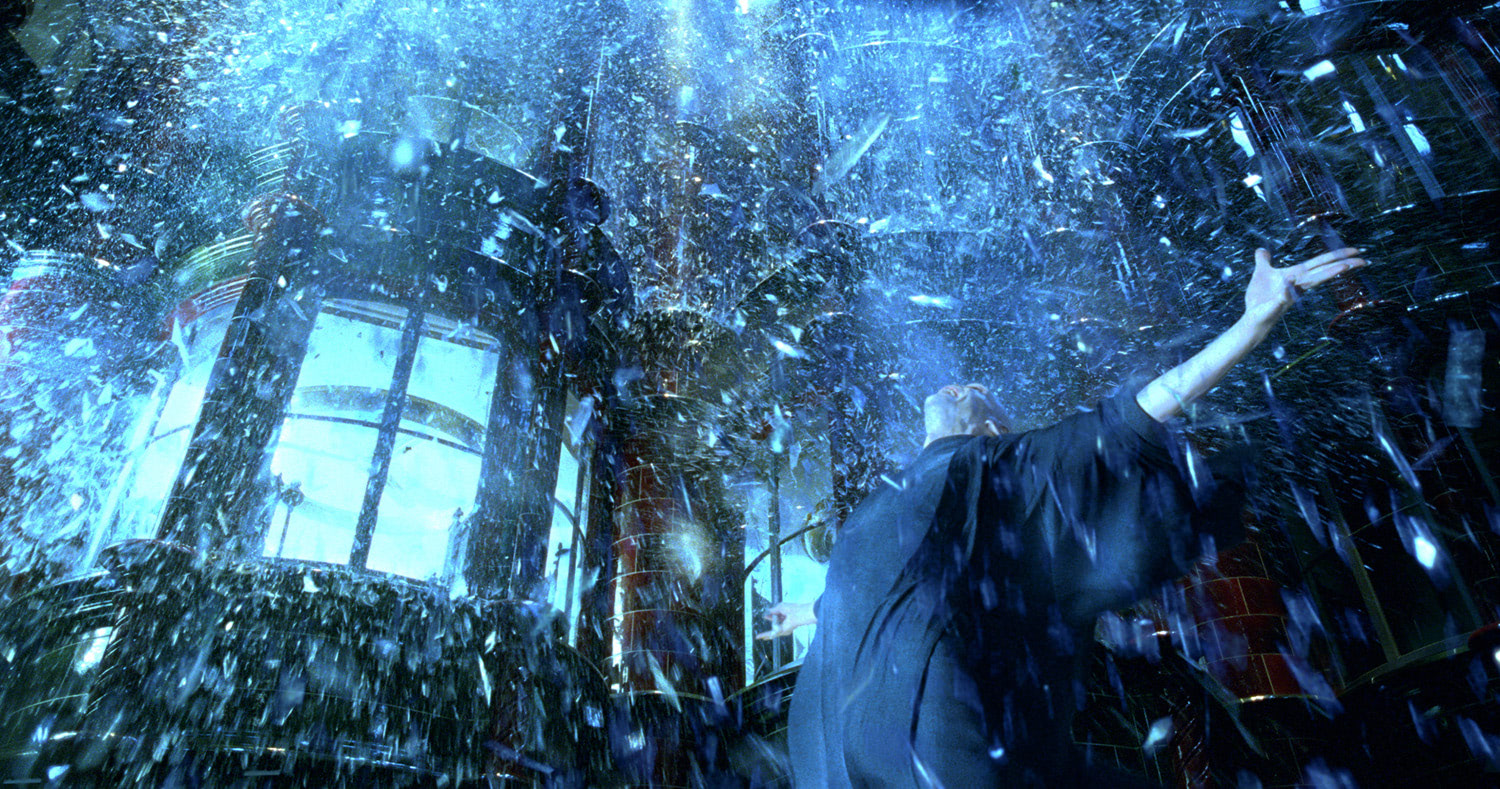
“Fantastic” Conductors Tackle Mahler’s “Resurrection”
-

Eight-Legged Approval for Mahler 8th
I was listening to a recording of Jascha Horenstein conducting Mahler’s Symphony No. 8 on Henry Fogel’s “Collectors’ Corner” last night on KWAX. Frequently identified as the “Symphony of a Thousand,” this is Mahler’s grandest statement, as if he took the choral finale of Beethoven’s Ninth Symphony, dialed it up to 11, and stretched it more or less to 90 minutes. It is hair-raisingly thrilling.
“Try to imagine the whole universe beginning to ring and resound,” Mahler wrote, in his characteristically overheated way. “There are no longer human voices, but planets and suns revolving.”
All the same, a man needs his sleep, and 11:00 (EDT) is already past my bedtime, especially if I want to do some reading. So I rose from my chair to turn out the lights and shut off my internet radio, when what did I notice on one of the speakers, but a spider with its legs splayed, unmistakably riding the grandiose waves of the music.
I couldn’t take that away from him. So I went back and sat down until the end of the first movement (about 25 minutes in duration).
I was reminded of Helen Keller, deaf and blind since she was a toddler, who experienced the thrill of Beethoven’s 9th purely through the vibrations of her radio speaker.
I waited until the end of the first movement to turn off the radio. I figured I’d allow the little guy his moment of ecstasy.
I’m not sure what I believe, exactly, but if I’m ever reincarnated, I hope someone will do as much for me.
Here’s a post I wrote about Keller in 2020.
https://rossamico.com/2020/12/31/beethovens-ninth-joy-freedom-2020/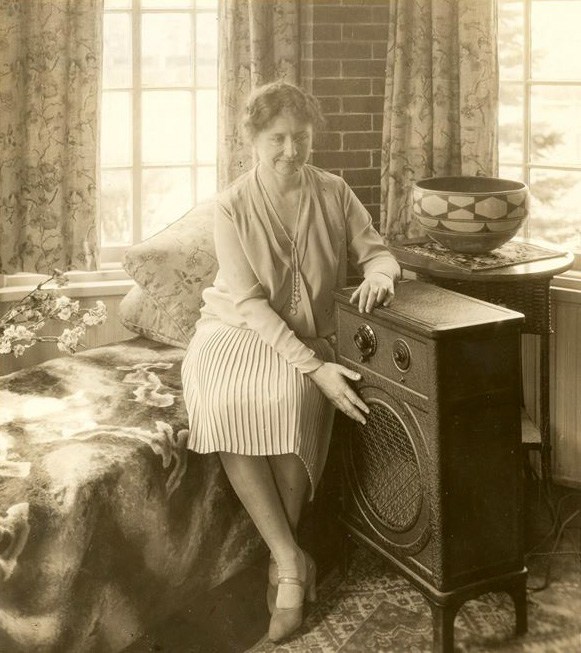
-

Mahler’s Overwhelming, Disorienting Masterpiece
I don’t care how jaded you are, there really is nothing like Mahler’s “Resurrection” Symphony. You can be sitting there, judging this, nitpicking that, and then all at once, the world vanishes, and it’s like you’re suspended in the middle of one of those enormous 19th century canvases. The awe inspired by chorus, organ, and orchestra in the work’s final moments is transformational and overwhelming.
I caught it yesterday afternoon with The Philadelphia Orchestra, since my weekend is jam-packed. Was it not my benchmark “Resurrection” Symphony? Who knows? Who cares? I’m just thankful to have heard it and that I was able to pull myself together enough to be able to drive home.
With soprano Ying Fang, mezzo-soprano Joyce DiDonato, music director Yannick Nézet-Séguin and the Philadelphia Symphonic Choir. Two more performances at the Kimmel Center for the Performing Arts this weekend, tonight at 8:00 and Sunday at 2:00. Build in time to emotionally center yourself afterwards.
Tickets and information at philorch.org -

Mahler Still Talks to Us Today
As Oscar Wilde memorably observed, “… There is only one thing in the world worse than being talked about, and that’s not being talked about.”
Gustav Mahler’s unprecedentedly ambitious – and loud – masterworks caused his contemporaries to sit up and take notice. Reactions ranged from exaltation to confusion to outright hostility, and not necessarily in that order. Of course Mahler got the last laugh. Despite the high cost of presenting his symphonies, they are now more prevalent on concert programs than ever before. And the halls are packed.
You haven’t really made it until you are widely caricatured. You’ll find more examples by following the link below. Some of the portraits are affectionate; some are mean-spirited. Either way, it’s clear that Mahler was being talked about.
Happy birthday, Gustav Mahler!
-

Charles Ives Avant-Garde Nostalgia
Charles Ives was the most nostalgic of avant-gardists. For the most part laboring at his music in isolation – in the evenings and on weekends, while earning his bread as an insurance executive – he managed to prognosticate, or at any rate, arrive independently, at some of the major developments of the 20th century. Some may perceive his grinding harmonies and clashing meters as a kind of temple of Moloch, on the altar of which beauty is sacrificed for effect. As Ives himself once remarked, “Are my ears on wrong?” But consider, the straw for his bricks was harvested from the music of the world around him, especially that recollected from his boyhood in Connecticut.
Ives could construct breathtaking musical edifices from the most diverse materials. Forget Moloch. Perhaps a better parallel would be the Tower of Babel. Only in Ives’ case, once the language becomes confused it actually seems to enliven his creative impulse. Consonance and dissonance are of no consequence to the composer. He listens past the cacophony to draw his energy from powerful associations. And he continued right on building, always grasping for the stars.
I find it fascinating that Gustav Mahler took an interest in Ives’ Symphony No. 3. Mahler discovered a copy of the score on his final visit to Manhattan as music director of the New York Philharmonic in 1911, and presumably it was still in his possession at the time of his death later that year. In the 1950s, an aged percussionist recollected playing the bell-part in a read-through of the work under Mahler’s baton in Munich. Did it happen? Mahler’s score has never come to light. Ives claimed Mahler took it with the intention of giving the work its premiere. Unfortunately, Mahler died (at 50) before he was able to do anything about it. It’s mind-bending to contemplate the one-time music director of the Vienna State Opera (and by extension the Vienna Philharmonic) performing Ives in 1911. When worlds collide!
But really, were the artists so very different? Mahler famously stated (to Sibelius), “The symphony must be like the world: it must embrace everything!” Mahler demonstrated this by filling his symphonies with fondly recollected folk material, rustic and courtly dances, children’s songs, hymns, and klezmer riffs. Ives leaned into hymns, patriotic marches, parlor songs, and quotations from the core classical repertoire he loved. Their music may have come out completely different, but both composers yearned to express, through these everyday human associations, universal truths that often reached beyond our terrestrial concerns.
Ives heard Mahler conduct in New York, but as he became more deeply involved in composition, he largely stopped going to concerts of other composers’ music. He found that it interfered with his recall of ideas in development, when he was still carrying them around inside his head. He said he could listen to Beethoven or Brahms, any of the music he grew up with, and it wouldn’t be an issue. But taking in new music could muddy his thoughts. Whether or not he ever heard any of Mahler’s symphonies, I do not know.
In the event, like most of Ives’ output, his Symphony No. 3 was not performed until years after it was written. Composed in 1908-10, it was finally given its premiere (in New York, under Lou Harrison) in 1946. The next year, it was awarded the Pulitzer Prize for Music. Ives passed along half the prize money to Harrison and commented gruffly, “Prizes are for boys, and I’m all grown up.”
Ives may come across as something of a tinkerer, and he often portrayed himself as such, but like the greatest modernists, he had mastered the basics of his craft. His studies with Horatio Parker at Yale gave him a sound foundation in the rules of composition. Just as Picasso or Schoenberg demonstrated that they had mastered traditional forms before blazing their own trails, Ives was capable of writing within convention. But he was always irrepressibly Ives. He was always chafing and often pushing, and you just know Professor Parker had his hands full.
Ives, the cranky Yankee, often got his back up against the musically complacent, whom he derided in his writings as “Rollo” – a named borrow from a popular children’s book character in the decades preceding the American Civil War.
He also played baseball for Yale. Whether on the field or in his study, throughout his career, he kept right on swinging for the fences.
Remembering Charles Ives, with admiration, on the 150th anniversary of his birth!
The Symphony No. 3, subtitled “The Camp Meeting,” is actually one of Ives’ most immediately accessible scores. The three movements: “Old Folks Gatherin’,” “Children’s Day,” and “Communion.”
For Ives at his cumulatively cacophonous best, try “The Fourth of July.” No composer understood as well the holiday from a boy’s perspective!
Tag Cloud
Aaron Copland (93) Beethoven (95) Composer (114) Film Music (144) Film Score (143) Film Scores (255) Halloween (94) John Williams (195) KWAX (229) Leonard Bernstein (104) Marlboro Music Festival (125) Movie Music (159) Mozart (90) Opera (212) Philadelphia Orchestra (89) Picture Perfect (174) Princeton Symphony Orchestra (109) Radio (88) Ross Amico (244) Roy's Tie-Dye Sci-Fi Corner (290) The Classical Network (101) The Lost Chord (269) Vaughan Williams (105) WPRB (397) WWFM (881)