Tag: Gustav Mahler

  • Otto Klemperer A Life of Genius and Madness

    Otto Klemperer A Life of Genius and Madness

    You were an associate, friend and disciple of Gustav Mahler. You championed new works by Schoenberg, Stravinsky, and Hindemith. You stood 6-foot-6 and wore a look of granitic intensity. You tolerated no coughing or sneezing from your audience. You suffered from severe cyclothymic bipolar disorder. You answered the door to your dressing room in your boxers and covered in lipstick. You were horsewhipped at the Hamburg Opera for stealing a man’s wife (the soprano Elisabeth Schumann). You underwent surgery to remove a brain tumor “the size of a small orange.” You were placed in an institution, only to escape. You took a severe spill, requiring you to conduct from a chair. You set yourself on fire and tried to douse the flames with spirits of camphor. You sired the actor who became Colonel Klink. When you weren’t offered the music directorship of the New York Philharmonic, you fired off a scathing rebuke, then moved to London where a new orchestra (the Philharmonia) was founded for you. You embarked on a glorious Indian Summer that spanned 20 years. Somehow, incredibly, you made it to the age of 88. In all, you lived a life worthy of one of the 20th century’s great conductors.

    Happy birthday, Otto Klemperer!


    Klemperer in Philadelphia: I love how, as soon as this video gets taken down, somebody else just puts it right back up.

    Live Bruckner from 1947, quite at variance with recordings of the elder Klemperer:

    Klemp conducting Beethoven’s 7th at 85:

    Good Klemperer documentary

    https://www.youtube.com/watch?v=Mqz-qUiCgbQ

    “Klemperer the Immoralist”

  • Mahler’s Nicknames Decoding the Symphonies

    Mahler’s Nicknames Decoding the Symphonies

    What’s in a name? For Gustav Mahler, a rose by any other name would not necessarily smell as sweet.

    Mahler was not overly fond of nicknames being applied to his symphonies. In the hopes of suppressing an early program he had leaked about the content of his Symphony No. 1, he withdrew the subtitle “Titan” after the work’s third performance. He may have once famously declared (while on a walk with Sibelius), “A symphony must be like the world. It must contain everything.” But, in common with Oscar Wilde’s Lord Henry, he must also have felt that “To define is to limit.”

    Mahler renounced the associations of “symphonic poem,” and although all of his symphonies are deeply personal and necessarily autobiographical, he wanted them to be heard foremost as music, music capable of being understood and enjoyed divorced from any extra-musical programs.

    Yet the subtitle “Titan” continues to dog the First. It is still encountered with frequency on concert posters, in program notes, on package designs, and over the radio. Admittedly, it is a cool nickname!

    There’s also the Symphony No. 8, handed down as the “Symphony of a Thousand” (dubbed so by a publicity-hungry impresario), the Symphony No. 2, “Resurrection,” after the Klopstock poem sung during the work’s finale, and the Symphony No. 6, commonly recognized as the “Tragic.”

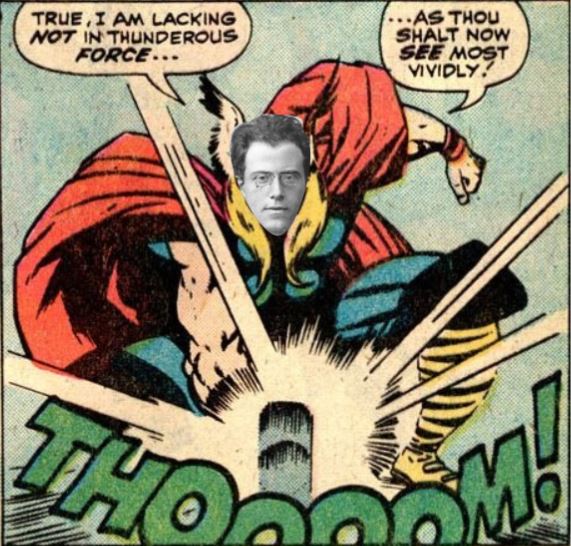
    The last movement of the Sixth notoriously contains three hammer blows. Mahler’s widow, Alma, conveyed that it was her husband’s intention that these signify three mighty blows of Fate against the work’s hero, “the third of which fells him like a tree.” These, she claimed, were tied to three tragedies in Mahler’s life: the death of their eldest daughter, Maria Anna, the diagnosis of Mahler’s heart condition (which would eventually kill him), and his forced resignation from the Vienna Opera. Inconveniently, all three of these things occurred after the work’s completion.

    When Mahler revised the symphony, he removed the last of the blows, perhaps out of superstition. What’s certain is that he was so shaken after the first performance that he omitted it from the score. Today, most performances restore the third blow.

    Any performance of the Symphony No. 6 builds tremendous anticipation in an audience, as, well into its 80-minute running time, a percussionist ponderously takes up a disproportionately large hammer, assumes a monumental position, and brings it down thunderously onto a block with not infrequently destructive force.

    Here are just a few examples:

    https://www.youtube.com/watch?v=UwljE3HsfSM&list=PLoubS-PL7KnLR4EONhdp0Ps68oTMekYS6&index=28

    https://www.youtube.com/watch?v=dXe0xbRXdZ4

    Hell, here’s the whole thing, with all three blows!

    https://www.youtube.com/watch?v=rypHeVr_X7c

    Happy birthday, Gustav Mahler. Tragedy tomorrow… comedy tonight!

  • Mahler Still Being Talked About

    Mahler Still Being Talked About

    As Oscar Wilde memorably observed, “… There is only one thing in the world worse than being talked about, and that’s not being talked about.”

    Gustav Mahler’s unprecedentedly ambitious – and loud – masterworks caused his contemporaries to sit up and take notice. Reactions ranged from exaltation to confusion to outright hostility, and not necessarily in that order. Of course Mahler got the last laugh. Despite the high cost of presenting his symphonies, they are now more prevalent on concert programs than ever before. And the halls are packed.

    You haven’t really made it until you are widely caricatured. You’ll find more examples by following the link below. Some of the portraits are affectionate; some are mean-spirited. Either way, it’s clear that Mahler was being talked about.

    Happy birthday, Gus!

    https://www.gustav-mahler.eu/index.php/private-life/3206-caricatures

  • Otto Klemperer A Mad Genius Remembered

    Otto Klemperer A Mad Genius Remembered

    You were an associate, friend and disciple of Gustav Mahler. You championed new works by Schoenberg, Stravinsky and Hindemith. You tolerated no coughing or sneezing from your audience. You suffered from severe cyclothymic bipolar disorder. You answered the door to your dressing room in your boxers and covered in lipstick. You underwent surgery to remove a brain tumor “the size of a small orange.” When placed in an institution, you escaped. You took a severe spill, requiring you to conduct from a chair. You set yourself on fire and tried to douse the flames with spirits of camphor. You sired Colonel Klink. Your career was capped by a glorious Indian Summer that spanned 20 years. You lived to the ripe old age of 88. In short, you had all the qualifications to be one of the 20th century’s greatest conductors.

    Happy birthday, Otto Klemperer (1885-1973).

    Join me for a celebration of Klemperer’s artistry (alongside works of Lou Harrison, Johan Peter Emilius Hartmann, and Zygmunt Stojowski), between 4 and 7 p.m. EDT, on WWFM – The Classical Network and wwfm.org.


    PHOTO: Otto the Indestructible

  • Hans Rott: Mahler’s Lost Symphony Pioneer

    Hans Rott: Mahler’s Lost Symphony Pioneer

    He was a brilliant improviser on the organ, Anton Bruckner’s favorite student. Gustav Mahler, his roommate, declared him “the founder of a new symphony.”

    It must have seemed very new at the time. When he submitted the first movement to a composition contest, the jury (with the exception of Bruckner) was beyond dismissive, even condescending, in its remarks. When he showed Johannes Brahms the manuscript, Brahms told him he had no talent and that he should give up composing.

    Hans Rott (1858-1884) lacked Mahler’s resolve, and his productivity was further hampered by encroaching mental illness. In 1880, while traveling, Rott pulled a revolver on a fellow passenger, convinced that Brahms had filled his train with dynamite. He was diagnosed with hallucinatory insanity and persecution mania. He died in an asylum, of tuberculosis, at the age of 25.

    Had fate dealt him a different hand, it’s entirely possible Rott would have developed into a composer as well-known as his contemporaries. It’s obvious from his only symphony, which dates from the final year of his studies, 1878, that Mahler was greatly influenced by his classmate. In fact, it’s startling to find so many “Mahlerian” characteristics already in evidence in this work that predated Mahler’s 1st.

    Hear it this afternoon, on Hans Rott’s birthday. Rott’s symphony will be among my featured works, from noon to 4 p.m. EDT. We’ll also observe the anniversary of the births of composers Benedetto Marcello and Jerome Moross, and conductor William Steinberg, on WWFM – The Classical Network and wwfm.org.


    PHOTOS: Future master of the fin-de-siècle symphony, Gustav Mahler (left), and his roommate, who showed him the way

Tag Cloud

Aaron Copland (92) Beethoven (95) Composer (114) Film Music (120) Film Score (143) Film Scores (255) Halloween (94) John Williams (185) KWAX (229) Leonard Bernstein (100) Marlboro Music Festival (125) Movie Music (135) Opera (198) Philadelphia Orchestra (88) Picture Perfect (174) Princeton Symphony Orchestra (106) Radio (87) Ralph Vaughan Williams (85) Ross Amico (244) Roy's Tie-Dye Sci-Fi Corner (290) The Classical Network (101) The Lost Chord (268) Vaughan Williams (103) WPRB (396) WWFM (881)

DON’T MISS A BEAT

Receive a weekly digest every Sunday at noon by signing up here


RECENT POSTS