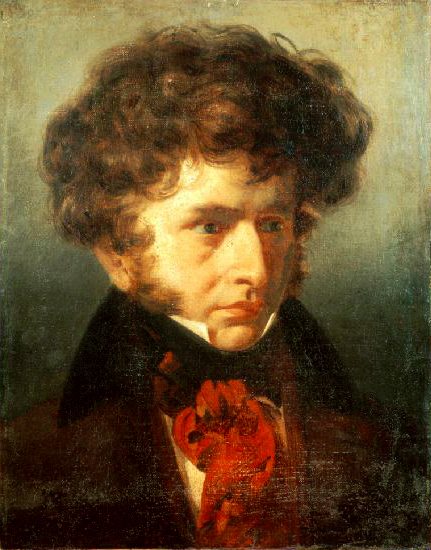
Tag: Hector Berlioz

  • The Odyssey on the Radio Classical Music Adventure

    The Odyssey on the Radio Classical Music Adventure

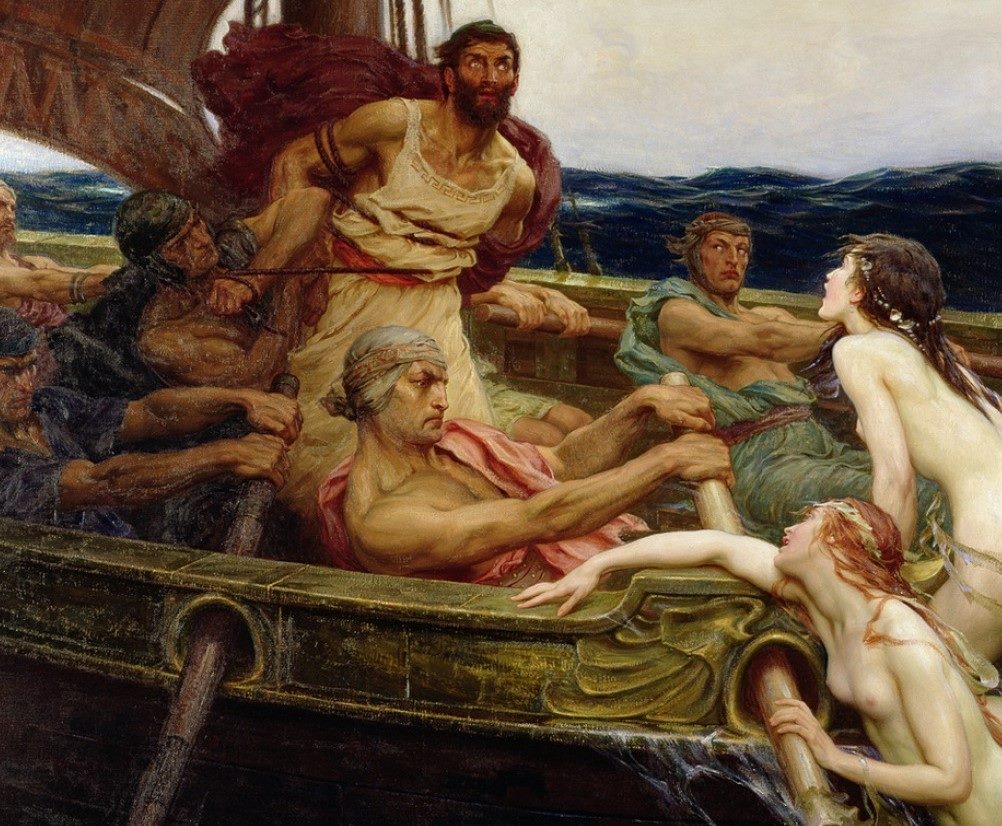
    There are times when curiosity drives us to have our crew lash us to the mast and then stuff their ears with wax. Tomorrow morning on WPRB may very well be one of those, as we follow in the steps of Odysseus, both at the Trojan War and on his long journey back to Ithaca.

    We’ll have music inspired by Circe, the Cyclops, the Golden Apple, Helen of Troy, the Lotus Eaters, the Sirens, Ulysses’ bow, and the rescue of Penelope, from composers such as Hector Berlioz, Ernst Boehe, Benjamin Britten, Max Bruch, Gabriel Fauré, John Harbison, and Jerome Moross.

    I’ll be tied up from 6 to 11 EDT, on WPRB 103.3 FM and at wprb.com. We’ll find the odd in “The Odyssey” (and “The Iliad,” for that matter), on Classic Ross Amico.

  • Bastille Day Music on WPRB: Eiffel Tower & Revolutions

    Bastille Day Music on WPRB: Eiffel Tower & Revolutions

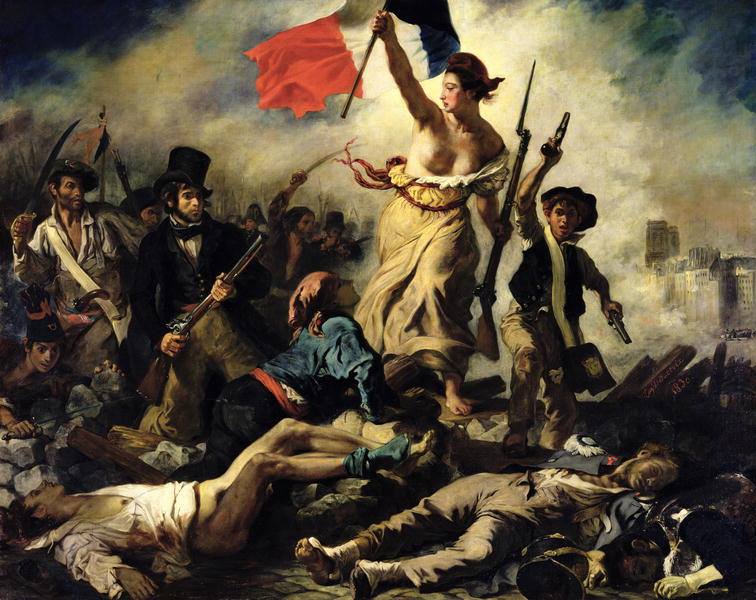
    Nobody knew how to revolt like the French. French history reads like a wine list of revolution, from 1789 forward. With that in mind, we’re celebrating Bastille Day today on WPRB.

    Few symbols of French pride are more widely recognized than the Eiffel Tower. Yet to come this morning, we’ll hear the collaborative ballet, “Les mariés de la tour Eiffel” (“The Wedding Party on the Eiffel Tower”), by members of Les Six – Georges Auric, Arthur Honegger, Darius Milhaud, Francis Poulenc and Germaine Tailleferre (only Louis Durey opted out) – a surreal romp conceived by Jean Cocteau. The action takes place on a deck of the tower on Bastille Day, July 14.

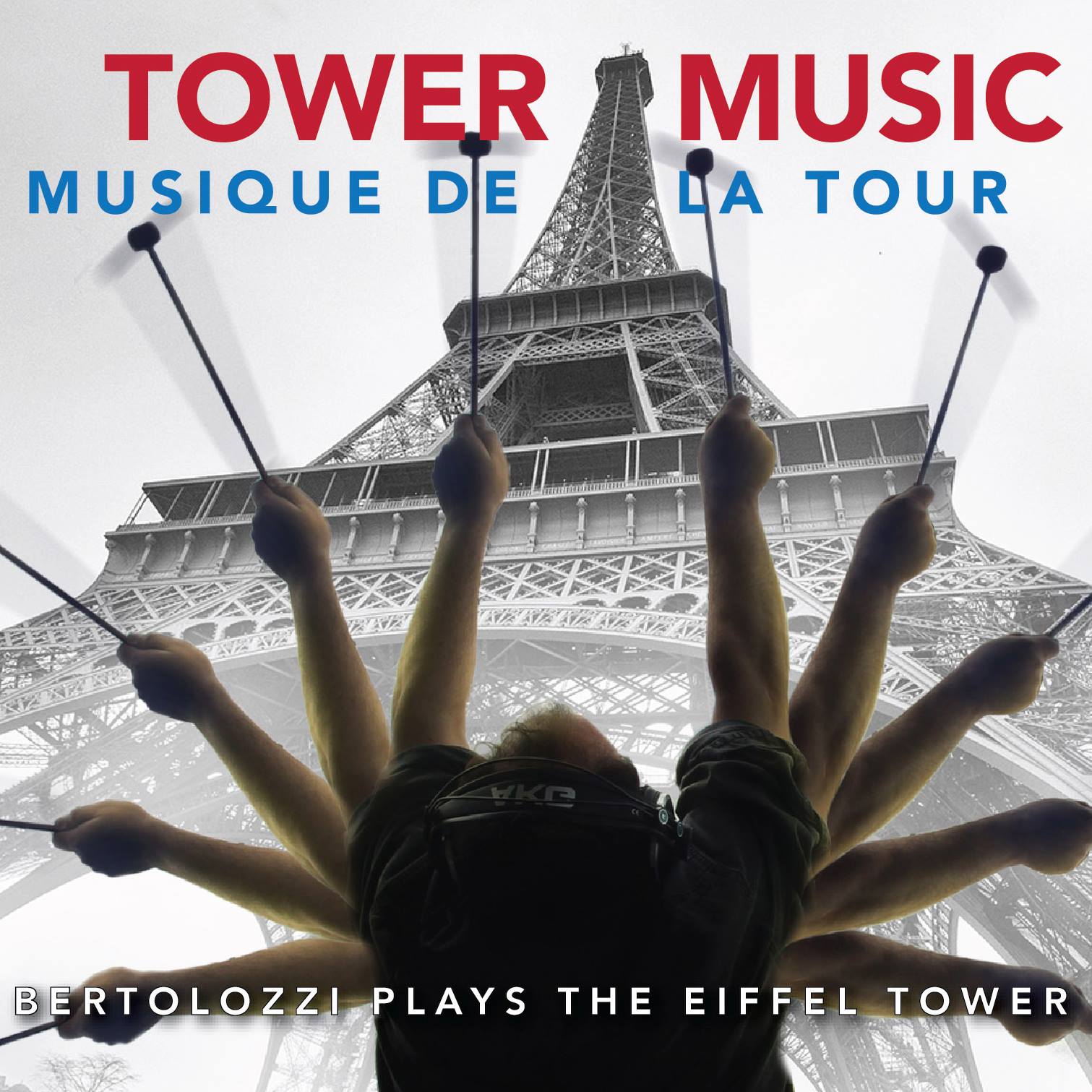
    We’ll also hear selections from the album “Tower Music,” a recent release on the Innova Recordings label, on which mad visionary Joseph Bertolozzi plays the actual Tour Eiffel like a giant percussion instrument. Bertolozzi will present a multi-media concert, Joseph Bertolozzi’s Bridge & Tower Music (he’s also played the Mid-Hudson Bridge), tonight at 7:00 at Live at The Falcon in Marlboro, NY.

    Right now, we’re listening to Franz Liszt’s “Héroïde funèbre,” his memorial to the fallen heroes of the July Revolution of 1830. We’ll also have an opportunity to hear Hector Berlioz’s “Symphonie funèbre et triomphale,” which was written to accompany the dead as their remains were transferred to a newly erected monument in the Place de la Bastille.

    I’ll be asking you to pardon my French until 11 EDT on WPRB 103.3 FM and at wprb.com. What’s creepier than a crêpe? Why, Classic Ross Amico, of course.

  • French Revolutions in Music

    French Revolutions in Music

    How many revolutions has France had, anyway? 1789, of course; then 1830; the “Les Miserables” revolution of 1832; another big one in 1848; a failed one in 1871… You might say, all throughout the 19th century, the French were a rather revolting people.

    This morning on WPRB, we’ll hear musical responses to revolutionary France, including many by native composers, including Darius Milhaud’s martial Symphony No. 4, written to mark the centenary of the February Revolution of 1848.

    We’ll also have Hector Berlioz’s “Symphonie funèbre et triomphale,” composed to honor those who died during the July Revolution of 1830. Of course, that was the heyday of the gunslinger-pianist, and Paris was teeming with foreign keyboard artists like Frederic Chopin and Franz Liszt. The conflict of 1830 inspired Liszt to write a symphonic poem, “Héroïde funèbre.”

    But Bastille Day is really all about 1789, so we’ll also include music by Luigi Cherubini and Étienne Nicolas Méhul, both important figures during what is commonly known as THE French Revolution.

    Otherwise, there will be abundant apolitical celebrations of France in general and Paris in particular, including the surrealist ballet “Les mariés de la tour Eiffel” (“The Wedding Party on the Eiffel Tower”), a collaborative work by members of Les Six, and plenty of musical joie de vivre courtesy of composers like Jacques Ibert and Jean Françaix.

    We’ll slather everything with French dressing this morning, from 6 to 11 EDT, on WPRB 103.3 FM and at wprb.com. Je suis le grand fromage, on Classic Ross Amico.

  • Shakespeare Radio April Broadcasts

    Shakespeare Radio April Broadcasts

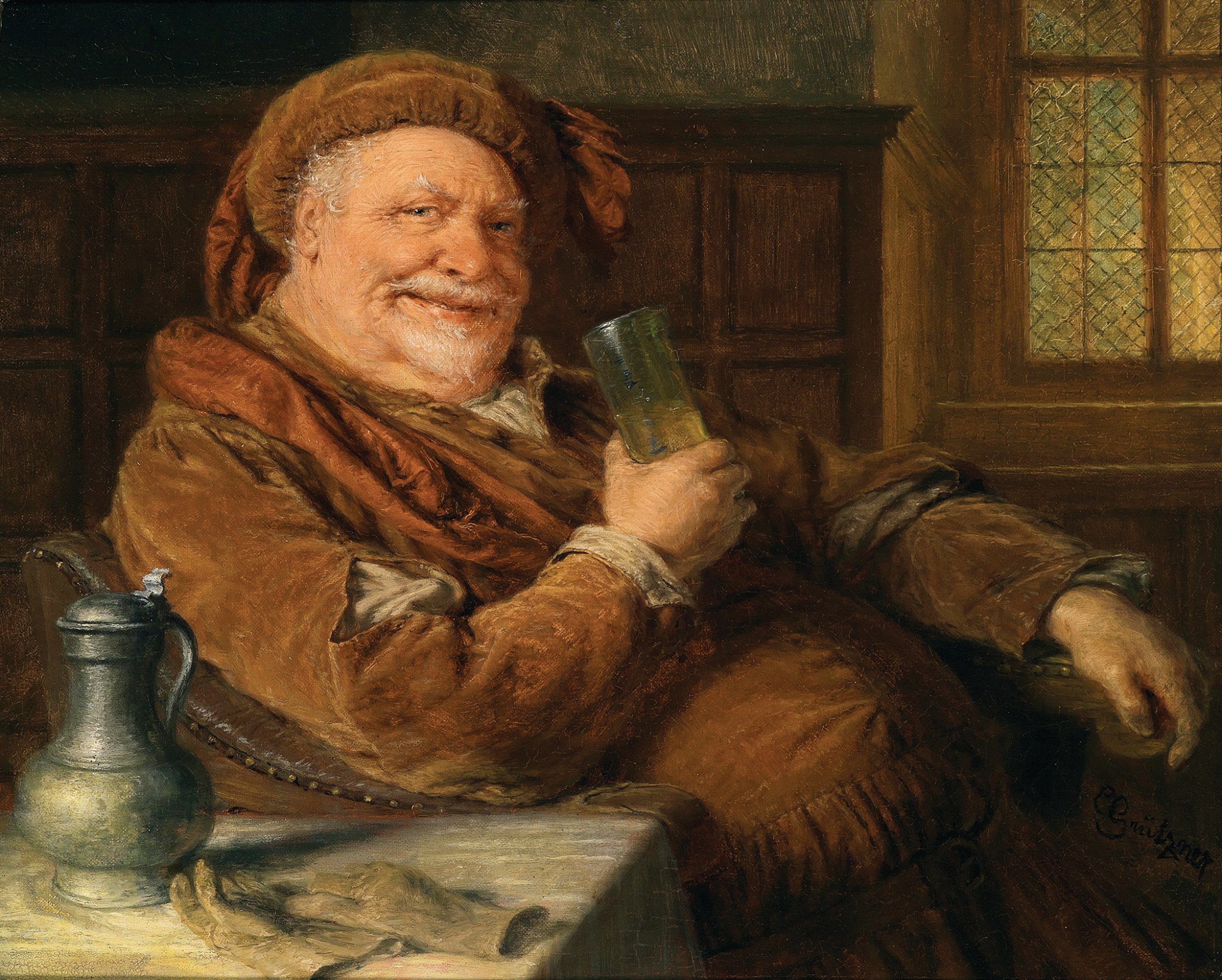
    Get ready to hoist a glass with Sir John. Coming up at around 8:30, it’s Edward Elgar’s symphonic study “Falstaff.”

    Then at 9:00, we’ll be joined by William Hobbs, music director of Westminster Opera Theatre, and Trent Blanton, stage director for Westminster’s production of Verdi’s “Falstaff,” which will be performed at the Robert L. Annis Playhouse on the campus of Westminster Choir College in Princeton this Friday and Saturday at 7:30 p.m.

    Later, it’s on to the dramatic symphony “Romeo and Juliet,” by Hector Berlioz.

    It’s all music inspired by Shakespeare every Thursday morning in April, as we remember the Bard on the 400th anniversary of his death (on April 23, 1616), on WPRB 103.3 FM and at wprb.com.

  • Liszt Saves Beethoven’s Monument

    Liszt Saves Beethoven’s Monument

    On this date in 1841, not for the first or last time, Franz Liszt came to the rescue. Liszt performed Beethoven’s “Emperor” Concerto in Paris, with Hector Berlioz conducting. The occasion was a fundraising project for a Beethoven monument to be erected in Bonn. Up to that time, it was not the custom to raise statues to cultural icons. Schiller finally got his only a few years earlier.

    Then as now, virtually every musician revered Beethoven. Even so, some were reluctant to put forth the effort to make the monument a reality. Those who did were met with a tepid response.

    Enter Liszt. When the project was in danger of floundering through lack of financial support, he personally donated over 10,000 francs. Until then, the total amount collected in France was barely 425 francs! More significantly, he returned from his early retirement from performing to put Europe on its collective ear with a series of concerts and recitals. Among these were a pair of duo piano programs with Frédéric Chopin.

    Ca-Ching!

    The monument would finally be unveiled on August 12, 1845, in honor of the 75th anniversary of the composer’s birth. Beethoven died in 1827, at the age of 56. On top of everything else, Liszt wrote a special work for the occasion, the “Festival Cantata for the Inauguration of the Beethoven Monument in Bonn.” The title pretty much says it all.

    Robert Schumann, who had something of a cagey relationship with Liszt, actually dedicated his “Fantasie in C” to the cause AND to the pianist. Felix Mendelssohn contributed his “Variations sérieuses.”

    The unveiling of the monument was to be the high point of a three-day Beethoven Festival. A month before the event, the planning committee realized that there was not a suitable venue in all of Bonn that would accommodate 3000 attendees. At Liszt’s urging, an architect was engaged and a new hall was built, Liszt picking up the tab himself. By the time construction began, it was less than two weeks before the festival, and builders had to work around the clock in order to complete the structure in time.

    The unveiling took place in the morning, with Liszt again performing the “Emperor” concerto in the afternoon. He followed that up by conducting Beethoven’s Fifth Symphony. The next day, his “Festive Cantata” was featured as part of a four-hour concert.

    You would think, after all he had poured into the occasion, the Bonn authorities would have kissed his feet. However, Lola Montez crashed a reception at the Hotel Der Stern, danced on a table, and insisted that she was Liszt’s personal guest. This embarrassed Liszt and created a bit of a scandal, so that the man who did the most to make both the Beethoven monument and festival realities was not invited back for the centenary celebrations.

    This kind of thing happened to Liszt all the time. Is it any wonder that, also on this date, in 1865, Liszt took the cloth, Pope Pius IX conferring upon him the title of “Abbé?”

Tag Cloud

Aaron Copland (92) Beethoven (95) Composer (114) Film Music (119) Film Score (143) Film Scores (255) Halloween (94) John Williams (185) KWAX (229) Leonard Bernstein (99) Marlboro Music Festival (125) Movie Music (134) Opera (198) Philadelphia Orchestra (86) Picture Perfect (174) Princeton Symphony Orchestra (106) Radio (87) Ralph Vaughan Williams (85) Ross Amico (244) Roy's Tie-Dye Sci-Fi Corner (290) The Classical Network (101) The Lost Chord (268) Vaughan Williams (102) WPRB (396) WWFM (881)

DON’T MISS A BEAT

Receive a weekly digest every Sunday at noon by signing up here


RECENT POSTS