Tag: Heitor Villa-Lobos

  • Rio Olympics 2016 Classical Music Warm-up

    Rio Olympics 2016 Classical Music Warm-up

    Tonight marks the opening ceremony of the 2016 Summer Olympic Games in Rio de Janeiro. I hope you’ll join me on WWFM – The Classical Network for a three-hour musical warm-up.

    We’ll savor performances by legendary Brazilian musicians such as Bidu Sayão, Guiomar Novaes, and Laurindo Almeida, music by Brazilian composers such as Camargo Guarnieri and Heitor Villa-Lobos, a few works inspired by Brazil, plenty of traditional Brazilian music, and of course an assortment of Olympic fanfares and occasional pieces written for past games.

    Listen in your sneakers and sweats. Tune in from 4 to 7 p.m. EDT, at 89.1 FM or online at wwfm.org.

  • Bard Salutes Mexican Composer Carlos Chávez

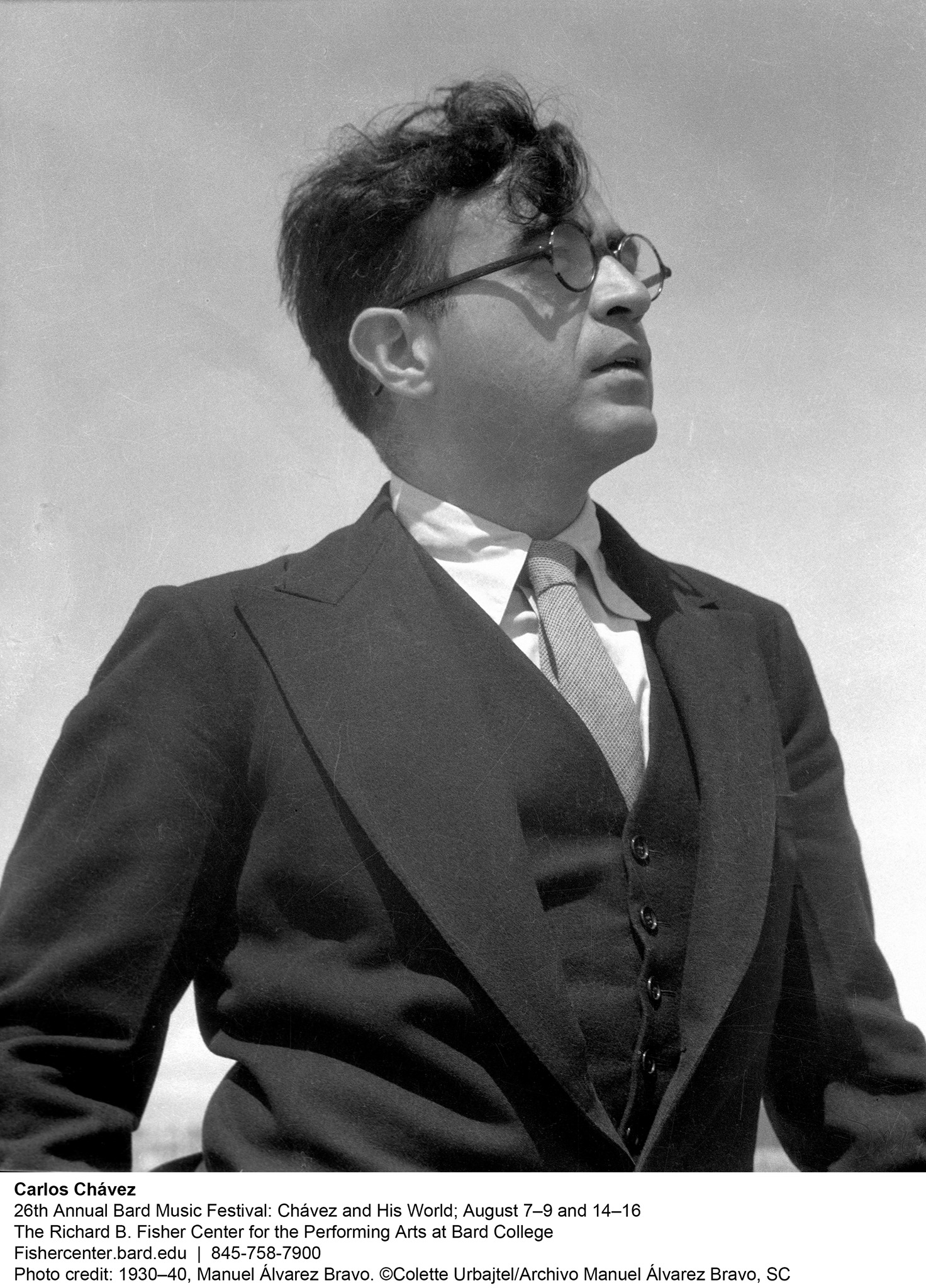
    Bard Salutes Mexican Composer Carlos Chávez

    In a development that promises to be as enlightening as it is mildly disorienting, a drive north this weekend will lead you “south of the border.”

    Carlos Chávez (1899-1978), regarded by many as Mexico’s foremost composer and conductor, will be the focus of this year’s Bard Music Festival, which begins today at Bard College in Annandale-on-Hudson, NY.

    For the next two weeks, Bard will bring together crackerjack artists (an impressive number of them on the Bard Conservatory faculty), leading musicologists, and appreciative audiences to celebrate music of the Americas, with an unusual focus on underplayed music of Mexico and South America.

    Among the featured performers will be Princeton University’s ensemble-in-residence, So Percussion, which will appear on a concert of music by Chávez, John Cage, Lou Harrison, Henry Cowell, Amadeo Roldán, and Colin McPhee, on August 14.

    Chávez is a fascinating figure, whose influence cannot be underestimated. His own works are divided between nationalistic utterances, pitched to the people, and more cosmopolitan, modernist experiments. His most famous bit of populism is his Symphony No. 2, the “Sinfonia India,” based on melodies by indigenous tribes of northern Mexico. The piece will be heard at Bard on August 15, alongside works by Latin American powerhouses Heitor Villa-Lobos, Silvestre Revueltas, and José Pablo Moncayo.

    In 1937, Chávez conducted the world premiere of Aaron Copland’s “El Salón México,” which essentially launched Copland into the mainstream.

    As always with the Bard festival, a tie-in book of scholarly essays, “Carlos Chávez and His World,” is being issued by Princeton University Press.

    Read more about this amazing, total immersion in the composer’s life and work in my article in today’s Trenton Times.

    http://www.nj.com/times-entertainment/index.ssf/2015/08/bard_music_festival_focuses_on.html

  • Macbeth & Emperor Jones: Power and Corruption

    Macbeth & Emperor Jones: Power and Corruption

    This week on “The Lost Chord,” I indulge my inner English major with a program inspired by two plays that explore the relationship of power and corruption – Shakespeare’s “Macbeth” and Eugene O’Neill’s “The Emperor Jones.”

    The impulse grew out of my recollection of the rarely-heard ballet by Heitor Villa-Lobos, which originally aired on television in 1957. However, since the score was never published, it was believed lost for decades until rediscovered by the conductor Jan Wagner (who is Venezuelan, despite his Teutonic name). Wagner will conduct the Odense Symphony Orchestra, a Nordic band, in a surprisingly idiomatic performance.

    Also on the program will be a half-remembered relic of American musical history, an aria from Louis Gruenberg’s opera, “The Emperor Jones,” sung by baritone Lawrence Tibbett, recorded in 1933. (By the purest coincidence, tomorrow also happens to be Gruenberg’s birthday.)

    “The Emperor Jones,” written in 1920, could be a potentially sensitive subject in a more politically correct era. No doubt about it, O’Neill’s tragedy is a product of its time, with plenty of minstrel show dialect, and the uncomfortable use of the N-word.

    Already in 1924, Sidney Gilpin, the actor who created Brutus Jones, hedged at playing the character in its first revival, unless O’Neill first changed what he perceived as some of the more offensive passages. O’Neill stood his ground, and Gilpin’s replacement, Paul Robeson, went on to international stardom.

    It’s easy to write-off “The Emperor Jones” as an embarrassing relic. Yet there have been some high-profile stagings over the past few years which demonstrate that the play still has much to tell us.

    Jones is a former railroad porter and convict, who kills a guard in his escape from prison, and through bluff and bravado establishes himself as emperor of a Caribbean island. He maintains his power through cruelty and exploitation. However, he overplays his hand, and the situation quickly erodes. As his subjects rise up against him, Jones retreats into the jungle and descends into primal fear, haunted by images of his victims.

    The play not only parallels some of the themes of “Macbeth,” it also demonstrates the fragility of human reason; how easily under the influence of adrenaline, brought on by raw terror, man is undone by the animal impulses of fight or flight; the psychological impact of guilt; and an insight into tyranny which was remarkably prescient given that fascism would soon overtake Europe.

    I don’t know why it never occurred to me before to juxtapose the two plays, but a quick Google search reveals that I am not the first, so there goes my dream of an honorary doctorate.

    Also on the show will be selections from rarely-heard incidental music written for two productions of “Macbeth,” by William Walton (for John Gielgud) and Sir Arthur Sullivan (for Henry Irving), respectively.

    Power corrupts, on “Power Plays,” this Sunday night at 10 ET, with a repeat Friday morning at 3. Remember, you can also catch it later as a webcast, at http://www.wwfm.org.

    PHOTOS: Gielgud as Macbeth (left) and Tibbett as Brutus Jones
Tag Cloud

Aaron Copland (92) Beethoven (95) Composer (114) Film Music (123) Film Score (143) Film Scores (255) Halloween (94) John Williams (187) KWAX (229) Leonard Bernstein (101) Marlboro Music Festival (125) Movie Music (138) Opera (202) Philadelphia Orchestra (89) Picture Perfect (174) Princeton Symphony Orchestra (106) Radio (87) Ralph Vaughan Williams (85) Ross Amico (244) Roy's Tie-Dye Sci-Fi Corner (290) The Classical Network (101) The Lost Chord (268) Vaughan Williams (103) WPRB (396) WWFM (881)

DON’T MISS A BEAT

Receive a weekly digest every Sunday at noon by signing up here


RECENT POSTS