Tag: Hoch Conservatory

  • Norman O’Neill: Frankfurt’s Forgotten Composer

    Norman O’Neill: Frankfurt’s Forgotten Composer

    Norman O’Neill was born 150 years ago today. Who exactly was he?

    O’Neill is probably the least known member of the Frankfurt Group – sometimes identified as the Frankfurt Gang – an informal collective of young musicians who came together at the Hoch Conservatory in Frankfurt-am-Main during the 1890s. The group also included Balfour Gardiner, Roger Quilter, Cyril Scott, and, the youngest of the bunch, the piano prodigy Percy Grainger.

    Later, though technically not “in” the Gang, other figures to become closely associated with it included Frederick Delius, Sir Thomas Beecham, and the composer Frederic Austin.

    The Hoch Conservatory of the day had a reputation for being one of the finest conservatories in Europe. Clara Schumann had been on the faculty there until 1892 – within a few years of the Frankfurt Group’s arrival.

    Two of the Gang attended twice. Cyril Scott arrived early, at the age of 12, and later returned for a second stint. Balfour Gardiner took a break to attend Oxford. Grainger was 13 at the time he was admitted. He was to remain at the conservatory for four-and-a-half years.

    What united this brilliant array of young talent in a foreign land? Well, there was shared language and culture, of course, but also a determination to break away from the predominant, Teutonic musical thinking of the time, and especially the place, to create a fresh “English” art.

    O’Neill, the son of Irish painter George Bernard O’Neill and Emma Stuart Callcott (daughter of glee composer William Hutchins Callcott), married pianist Adine Berthe Maria Ruckert. Ruckert, a pupil of Clara Schumann, was also a teacher. She would later become head music mistress at the St. Paul’s Girls’ School. Gustav Holst, who was director of music there, became a frequent visitor at their house.

    O’Neill himself studied with Arthur Somervell and Iwan Knorr. Back in London, he served as treasurer of the Royal Philharmonic Society and taught harmony and composition at the Royal Academy of Music.

    In 1934, he was on his way to a recording session when he stepped off the curb and was struck by a carrier tricycle. He developed blood poisoning and died less than three weeks later, on March 3, eleven days shy of his 59th birthday.

    O’Neill’s concert output includes symphonic suites, chamber music, and instrumental works. Most of these pre-date World War I. After the war, as music director of the Haymarket Theatre, he devoted himself largely to music for the stage.

    He achieved particular success with his music for J.M. Barrie’s “Mary Rose” (1920).

    If I understand correctly, he was the first British composer to conduct his own music on record, when he led selections for a stage production of Maurice Maeterlinck’s “The Blue Bird” (1910).

    O’Neill composed a lot of charming music that deserves to be resurrected, at the very least in new recordings. Even if no one else remembers him today, I will. Happy sesquicentenary to Norman O’Neill!

    Piano Quintet in E minor (1902-03)

    “La Belle Dame sans Merci,” after Keats (1908)


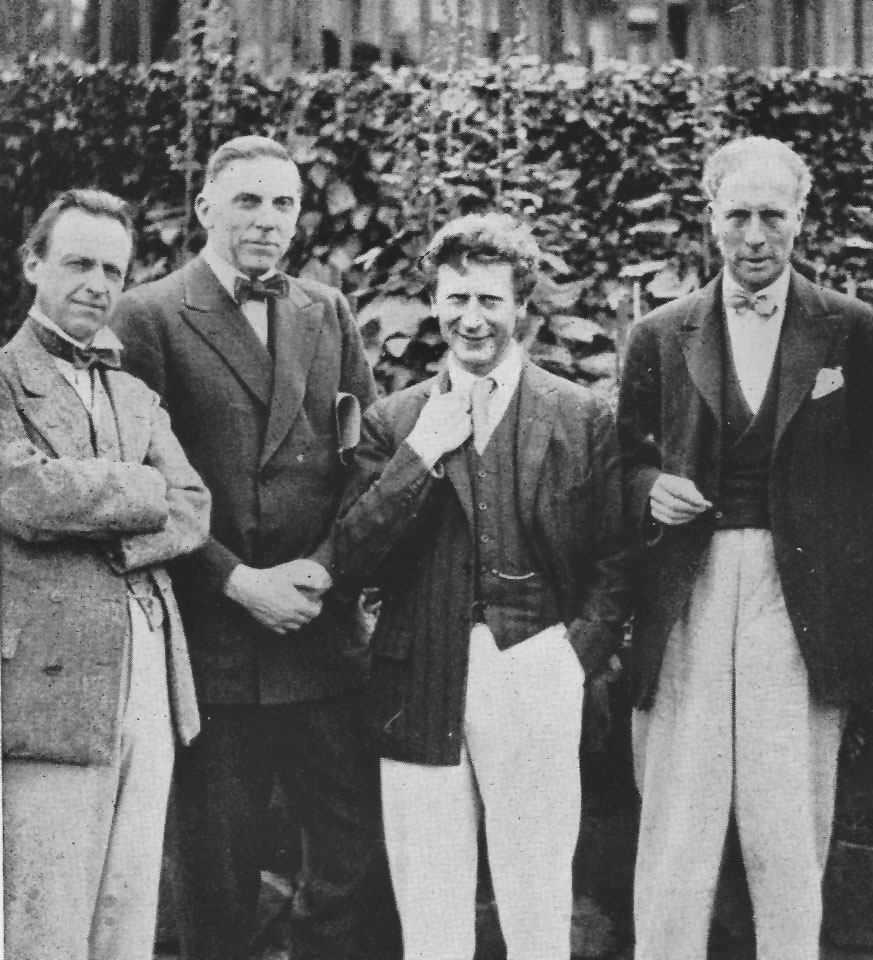
    Frankfurt Gang reunion: (left to right) Cyril Scott, Roger Quilter, Percy Grainger, and Norman O’Neill in 1930
  • The Frankfurt Gang: English Music Rebels

    The Frankfurt Gang: English Music Rebels

    The loose collective known as “The Frankfurt Gang” came together in 1890s, as students at the Hoch Conservatory in Frankfurt-am-Main. Its members included Balfour Gardiner, Roger Quilter, Norman O’Neill, Cyril Scott, and the youngest of the bunch, the piano prodigy Percy Grainger. This brilliant array of talent bonded in a foreign land, united by a shared language and culture, but also a determination to break away from Teutonic dominance in music, with the goal of creating a fresh “English” art.

    This Sunday night on “The Lost Chord,” we’ll have music by four of these firebrands, including Gardiner’s “Overture to a Comedy,” Quilter’s “Where the Rainbow Ends,” Scott’s “Neptune” (refashioned from an earlier work inspired by the sinking of the Titanic), and one of Grainger’s choral settings of a text from Kipling’s “Jungle Book.”

    The Hoch Conservatory of the day had the reputation of being one of the very finest in Europe. Clara Schumann had been on the faculty there until 1892 – within a few years of the Frankfurt Group’s arrival. In fact, at least one of them was there before Schumann’s departure.

    Scott arrived at the school early, at the age of 12, and then later returned for a second stint. Gardiner was also there twice, taking a break to attend Oxford. Grainger was 13 at the time he was admitted. He was to remain at the Hoch Conservatory for four-and-a-half years.

    Frankfurt alumni aim for the high notes this week. I hope you’ll join me for “Hochschule Musical,” this Sunday night at 10:00 EDT, on WWFM – The Classical Network and at wwfm.org.


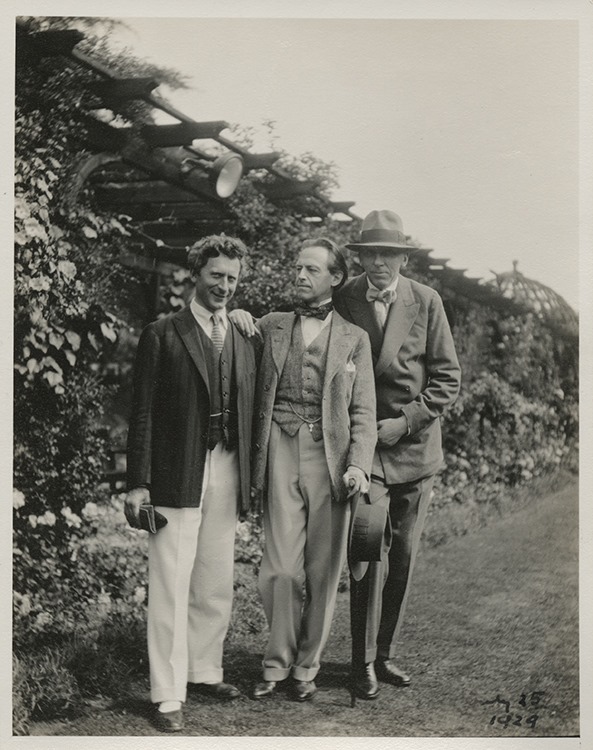
    Hochschule reunion: (left to right) Grainger, Scott, and Quilter

  • The Frankfurt Group: English Music Pioneers

    The Frankfurt Group: English Music Pioneers

    The Frankfurt Group, sometimes called the Frankfurt Gang, met at the Hoch Conservatory in Frankfurt-am-Main in the 1890s. The group included Balfour Gardiner, Roger Quilter, Norman O’Neill, Cyril Scott, and the youngest of the bunch, the piano prodigy Percy Grainger.

    Later, though never officially part of the group, other figures became closely associated, including Frederic Delius, Sir Thomas Beecham, and the composer Frederic Austin.

    The Hoch Conservatory of the day had the reputation of being one of the very finest in Europe. Clara Schumann had been on the faculty there until 1892 – within a few years of the Frankfurt Group’s arrival. In fact, at least one of them, Cyril Scott had already been there.

    Scott arrived at the school early, at the age of 12, and then later returned for a second stint. Balfour Gardiner was also there twice, taking a break to attend Oxford. Grainger was 13 at the time he was admitted. He was to remain at the Hoch Conservatory for four-and-a-half years.

    What united this brilliant array of young talent in a foreign land? Well, there was shared language and culture, of course, but also a determination to break away from the dominant, Teutonic musical thinking of the time, and especially the place, to create a fresh English art.

    I hope you’ll join me for “Hochschule Musical,” sampling works by members of the Frankfurt Group, this Sunday night at 10:00 EST on “The Lost Chord,” on WWFM – The Classical Network and at wwfm.org.


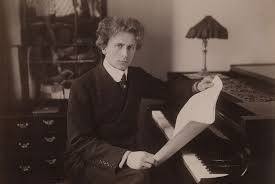
    PHOTOS: Former classmates (clockwise from top) Percy Grainger, Cyril Scott, and Roger Quilter

  • Joachim Raff A Composer Worth Rediscovering

    Joachim Raff A Composer Worth Rediscovering

    There’s one story about the German-Swiss composer Joachim Raff that I find so endearing. When Raff learned that Franz Liszt would be playing in Basel, he traveled by foot from Zurich (a distance of nearly 50 miles), through a driving rain, only to discover upon reaching the venue that the concert had sold out.

    Word reached Liszt of the young man’s predicament, and the great pianist, in yet another of his legendary acts of generosity, had a chair put up on the stage so that Raff would be able to enjoy the recital – which he did, sitting there, grinning like an idiot, amidst a widening pool of water.

    Raff became Liszt’s assistant at Weimar, where he orchestrated a number of the elder composer’s works, until Liszt gained the technique and confidence himself; after which time, Liszt went back and revised many of the earlier pieces. In turn, Liszt staged the premiere of Raff’s opera “King Alfred” (though, because of an illness in the family, he had to hand over the conducting duties to Raff himself).

    Raff must have been a singularly likable figure. His was the rare instance of a composer who was accepted in both camps, on either side of the seemingly unbridgeable divide that separated the “absolute” music of Mendelssohn and Schumann and the “program” music – the so-called “Music of the Future” – of Liszt and Wagner.

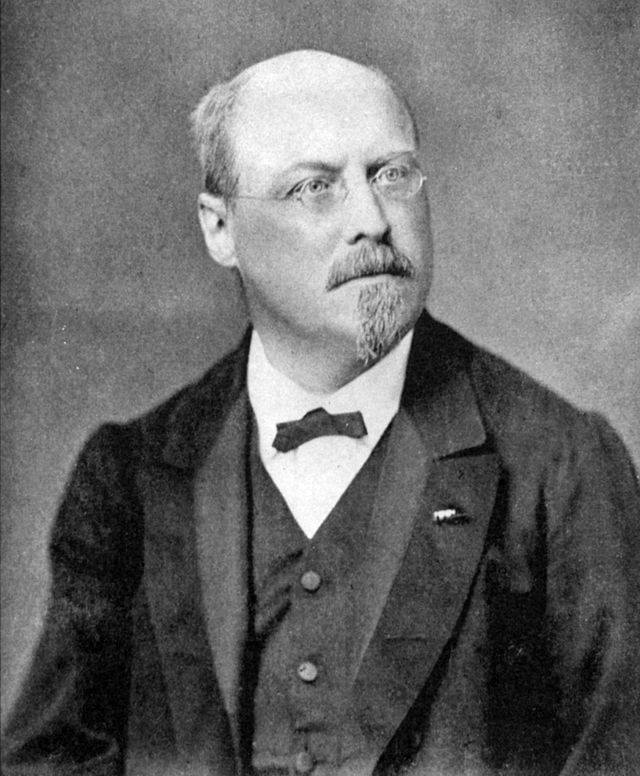
    In 1878, Raff became the first director of the Hoch Conservatory in Frankfurt, where he hired Clara Schumann, among the eminent faculty, and initiated a class for female composers.

    During his lifetime, Raff was one of the best-known German composers. It’s unfortunate that so little of his music endures in the public memory (beyond, perhaps, the “Cavatina” for violin and piano), but the symphonies, in particular, have not aged well.

    Raff’s practice was to choose a promising program – for instance, in the Symphony No. 5, the “Lenore” Symphony, he selected an overheated ballad by Gottfried August Bürger, about a maiden who is swept away amidst jeering specters by the phantom of her former lover – and then he would negate all the drama by rendering the symphony in classical form. In other words, the story would be straightjacketed in order to suit the requirements of form, rather than the other way around – which would be easier to forgive if the symphony weren’t nearly an hour long.

    However, he did leave behind some very impressive music. You just really have to look for it. I hope you enjoy these “diamonds in the Raff”:

    Piano Concerto in C minor:

    “Ode to Spring”:

    Happy birthday, Joachim Raff (1822-1882).

Tag Cloud

Aaron Copland (92) Beethoven (95) Composer (114) Film Music (124) Film Score (143) Film Scores (255) Halloween (94) John Williams (188) KWAX (229) Leonard Bernstein (101) Marlboro Music Festival (125) Movie Music (139) Opera (202) Philadelphia Orchestra (89) Picture Perfect (174) Princeton Symphony Orchestra (106) Radio (87) Ralph Vaughan Williams (85) Ross Amico (244) Roy's Tie-Dye Sci-Fi Corner (290) The Classical Network (101) The Lost Chord (268) Vaughan Williams (103) WPRB (396) WWFM (881)

DON’T MISS A BEAT

Receive a weekly digest every Sunday at noon by signing up here


RECENT POSTS