This week on “Picture Perfect,” it will be a much-needed reality check, as we pause to give thanks for the blessings of family, community, and country. Join me for selections from “The Cummington Story” (Aaron Copland), “Field of Dreams” (James Horner), “The Best Years of Our Lives” (Hugo Friedhofer), and “Lincoln” (John Williams). We’ll tune out the noise and focus on what’s really important for Thanksgiving, on “Picture Perfect,” music for the movies, this Saturday evening at 6:00 EST, on WWFM – The Classical Network and wwfm.org.
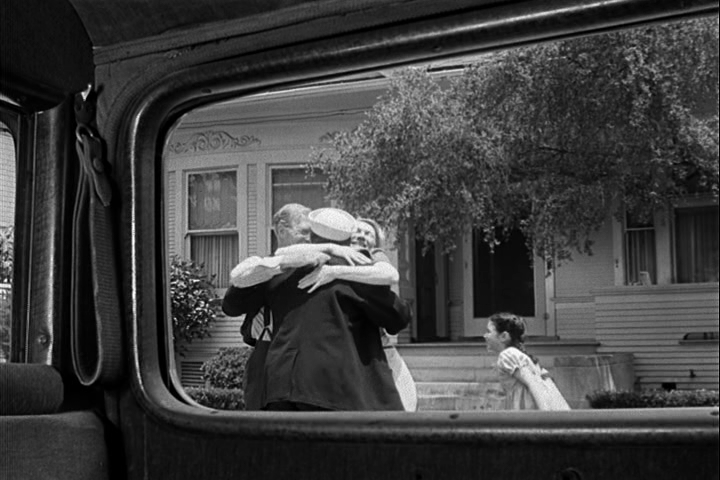
PHOTO: Homer’s homecoming in “The Best Years of Our Lives”
It’s all about valor and sacrifice this week on “Picture Perfect,” as we anticipate Memorial Day.
Memorial Day has its roots in Decoration Day, established in 1868 to honor the Civil War dead. We’ll hear music from “Glory” (1989), inspired by the extraordinary courage of Colonel Robert Gould Shaw’s 54th Massachusetts Voluntary Regiment, an all African American outfit that distinguished itself in an impossible assault on Fort Wagner, near Charleston, South Carolina. The outstanding cast features Morgan Freeman, Matthew Broderick, and Cary Elwes, with an Oscar-winning performance by Denzel Washington. The poignant score is by James Horner.
Gary Cooper had one of his best roles as “Sergeant York” (1941), based on the true story of Alvin C. York, who went from backwoods hell-raiser to devout pacifist. After a period of soul-searching, York was able to reconcile his strong moral convictions with the unfortunate reality that sometimes it really is necessary to fight. He went on to distinguish himself on the battlefield and become one of the most-decorated soldiers of the First World War. The folksy score, evocative of York’s Tennessee roots, is by Max Steiner.
In director Michael Cimino’s “The Deer Hunter” (1978), three men from a small Pennsylvania steel town serve in Vietnam, then struggle to cope with the war’s psychological impact. The harrowing film, especially memorable for its scenes of Russian roulette in a P.O.W. camp, won five Academy Awards, including Best Picture and Best Director. Christopher Walken was honored with the award for Best Supporting Actor. Stanley Myers wrote the music. We’ll hear his famous “Cavatina,” performed by guitarist John Williams, not to be confused with…
… composer John Williams, who provided one of his sparser scores for “Saving Private Ryan” (1998). Steven Spielberg’s war-is-hell narrative yet manages to honor the sacrifice of the fighting men of World War II. The opening – a sustained “you-are-there” battle sequence on Omaha Beach – is unforgettable. Remarkably, it is presented wholly without music, Williams preferring to allow the tension of the mise-en-scène to speak for itself. Spielberg picked up his second Academy Award for Best Director. The film, however, inexplicably, lost to “Shakespeare in Love.”
I hope you’ll join me for music from these cinematic meditations on the costs and consequences of war, as we honor the sacrifice of soldiers who died while serving in America’s armed forces, this Friday evening at 6:00 EDT, on WWFM – The Classical Network and wwfm.org.
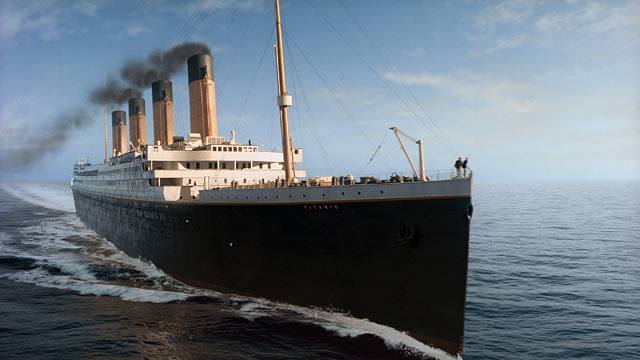
This week on “Picture Perfect,” with “Titanic” back in theaters for its 20th anniversary, we’ll hear selections from James Horner’s most famous score. The “Titanic” soundtrack sold over 30 million copies, making it the highest-selling primarily orchestral soundtrack of all time.
We’ll round out the hour with more oceanic agony, with music from “Raise the Titanic” (John Barry), “The Perfect Storm” (James Horner), “A Night to Remember” (William Alwyn), and “The Poseidon Adventure” (John Williams).
“Titanic” is just the tip of the iceberg, this Friday at 6:00 EST, on WWFM – The Classical Network.
2016 has been a bold year for remakes. Above and beyond a new “Ghostbusters,” which had so-called fanboys tied up in knots, Hollywood has brazenly taken on two beloved classics in “Ben-Hur” and “The Magnificent Seven.” Generally speaking, the originals excelled on all levels, which is why they are still fondly remembered, but the music for both has been especially indelible. In fact, I would argue “The Magnificent Seven” is as beloved as it is mostly because of Elmer Bernstein’s immortal score.
This week on “Picture Perfect,” you’ll have a chance to sample music from the remakes, alongside selections from their classic predecessors.
I’ve been listening to James Horner’s score for the new version of “The Magnificent Seven,” and while the result is not exactly top-shelf Horner – the composer was killed in a plane crash last year, not long after making some sketches after having merely read the script (an associate of his, Simon Franglen, who worked with the composer on “Titanic” and “Avatar,” was hired to flesh out the material) – it nonetheless serves as a painful reminder of exactly what’s been lost from the art of film-scoring.
Horner’s trademark use of the shakuhachi is invoked, as are “Mask of Zorro”-style handclaps and the inclusion of the all-pervasive Horner “Danger Motif” (which echoes the opening of Rachmaninoff’s Symphony No. 1 and is in just about every genre score Horner composed since at least “Star Trek II” in 1982). But what is most pertinent, and most refreshing, are the snippets of bona fide melody – and some of that melody is actually stirring and uplifting. After all, Horner hit his stride in the early ‘80s, when music still had something meaningful to add to movies, beyond simply acting as a moody drone or pumped-up bass-line.
Say what you will about Horner – he was a flawed artist who lifted freely from his own and others’ work – but he was always polished, professional and dramatically effective. I would go so far as to say he may very well have been the most naturally talented film composer of his generation. He was fatally limited by a lack of originality, but he always knew his way around an orchestra.
Furthermore, he had the ability to uplift. It’s a quality not at all common in film music today, or in movies at all for that matter. Movies may retain the ability to thrill, but the thrills, I find, such as they are, are mostly adrenaline-driven. When was the last time you experienced awe at the movies, or left the theater feeling elevated or elated? More commonly, it’s the sensation of having been wrung-out, triumph experienced vicariously only insofar as having survived the latest computer-generated assault. Where is the joy in that? Where is the hope?
Horner’s score in no way displaces Elmer Bernstein’s immortal music for the original “The Magnificent Seven.” Then again, how could it? But at least he doesn’t embarrass himself. The best I can say about Marco Beltrami, on the other hand, is that he is smart enough to know there is no way a new “Ben-Hur” is going to be able to top its predecessor. So instead, he tries for something completely different.
Tune in at 6:00 EDT and hear for yourself. We’ll enjoy a little “7” and “7” with two sides of “Ben-Hur,” on WWFM – The Classical Network and at wwfm.org.
Unfamiliar with Horner’s “Danger Motif?” These clips should give you an idea:
You can also it hear it here, in the first movement of Rachmaninoff’s First Symphony:
This week on “Picture Perfect,” it’s an hour of music from movies about fantasy quests.
For decades, “The Lord of the Rings” had been a kind of Holy Grail for genre fans, and anticipation ran high in regard to when exactly there would be a decent live action adaptation of J.R.R. Tolkien’s magnum opus. Alas, either filmmakers couldn’t acquire the rights, or they were hampered by technological limitations. Though the realization of Tolkien’s richly-imagined world of hobbits, orcs and balrogs eluded many, fantasy films of a derivative nature were thick on the ground. Some were good, some not so good. But many of them had outstanding scores.
“The Dark Crystal” (1982), though produced by Jim Henson and company, was a long way from Big Bird and Ernie & Burt, with some pretty dark scenes. The score by Trevor Jones is first rate, given the full romantic treatment and recorded by the London Symphony Orchestra, augmented by Fairlight and Synclavier synthesizers, as well as the occasional period instrument.
“Willow” (1988) allegedly grew out of George Lucas’ desire to film “The Hobbit.” Rather than fork over a sizeable portion of his earnings to the Tolkien estate, he opted instead to take the “Star Wars” approach of synthesizing archetypal images, from the Old Testament through Ray Harryhausen films, to create his own original story. Except the influences weren’t so cleverly assimilated this time. Composer James Horner followed suit, with a score rich in allusions to Schumann, Wagner, Grieg, Tchaikovsky, Rachmaninoff and especially Prokofiev.
The first feature-length adaptation of “The Lord of the Rings” (1978) was literally rendered in animation. The film manages only to cover the first book-and-a-half of the trilogy, and the last half hour or so is probably incomprehensible to anyone who hasn’t read it. It had been director Ralph Bakshi’s plan to divide the trilogy into two parts – already a concession to the studio – but the first film’s modest performance meant there was no funding for a second.
Two-time Academy Award winner Leonard Rosenman was engaged to write the score. Rosenman was responsible for composing the music for the James Dean classics “East of Eden” and “Rebel Without a Cause. Bakshi had originally wanted to use Led Zepplin songs. He later expressed his dislike for Rosenman’s score, which he found to be too conventional – somewhat ironic in that Rosenman, a pupil of Arnold Schoenberg, Roger Sessions and Luigi Dallapiccola, was known for writing some of the most challenging scores in film history, including the uncompromising music for “Fantastic Voyage.”
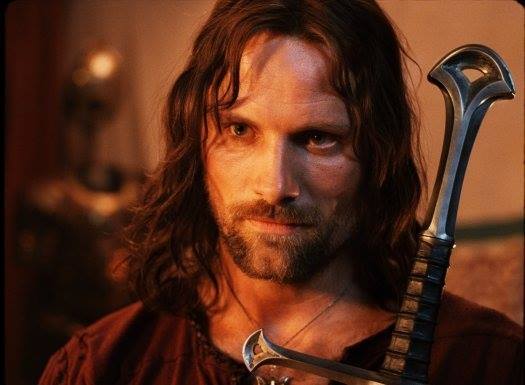
It would be over two decades before another feature film based upon Tolkien’s source material was mounted. Peter Jackson’s “The Fellowship of the Ring” (2001) is brimful of state-of-the-art special effects, so much so that a great many important details from Tolkien’s novel are lost in the shuffle. Still, Jacksons’ trilogy went on to garner 30 Academy Award nominations, of which it won 17. Howard Shore’s music was recognized with Oscars for the first and third installments. The third, “The Return of the King” (2003), inexplicably went on to become one of the most decorated films of all time.
I hope you’ll join me for an hour of fantasy quests, this Friday evening at 6 ET, with a repeat Saturday morning at 6; or that you’ll listen to it online at wwfm.org.
PLEASE NOTE: Today is “Five Buck Friday” at WWFM. Become a sustaining member for only $5 a month at wwfm.org. Strider thanks you!