Tag: Jean Françaix

  • Everything Old is New Again on “The Lost Chord”

    Everything Old is New Again on “The Lost Chord”

    This week on “The Lost Chord,” what’s old is new again, as we enjoy a program of 20th century music by French composers who look back to their illustrious forebears.

    In the 1870s, following France’s defeat in the Franco-Prussian war, there was a rise in musical nostalgia, with composers doing their part to mend the wounded national dignity by looking back to the galant style of the Ancien Régime – an idealized Golden Age which stood outside of Gallic history, full of shepherds and shepherdesses, panpipes and periwigs. The movement gave rise to such works as Camille Saint-Saëns’ Septet and the “Suite dans le style ancien” by Vincent d’Indy.

    50 years later, a renewed fascination with music of the 18th century took root in the 1920s, in no small part because of Stravinsky’s sudden shift to neo-classicism. This was concurrent with the rise of Les Six, a loose collective of composers who had begun to flourish in Paris. We’ll hear three of their works that sprang from a shared affection for music of the Baroque.

    One of the group’s more prominent members, Darius Milhaud, composed his “Suite d’après Corrette,” a piece for winds after 18th century composer Michel Corrette (with tell-tale “cuckoo” finale), in 1937. Eleven years later, he followed it with “L’Apothéose de Molière,” the title evocative of the spirit of Jean-Baptiste Lully. However, in this instance, the source material was culled from works by the lesser-known Baroque violinist and composer Baptiste Anet, a pupil Corelli and an elite musician in the service of Louis XIV. We’ll hear both Milhaud pieces, presented back-to-back.

    Then we’ll have a work by one of his colleagues, the only female member of Les Six, Germaine Tailleferre. In 1964, Tailleferre paid tribute to the Baroque keyboard master Jean-Philippe Rameau, on the occasion of the bicentennial of his death. “Hommage à Rameau” falls into three movements and is scored for two pianos and percussion.

    Finally, we’ll turn to Jean Françaix, who was NOT a member of Les Six, although his musical aesthetic would have fit right in. Had he been born twenty years earlier, we might be talking about Les Sept! Françaix’s “Duo Baroque,” composed in 1980, is scored for the unusual combination of double bass and harp. It pays tribute to no specific composer – in fact, for the most part, it doesn’t even sound particularly Baroque – though it does share a certain charm, wit, and elegance characteristic of music of the 18th century.

    I hope you’ll join me for “Everything Old Is New Again,” on “The Lost Chord,” now in syndication on KWAX Classical Oregon!

    ——–

    Clip and save the start times for all three of my recorded shows:

    PICTURE PERFECT, the movie music show – Friday at 8:00 PM EST/5:00 PM PST

    SWEETNESS AND LIGHT, the light music program – Saturday at 11:00 AM EST/8:00 AM PST

    THE LOST CHORD, unusual and neglected rep – Saturday at 7:00 PM EST/4:00 PM PST

    Stream them, wherever you are, at the link!

    https://kwax.uoregon.edu

  • May Flowers & Floral Music on Sweetness and Light

    May Flowers & Floral Music on Sweetness and Light

    This morning on “Sweetness and Light,” we’ll take some time to smell the flowers – May flowers, that is! No, you wiseacres, nothing to do with the Pilgrims. Rather a celebration of gardens and all things floral. I’ve assembled some bouquets of music by Albert Ketèlbey, Johann Strauss II, Ethelbert Nevin, Edward MacDowell, Scott Joplin, Gilbert & Sullivan, Billy Mayerl, Percy Grainger, Léo Delibes, and Sergei Rachmaninoff.

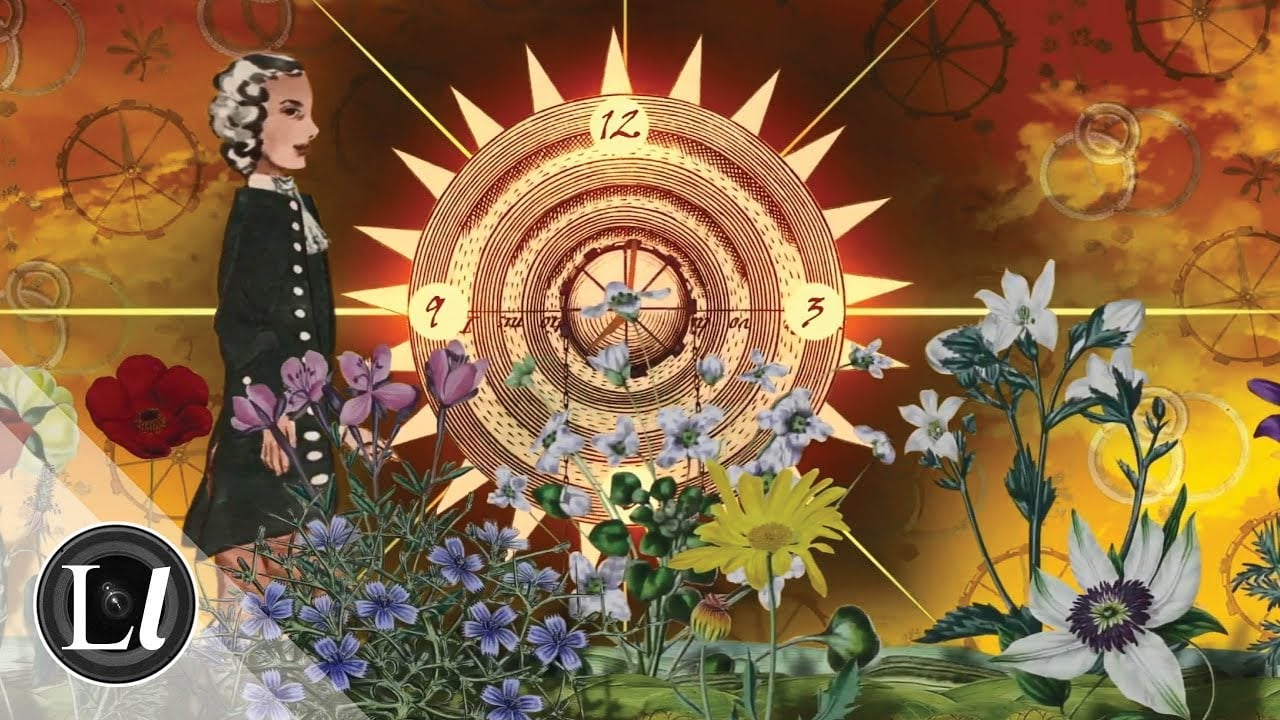
    The centerpiece will be “L’horoge de flore” (“The Flower Clock”) by Jean Françaix, written for John de Lancie, principal oboist of the Philadelphia Orchestra. Each of the seven movements corresponds to a flower whose blooms open at a certain time of day. The first floral clock was formulated by the Swedish botanist Carl Linnaeus, back in 1748.

    Surely, there are more accurate ways to keep time. Use one to mark the minutes until “Sweetness and Light,” a program of music calculated to charm and to cheer, this Saturday morning at 11:00 EDT/8:00 PDT, exclusively on KWAX, the radio station of the University of Oregon!

    Stream it, wherever you are, at the link:

    https://kwax.uoregon.edu/

  • Floral Clocks Françaix and Time Change

    Floral Clocks Françaix and Time Change

    After several nights of frost, I suppose it’s pointless to try to figure out how to reset my floral clock. I hope you have more success tonight, as we “fall back” to standard time.

    Jean Françaix completed his “L’Horloge de flore” (“The Flower Clock”) in 1959, on a commission from principal oboist of the Philadelphia Orchestra, John de Lancie. The suite falls into seven movements, each of which corresponds with a flower whose blooms open at a certain time of day.

    The first floral clock was formulated by Carl Linnaeus back in 1748. His idea was “old school” and therefore, depending on vagaries of weather, season, and latitude, subject to many idiosyncrasies. One should never coordinate one’s schedule around a floral clock.

    The flowers in more recent clocks tend to be merely decorative, with large, mechanical hands making their way around a mostly floral face. Where’s the fun in that? I may as well just stick with my Kit-Cat clock.

    To further add to your fount of useless knowledge, Jean Françaix’s surname is of Flemish origin. He always pronounced the “x.” English-speaking radio announcers, on the other hand, almost always pronounce it in the French manner, as “Fron-SAY.”

    Over the years, I have used the “x” on most occasions. Unfortunately, then I wind up feeling sheepish about it and am compelled to explain, so that listeners don’t think I’m a total idiot. Just pedantic. I confess, there have been times when I haven’t felt like dealing with it and just said “Fron-SAY.” Lord knows, I’ve done more transparently idiotic things.

    Interestingly, I just learned that Michael Jackson had a floral clock at his Neverland Ranch (presumably of the more modern variety). Even a broken clock is right twice a day. When you wake up tomorrow morning and it’s still the middle of the night, just remember: the time change brings with it an extra hour of autumn!


    Françaix, “L’Horloge de flore”

    More about Carl Linnaeus’ Flower Clock

    Keep the “sex” in Françaix (said “Fron-SEX”)!

  • Daylight Saving Time Musical Commiseration

    Daylight Saving Time Musical Commiseration

    The possibility of stroke is elevated, even as productivity plummets. Sunday drives will become snarled in traffic accidents. Everyone will be moody and depressed.

    Sleepers, awake! Welcome to Daylight Saving Time!

    Brew yourself an extra strong pot of coffee, and join me on WPRB for a morning of musical commiseration.

    Among our featured highlights, Trenton’s own George Antheil will collaborate with George Balanchine on “Dreams.” A female somnambulist will dance across the rooftops with the Moon-Dandy in Erwin Schulhoff’s ballet “Moonstruck.” And Jean Francaix will puzzle over how to change his flower clock in “L’horloge de flore.”

    It’s all about lost sleep and syncopated clocks, this Sunday morning from 7 to 10 EDT, on WPRB 103.3 FM and wprb.com. I’m told we’ll get our hour back on November 4. Until then, enjoy the Circadian Apocalypse. If you’re on time, you’re already late, on Classic Ross Amico.

  • Nadia Boulanger: Influential Music Teacher

    Nadia Boulanger: Influential Music Teacher

    Today is the anniversary of the birth of Nadia Boulanger (1887-1979), pedagogue and Patron Saint of American – some might argue “20th Century” – Music. Certainly, her influence continues to be felt into our own time.

    Among Boulanger’s hundreds of pupils: Daniel Barenboim, Idil Biret, Elliot Carter, Aaron Copland, John Eliot Gardiner, Philip Glass, H. Wiley Hitchcock, Quincy Jones, Robert Kapilow, Dini Lipatti, Igor Markevitch, Astor Piazzolla, Walter Piston, Stanislaw Skrowaczewski, Virgil Thomson and George Walker.

    Writes Ned Rorem (the rare American who did not study with Boulanger), “Myth credits every American town with two things: a 10-cent store and a Boulanger student.”

    Here is Rorem writing about Boulanger in the New York Times in 1982:

    http://www.nytimes.com/1982/05/23/books/the-composer-and-the-music-teacher.html?pagewanted=all&mcubz=3


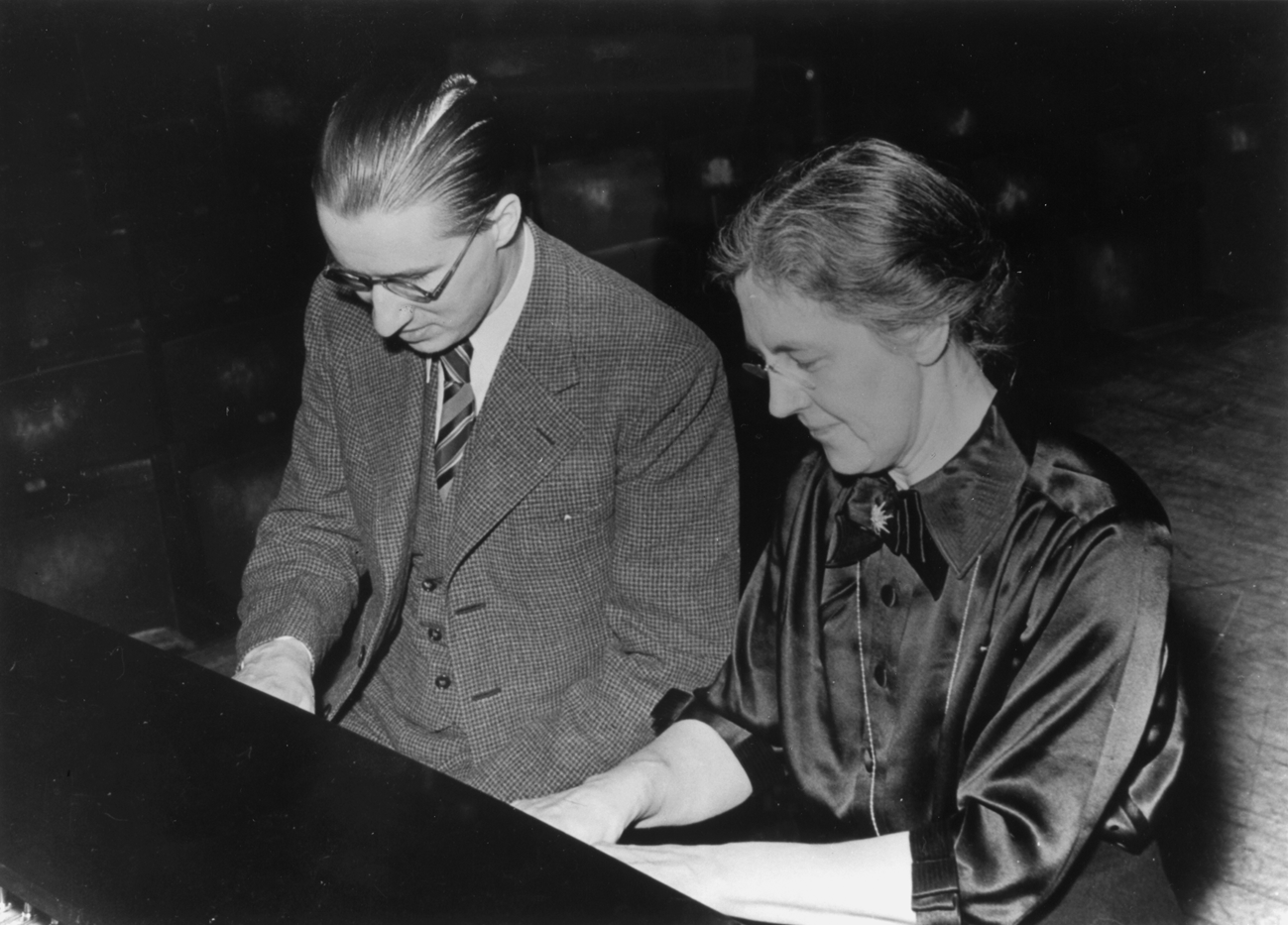
    PHOTO: Boulanger with one of her pupils, the composer Jean Françaix

Tag Cloud

Aaron Copland (92) Beethoven (95) Composer (114) Film Music (123) Film Score (143) Film Scores (255) Halloween (94) John Williams (187) KWAX (229) Leonard Bernstein (101) Marlboro Music Festival (125) Movie Music (138) Opera (202) Philadelphia Orchestra (89) Picture Perfect (174) Princeton Symphony Orchestra (106) Radio (87) Ralph Vaughan Williams (85) Ross Amico (244) Roy's Tie-Dye Sci-Fi Corner (290) The Classical Network (101) The Lost Chord (268) Vaughan Williams (103) WPRB (396) WWFM (881)

DON’T MISS A BEAT

Receive a weekly digest every Sunday at noon by signing up here


RECENT POSTS