Tag: Jean Sibelius

  • Meeting Rautavaara A Musical Memory

    Meeting Rautavaara A Musical Memory

    I had the rare opportunity to actually meet Einojuhani Rautavaara once, back in the year 2000. He was in Philadelphia for the first performance of his Symphony No. 8, “The Journey.” By purest chance, I had struck up a friendship with Anssi Blomstedt, a documentary filmmaker then living in Philadelphia, who is the youngest grandchild of Jean Sibelius. He had simply wandered into my bookstore one day, as I was playing a CD of Robert Kajanus conducting his grandfather’s Symphony No. 3. Of all the gin joints in all the towns in all the world…

    Anyway, I got Anssi into a rehearsal of Simon Rattle conducting the Philadelphia Orchestra in Sibelius’ Symphony No. 5. The ebullient Rattle was overjoyed to meet him. The encounter happened to coincide with an interview Rattle was doing backstage with somebody from Vanity Fair, I think, and somewhere there is a photograph of the future Sir Simon planting a kiss on Anssi’s forehead.

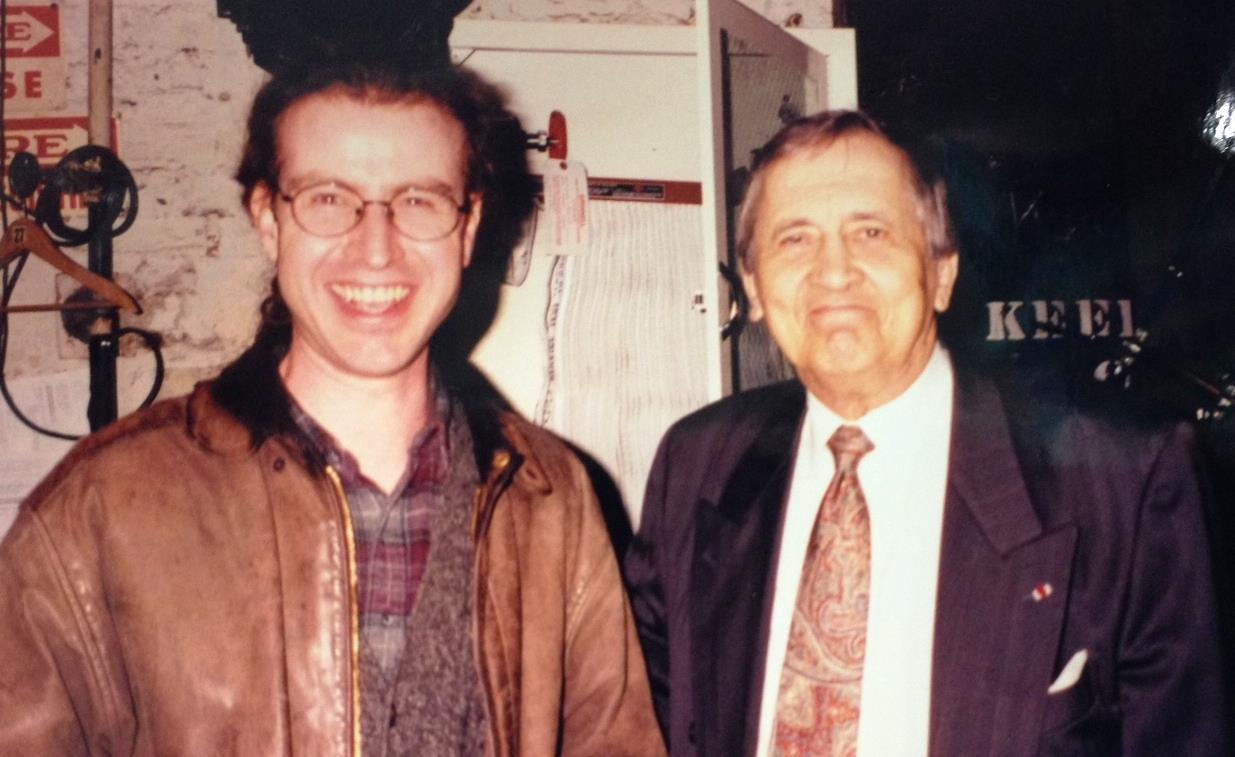
    One good turn deserves another, and when Rautavaara came to town, Anssi took me backstage at the Academy of Music to introduce me to him. The venerable composer was friendly and obviously amenable to a photograph. He also was kind enough to sign my Naxos CD of his Symphony No. 3, Piano Concerto No. 1, and Concerto for Birds and Orchestra, “Cantus Arcticus.” I wonder what he thought of this peculiar, 33 year-old “fan.”

    Rautavaara died on July 27 at the age of 87. Join me this morning as we celebrate the late Finnish master with FIVE HOURS of his music, from 6 to 11 EDT, on WPRB 103.3 FM and at wprb.com. One needs plenty of time in order even to say “Einojuhani Rautavaara.” Mostly we’ll let the music do the talking, on Classic Ross Amico.

  • More Sibelius? A Sesquicentennial Celebration Part II

    More Sibelius? A Sesquicentennial Celebration Part II

    When is too much enough? Clearly NOT when it comes to Jean Sibelius.

    Even as the music world is sleeping off yesterday’s sesquicentennial anniversary bash, Classic Ross Amico is gearing up for Part II of its #Sibelius150 celebration.

    Last week’s playlist was not intended to be a “Part I.” However, the positive feedback received by way of Facebook, via email, and through genuine, old-fashioned, face-to-face conversation had a kind of chemical reaction with the immediate regret I felt at the end of last week’s show of not being able to get around to so much of the music I had wanted to share. Thus, the idea for an ambitious follow-up was spawned.

    Last Thursday, we enjoyed classic recordings of Symphonies Nos. 3, 1, 4, and 5; this week, we’ll hear great performances of Symphonies 6, 2, and 7, and possibly even the original 1915 version of No. 5, which is in many respects quite a different piece from the finished (or Finnished?) masterwork of 1919.

    And of course, we’ll have plenty of other surprises, many in superb recordings, along the way.

    How much Sibelius is too much Sibelius? Tune in tomorrow morning from 6 to 11 ET to test your stoic endurance, on WPRB 103.3 FM or at wprb.com. It ain’t Tapiola until it’s Tapiola this week, on Classic Ross Amico.

  • Sibelius’ 150th: Celebrating Finland’s Musical Titan

    Sibelius’ 150th: Celebrating Finland’s Musical Titan

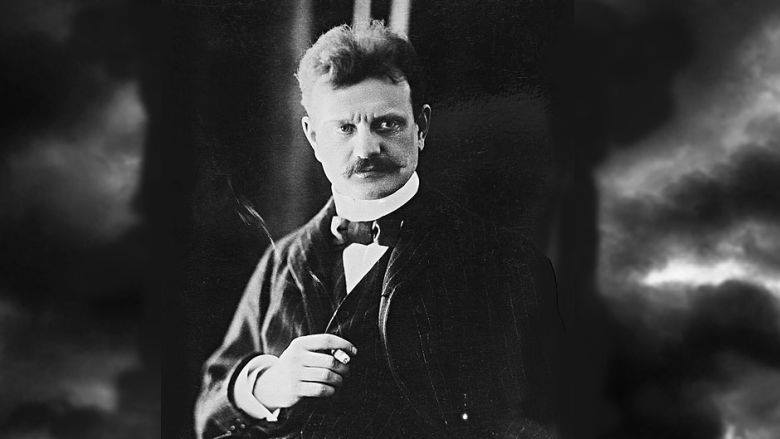
    At last the day is upon us – the 150th anniversary of the birth of Jean Sibelius. Sibelius, of course, was Finland’s most revered artist and, though arguably underestimated for much it, one of the most influential composers of the 20th century.

    With his 50th birthday imminent in 1915, the Finnish government commissioned from him a 5th symphony. The work was given its premiere one hundred years ago today, with the composer conducting the Helsinki Philharmonic Orchestra – though the original version was quite different, in many respects, from the masterpiece that has entered the standard repertoire. In a remarkable feat of objectivity, Sibelius revised the symphony twice, in 1916 and then again in 1919.

    One of the work’s major innovations (showing the influence of Liszt, whom Sibelius greatly admired) involved the elimination of the break between the first two movements of the original, four-movement structure. The demarcations are blurred so that the first movement slips inexorably into the scherzo, and the listener is swept along, as if caught in a powerful current or precipitated into an avalanche, to thrilling effect.

    This transition is always a challenge for conductors, since the changeover should appear entirely organic. Sibelius would further experiment with the telescoping of movements and the subversion of classical expectations in his 7th Symphony.

    Perhaps the most striking revision is in how the final movement builds to a climax of impressive grandeur, a sublime apotheosis of the ennobling “swan theme,” only to come up against a series of powerful, monolithic chords, each isolated from the other by a moment of silence. The first five suspend the effect, before coming down with an indisputable sense of finality on the sixth. This is music of the gods.

    On this day, one hundred years ago, the Finnish government declared Sibelius’ birthday a national holiday. You would do yourself a favor if you put in a call to your boss to tell him or her that you’ll be staying home today so that you can enjoy Sibelius’ Symphony No. 5.

    Happy birthday, Jean Sibelius!


    Karajan conducts the 5th Symphony:
    https://www.youtube.com/watch?v=V8qiAMOiygs

    Vänskä conducts the original 1915 version!

    More Sibelius this Thursday morning, from 6 to 11 ET, when I continue with the second half of my sesquicentennial salute on WPRB 103.3 FM and at wprb.com.

    #Sibelius150 #12DaysOfSibelius

  • Sibelius at 150 A Birthday Celebration

    Sibelius at 150 A Birthday Celebration

    December 8th marks the 150th anniversary of the birth of Jean Sibelius. I know, it’s a little early yet, but the Sinatra celebrations are underway, and he wasn’t even born until the 12th!

    We’ll salute Finland’s most celebrated composer this morning with outstanding performances by Sir John Barbirolli, Sir Thomas Beecham, Anthony Collins, Sir Colin Davis, Neeme Järvi, Robert Kajanus, Herbert von Karajan, Serge Koussevitzky, Eugene Ormandy, Sir Simon Rattle, Sir Malcolm Sargent, Leopold Stokowski and Osmo Vänskä – or as many of those as I can get to. I’ll also include a gorgeous rarity, “The Bard,” from a new CD with JoAnn Falletta and the Buffalo Philharmonic Orchestra.

    In addition, organist Gail Archer will be dropping by at 9:30 this morning, to talk about her new CD devoted to music by women composers, “The Muse’s Voice.” Archer will perform a free recital at 12:30 this afternoon at Princeton University Chapel. The program will include works by Joan Tower, Libby Larsen, Nadia Boulanger and Jeanne Demessieux.

    Other than that, it’s wall-to-wall Sibelius, from 6 to 11 ET, on WPRB 103.3 FM or at wprb.com. We’ll have the vodka and cigars at the ready, on Classic Ross Amico.

  • Celebrating Sibelius A Finnish Master at 150

    Celebrating Sibelius A Finnish Master at 150

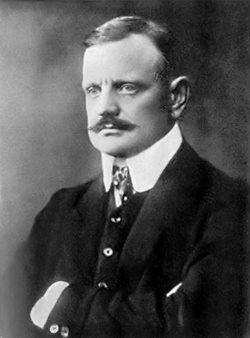
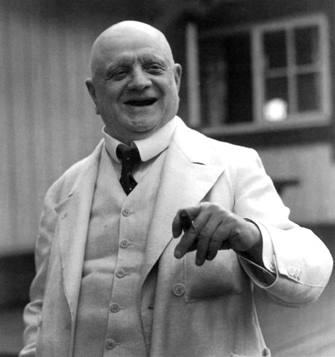
    December 8th marks the 150th anniversary of the birth of Finnish master Jean Sibelius. Since he may very well be my favorite composer (or at any rate, he’s right up there), I will be devoting the entire playlist tomorrow morning on WPRB to his magnificent music, in outstanding performances from the 1930s to the present.

    Featured conductors will include Sir John Barbirolli, Sir Thomas Beecham, Sir Colin Davis, Neeme Järvi, Robert Kajanus, Herbert von Karajan, Serge Koussevitzky, Eugene Ormandy, Leopold Stokowski and Osmo Vänskä. I’ll also include a lovingly-performed rarity from a new CD with JoAnn Falletta and the Buffalo Philharmonic Orchestra.

    The influence of Sibelius on the establishment of a Finnish national identity cannot be underestimated. He is venerated in Finland as we in the United States venerate the Founding Fathers, though with considerably more passion and a sense of personal connection. Monuments to Sibelius abound, and his name is on public buildings. Why should this be so?

    After seven centuries under Swedish rule, Finland was “liberated” by the Russians in 1809. In its new role, Finland served as an autonomous Grand Duchy of the Russian Empire. At times, relations between the two could become palpably tense.

    It was the emergence of the Kalevala, compiled in the mid-19th century by Elias Lönnrot from oral traditions, that lit a spark in the frozen north. Here were heroic tales of Finland’s distant past. It brought to a head the issue of Swedish yet being the dominant language of Finland and contributed to a snowballing sense of nationalism that resulted in Finnish independence from Russia in 1917.

    Along the way, Sibelius had become the movement’s most dangerous torch-bearer. Like other Finnish artists of the time, he turned to the Kalevala for inspiration, bringing a number of the tales vibrantly to life in his music. But it was “Finlandia” that proved the true firebrand. So directly did it speak to the Finnish heart that performances of the work were banned by the Russian authorities, so that the piece could only be programmed covertly under alternative names like “Happy Feelings at the Awakening of Finnish Spring.”

    However, his importance to music transcends the provincial concerns of a small northern country. Sibelius offered a fresh and original path from Romanticism into the 20th century. While Stravinsky and Schoenberg duked it out on the world stage, Sibelius crept quietly like a frost from the north to invigorate the hearts of listeners and stimulate the creativity of (some) composers.

    The perception at first, with the rise of rhythmic complexity and the breakdown of tonality, was that Sibelius was a conservative throwback, and not to be taken seriously, but time has proven otherwise. His music took root mainly in the Nordic countries, England, and the United States, went underground somewhat at mid-century, then emerged as an essential part of the repertoire of virtually every major conductor and orchestra.

    Even so, he is easily misunderstood. His music is organic, bold, enigmatic and idiosyncratic, often rugged and austere on the surface, but with a soft, warm glow emanating from deep within. I find it irresistible.

    I hope you’ll join me tomorrow morning from 6 to 11 ET, on WPRB 103.3 FM or at wprb.com, when it will be all-Sibelius. We’ll be conjuring heroes and magicians, and brooding with migratory birds amidst the snow-capped pines, on Classic Ross Amico.
Tag Cloud

Aaron Copland (92) Beethoven (95) Composer (114) Film Music (120) Film Score (143) Film Scores (255) Halloween (94) John Williams (185) KWAX (229) Leonard Bernstein (100) Marlboro Music Festival (125) Movie Music (135) Opera (198) Philadelphia Orchestra (88) Picture Perfect (174) Princeton Symphony Orchestra (106) Radio (87) Ralph Vaughan Williams (85) Ross Amico (244) Roy's Tie-Dye Sci-Fi Corner (290) The Classical Network (101) The Lost Chord (268) Vaughan Williams (103) WPRB (396) WWFM (881)

DON’T MISS A BEAT

Receive a weekly digest every Sunday at noon by signing up here


RECENT POSTS