Tag: Johannes Brahms

  • Hans Gál Rediscovered A Neglected Composer

    Hans Gál Rediscovered A Neglected Composer

    He was a remarkable figure, who weathered much to create works of lasting beauty.

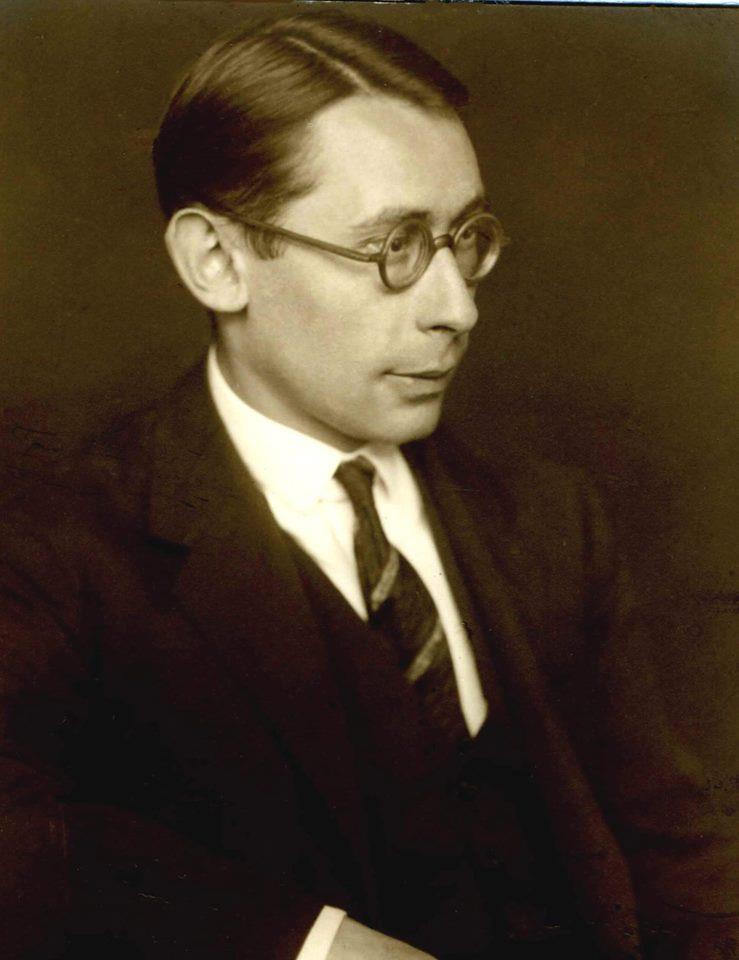
    Composer, pianist and teacher Hans Gál was born outside Vienna in 1890. He studied with, among others, Eusebius Mandyczewski, lifelong friend of Johannes Brahms. Gál himself became a serious Brahms scholar, co-editing the master’s complete works, in cooperation with Mandyczewski, in ten volumes. He edited other scholarly volumes on Brahms, as well.

    It was while Gál was director of the Mainz Conservatory of Music that the Nazis came to power. Forced out of his position, he returned to Austria. Then the Anschluss drove him to Great Britain.

    There, he made friends with the musicologist Donald Francis Tovey. Tovey, also a friend of Brahms, was based at Edinburgh University. Though Gál would be held in an internment camp during the war, Tovey eased the way for his subsequent employment at Edinburgh. Gál flourished there, becoming a respected member of the faculty and an influential teacher. He remained in Scotland for the rest of his very long life. He died there in 1987 at 97 years-old.

    Gál composed in nearly every genre. He was lauded by many of the greatest musicians of his day. Yet somehow his music and reputation haven’t really pervaded the wider musical consciousness.

    This Sunday night on “The Lost Chord,” we’ll hear two works by this neglected composer, issued on the Avie label, which has done much to document Gál’s orchestral, chamber and instrumental music.

    First, we’ll have the Piano Sonata, Op. 28, from a complete, 3-CD set devoted to Gál’s output for the keyboard. Gál was about 37 years-old at the time of the sonata’s composition. It’s sobering to think he yet had 60 years of life ahead of him!

    Then we’ll hear his Cello Concerto, from 1944. Gál’s mother died in 1942. Shortly after, his aunt and sister took their own lives to avoid deportation to Auschwitz. Unable to bear up under the strain, the composer’s youngest son also committed suicide at 18 years-old. For all the turbulence and tragedy in Gál’s life, he managed to craft a rewarding and mellifluous work, which on occasion offers glimpses of his beloved Brahms. The concerto is elegiac, lyrical and deeply personal.

    I hope you’ll join me for “Gál’s Worthy” – worthwhile music of Hans Gál – this Sunday night at 10:00 EDT, on WWFM – The Classical Network and wwfm.org.

  • Tchaikovsky Wins WWFM Membership Drive

    Tchaikovsky Wins WWFM Membership Drive

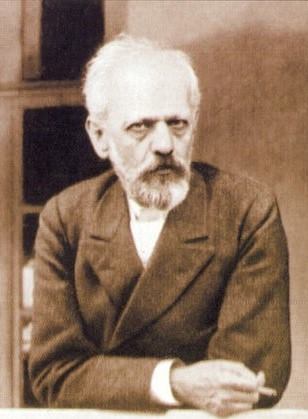
    Tchaikovsky shares our elation at having concluded another successful membership drive. The votes were tallied, and Ol’ Peter Ilych pulled ahead of Johannes Brahms to be voted the more popular of today’s two famous birthday celebrants among our listener-members. Thank you to all of you who elected to get in on the fun. There certainly were plenty of tempting thank you gifts to get lost in this time around. If you didn’t have a chance to donate, you may still do so and pick up a special token of our appreciation by visiting wwfm.org. Peter Ilych and we are grateful for your support of WWFM – The Classical Network.

  • Brahms vs Tchaikovsky Birthday Battle

    Brahms vs Tchaikovsky Birthday Battle

    In this corner, weighing in at 250 pounds… ladies and gentlemen, the original Liebeslieder Waltzer… the Hamburger from Hamburg… Johannes Brahms. In the opposite corner, at 180… the infamous Marching Slav… the Nutcracker from Nadezhda… Peter Ilych Tchaikovsky.

    Today… the birthday anniversaries of both. Brahms, born in 1833, and Tchaikovsky in 1840. We pit the two together on The Classical Network in an historic Battle of the Beards, a hummable rumble that will span 12 hours, from 8 to 8 EDT, as we take your bets on a bankable future for classical music on the air waves and your votes for prominence in the pantheon of Brahms or Tchaikovsky.

    Call now, at 1-888-232-1212, or contribute online at wwfm.org. We’ll tally the votes tonight in the 7:00 hour. David Osenberg and I will be squinting through the blood, sweat and tears, from 4 to 8 p.m. EDT. Strike a blow for great music. Join us ringside on WWFM – The Classical Network and wwfm.org. As always, we thank you for your support!

  • Unrequited Love at Marlboro Music Festival

    Unrequited Love at Marlboro Music Festival

    Few torments are as unshakeable as that of unrequited love. Yet sublimated passion has led to more than its share of artistic masterpieces. For this Valentine’s Day, we’ll enjoy the fruits of others’ longing, on this week’s “Music for Marlboro.”

    It’s been speculated that Johannes Brahms’ “Liebeslieder Waltzes” was the product of his frustrated affection for Clara Schumann, the wife of composer Robert Schumann. The dance-like settings for four voices and piano (four hands) are based on love songs from Georg Friedrich Daumer’s collection “Polydora.”

    We’ll hear a performance from the 1971 Marlboro Music Festival, featuring soprano Kathryn Bouleyn, mezzo-soprano Mary Burgess, tenor Seth McCoy, and baritone John Magnuson, with Rudolf Serkin and Luis Batlle at the keyboard.

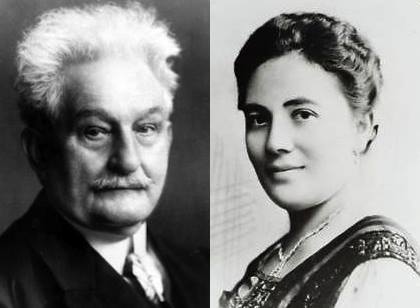
    The remarkably prolific Indian summer of Czech master Leoš Janáček can attributed in part to the sublimated passion he felt for Kamila Stösslová, a married woman some 38 years his junior. Janacek’s String Quartet No. 2, composed in 1928, when the composer was about 74 years-old, was inspired by their long and intimate – though unconsummated – relationship, detailed in their more than 700 letters. The work has been described as a “manifesto on love.”

    We’ll hear Janáček’s “Intimate Letters,” performed at the 2002 Marlboro Festival by violinists Nicholas Kendall and Hiroko Yajima, violist Richard O’Neill, and cellist Alexis Pia Gerlach.

    Great composers’ romantic frustrations are our gain this week, on “Music from Marlboro,” this Wednesday evening at 6:00 EST, on WWFM – The Classical Network and wwfm.org.

    Marlboro School of Music and Festival: Official Page

    Top (left to right): Janáček and his muse; bottom: Brahms, not yet “free but happy”

  • Mitsuko Uchida Birthday Broadcast

    Mitsuko Uchida Birthday Broadcast

    Happy birthday, Mitsuko Uchida!

    In addition to being one the world’s most celebrated pianists, Uchida has served as artistic director of the Marlboro Music School and Festival since 2013. We’ll honor her on this week’s broadcast of “Music from Marlboro” with two of her performances, documented in live recordings from the festival she manages.

    The highlight of the hour will be Beethoven’s Piano Trio in B-flat, Op. 97, popularly known as the “Archduke.” Nicknamed for Beethoven’s patron and pupil, Archduke Rudolph of Austria, the trio is one of fourteen works Beethoven dedicated to Rudolph, who was the youngest child of Emperor Leopold II of Austria. We’ll hear a 2006 performance. Uchida will be joined by Soovin Kim, violin, and the venerable David Soyer, cello.

    The hour will begin with music by Johannes Brahms. We’ll hear his “Zwei Gesänge” (Two Songs) for voice, viola and piano, Op. 91. The text of the first, “Gestillte Sehnsucht” (Longing at Rest), composed in 1884, is by Friedrich Rückert. That of the second, “Geistliches Wiegenlied” (Sacred Lullaby), composed in 1863, is by Emanuel Geibel, who in turn was inspired by Lope de Vega. The songs were published as a set in 1884.

    The first, touched by nature and yearning, begins “Immersed in golden evening glow, how solemnly the woods stand!” Imagery of wind and birds whispering the world to slumber gradually metamorphose into a desire for wishes and longing to be hushed to slumber, as well. The song ends there, though in the original Rückert continues his poem for another stanza, acknowledging that these desires will only be silenced by death. So German…

    The second song (written first) was composed for Brahms’ friend, the violinist Joseph Joachim, and Joachim’s wife, Amalie. It was intended as a wedding present, but resubmitted a year later on the baptism of the couple’s son (named after Johannes). Joseph also played the viola, and Amalie was a contralto. The work is a cradle song sung by Mary, mother of Jesus, who addresses the holy angels, requesting that they silence the rustling palms because her Child is sleeping. The viola quotes the Christmas melody “Joseph, lieber Joseph mein,” a sly reference on the part of Brahms, who incorporates the carol’s text, in order to include Joachim’s given name.

    The performance, from 2011, again features Mitsuko Uchida at the keyboard, with mezzo-soprano Jennifer Johnson Cano and violist Hélène Clément.

    That’s a cradle song for Baby Jesus by Johannes Brahms and music composed for Rudolph by Beethoven, on this week’s “Music from Marlboro,” this Wednesday evening at 6:00 EST, on WWFM – The Classical Network and wwfm.org.

    Marlboro School of Music and Festival: Official Page
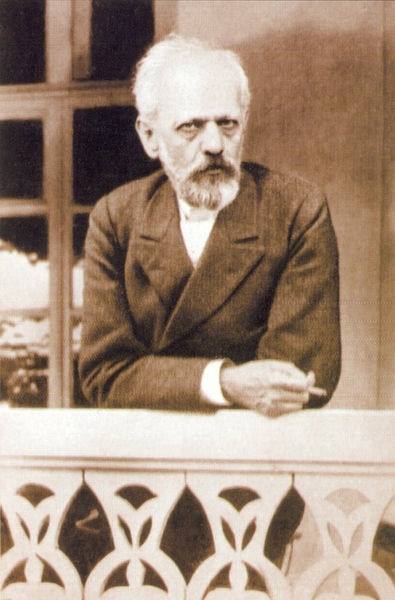

    PHOTO: Hélène Clément, Mitsuko Uchida, and Jennifer Johnson Cano

Tag Cloud

Aaron Copland (92) Beethoven (95) Composer (114) Film Music (120) Film Score (143) Film Scores (255) Halloween (94) John Williams (185) KWAX (229) Leonard Bernstein (100) Marlboro Music Festival (125) Movie Music (135) Opera (198) Philadelphia Orchestra (88) Picture Perfect (174) Princeton Symphony Orchestra (106) Radio (87) Ralph Vaughan Williams (85) Ross Amico (244) Roy's Tie-Dye Sci-Fi Corner (290) The Classical Network (101) The Lost Chord (268) Vaughan Williams (103) WPRB (396) WWFM (881)

DON’T MISS A BEAT

Receive a weekly digest every Sunday at noon by signing up here


RECENT POSTS