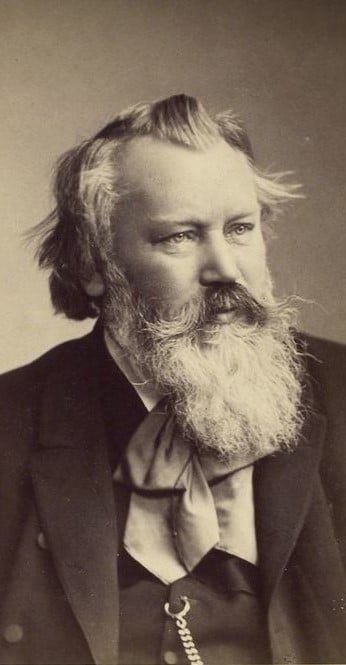
The “young eagle from the North,” as Schumann described him, gets his own Google Doodle. Happy birthday, Johannes Brahms, born 190 years ago today.
https://www.google.com/doodles/johannes-brahmss-190th-birthday
The “young eagle from the North,” as Schumann described him, gets his own Google Doodle. Happy birthday, Johannes Brahms, born 190 years ago today.
https://www.google.com/doodles/johannes-brahmss-190th-birthday
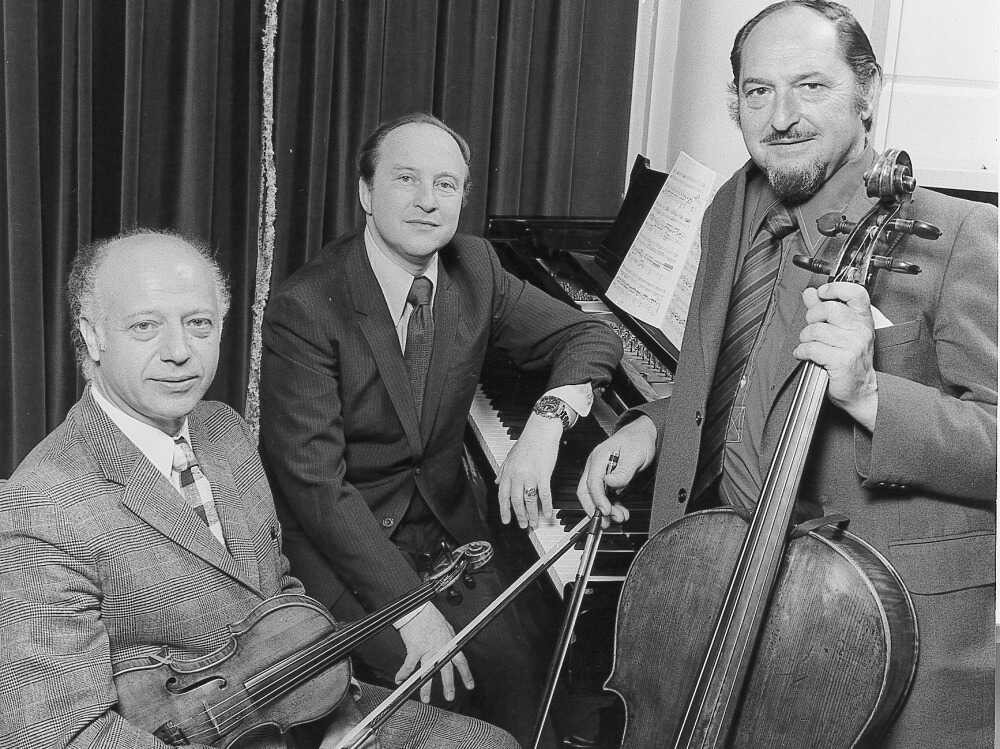
The pianist Menahem Pressler has died. Pressler was the anchor of one of the world’s most beloved chamber music ensembles, the Beaux Arts Trio. He was the only musician to perform with the group, which underwent several personnel changes, throughout its entire 53-year existence.
The serenity of his playing betrayed no indication of a harrowing start. Many of his relatives – grandparents, uncles, aunts, and cousins – were murdered during the Holocaust. Somehow he managed to escape Nazi Germany with his immediate family in 1939.
In 1946, he won first prize at the Debussy International Piano Competition in San Francisco. Not long after, he made his Carnegie Hall debut with the Philadelphia Orchestra conducted by Eugene Ormandy.
Beginning in 1955, Pressler taught at Indiana University Jacobs School of Music. The same year, he became a founding member of the Beaux Arts Trio.
Following the trio’s dissolution in 2008, Pressler returned to his career as a concert pianist. He made his debut with the Berlin Philharmonic at the age of 90.
Pressler died yesterday at the age of 99. He would have been 100 in December.
To coincide with the birthday of Johannes Brahms, here’s a lovely Beaux Arts performance of the composer’s Piano Trio No. 1.
Pressler plays Chopin in 2018
Pressler documentary in German (activate subtitles by clicking on CC)
R.I.P.
PHOTO: Pressler (center) with Beaux Arts colleagues Isadore Cohen (left) and Bernard Greenhouse
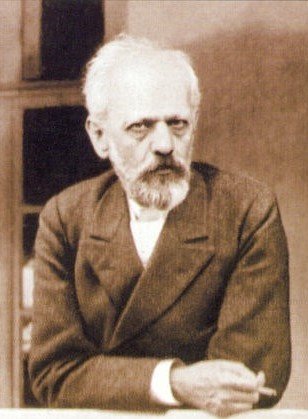
On Brahms and Tchaikovsky’s shared birthday anniversary, here’s a gold mine of material relating to the complicated relationship between the two artists, who didn’t much care for one another’s music, but rather enjoyed one another’s company.

Following up on my series of posts about his family’s fascinating bookplates (on February 23, February 27, and March 5), Xavier Montsalvtage finally gets his day. Join me this afternoon on The Classical Network, as I’ll celebrate the great Catalan composer’s birthday with his “Concerto breve.”
We’ll also hear music by three American originals: Henry Cowell, Carl Ruggles, and “The Beethoven of Kentucky” (and one of the founders of the New York Philharmonic), Anthony Philip Heinrich. AND a work for guitar and bandoneón by Argentinian master Astor Piazzolla.
At 6:00, it’s another “Music from Marlboro.” The highlight this evening will be the String Sextet No. 2, by a young and ardent Johannes Brahms.
We’re always passionate about music, from 4 to 7 p.m. EDT, on WWFM – The Classical Network and wwfm.org.
PHOTOS: Xavier Montsalvatge (left), with (top to bottom) Henry Cowell, Carl Ruggles, and Anthony Philip Heinrich
Aaron Copland (93) Beethoven (95) Composer (114) Film Music (144) Film Score (143) Film Scores (255) Halloween (94) John Williams (195) KWAX (229) Leonard Bernstein (104) Marlboro Music Festival (125) Movie Music (159) Mozart (90) Opera (212) Philadelphia Orchestra (89) Picture Perfect (174) Princeton Symphony Orchestra (109) Radio (88) Ross Amico (244) Roy's Tie-Dye Sci-Fi Corner (290) The Classical Network (101) The Lost Chord (269) Vaughan Williams (105) WPRB (397) WWFM (881)