It’s ironic that a man named Cage would be all about freedom.
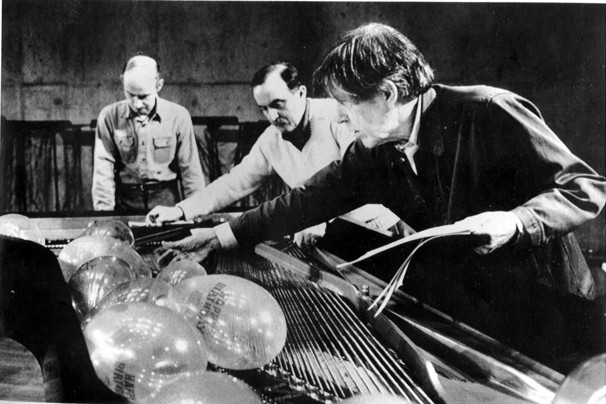
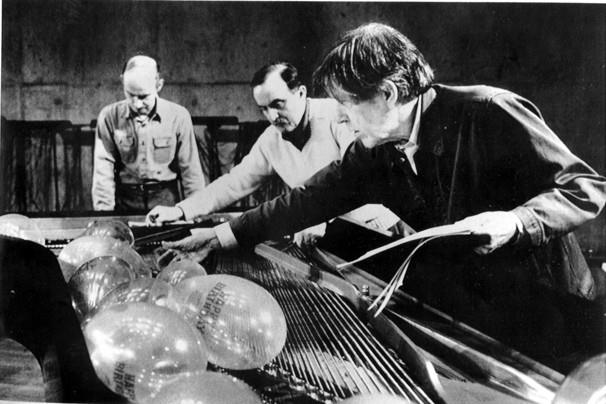
A pioneer of aleatory or chance-controlled music, electroacoustic music, nonstandard use of musical instruments (like the prepared piano), making music with found objects, and finding the music in everyday sounds, John Cage was a titan of 20th century music.
It’s possible to not know a single work he ever “wrote,” or at any rate conceived, and still be exposed to his influence constantly. Cage taught us new ways to think about sound and the nature of music, opening our ears to an infinite variety of new worlds for exploration. His genius lay in recognizing that which had always been invisible before our eyes and silent to our ears.
To honor him on his birthday, I might insert objects between the caps lock and shift key of my laptop, or roll dice to determine which letters or combinations of letters to hit, or allow my cat to walk across the keyboard or spill a cup of coffee across the keys.
Or I could write nothing at all and allow the peripheral impressions you receive from your own environment determine how you experience my blank post.
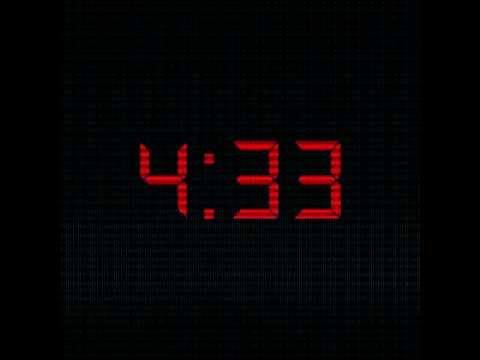
You don’t have to like Cage any more than you like the hum of the refrigerator, or a creaking chair, or a tree falling in the woods. If you’re there to hear it, once in a while you should be made to do so. Me, I’ll have 4’ 33” on infinite repeat all day.
Happy birthday, John Cage (1912-1992). There are plenty who would scoff at the Emperor’s New Clothes, but you were one hell of a tailor.
“I can’t understand why people are frightened of new ideas. I’m frightened of the old ones.” – John Cage
“Discovery consists of seeing what everybody else has seen and thinking what nobody has thought.” – Albert Szent-Györgyi
Cage’s most notorious piece, 4’ 33”:
Cage performs “Water Walk” on national television:
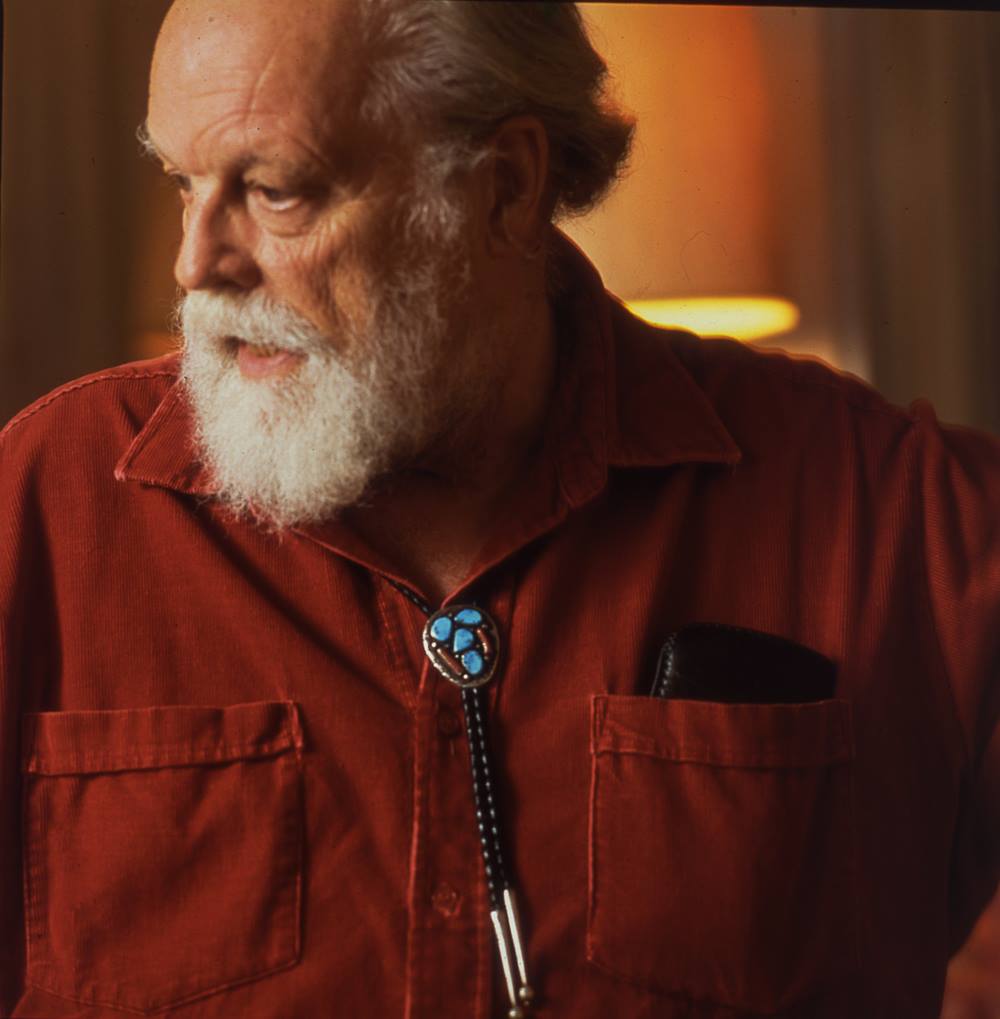
Today is the 100th anniversary of the birth of composer Lou Harrison. Frequently described as an “American maverick,” Harrison was a pioneer of assimilating what is now termed “world music,” blending Eastern and Western elements. In this way, he navigated his own route to postmodernism, and his influence has been as keenly felt as that of any 20th century composer.
Typically, Harrison discards the sense of willfulness and the projection of self that make many of our 20th century classics undeniably great. But in the process, he uncovers something else, a kind of musical equivalent to Zen that can be as entrancing as it is immediately accessible in its elegant simplicity. Funny to consider that among his teachers was Arnold Schoenberg. But then Harrison found joy in all kinds of music. He was mentored by Henry Cowell and Virgil Thomson. He was a friend of John Cage. He was an early champion of composers Edgard Varèse, Carl Ruggles and Alan Hovhaness.
Among his great contributions on behalf of others: Harrison conducted the world premiere of Charles Ives’ Symphony No. 3, “The Camp Meeting,” at Carnegie Hall in 1946. The piece had lain unperformed, in Ives’ possession, since its creation 40 years earlier. The symphony went on to win the Pulitzer Prize for Music, and it remains one of the few works to have been so honored to have entered the standard repertoire.
A lifelong pacifist, Harrison lived an openly gay lifestyle since the 1930s. To help make ends meet, he took side jobs as a record salesman, a florist, an animal nurse, and a forestry firefighter. He died at the age of 85 from a heart attack while traveling to a festival of his own music at Ohio State University in 2003. Not a bad way to go.
Happy birthday, Lou Harrison. You’ve touched many, many more than those who know your name.
It’s ironic that a man named Cage would be all about freedom.
A pioneer of aleotory or chance-controlled music, electroacoustic music, nonstandard use of musical instruments (such as the prepared piano), making music with found objects, and finding the music in everyday sounds, John Cage was a giant of 20th century music.
It’s possible to not know a single work he ever “wrote,” or at any rate conceived, and still be exposed to his influence constantly. Cage taught us new ways to think about sound and the nature of music, literally opening up new worlds for exploration. His genius lay in recognizing what had always been invisible before our eyes and silent to our ears.
To honor him on his birthday, I might insert objects between the caps lock and shift key of my laptop, or roll dice to determine which letters or combinations of letters to hit, or allow my cat to walk across the keyboard or spill a cup of coffee across the keys.
Or I could write nothing at all and allow the peripheral impressions you receive from your own environment determine how you experience my blank post.
Happy birthday, John Cage (1912-1992). There are plenty who would scoff at the Emperor’s New Clothes, but you were one hell of a tailor.
“I can’t understand why people are frightened of new ideas. I’m frightened of the old ones.” – John Cage
“Discovery consists of seeing what everybody else has seen and thinking what nobody has thought.” – Albert Szent-Györgyi
I hadn’t realized until last night that John Cage transcribed “4’ 33”” for orchestra. I wonder if anyone ever thought to program this as an encore to Mahler’s “Symphony of a Thousand?”