Tag: John Carter

  • Mars Movies Soundtracks Space and Cinema

    Mars Movies Soundtracks Space and Cinema

    Remember when going to Mars was fiction? Me too, and I’d like to keep it that way! This week on “Picture Perfect,” we’ll be seeing red, as we’re off to visit the fourth planet – or are we?

    “Capricorn One” (1978) posits, in true conspiracy theory fashion, that the first manned mission to Mars is a fabrication, filmed on a sound stage. However, when the actual capsule burns up upon re-entry into the earth’s atmosphere, the government attempts to cover it up, and the astronauts are sent scrambling for their lives. This is the film in which O.J. Simpson eats a rattlesnake. The cast also includes Elliott Gould, James Brolin, Sam Waterston, Hal Holbrook, and Karen Black. Jerry Goldsmith wrote the propulsive score.

    The Red Planet is also the destination of the crew of Mars Gravity Probe 1, in “Robinson Crusoe on Mars” (1964). In events which loosely parallel the trajectory of Daniel Defoe’s classic novel, commander Paul Mantee survives a crash on the seemingly desolate planet, along with the mission’s test monkey. Later, he develops a friendship with an escaped alien slave, whom he names Friday. The composer is Van Cleave.

    Van Cleave had much in common with Ferde Grofé. Yes, THE Ferde Grofé – he of “The Grand Canyon Suite.” You’ll recall Grofé acted as an orchestrator for the Paul Whiteman Band. His most celebrated achievement in that capacity was his arrangement of George Gershwin’s “Rhapsody in Blue.”

    Cleave had also served as an arranger for Whiteman. Later, he pioneered the use of the theremin in his television scores, for series like “The Twilight Zone.”

    It was Grofé who allegedly introduced the theremin to outer space, with his music for “Rocketship X-M” (1950). “Rocketship X-M’s” unlikely premise is that the spacecraft of the title overshoots its target, the moon, and inadvertently ends up on Mars – a difference of many, many, many millions of miles! Lloyd Bridges heads the cast.

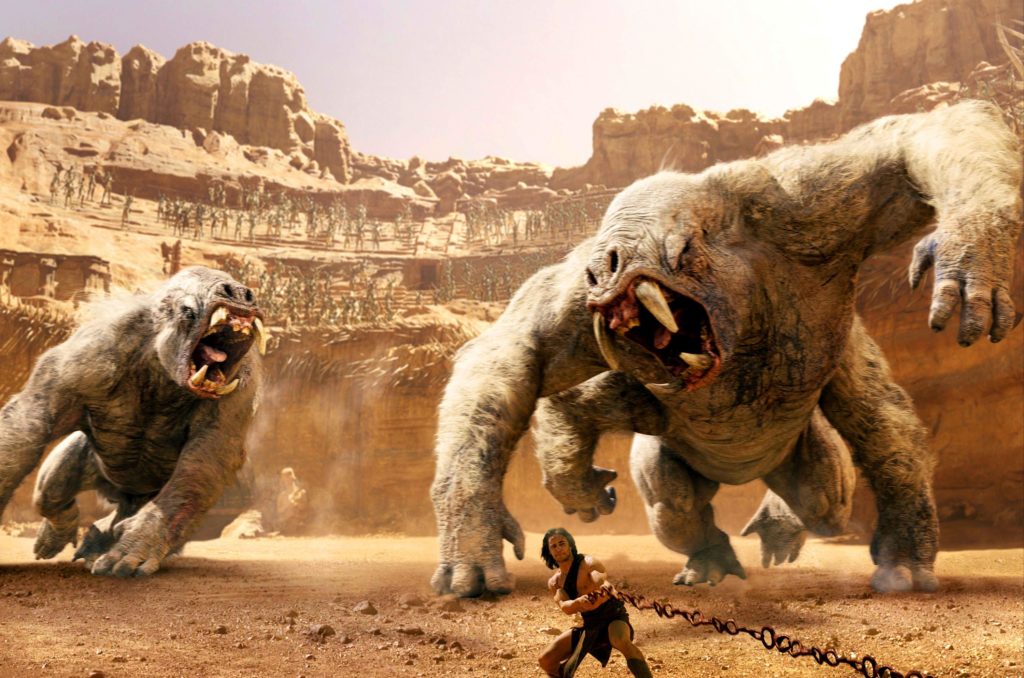
    Sadly, “John Carter” (2012), Walt Disney’s long-overdue adaptation of Edgar Rice Burroughs’ Martian tales, was branded a colossal flop. It’s a sad state of affairs when a 300 million dollar take is considered a disappointment! Though the film failed to live up to box office expectations, and some of the tropes established by Burroughs 100 years ago seem a little overly-familiar in the decades since the release of “Star Wars,” “John Carter” was nowhere near as bad as one was led to believe. It was certainly no worse than any other film of its kind made in recent years, and in fact a good deal better than many. And I would include in that assessment any of the recent Tolkien adaptations.

    True, most of the potential magic is lost in the usual over-reliance on computer effects, and the screenplay makes some unnecessary alterations to the books. But all in all, “John Carter” is a satisfying Martian adventure. Edgar Rice Burroughs never aspired to be Joseph Conrad. The film’s epic, evocative score is by Michael Giacchino.

    Red is the new black, with music from movies about the fourth planet. Mars is our destination – whether by design, by accident, by conspiracy, or by unexplained means – on “Picture Perfect,” music for the movies, now in syndication on KWAX, the radio station of the University of Oregon!


    Clip and save the start times for all three of my recorded shows:

    PICTURE PERFECT, the movie music show – Friday at 8:00 PM EDT/5:00 PM PDT

    SWEETNESS AND LIGHT, the light music program – Saturday at 11:00 AM EDT/8:00 AM PDT

    THE LOST CHORD, unusual and neglected rep – Saturday at 7:00 PM EDT/4:00 PM PDT

    Stream them, wherever you are, at the link!
    https://kwax.uoregon.edu/

  • Attic Treasures A Summer of Martian Dreams

    Attic Treasures A Summer of Martian Dreams

    After years of living in rentals, and at my grandparents’, I was excited to finally be moving into our own house. Not that those other places weren’t homey. There was always a lot of love and security and freedom from strife (after early childhood). But this was a real house, constructed in 1930, and it was ours.

    As if that weren’t exciting enough, I was to have the entire attic to myself, as my bedroom, which I could adorn with all my “Star Wars” and Marx Brothers paraphernalia and have my own phone and a turntable and a bookcase and a comfy chair.

    Of course, it was rather late in the game. By then I was already turning 17. In a year, I’d be caught in the inexorable pull of last-minute college preparations. But time was different then, and the days were long.

    Also, I tend to be a bit like chewing gum: once I get stuck on something, I’m difficult to get rid of. I may have been less than a year from high school graduation, but I would attend college only about 90 minutes away, and until I finally opened my first book shop in 1995 – the same time I was hired at WWFM, as a matter of fact, making for a seven-day work schedule – I was home as much as possible, on whatever weekends, holidays, or summer breaks I could get. So it remained “my room” for a decade or more.

    After 1995, the shift was gradual but inexorable, as the space metamorphosed into more what you might expect of an attic. It became a storage space in which my parents piled up old clothing, boxes of photos, luggage, wrapping paper, household accessories, plastic bins, and bric-a-brac, much of which probably should have just been tossed. It got to the point where they were simply piling things on and around the furniture.

    Now that my stepfather is in his 80s, it’s something I realize I need to address with greater industriousness. So I’ve been up a few times to retrieve some of my old belongings and to take stock of what should be bagged up and carted off. It’s an uncanny feeling to return to that space and still sense the room that once was, more or less preserved under decades of mummy dust or grown over with coral. For a room that has not really been temperature controlled for decades, it’s amazing how well-preserved are many of my toys, albums, books, magazines, comics, and films. But there are so many strata of coats and cardboard boxes and Christmas decorations. It’s a major excavation to get to anything.

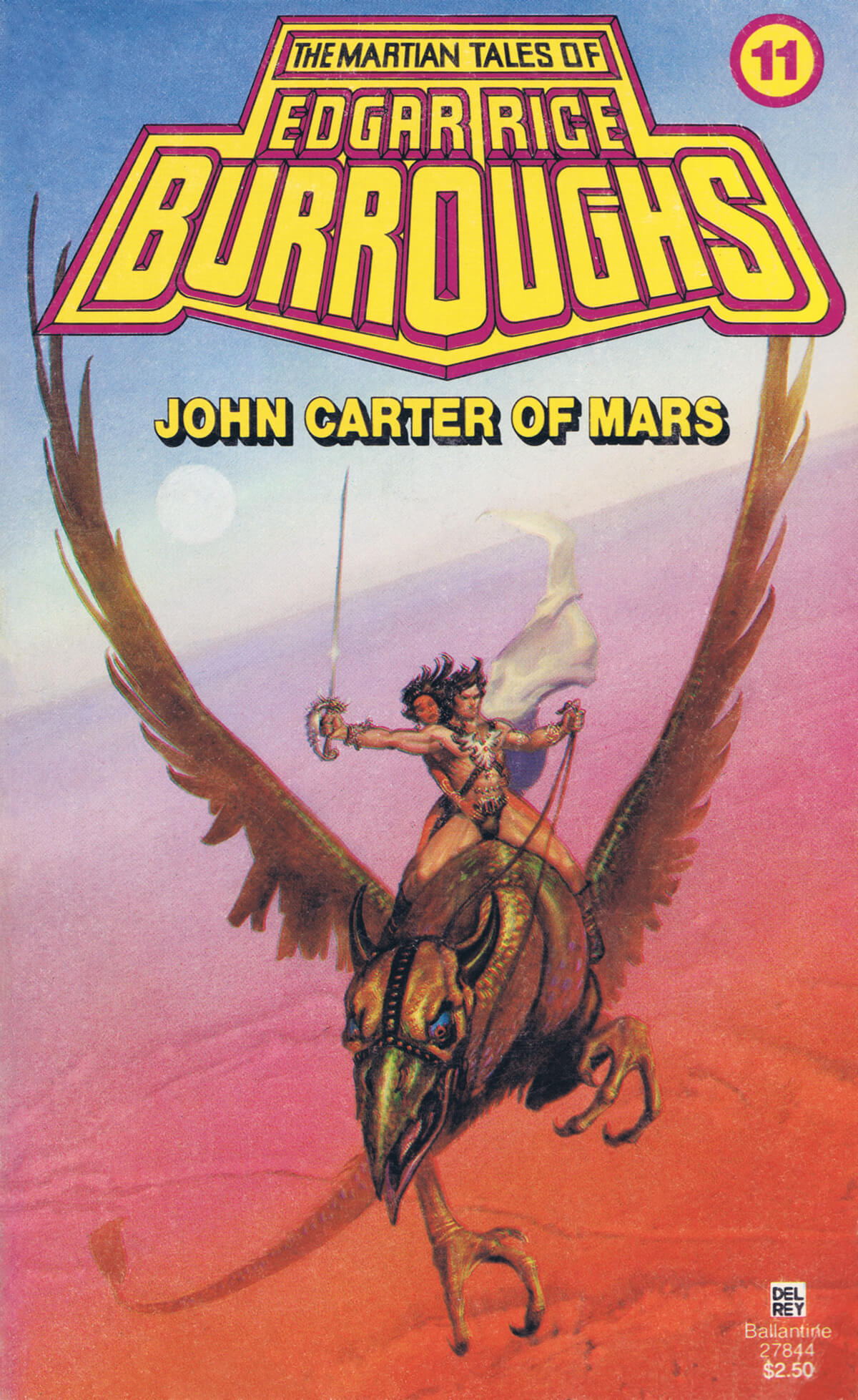
    Be that as it may – I realize that it sometimes takes me a while to get to the point – in the summer of ’83, 40 years ago, I was charged with the painting the house, prior to our moving everything in. Unfortunately for my folks, it was around the same time that I purchased Edgar Rice Burroughs’ Martian novels – you know, the ones featuring John Carter and his progeny – in the paperback editions with the Michael Whelan cover art. So I’d paint one wall, and then I’d reward myself with the reading of a chapter. Eventually, my mom started to wonder why it was taking me so long to finish the project.

    In a letter to the Corinthians, the Apostle Paul famously wrote, “When I was a child, I spoke as a child, I understood as a child, I thought as a child; but when I became a man, I put away childish things.” Evidently, he was unfamiliar with the escapist adventures of John Carter, Tars Tarkas, and Dejah Thoris.

    I am happy to say, I have always retained my appreciation for childish things, whether at 5, 10, 17, or 56. Reflecting back 40 years, on the summer of ’83, is giving me a powerful thirst for Barsoom.

  • Burroughs Interview Delayed New Date Set

    Burroughs Interview Delayed New Date Set

    Alas and alack! Internet issues have caused us to postpone our interview (previously scheduled for Sunday) with Edgar Rice Burroughs authority Scott Tracy Griffin. Griffin has now kindly agreed to join us on Sunday, August 22, at 7 PM.

    The Burroughs delay only gives me more time to shovel in more Tarzan and John Carter! Among Griffin’s extensive writings on Burroughs are two lavishly illustrated books, “Tarzan: The Centennial Celebration” and “Tarzan on Film.”

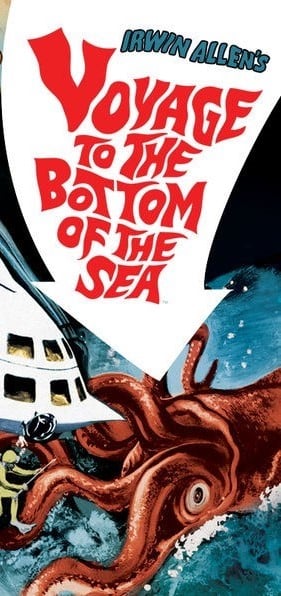
    In the meantime, Roy and I will continue, full steam ahead, with our planned discussion of the 1961 Irwin Allen film “Voyage to the Bottom of the Sea” (with Roy leeching off the wi-fi of a certain area restaurant), tomorrow evening at 7:30 EDT.

    NOTE THAT SPECIAL START TIME!

    Whether rumbling in the jungle or sleeping with fishes, we hope you’ll join us in the comments section, as we livestream on Facebook, on Roy’s Tie-Dye Sci-Fi Corner!

    https://www.facebook.com/roystiedyescificorner

  • Edgar Rice Burroughs Still Thrills

    Edgar Rice Burroughs Still Thrills

    It’s probably true that everything I liked as a kid, I still like now.

    I was already in my teens by the time I discovered Edgar Rice Burroughs. My family was about to move into a new house, and I was supposed to be painting the interiors. Instead, I spent huge swaths of the day reading about John Carter of Mars (or Barsoom, as it’s called by the natives). Eventually I finished the job, but it did not escape my mother’s notice that it took an awfully long time.

    Years later, as I was just getting sucked into the internet, I belonged to an online book chat, and one of the topics we discussed was what we enjoyed reading as we were growing up. I mentioned Burroughs, which spurred one of the other contributors to remark, “Some things are probably better left to memory.”

    Fast forward another decade. I was sifting through a box of my old paperbacks, when my eyes settled on Michael Whelan’s vibrant cover art, with its six-limbed Green Martians, scantily clad princesses, mad scientists, and swords everywhere. Why would I not want to re-explore?

    And you know what? The stories were still terrific.

    Scott Tracy Griffin will be our guest on an upcoming episode of “Roy’s Tie-Dye Sci-Fi Corner.” Griffin is a world authority on Burroughs. In particular, he has written extensively on the author’s most famous creation, Tarzan of the Apes. Needless to say, I am taking my preparation entirely too seriously – if having this much fun can be considered serious. I have read literally thousands of pages of Burroughs in preparation for the interview.

    Is Burroughs a great writer? From a literary standpoint, probably not. Even his plots can seem a little slapdash, written as they were for the pulps. But he is unquestionably a master entertainer. There is a raw power to his stories and a flamboyant passion underlying his descriptions that defy criticism. It’s easy to understand why he had such a lasting impact on figures ranging from Ray Bradbury to George Lucas to Carl Sagan.

    And it’s not like he doesn’t have anything to say. The stories are full of interesting, amusing, and occasionally horrifying observations about social constructs (practical and peculiar), race relations, overweening science, religious fanaticism, ivory tower intellectualism, autocratic rule, greed, lust, love, honor, sacrifice, environmental peril, the beauty of nature, and the mysteries of existence. Furthermore, since his characters and settings extend over multiple narratives, he is able to fully develop these magical, transporting worlds.

    Maybe Africa and Mars are not as strange and distant as they once seemed in the nineteen-tens (the era that produced Tarzan and John Carter). But Burroughs’ imagination is evergreen in its inspiration and fascination.

    Also, I love his crazy science! It’s not enough for Burroughs to build these insane worlds; he actually attempts at many points to explain how everything works. That his speculative flights are rooted in the science and technology of his own time makes them all the more fascinating. I love that people on Mars travel in aerial warships powered by propeller, and that no one seems to have developed methods of long-distance communication.

    Furthermore, despite the existence of rifles and sidearms, swords are still the preferred method of defense. Castles and walled cities are common. So as much as Burroughs looks forward, he also looks back.

    Sure, a broken clock is right twice a day, but give Burroughs some credit. He may lack the respectability of Jules Verne and H.G. Wells, but he did anticipate wireless technology, the teletype, radar, sonar, the radio compass, autopilot, television, cloning, organ transplants, and the use of radiation in warfare.

    Now that “Tarzan of the Apes,” The Return of Tarzan,” and “A Princess of Mars” have all been picked up by Penguin Classics, it’s high time to give Burroughs his due. Tarzan has been as enduringly popular as Sherlock Holmes and more insinuatingly primal than Conan Doyle’s other hero, Professor Challenger. And if you only know Tarzan from the movies, you don’t know Tarzan! These are simple adventure tales, to be sure, but they are also thought-provoking reflections of the era in which they were written that still have the power to enthrall today. Who knew? They are classics, after all.

    It’s the summer of Edgar Rice Burroughs! Join us as we chat about these topics and more with author Scott Tracy Griffin, on Roy’s Tie-Dye Sci-Fi Corner, when we livestream on Facebook, Sunday, August 8, at 7 PM EDT.

    https://www.facebook.com/roystiedyescificorner

    PLEASE NOTE: There will be no show this weekend, but Roy and I will be back on Friday, August 6, to discuss the 1961 Irwin Allen film, “Voyage to the Bottom of the Sea.”


    PHOTOS (counterclockwise from top): Burroughs authority Scott Tracy Griffin, his book “Tarzan: The Centennial Celebration,” the last of the John Carter collections, and the master himself

  • Mars Movies: War of the Worlds & John Carter

    Mars Movies: War of the Worlds & John Carter

    This week on “Picture Perfect,” it’s an interplanetary exchange program (though, granted, not always a peaceful one), with music from movies about visitors to and from Mars.

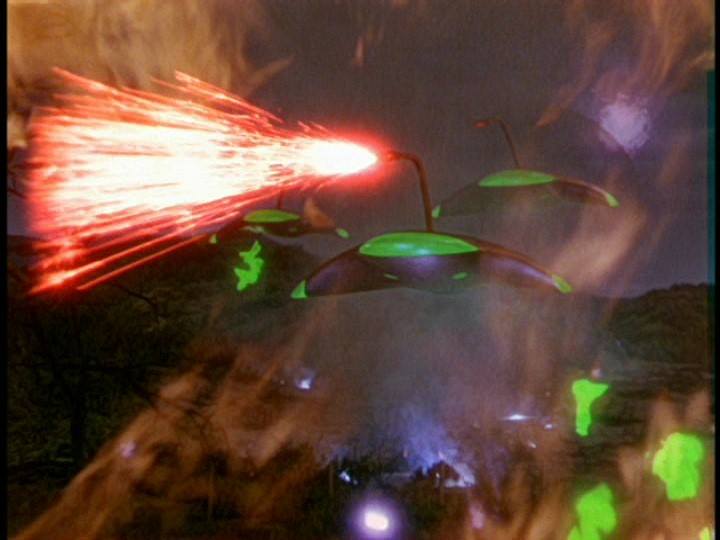
    The first half of the show will compare and contrast selections from two film adaptations of H.G. Wells’ Martian invasion novel, “The War of the Worlds” – the classic 1953 version, produced by George Pal, with music by Leith Stevens, and the Steven Spielberg blockbuster, from 2005 (titled, simply, “War of the Worlds”), with music by John Williams.

    Then we’ll take it to the Red Planet, when an American astronaut is stranded with his test monkey, in 1964’s “Robinson Crusoe on Mars,” with music by Van Cleave.

    And finally, Edgar Rice Burroughs’ John Carter gets the big screen treatment, in 2012, a hundred years after the fact, in… well, “John Carter.” (Why Disney dropped “of Mars” from the title – something that would have actually said something about the subject matter – is anybody’s guess.)

    Unfortunately the intervening decades robbed Burroughs’ creation of much of its freshness, with dozens, if not hundreds, of science fiction novels and movies having raided the author’s pulp treasure trove, making “John Carter” less striking than it might have been.

    And I’m sure you already know where I stand on CGI. I would have loved this film had it been made in the ‘70s or ‘80s, using miniatures and matte paintings. Don’t get me wrong, I still enjoyed it, but it didn’t give me a lift, as few movies do these days. That said, it certainly wasn’t the train wreck the press made it out to be.

    The music was by Michael Giacchino, who thankfully uses an orchestra and employs leitmotif, though perhaps doesn’t weave so rich a tapestry as might have some of his forebearers. It certainly ends the hour on a romantic note, a welcome relief after dodging so many Martian heat rays.

    I hope you’ll accompany me to and from Mars, on “Picture Perfect,” music for the movies, this Friday evening at 6 ET, with a repeat Saturday morning at 6, or that you’ll partake of the webcast (once it’s posted), at http://www.wwfm.org.

    PHOTO: Pal’s enemies

Tag Cloud

Aaron Copland (92) Beethoven (94) Composer (114) Film Music (117) Film Score (143) Film Scores (255) Halloween (94) John Williams (185) KWAX (228) Leonard Bernstein (99) Marlboro Music Festival (125) Movie Music (132) Opera (197) Philadelphia Orchestra (86) Picture Perfect (174) Princeton Symphony Orchestra (106) Radio (86) Ralph Vaughan Williams (85) Ross Amico (244) Roy's Tie-Dye Sci-Fi Corner (290) The Classical Network (101) The Lost Chord (268) Vaughan Williams (99) WPRB (396) WWFM (881)

DON’T MISS A BEAT

Receive a weekly digest every Sunday at noon by signing up here


RECENT POSTS