In keeping with winter solstice tradition, it is a day to visit friends and bear gifts, especially candles. Schools are closed. Courts are not in session. Oh yeah, there’s also a sacrifice to Kronos (a.k.a. Saturn) and a riotous feast with benefits.
On this most popular holiday to emerge from Ancient Rome, the social order is inverted and strictures are loosened. Slaves are served by their masters. Gambling is permitted in public. There is drinking, noise, mirth, and wantonness. The populace is showered with figs, nuts, and dates, women fight in the arena, and cranes are hunted by dwarfs. In short, it’s an old-fashioned Christmas, before there was even such a thing as Christmas. Hey, if the Flintstones can celebrate the birth of Jesus, why not?
In the interest of converting rather than alienating, Christianity kept the candles, but frowned on the orgies, or at least looked the other way. But Saturnalia traditions continued to be practiced down the centuries, as evidenced in the medieval Feast of Fools, in the Victorian revival of gift-giving, in the lighting of candles, and in the eating, drinking, singing, and dancing.
Saturnalia, at its peak, was practiced through December 23. Wishing you and yours a merry one!
As you set the table for Saturn, here’s John Ireland’s “Satyricon Overture:”
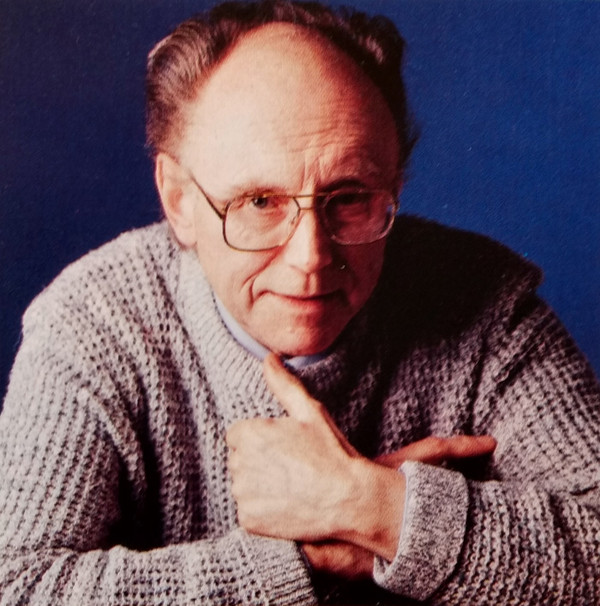
So sorry to learn of the death of Eric Parkin, one of Chandos Records’ stable of pianists. As such, Parkin recorded much English music. In particular, I have him to thank for introducing me to Billy Mayerl, sometimes described as the English Gershwin. What fun, joyous music his is!
Parkin also did much to champion the works of Sir Arnold Bax, John Ireland, and E.J. Moeran, alongside those of many others in even greater need of championing.
I can’t believe he was 96 years-old at the time of his death. I guess many of the recordings I’ve been listening to all these years were made 30-35 years ago. His performances have given me countless hours of pleasure.
R.I.P., Eric Parkin, and thank you for making my world a brighter place!
Perhaps appropriate for the Halloween season, Eric Parkin performs Billy Mayerl’s transcription of Guy Desslyn’s “The Pompous Gremlin”:
Personally, I prefer Mayerl’s “Bats in the Belfry,” but I can’t find Parkin’s recording online.
Parkin performed John Ireland’s Piano Concerto on several of his numerous appearances at the BBC Proms. The second movement is especially beautiful. Or at least I find it so. And the last movement is suitably jaunty.
Interestingly, the third movement seems to recall Ravel’s Concerto in G, written at approximately the same time, though Ravel’s concerto didn’t appear until after Ireland’s had already been published. Ireland did meet Ravel once in Paris. Could he have seen the score?
The work was dedicated to Helen Perkin (one letter off from Parkin!), a pianist Ireland happened to be sweet on. Unfortunately, the attraction was not reciprocated. But no one can fault Ireland for not trying. The slow movement of his concerto contains an allusion to Perkin’s own “Phantasy String Quartet,” though she described it as “more a reminiscence than an exact quotation.”
Earlier, Ireland had been in attendance as Perkin played Prokofiev’s Third Piano Concerto. So in that case, yes, he was definitely “borrowing.” You can hear the influence especially at the very end of his piece.
But all of this is getting very far away from Eric Parkin. I hope you will enjoy his recording of Ireland’s concerto.
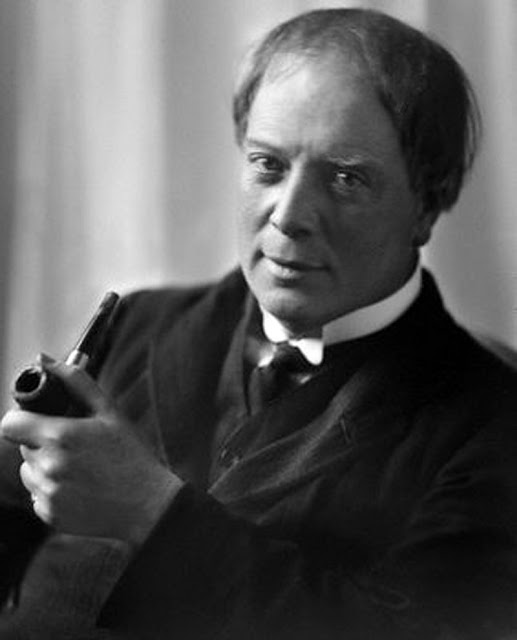
Oscar Wilde lavishly praised it. H.P. Lovecraft and Guillermo del Toro claimed it as a seminal influence. Stephen King called it “one of the best horror stories ever written. Maybe the best in the English language.”
Is Arthur Machen’s “The Great God Pan” (1894) really all that? I don’t know if I’d take it that far, but it certainly was influential.
Parallels have been drawn with Bram Stoker’s “Dracula” (1897) – likely because of its patchwork narrative and atmospheric distancing from an impalpable terror. In common with Stoker’s magnum opus, it teases the imagination into grasping for that which is always just beyond comprehension.
So unspeakable are the horrors that lurk within, Machen’s characters literally cannot bring themselves to speak them. Rather, there are abundant warnings about soul-shattering terrors, implied but never outright stated. The reader is given just enough to titillate that part of the brain that craves sensation, the desire to look upon that which makes us look away. There is a lot of very depraved action, evidently, transpiring right around the corner, or beyond the bluff, or in the woods, or behind the doors of a certain London townhouse.
From its reception, you’d think that Machen’s novella was a threat to the very underpinnings of Victorian society. “Too morbid to be the production of a healthy mind,” wrote one critic. Another assessed it as “A perfectly abominable story, in which the author has spared no endeavor to suggest loathsomeness and horror, which he describes as beyond the reach of words.” He continues with a warning that Machen’s books are a dangerous threat to the entire British public, and that they will destroy a reader’s sanity and grasp of morality.
Needless to say, with that kind of publicity, “The Great God Pan” sold like bangers and mash.
The story is certainly handled with far more subtlety and art than those churned out for the penny dreadfuls, popular serials by hack writers who trafficked in lurid melodrama. What made Machen seem so dangerous in the eyes of the establishment was likely a perceived affinity with the Decadent movement in art and literature, as embodied by Wilde and his associates. He may have shared Wilde’s publisher, The Bodley Head, and “Pan” itself prefaced with an illustration by Aubrey Beardsley, but Machen, the family man, was more than likely to be caught sipping black tea than absinthe.
He has been called the greatest of Welsh writers, yet he remains a cult figure, despite the widening availability of his work. It used to be that one had to sift for his stories, like shards of pottery, in anthologies of the supernatural; now editions of his works are available from more respectable outlets, like Oxford World’s Classics and Penguin Classics.
He was born in Caerleon, Monmouthshire, in 1863. Descended from a long line of clergyman, he himself was attracted to ancient and medieval history, a passion fueled by the Celtic and Roman ruins that studded the Welsh landscape. He was also fascinated by the occult, an interest sparked by an article on alchemy he had stumbled across in a volume of Dickens’ “Household Words,” discovered on the shelves of his father’s rectory library. “Pan” was inspired by the author’s personal interaction with the ruins of a Roman temple near his childhood home. The temple is believed to have been dedicated to Nodens, God of the Depths.
The composer John Ireland considered Machen’s fiction to be life-changing and claimed that it influenced much of his own work. Ireland’s “The Forgotten Rite” was directly inspired by readings of Machen’s books. These awakened in him an affinity for long-lost customs and rituals, often of a pagan hue. Ireland’s “Legend,” dedicated to Machen, and “Mai-Dun” both ruminate on ancient sites, imbued with a sense of the supernatural.
Machen’s writings were also beloved, on the one hand, by Jorge Luis Borges, acknowledged father of Latin American Magical Realism, and on the other, the occultist Aleister Crowley, whom Machen loathed.
Is Machen for everyone? Probably not. His prose is certainly much denser than that commonly encountered in fiction today. But the fact that it makes one strain to see beneath the surface makes it all the more effective. “Pan” is set in a world of scientists, occultists, and pompous gentlemen, all of whom speak in their own abstruse fashion. The truth, kept always ill-defined and just out of reach, lends the story the quality of a dream, or more precisely a nightmare.
I imagine some might find this kind of writing frustrating or even dull. There are no jump-scares or fountains of gore. There is, however, abundant atmosphere and a profound undercurrent of unseen horror unfolding beneath our very noses. “Pan” emerged from the same world as “The Strange Case of Dr. Jekyll and Mr. Hyde” (1886) and “The Picture of Dorian Gray” (1890). Also Jack the Ripper and the Whitechapel murders (1888-91). It was no great stretch for Machen to be able to instill in his readers a sense that there is much to be feared in ordinary life, and it all exists behind the thinnest of veils.
That said, if I’m to be honest, “Dracula” holds up much better as a popular story. A few eyerolling Victorian floridities aside, Stoker’s book, which owes much to “Pan,” is unremittingly compelling in a way that Machen’s story no longer is. I think any literate person can pick up “Dracula” and still thrill to its elemental power.
Machen is for the weird tales crowd. His underlying ideas are chilling. His technique is scattershot, but when everything comes together, his method is cumulatively brilliant. However, in a world accustomed to being bludgeoned with blunt sentences and vulgar bloodletting, “Pan” may seem, if not exactly tame, then frustratingly obscure. Needless to say, I like his writing very much.
The title, “The Great God Pan,” was taken from this poem by Elizabeth Barrett Browning. Below, you’ll also find a link to some of John Ireland’s music.
A MUSICAL INSTRUMENT (1862)
I.
WHAT was he doing, the great god Pan,
Down in the reeds by the river?
Spreading ruin and scattering ban,
Splashing and paddling with hoofs of a goat,
And breaking the golden lilies afloat
With the dragon-fly on the river.
II.
He tore out a reed, the great god Pan,
From the deep cool bed of the river:
The limpid water turbidly ran,
And the broken lilies a-dying lay,
And the dragon-fly had fled away,
Ere he brought it out of the river.
III.
High on the shore sate the great god Pan,
While turbidly flowed the river;
And hacked and hewed as a great god can,
With his hard bleak steel at the patient reed,
Till there was not a sign of a leaf indeed
To prove it fresh from the river.
IV.
He cut it short, did the great god Pan,
(How tall it stood in the river!)
Then drew the pith, like the heart of a man,
Steadily from the outside ring,
And notched the poor dry empty thing
In holes, as he sate by the river.
V.
This is the way,’ laughed the great god Pan,
Laughed while he sate by the river,)
The only way, since gods began
To make sweet music, they could succeed.’
Then, dropping his mouth to a hole in the reed,
He blew in power by the river.
VI.
Sweet, sweet, sweet, O Pan!
Piercing sweet by the river!
Blinding sweet, O great god Pan!
The sun on the hill forgot to die,
And the lilies revived, and the dragon-fly
Came back to dream on the river.
VII.
Yet half a beast is the great god Pan,
To laugh as he sits by the river,
Making a poet out of a man:
The true gods sigh for the cost and pain, —
For the reed which grows nevermore again
As a reed with the reeds in the river.
In keeping with winter solstice tradition, it is a day to visit friends and bear gifts, especially candles. Schools are closed. Courts are not in session. Oh yeah, there’s also a sacrifice to Kronos (a.k.a. Saturn) and a riotous feast with benefits.
On this most popular holiday to emerge from Ancient Rome, the social order is inverted and strictures are loosened. Slaves are served by their masters. Gambling is permitted in public. There is drinking, noise, mirth, and wantonness. The populace is showered with figs, nuts, and dates, women fight in the arena, and cranes are hunted by dwarfs. In short, it’s an old-fashioned Christmas, before there was Christmas. Hey, if the Flintstones can celebrate the birth of Jesus, why not?
In the interest of converting rather than alienating, Christianity kept the candles, but frowned on the orgies, or at least looked the other way. But Saturnalia traditions continued to be practiced down the centuries, as evidenced in the medieval Feast of Fools, in the Victorian revival of gift-giving, in the lighting of candles, and in the eating, drinking, singing, and dancing.
Saturnalia, at its peak, was practiced through December 23. Wishing you and yours a merry one!
I can’t promise that I’ll be playing any music for Saturnalia, exactly, but if you join me today between 4 and 7 p.m. EST, I’ll be serving up plenty for Christmas and mid-winter, on WWFM – The Classical Network and wwfm.org.
As you set the table for Saturn, here’s John Ireland’s “Satyricon Overture:”
John Ireland was no more Irish than (Finnish composer) Einar Englund was English. In fact, he was born in Bowdon, in Greater Manchester, into a family of Scottish descent. Ireland lost both parents in his mid-teens. Recollections of a melancholy childhood were said to have dogged him for the remainder of his days.
He studied composition at the Royal College of Music under Sir Charles Villiers Stanford (who also taught Gustav Holst, Ralph Vaughan Williams, Frank Bridge, and Sir Arthur Bliss, among others). Ever self-effacing, Ireland preferred to live his life outside the limelight. You might say he was modest to a fault. Benjamin Britten, who was an Ireland pupil, described him as possessing “a strong personality but a weak character.”
Even so, the premiere of Ireland’s Violin Sonata No. 2 in 1917 made the English musical establishment sit up and take notice. One can imagine the composer’s mixed emotions on the occasion. His awkwardness likely contributed to a very brief marriage, which is rumored to have been unconsummated. Ireland was 47; his bride was a 17 year-old pupil. Beyond that comparative moment of madness, the composer remained a bachelor for the rest of his life.
Ireland’s other students included E.J. Moeran, Geoffrey Bush, and Richard Arnell. The composer attained enough of a degree of prominence that he was offered the award of Commander of the Order of the British Empire (which naturally he declined). His 70th birthday was celebrated with a special Prom concert, with a performance of his Piano Concerto as the centerpiece.
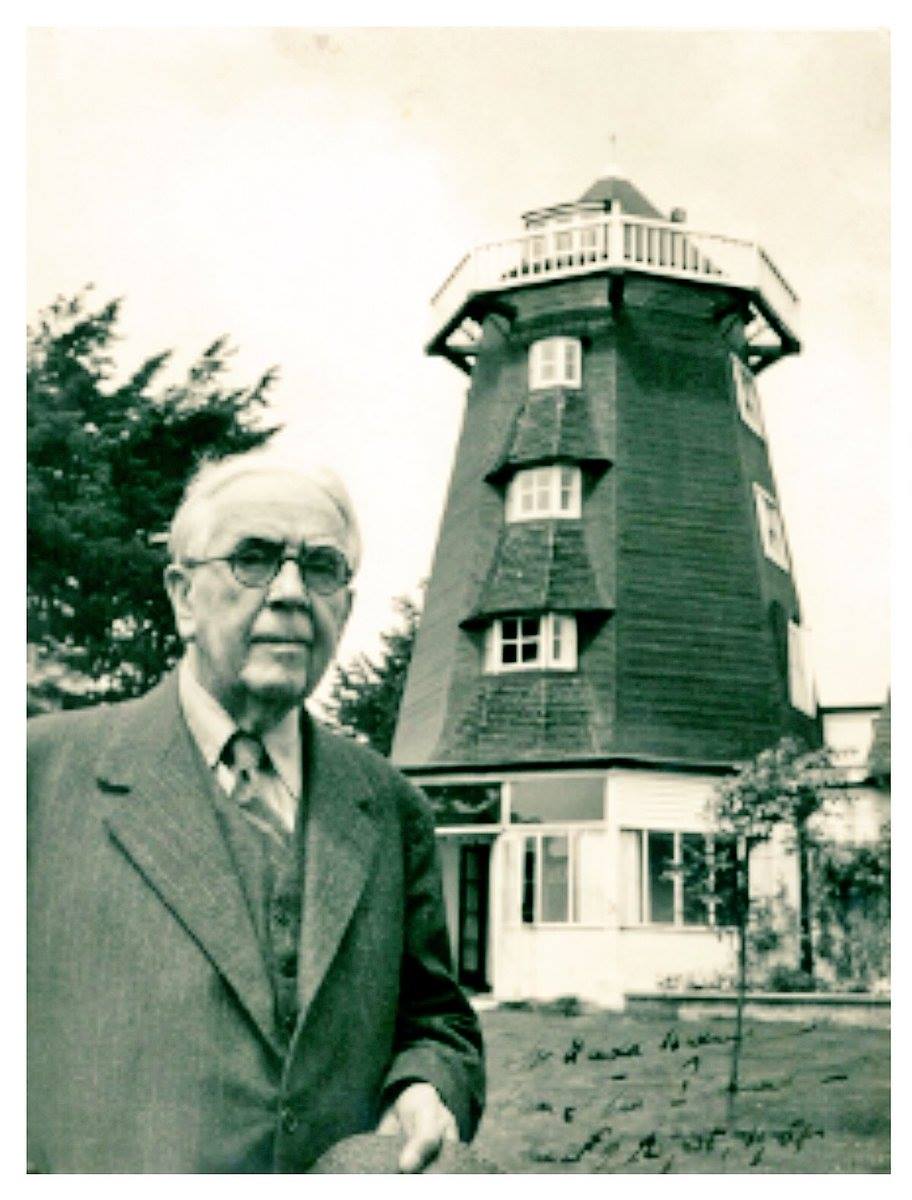
Ireland frequently visited the Channel Islands and drew inspiration from the native landscape. In 1939, he actually moved to Guernsey. He was evacuated from the islands ahead of the imminent German invasion during World War II. In 1953, he retired to a converted windmill in the hamlet of Rock in Sussex. He died in 1962 at the age of 82.
While there is plenty of wistfulness to be found in Ireland’s music – his is a fascinating alternative to the folk song-inflected style of many of his peers – there are also moments of pageantry that can stand toe-to-toe with the swaggering pomp of Elgar and Walton at their most imperial.
I hope you’ll join me for music of John Ireland, among my featured highlights, between 4 and 7 p.m. EDT, on WWFM – The Classical Network and wwfm.org.