Tag: Krampusnacht

  • Krampus, White Reindeer & Early Winter Visions

    Krampus, White Reindeer & Early Winter Visions

    I thought for a minute that Krampus had come a little early this year, but then I realized it was only a four-point buck outside my kitchen window.

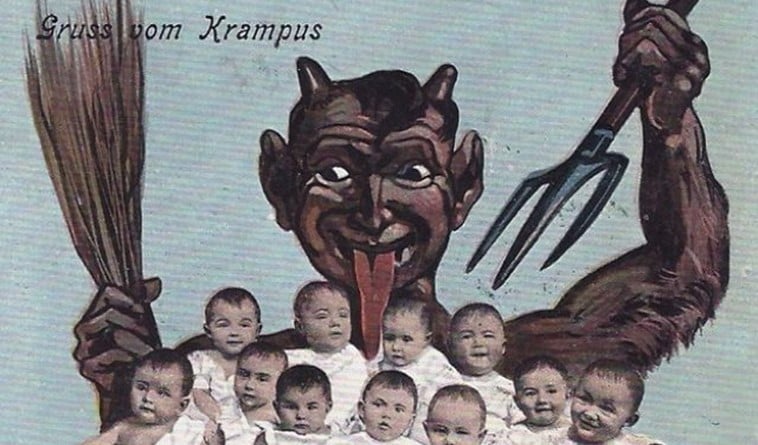
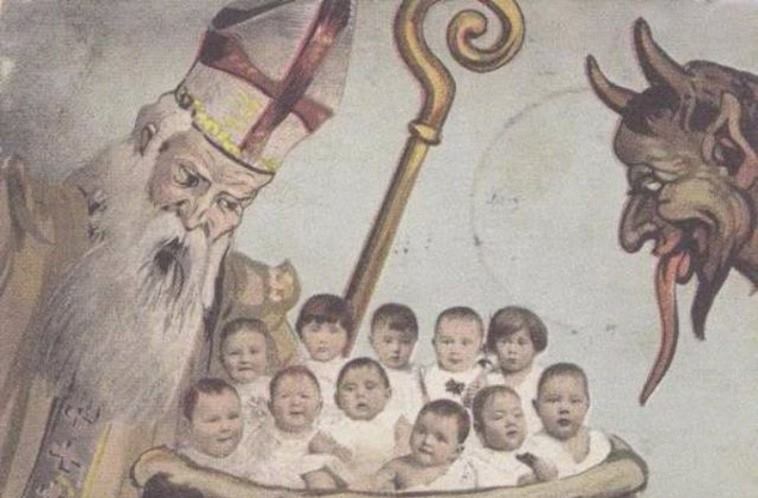
    December 5th, the eve of Saint Nicholas Day, is the night Krampus gets to flex his muscle. Egregiously-horned and whiplash-tongued, this Alpine demon scampers down from his mountain lair, festooned with chains and cowbells, to accompany St. Nick on his rounds. In an Old World display of good cop/bad cop, the Patron Saint of Children bestows small gifts on all the good girls and boys. And the bad? Well, the bad are turned over to Krampus.

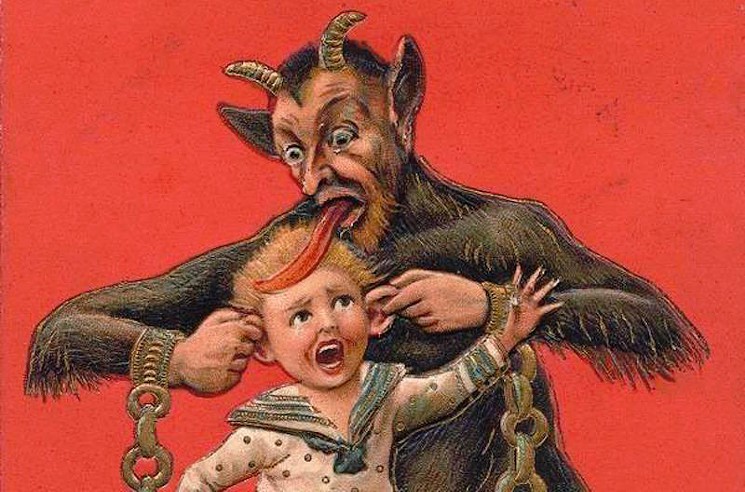
    At best, garden-variety naughtiness is repaid by the sting of a switch. But the especially ill-behaved are clapped in chains, taken for a short ride in a wicker basket, and then hurled into a stream or immolated by hellfire. With mounting anxiety a thousand times worse than the dread of a bad report card, a wee sinner pulls the sweat-soaked blankets over his or her head and prays vociferously for a stocking full of coal.

    Krampus’ momentum continues to build in the U.S., with Krampuslaufer (Krampus runs) springing up all over, most recently in Williamsport, PA. I’m not sure how I feel about that. I kind of liked it when my advocacy of an arcane Alpine Christmas demon still got looks of befuddlement, then disgust.

    The old ways are best! Stay dry, Krampus-runners! Gruß vom Krampus!


    If there is any classical music written for Krampus, I have yet to hear it. Therefore, as kind of a place-holder for this Krampusnacht, I offer a suite by Finnish composer Einar Englund from a film inspired by another bizarre legend, that of “The White Reindeer.” Don’t go into it expecting any Rankin-Bass Rudolph. This is Lapland, after all, the land of shapeshifting, vampiric livestock. This Rudolph sports teeth like The Abominable.

    I’ve got the music all cued-up and ready to go, starting at the 34-minute mark of this particular album. The suite runs about 14 minutes, through 47:45:

    Here’s the trailer for a recent reissue of the movie, a 1952 Cannes and Golden Globe Award winner:

    https://www.youtube.com/watch?v=ECyp3fJBI20

    Maybe that “buck” wasn’t a buck after all…


    Spare the Krampus, spoil the child!

  • Mozart’s Death Krampus Connection?

    Mozart’s Death Krampus Connection?

    How is it that I never before drew the connection?

    You know, every once in a while, how someone comes up with a new theory about the identity of Jack the Ripper, or claims to have discovered the secret of Elgar’s “Enigma Variations?” Well, it only just occurred to me, I may have solved the mystery of Wolfgang Amadeus Mozart’s death. And it is far more sinister than any alleged poisoning by Antonio Salieri.

    Mozart gave up the ghost on this date in 1791. A prodigy at the keyboard and on the violin, and a composer from the age of five, alas, in death he was also ahead of the curve.

    Mozart was 35 at the time of his passing, yet there was always something childlike in his personality. At times, he seemed much younger than his years. There’s no question that he could be naughty. He was certainly disobedient to his father, autocrat though he was. He defied the Pope, was extravagant in his spending, was inappropriate in his speech, and could be perhaps a mite too arrogant for his own good.

    The cause of Mozart’s death was recorded as “severe military fever.” Even so, over the years, there have been dozens of theories put forth as to the true nature of his passing. Acute rheumatic fever. Streptococcal infection. Influenza. Mercury poisoning. A rare kidney ailment. Even a bad pork chop. Combined, of course, with overwork.

    Alas, we’ll never know for sure. Mozart was buried in a common grave – not a communal grave, or a pauper’s grave, as has been frequently stated, but one whose wooden marker has long since worn away.

    Here’s the thing. December 5, the date of Mozart’s passing, also happens to be Krampusnacht. As a former native of Salzburg and later Vienna, Mozart should have known better. Because, you see, Austria is the dark, beating heart of the Christmas devil.

    What exactly is Krampus? Why, he’s St. Nicholas’ austere helper. Horned, hairy, and egregiously long-tongued, Krampus emerges from his Alpine domain to assist the patron saint of children on the eve of his feast day. Saint Nick bestows small gifts to all the good girls and boys. The rest are handed over to Krampus.

    For milder offenses, there is the sting of the switch; for the especially ill-behaved, there are chains, a short ride in a wicker basket, and drowning in a stream or immolation by hellfire. When a recalcitrant child hears the dull clatter of approaching cow-bells on December 5, he knows it’s all over. With anxiety a thousand times worse than the anticipation of a bad report card, the wee sinner pulls the sweat-soaked blankets over his head and prays vociferously for a stocking full of coal.

    No doubt, Mozart was a chronic offender. Could he have withstood a sound thrashing in his weakened state?

    Confutatis maledictus, indeed.

  • Mozart’s Death Krampus Was the Culprit?

    Mozart’s Death Krampus Was the Culprit?

    How is it that I never before drew the connection?

    You know, every once in a while, how someone comes up with a new theory about the identity of Jack the Ripper, or claims to have discovered the secret of Elgar’s “Enigma Variations?” Well, it only just occurred to me, I may have solved the mystery of Wolfgang Amadeus Mozart’s death. And it is far more sinister than any alleged poisoning by Antonio Salieri.

    Mozart gave up the ghost on this date in 1791. A prodigy at the keyboard and on the violin, and a composer from the age of five, alas, in death he was also ahead of the curve.

    Mozart was 35 at the time of his passing, yet there was always something childlike in his personality. At times, he seemed much younger than his years. There’s no question that he could be naughty. He was certainly disobedient to his father, autocrat though he was. He defied the Pope, was extravagant in his spending, was inappropriate in his speech, and could be perhaps a mite too arrogant for his own good.

    The cause of Mozart’s death was recorded as “severe military fever.” Even so, over the years, there have been dozens of theories put forth as to the true nature of his passing. Acute rheumatic fever. Streptococcal infection. Influenza. Mercury poisoning. A rare kidney ailment. Even a bad pork chop. Combined, of course, with overwork.

    Alas, we’ll never know for sure. Mozart was buried in a common grave – not a communal grave, or a pauper’s grave, as has been frequently stated, but one whose wooden marker has long since worn away.

    Here’s the thing. December 5, the date of Mozart’s passing, also happens to be Krampusnacht. As a former native of Salzburg and later Vienna, Mozart should have known better. Because, you see, Austria is the dark, beating heart of the Christmas devil.

    What exactly is Krampus? Why, he’s St. Nicholas’ austere helper. Horned, hairy, and egregiously long-tongued, Krampus emerges from his Alpine domain to assist the patron saint of children on the eve of his feast day. Saint Nick bestows small gifts to all the good girls and boys. The rest are handed over to Krampus.

    For milder offenses, there is the sting of the switch; for the especially ill-behaved, there are chains, a short ride in a wicker basket, and drowning in a stream or immolation by hellfire. When a recalcitrant child hears the dull clatter of approaching cow-bells on December 5, he knows it’s all over. With anxiety a thousand times worse than the anticipation of a bad report card, the wee sinner pulls the sweat-soaked blankets over his head and prays vociferously for a stocking full of coal.

    No doubt, Mozart was a chronic offender. Could he have withstood a sound thrashing in his weakened state?

    Confutatis maledictus, indeed.

  • Krampusnacht Devilish Delights & Dark Carols

    Krampusnacht Devilish Delights & Dark Carols

    Here comes Krampus – and along with him, my most controversial post of the year. I always lose one or two followers over Krampusnacht. Apparently it’s hard for some folks to reconcile Christmas with an Alpine devil. But when it comes to the holidays, the Central European psyche holds nothing in reserve.

    In the grand tradition of spare the rod, spoil the child (Proverbs 13:24), with Krampus the Old World really pulls out all the stops. On December 5, the eve of Saint Nicholas’ Day, it is the custom for an egregiously-horned, whiplash-tongued demon to emerge from his mountain lair, festooned in chains and cow bells, to accompany the Patron Saint of Children on his rounds. Saint Nick bestows small gifts to all the good boys and girls; the bad are handed over to Krampus.

    Garden-variety naughtiness may earn the sting of a switch; but the especially ill-behaved are clapped in chains, taken for a short ride in a wicker basket, and then drowned in a stream or immolated by hellfire. With mounting anxiety a thousand times worse than the anticipation of a bad report card, a wee sinner pulls the sweat-soaked blankets over his head and begins to pray vociferously for a stocking full of coal.

    It is with mixed emotions that I watch Saint Nick’s dark helper creep ever closer to the mainstream. It used to be that there were one or two books of vintage postcards, and they were out of print and difficult to get a hold of. Now Krampus has become something of a shadow industry. He’s even been the subject of a major motion picture, for crying out loud. I never thought I would see it, but The Man is trying to appropriate Krampus, just like he did rock ‘n’ roll. But you can’t keep a good demon down. As long as there are people fed up with Black Friday sales on Thanksgiving, there will always be plenty of fuel for a reactionary Black Christmas. And no amount of tinsel is going to change that.

    If there is any classical music written for Krampus, I have yet to hear it. Therefore, as a kind of place holder on this Krampusnacht, I will offer a suite by Finnish composer Einar Englund for a film inspired by another bizarre legend, that of “The White Reindeer.” Don’t go into it expecting any Rankin-Bass Rudolph. This is Lapland, after all, the land of shape-shifting, vampiric livestock. This Rudolph sports teeth like The Abominable.

    It’s also the birthday today of pianist Krystian Zimerman. He’ll be the soloist in Franz Liszt’s “Totentanz” (“Dance of Death”). As time allows, we’ll even have a diabolical sleigh-ride courtesy of Bernard Herrmann.

    Oh yes! We’ll also mark the birthdays of Francesco Geminiani, Vítězslav Novák, Osvaldo Golijov, and José Carreras, with a little more Hanukkah music tossed into the mix, from 4 to 6 p.m. EST. Then stick around for “Music from Marlboro.” We’ll embrace the saints at 6 – more about that in an upcoming post – on WWFM – The Classical Network and wwfm.org.

    This year’s Parade of Spirits, Liberty Lands, formerly known as Krampuslauf, spills into the streets of Philadelphia’s Northern Liberties neighborhood on December 15. The event will benefit Delaware Valley homeless shelters.

    Go ahead and unfollow me, if you must. You can stop your ears, but you can’t stop Krampus.

  • Krampus is Coming Controversial Christmas Devil

    Here comes Krampus – and along with him, my most controversial post of the year. I always lose one or two followers over Krampusnacht. Apparently it’s hard for some folks to reconcile Christmas with an Alpine devil. But when it comes to the holidays, the Central European psyche holds nothing in reserve.

    In the grand tradition of spare the rod, spoil the child (Proverbs 13:24), in Krampus the Old World really pulls out all the stops. On December 5, the eve of Saint Nicholas’ Day, it is the custom for an egregiously-horned, whiplash-tongued demon to emerge from his mountain lair, festooned in chains and cow bells, to accompany the Patron Saint of Children on his rounds. Saint Nick bestows small gifts to all the good boys and girls; the bad are handed over to Krampus.

    Garden-variety naughtiness may earn the sting of a switch; but the especially ill-behaved are clapped in chains, taken for a short ride in a wicker basket, and then drowned in a stream or immolated by hellfire. With mounting anxiety a thousand times worse than the anticipation of a bad report card, a wee sinner pulls the sweat-soaked blankets over his head and begins to pray vociferously for a stocking full of coal.

    It is with mixed emotions that I watch Saint Nick’s dark helper creep ever closer to the mainstream. It used to be that there were one or two books of vintage postcards, and they were out of print and difficult to get a hold of. Now Krampus has become something of a shadow industry. He’s even been the subject of a major motion picture, for crying out loud. I never thought I would see it, but The Man is trying to appropriate Krampus, just like he did rock ‘n’ roll. But you can’t keep a good demon down. As long as there are people fed up with Black Friday sales on Thanksgiving, there will always be plenty of fuel for a reactionary Black Christmas. And no amount of tinsel is going to change that.

    If there is any classical music written for Krampus, I have yet to hear it. Therefore, as a kind of place holder on this Krampusnacht, I will offer a suite by Finnish composer Einar Englund for a film inspired by another bizarre legend, that of “The White Reindeer.” Don’t go into it expecting any Rankin-Bass Rudolph. This is Lapland, after all, the land of shape-shifting, vampiric livestock. This Rudolph sports teeth like The Abominable.

    It’s also the birthday today of pianist Krystian Zimerman. He’ll be the soloist in Franz Liszt’s “Totentanz” (“Dance of Death”). Then, if time allows, we’ll have a diabolical sleigh-ride courtesy of Bernard Herrmann.

    Oh yes! We’ll also mark the birthdays of Francesco Geminiani, Vítězslav Novák, Osvaldo Golijov, and José Carreras, with a little more Hanukkah music tossed into the mix, from 4 to 6 p.m. EST. Then stick around for “Music from Marlboro. We’ll embrace the saints at 6 – more about that in an upcoming post – on WWFM – The Classical Network and wwfm.org.

    This year’s Parade of Spirits, Liberty Lands, formerly known as Krampuslauf, spills into the streets of Philadelphia’s Northern Liberties neighborhood on December 9. The event will benefit Delaware Valley homeless shelters.

    Go ahead and unfollow me, if you must. You can stop your ears, but you can’t stop Krampus.

Tag Cloud

Aaron Copland (92) Beethoven (95) Composer (114) Film Music (123) Film Score (143) Film Scores (255) Halloween (94) John Williams (187) KWAX (229) Leonard Bernstein (101) Marlboro Music Festival (125) Movie Music (138) Opera (202) Philadelphia Orchestra (89) Picture Perfect (174) Princeton Symphony Orchestra (106) Radio (87) Ralph Vaughan Williams (85) Ross Amico (244) Roy's Tie-Dye Sci-Fi Corner (290) The Classical Network (101) The Lost Chord (268) Vaughan Williams (103) WPRB (396) WWFM (881)

DON’T MISS A BEAT

Receive a weekly digest every Sunday at noon by signing up here


RECENT POSTS