Tag: Labor Day

  • Remembering the Jerry Lewis MDA Telethon

    Remembering the Jerry Lewis MDA Telethon

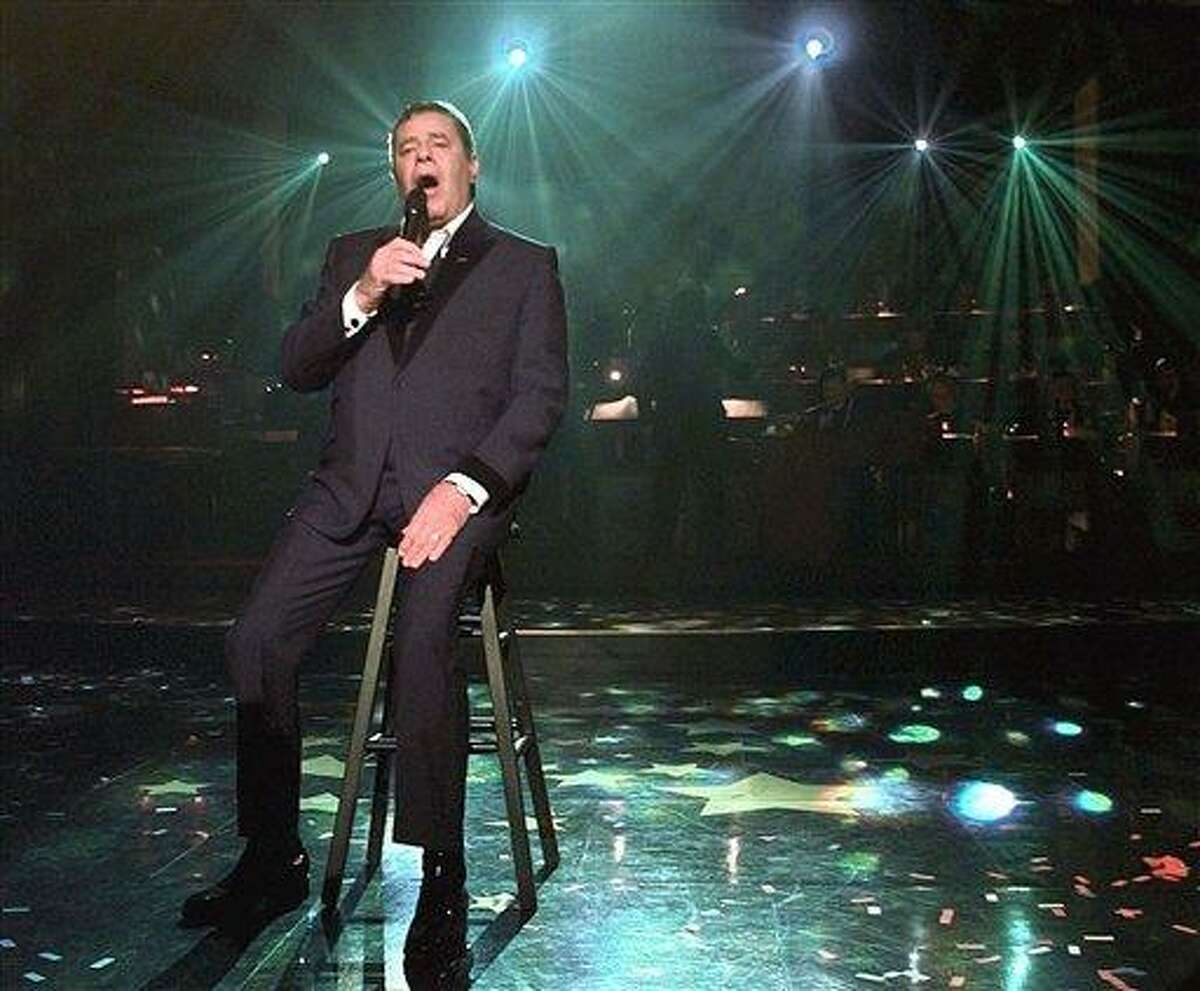
    For those of a certain era, it was never Labor Day without the Jerry Lewis MDA Labor Day Telethon. The show, presented as a benefit for the Muscular Dystrophy Association, was a star-studded endurance test, with celebrities ranging from Sinatra to Charo to Don Rickles to Midori giving their all, the whole while with a toll-free number superimposed at the bottom of the screen.

    The show began on Sunday evening and ran through late Monday afternoon. Jerry would emcee in varying degrees of sleep-deprived dishevelment. By the end, the bowtie was undone and the rumpled shirt unbuttoned, as he wrung out the final dollars and maybe even a few tears from a captivated television audience.

    The telethon ran for 44 years, from 1966 to 2010, raising billions for MD research. For a good deal of its existence, it was broadcast from Las Vegas, with Ed McMahon serving as cohost. A super infusion of old-school showmanship – a glitzy, schmaltzy, backslapping, in-jokey exercise, turned to the service of a good cause – there really was nothing like it. It had an inexplicable magnetism, easy to make light of, but hard to look away.


    Jerry opens the show in 2006 by conducting Leonard Bernstein’s “Candide Overture.”

    Charo

    Reunion with Dean Martin

    Jerry brings it home with “You’ll Never Walk Alone”

    There’s a whole channel devoted to this stuff on YouTube

    https://www.youtube.com/c/MDATelethon

    And another one here

    https://www.youtube.com/user/thetelethonyears

  • Labor Day Road Trip American Music

    Labor Day Road Trip American Music

    Labor Day weekend. Summer’s last hurrah.

    It may be the first weekend of September, but there’s still time for one more summer road trip.

    This Sunday night on “The Lost Chord,” it’s an hour of quintessentially American music about travel by car.

    Frederick Shepherd Converse’s “Flivver Ten Million” traces the Ford Motor Company’s affordable assembly line automobile, from its creation in a Detroit factory to the manifest destiny of America’s roadways.

    John Adams’ “Road Movies” has nothing at all to do with Bob Hope and Bing Crosby, alas. What it is, however, is a violin sonata written firmly within the American tradition, with a special affinity at its core with Aaron Copland’s Violin Sonata.

    Virgil Thomson’s “Filling Station,” written for Leon Kirstein’s Ballet Caravan, may have the distinction of being the only ballet set at a gas station. The work’s success gave Copland the confidence to follow through on another Caravan commission, which resulted in “Billy the Kid.”

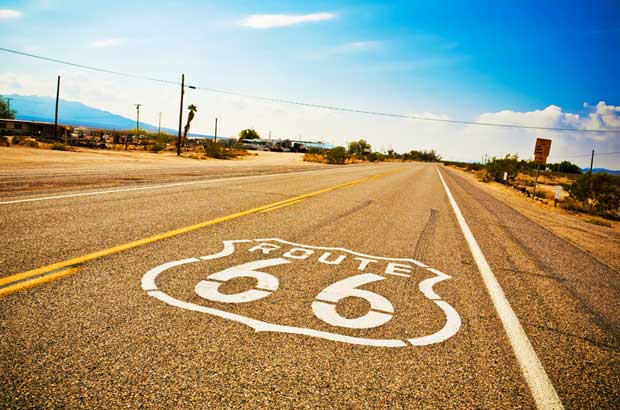
    Finally, we’ll hear one of Michael Daughtery’s most performed works, the exuberant “Route 66,” inspired by the storied “Main Street of America.”

    Put the pedal to the metal. American composers hit the road for Labor Day, on “The Last Roads of Summer,” this Sunday night at 10:00 EDT, on WWFM – The Classical Network and wwfm.org.

  • “Cradle Will Rock”: Welles & Blitzstein’s Labor Day Coup

    “Cradle Will Rock”: Welles & Blitzstein’s Labor Day Coup

    For Labor Day, Marc Blitzstein and Orson Welles stick it to the Man – or Mr. Mister, as the case may be – with “The Cradle Will Rock.”

    The Philadelphia-born Blitzstein is probably best remembered for two things: for supplying the fine English translation/adaptation of Kurt Weill and Bertolt Brecht’s “The Threepenny Opera;” and for being the composer of this incendiary entertainment.

    Not long before “Cradle”s scheduled premiere, on June 16, 1937, the Brechtian, pro-labor musical was shut down by the Works Progress Administration, allegedly due to budget cuts. However, the padlocks on the theatre, the security guards, and the unwillingness to release props or costumes seemed to bolster assertions that the play was censored for being too radical.

    One must never toss a bone like that to Orson Welles. Welles turned it into a publicity coup by leading a 21-block march to a much larger theatre, where “The Cradle Will Rock” skirted union restrictions by scrapping the orchestra and having the actors perform their parts from the audience, while Welles and Blitzstein presided from the stage.

    The stunt worked so well that the show was able to secure a private backer and all subsequent performances were done in the same manner, with the actors in the audience. The producer, John Houseman, was elated that such a practical solution should prove to be the key to the show’s success.

    “There has always been the question of how to produce a labor show so the audience feels like it is a part of the performance,” he commented. “This technique seems to solve that problem and is exactly the right one for this particular piece.”

    The success of “The Cradle Will Rock” led Welles and Houseman to form the Mercury Theatre.

    But don’t take my word for it. Blitzstein tells the story himself in this reminiscence of the first performance of “The Cradle Will Rock.”


    PHOTO (left to right) Blitzstein, Welles, and Lehman Engel in 1937

  • Labor Day Movie Music Working Stiffs on Film

    Labor Day Movie Music Working Stiffs on Film

    Heigh-ho! This week on “Picture Perfect,” we celebrate Labor Day with music from movies about the working stiff.

    “The Molly Maguires” (1970), set in and around the anthracite mines of Pennsylvania, illustrates the unfair labor practices imposed on immigrant workers there, which triggered violent strikes and acts of sabotage. Sean Connery is the ringleader and Richard Harris the Pinkerton detective brought in to infiltrate the gang.

    The film was directed by Martin Ritt, a number of whose projects deal with labor, corruption, and intimidation, and his own experiences living through the era of the Hollywood blacklist – among these, “Edge of the City,” “The Front,” and “Norma Rae.”

    The music is by Henry Mancini, a far cry from his work on “The Pink Panther,” “Peter Gunn,” and “Breakfast at Tiffany’s,” with a decidedly Celtic lilt.

    Charlie Chaplin was a brilliant comedian, of course, but his perfectionism often resulted in uncomfortably close supervision over every aspect of his films. The young David Raksin found this out the hard way, when he accepted the job of assisting Chaplin in the writing of the score to “Modern Times” (1936).

    Chaplin, a violinist and cellist himself, would whistle tunes and then stand over Raksin’s shoulder as he figured out how to make them fit the action. Alfred Newman, a much more seasoned hand, resented the micromanagement and stormed out of the film’s recording sessions. Raksin was actually fired once, after only a week and a half, but he was quickly rehired. Despite the creative friction, Chaplin and Raksin became friends, and Raksin recollected his work on “Modern Times” as some of the happiest days of his life.

    The film begins with an iconic factory scene, Chaplin working an assembly line at an increasingly hectic pace, literally being put through the gears of the machinery. He suffers a breakdown, goes berserk, and throws the entire mechanized dystopia into chaos.

    Speaking of dystopias, few can match the OSHA-flouting nightmare of Fritz Lang’s “Metropolis” (1927). One of the landmarks of silent cinema, “Metropolis,” unfortunately, is eerily prescient of a world divided between the haves and the have-nots. Once seen, the subterranean hell of the workers’ hive is not soon to be forgotten.

    Lang’s vision continues to resonate in more ways than one, with its iconography shamelessly recycled by dewy-eyed fans and film students down the generations. Similarly, Gottfried Huppertz’s influential, Straussian score led the way for the opulent symphonic canvases of Max Steiner, Erich Wolfgang Korngold, and John Williams.

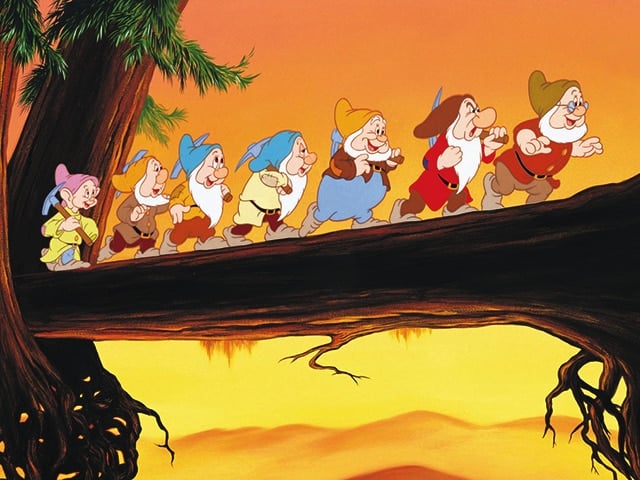
    Finally, we’ll accept a helping hand – as well as claw, tail, beak, and tongue – from the benevolent woodland creatures of “Snow White and the Seven Dwarfs” (1937). Frank Churchill and Larry Morey’s songs are justifiably immortal.

    The “picks” are all “mine” for Labor Day. Whistle along to music from movies about work, on “Picture Perfect,” this Saturday evening at 6:00 EDT, on WWFM – The Classical Network and wwfm.org.
  • Labor Day Listen Paul Robeson’s Joe Hill

    Labor Day Listen Paul Robeson’s Joe Hill

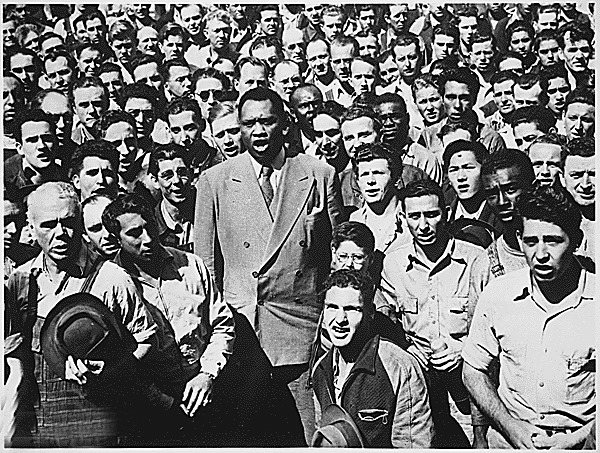
    Can’t – and shouldn’t – get through Labor Day without listening to Paul Robeson sing “Joe Hill.”

Tag Cloud

Aaron Copland (93) Beethoven (95) Composer (114) Film Music (144) Film Score (143) Film Scores (255) Halloween (94) John Williams (195) KWAX (229) Leonard Bernstein (104) Marlboro Music Festival (125) Movie Music (159) Mozart (90) Opera (212) Philadelphia Orchestra (89) Picture Perfect (174) Princeton Symphony Orchestra (109) Radio (88) Ross Amico (244) Roy's Tie-Dye Sci-Fi Corner (290) The Classical Network (101) The Lost Chord (269) Vaughan Williams (105) WPRB (397) WWFM (881)

DON’T MISS A BEAT

Receive a weekly digest every Sunday at noon by signing up here


RECENT POSTS