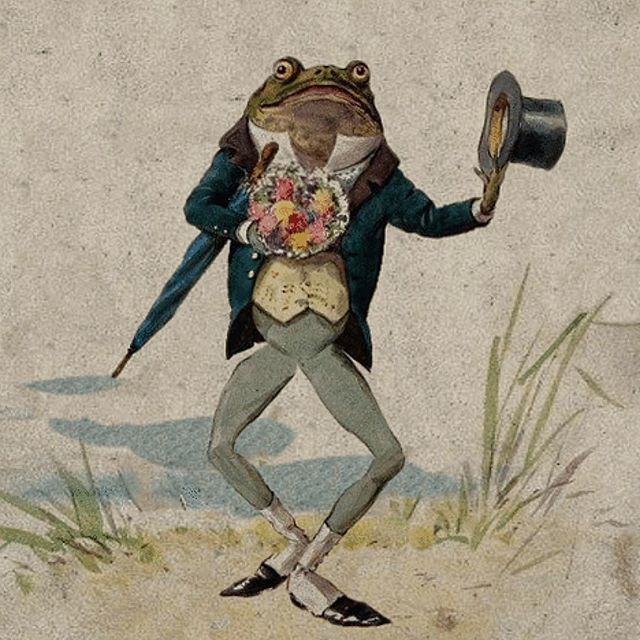
This week on “Sweetness and Light,” hie thee to the church on time. it’s an hour of June weddings!
We’ll have a comedy overture, “The Tinker’s Wedding,” by English composer Havergal Brian. Brian attained notoriety for his “Gothic Symphony,” a work so grand it entered the Guinness Book, when it was acknowledged as the world’s largest symphony. He composed 32 symphonies in all, 20 of them after the age of 80!
We’ll also hear a wedding march by Alexander Glazunov, composed to mark his parents’ silver anniversary and a processional by Philadelphia composer Robert Moran, written as a wedding gift for his friend, organist Robert Ridgell (then of Trinity Wall Street).
Camille Saint-Saëns wrote his confectionery, the “Wedding Cake,” a work for piano and orchestra, as a matrimonial offering to former Liszt pupil Caroline de Serres Wieczffinski (née Montigny-Rémaury). Imagine trying to fit that name on an invitation.
Speaking of the piano, anyone who took lessons surely bears the scars of Carl Czerny. But Czerny composed more than just exercises and etudes. We’ll hear his “Fantaisie brillante” on themes from Mozart’s “The Marriage of Figaro.”
We’ll also hear a work by Wolfie’s father, Leopold Mozart, a raucous, descriptive symphony called “The Peasant Wedding.” And a rowdy wedding it is!
Once experienced, there’s no turning back, so we’ll wrap things up with violinist Lara St. John’s polka band, Polkastra, and the “Shotgun Wedding March,” from their album, “I Do.” And I think you’ll agree, Spike Jones would be proud.
Look for me in my squirting boutonniere. Say “I do” to “Sweetness and Light,” this Saturday morning at 11:00 EDT/8:00 PDT, exclusively on KWAX Classical Oregon!
Stream it, wherever you are, at the link:
https://kwax.uoregon.edu/
Tag: Lara St. John
-
Say I Do to June Weddings on “Sweetness and Light”
-
Saint-Saëns, Rossini & More From Marlboro
On this week’s “Music from Marlboro,” we’ll travel from Saint-Saëns to Saint Petersburg, with a performance by Lara St. John tossed into the mix.
Works by two child prodigies (well, one of them “former”) will be heard on the first half of the program.
Camille Saint-Saëns demonstrated perfect pitch at the age of two and gave his first public concert at five. He was 72, at the other end of a very long career, when he composed his Fantaisie, Op. 124. We’ll hear it performed by violinist Thomas Zehetmair and harpist Alice Giles, at the 1982 Marlboro Music Festival.
Gioachino Rossini would blossom into one the most productive of opera composers, but even as a boy there was evidence of his remarkable facility and fecundity. He wrote his six string sonatas, scored for two violins, cello, and double bass, in 1804, over a period of three days. Rossini was twelve years-old. The sonatas are rhythmically vital and full of the kinds of melodies that would soon endear him to audiences the world over. We’ll hear the third of these, the String Sonata in C major, in a 1989 performance, featuring violinists St. John and Ivan Chan, cellist Paul Tortelier, and double bassist Timothy Cobb.
Then we’ll round out the hour with Anton Arensky’s Piano Trio No. 1 in D minor. Arensky, a pupil of that icon of Russian nationalism, Nikolai Rimsky-Korsakov, gravitated more toward the cosmopolitan sound of Rimsky’s rival, Peter Ilych Tchaikovsky. His trio is full of good tunes, always charming, regardless of whether the music is melancholy, turbulent, reflective, or good humored. It’s the kind of piece that will have you humming for the rest of the day. It was played at the 1982 Marlboro Music Festival by pianist Frederick Moyer, violinist Isodore Cohen, and cellist John Sharp.
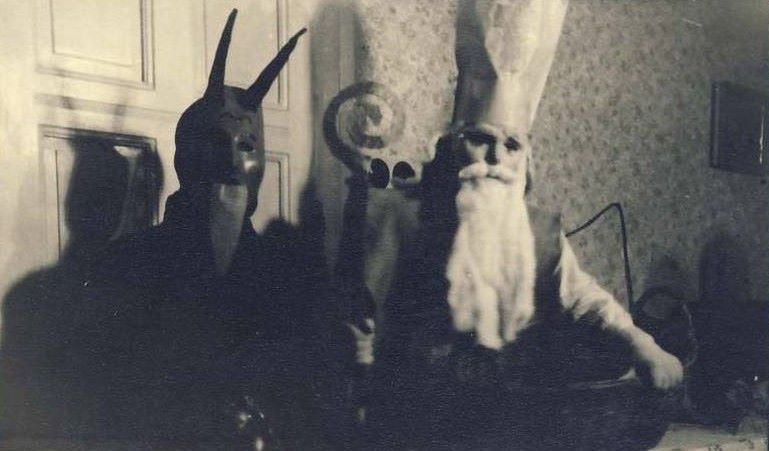
We’re grasping for saints on this Krampusnacht. I hope you’ll join me for the next “Music from Marlboro,” this Wednesday evening at 6:00 EST, on WWFM – The Classical Network and wwfm.org.
In the meantime, here’s a link to Lara St. John’s new “Hanukkah Carol,” co-written with accordionist Ronn Yedidia and sung by countertenor Aryeh Nussbaum Cohen.
Marlboro School of Music and Festival: Official Page
-
Lara St. John Plays New Hope Plus Much More
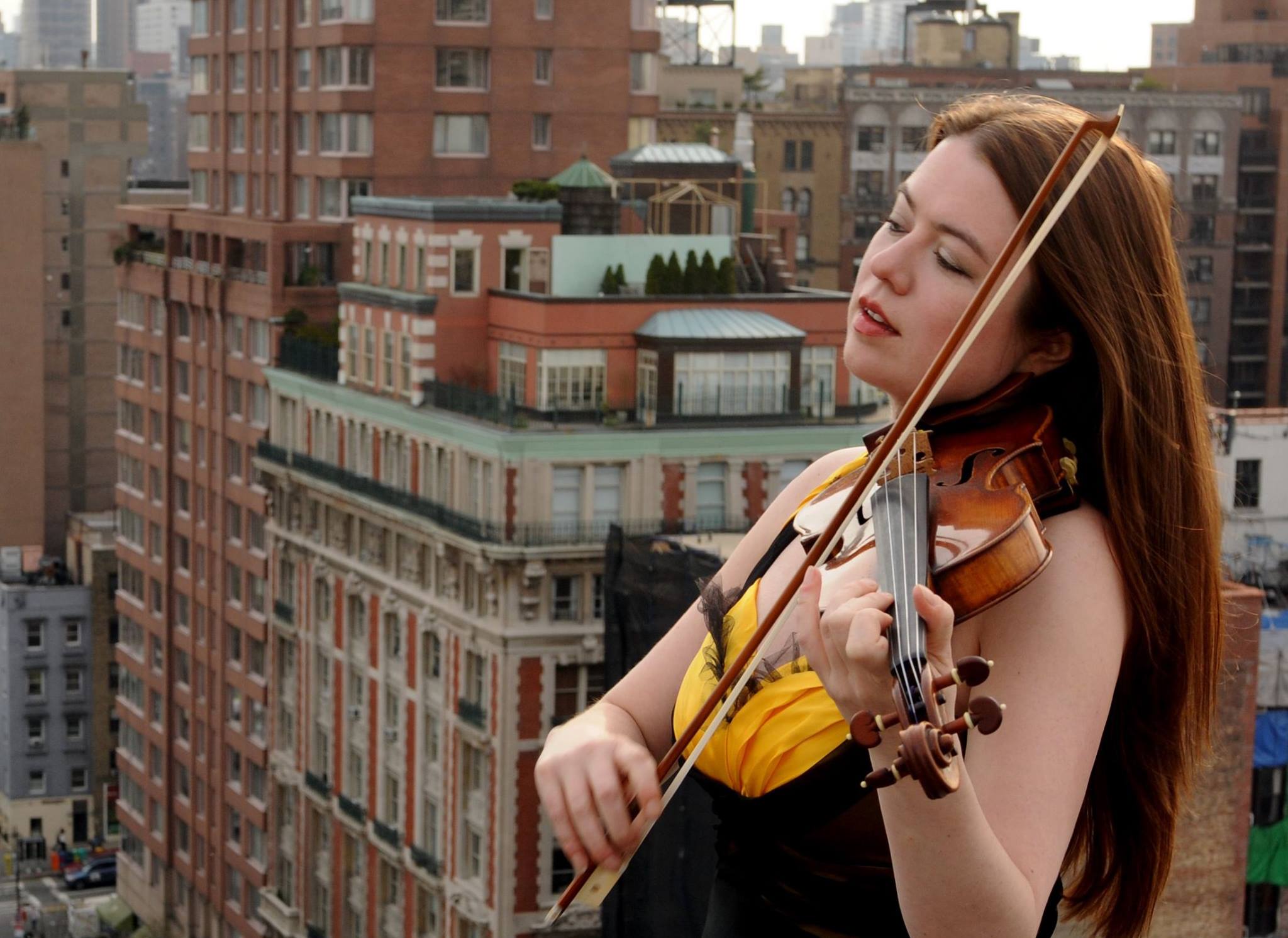
Talk to Lara St. John about her upcoming concert in New Hope, and she is just as likely to drift to topics as diverse as a Chagall exhibit she recently attended in Montreal, her experience of playing the score for “The Red Violin” (by her friend, composer John Corigliano) live with the film, and editing videos like “Bar Fight” and “The Kosher Chicken Dance” for her YouTube channel.
As serious artists go, St. John is refreshingly unpretentious and occasionally even a bit geeky. She is well enough versed in “Star Wars” and “The Lord of the Rings” to pepper her conversation with references to AT-ATs and dragons. Her record label, Ancalagon, is named for a pet iguana (now deceased), which in turn was named for a creature in J.R.R. Tolkien’s “The Silmarillion.”
St. John likes to keep it interesting, and she likes to have fun. When she plays, she is often very spontaneous, and she always goes for broke.
The Lambertville-based Riverside Symphonia will host St. John and her frequent partner, the pianist Matt Herskowitz, for a recital at St. Martin of Tours Church in New Hope on Mar. 10 at 8 p.m. On the first half of the program will be sonatas by Beethoven and César Franck.
The second half of the concert will be made up of special arrangements made for her from material largely collected by her from Yiddish, Macedonian, Israeli, Armenian, and Hungarian sources. These showpieces form the basis of her most recent album, “Shiksa.”
Capturing St. John in print is always a challenge. Read my most recent attempt in today’s Trenton Times.
http://www.nj.com/times-entertainment/index.ssf/2017/03/classical_music_lara_st_john_p.html
-

St. John’s Eve: Music & Midsummer Magic
Bah! Chernobog cares nothing for your puny strawberry moon!
This Thursday morning on WPRB, we leap over tepid news blurb observations about the solstice – and probably a few bonfires – to celebrate St. John’s Eve.
Though the actual summer solstice may occur anytime between June 21 and June 25, June 24 is the Feast Day of St. John.
St. John’s Eve is a time for the harvesting of St. John’s Wort, with its miraculous healing powers. It’s a time to seek the fern flower, which can bring good fortune, wealth, and the ability to understand animal speech. It’s a time for the lighting of bonfires against evil spirits, and even dragons, which roam the earth, as the sun again pursues a southerly course. And it’s a time when witches are believed to rendezvous with powerful forces, such as the demon Chernobog, who emerges from the Bald Mountain on St. John’s Eve at the climax of Disney’s “Fantasia” (though fair weather pagan Deems Taylor claims it’s Walpurgis Night).
Not surprisingly, after a long, hard winter, the Scandinavian countries are crazy for Midsummer. Leaping over a bonfire is seen as a surety of prosperity and good luck. Not to light a bonfire is seen as offering up one’s own house for destruction by fire. The bigger the fire, the further at bay are kept evil spirits. The further the evil spirits, the better the guarantee of a good harvest.
We’ll have music connected in one way or another with Midsummer rituals, including dances from “The Midsummer Marriage” by Sir Michael Tippett, the ballet “St. John’s Eve” by Gunnar de Frumerie, and Modest Mussorgsky’s “St. John’s Night,” an earlier, less-familiar incarnation of his popular musical picture “A Night on Bald Mountain,” as heard in his opera, “Sorochinsky Fair.”
In addition, we’ll have Alfred Schnittke’s contrarian rondo, “(K)ein Sommernachtstraum.” The root of the title is German for “A Midsummer Night’s Dream,” but the postmodern inclusion of the “K” in parentheses modifies the meaning to “NOT a Midsummer Night’s Dream.” Indeed! Schnittke sets up the listener with a soothing notturno in the style of Mozart or Schubert, but very soon the atmosphere begins to shift.
Also featured will be Rebecca Clarke’s “Midsummer Moon,” Aaron Copland’s “Midsummer Mood,” Hugo Alfven’s “Midsummer Vigil” (conducted by the composer), and Mario Castelnuovo-Tedesco’s “A Midsummer Night’s Dream,” with additional musical portraits of the denizens of Fairyland, Oberon, Titania and Puck.
Since, after all, it is the Eve of St. John, there will also be performances by violinist Lara St. John’s polka band, Polkastra, from their wedding album, “I Do!”
Start piling high the wood. We’ll touch things off tomorrow morning from 6 to 11 EDT on WPRB 103.3 FM and at wprb.com. Once again, we’re strapping on the goat leggings, on Classic Ross Amico.
-

Schubert on Harp Lara St. John’s New Album
Harpeggione?
Yes, Lara St. John can be as terrible a punster as I. But she can also assume an air of propriety, when necessary, and opted to call her new album – recorded with principal harp of the Berlin Philharmonic, Marie-Pierre Langlamet – simply, “Schubert.”
On the disc, Langlamet performs Schubert’s piano parts, every blessed note as written, on a double-action pedal harp, an instrument the composer could not have known, and yet suits his creations wonderfully. The result is an insinuating, sinuous program of impromptus, lieder (including, appropriately enough, “Songs of the Harper,” with Deutsche Grammophon artist Anna Prohaska), a sonatina (with St. John) and the “Arpeggione” Sonata, with Berlin Philharmonic cellist Ludwig Quandt.
The disc is a follow-up to St. John and Langlamet’s earlier collaboration, “Bach Sonatas” (which in interviews St. John described as being for violin and “harp… sichord”). Both were issued on her own label, Ancalagon, named for her pet iguana, who in turn was named for a dragon in J.R.R. Tolkien’s “The Silmarillion.”
The label has been home to recordings by the New York-based chamber orchestra, The Knights, and St. John’s polka band, Polkastra, as well as a Juno Award-winning disc featuring Mozart’s Sinfonia Concertante, made with her brother, Scott St. John, then a member of the St. Lawrence String Quartet.
Lara St. John and Marie-Pierre Langlamet are my guests this week on “The Lost Chord,” this Sunday night at 10 ET, with a repeat Friday morning at 3. Or you can catch the show later as a webcast, at http://www.wwfm.org.
Tag Cloud
Aaron Copland (94) Beethoven (95) Composer (114) Film Music (149) Film Score (143) Film Scores (255) Halloween (98) John Williams (197) KWAX (232) Leonard Bernstein (105) Marlboro Music Festival (125) Movie Music (164) Mozart (91) Opera (215) Philadelphia Orchestra (90) Picture Perfect (174) Princeton Symphony Orchestra (110) Radio (90) Ross Amico (244) Roy's Tie-Dye Sci-Fi Corner (290) The Classical Network (101) The Lost Chord (269) Vaughan Williams (107) WPRB (397) WWFM (881)