Tag: Leon Botstein

  • Martinů at Bard: Weekend 1 Impressions

    Martinů at Bard: Weekend 1 Impressions

    Okay, here we go: my impressions of this year’s Bard Music Festival, “Martinů and His World,” Weekend 1. If you’re looking for festival background, see yesterday’s post.

    One of the things I’ve always found refreshing about the Bard approach to its honored subject (this year, the chameleonic composer Bohuslav Martinů) is its mix-and-match philosophy of programming. With the exception of Saturday night concerts, for which larger forces are amassed for the duration – an orchestra, with perhaps the addition of soloists and/or a chorus – it’s not uncommon to experience instrumental, vocal, chamber, and orchestral music on the same program.

    Concerts frequently push, and sometimes exceed 150 minutes. At Bard, there is no such thing as too much of a good thing. There is an intermission, of course. Sometimes. This past Sunday morning’s concert ran two hours without break. It was projected to run 90 minutes.

    The Friday night opener took place at Bard College’s 900-seat Sosnoff Theater, inside the Frank Gehry-designed kaiju armadillo that is the Richard B. Fisher Center for the Performing Arts. Festival inaugural concerts always serve as introductory affairs, so we were treated to Martinů across various genres and periods.

    The program commenced with Orion Weiss, a pianist whom I’ve heard at Bard pretty much every year since I first encountered him there in 2008, during “Prokofiev and His World.” That would have been my first visit to the festival, which was established in 1990. Throughout the weekend, Weiss exhibited a remarkable grasp of the Martinů idiom. For starters, he played two selections (both in F major) from the composer’s “Etudes and Polkas.” I would have liked to have heard more of these, so delectable they were. I’ve enjoyed them very much on record. But on Friday, they were mere appetizers.

    As was the folk-inflected “Primrose,” a collection of five brief, though characterful songs for two voices, violin (an inspired choice on the part of the composer), and piano. This is music with roots in the soil of Moravia and shoots in the New World. The vocal duets were sung by soprano Jana McIntrye and mezzo-soprano Taylor Raven, with foundations and embellishments provided by violinist Luosha Fang and pianist Erika Switzer.

    In browsing the promotional material during the weeks and months leading up to the festival, it did not register that the third work on the program, titled “Fantasia,” was indeed Martinů’s Fantasia for Theremin, Oboe, String Quartet, and Piano. If you don’t know the theremin, it’s that electronic instrument often used in old science fiction movies to denote UFOs and mad science. Tones are conjured and bent without physical contact by manipulating electromagnetic fields with hands held in varying proximities to the machine’s dual antennae. You have to give Martinů credit for employing this most unusual device for its musical capabilities, as opposed to gimmicky ends.

    Believe it or not, this is not the first time I’ve encountered the piece. I heard it performed in 2013 by the Concordia Chamber Players with the New Jersey Symphony’s Darryl Kubian on the theremin. Granted, that was in a more intimate venue (Trinity Church in Solebury, PA), but the instrument, and by extension the work itself, made more of an impression on that occasion. That said, I must confess, despite some intriguing interplay between the theremin and the oboe, for me the piece kind of outstays its welcome. But not by much. Maybe I’m just one of those vulgarians who actually craves more mad science. On Friday, Dorit Chrysler was the thereminist. She shared the stage with oboist Alexandra Knoll, the Balourdet Quartet, and again, pianist Orion Weiss.

    The first half of the concert concluded with Weiss and members of the Balourdet in a profoundly absorbing performance of Martinů’s Piano Quartet No. 1. This is a work of urgency and uncertainty that yet manages to attain real beauty with its flashes of irrepressible humanity. In my notebook, I jotted down the impression that Shostakovich might have recognized the emotional soundscape of the work’s second movement. A ray of hope appears in the third, and it occurred to me, perhaps quirkily, that Martinů’s piano passages, when he is in hopeful mode, put me in the mind, somewhat, of Vince Guaraldi’s “Cast Your Fate to the Wind,” if only in spirit. I mean that generally, not just in this piece. But Martinů is never the same for long. As it was, hope was not to continue untroubled, and peace was not guaranteed. Optimism pierced the gloom, shining sporadically, like shafts of light through clouds.

    For me, this was the high-point of the program thus far, and perhaps it would have carried the evening, had it not been for the Double Concerto for Two String Orchestras, Piano, and Timpani. Positioned as it was after interval, on top of everything else, the Double Concerto had the advantage of contrast with the smaller-scale works on the concert’s first half, which enhanced its impact enormously. As I observed in yesterday’s post, it was like the effect of having viewed a 35 mm film and then having the screen suddenly open up to the dimensions of Cinemascope.

    The visual of pianist Michael Stephen Brown seated in an antiheroic position, behind the instrument, the piano perpendicular in relation to the seats in the auditorium, so that hands and keys were invisible to the audience, emphasized his neoclassical function as a musician in, as opposed to apart from, the orchestra, as in a Baroque concerto grosso. But there was nothing remotely 18th century about the content of the music, with its white hot divisi strings ratcheting up the intensity. I own several recordings of the Double Concerto, but it wasn’t until I heard it live in concert, here for the first time, that I realized what an outstanding work it truly is. Again, as I remarked yesterday, this is searing, full-bodied music that can stand toe-to-toe with the finest works of Béla Bartók. Music director Leon Botstein (also Bard’s co-artistic director) and the young musicians of The Orchestra Now, Bard’s graduate training ensemble, gave it as fine a performance as I ever expect to hear.

    In the wake of this emotionally-taxing work and the staggering success of its execution, I was all set to decompress with the Symphony No. 2, one of the composer’s more carefree inspirations. It’s a piece that bears the influence of Martinů’s Czech antecedents (especially Dvorak), but also conjures the kind of wide-open positivity we associate with a lot of American music of the era. By then, 1943, Martinů was safely across the Atlantic and composing in the United States. The work was written for the Czech community of Cleveland and first performed by the Cleveland Orchestra conducted by Erich Leinsdorf.

    To be fair, Botstein and his musicians had set the bar awfully high. So when the symphony commenced, my heart sank a little, as I began to suffer flashbacks to a performance of Charles Ives’ Symphony 2 these same forces had given last season at Carnegie Hall that just refused to spring to life. One of my favorite American symphonies wound up sounding like John Knowles Paine on a bad day. I feared a recurrence on Friday, with the first movement of the Martinů symphony played, to my ears, with more diffidence than such a characterful, optimistic piece should have been. It lacked forward momentum, which is not something you generally experience with this composer.

    Or at least, that was my impression. Who knows. Maybe it was just me. (I HAD eaten some undercooked salmon for dinner.)

    HOWEVER, I am very happy to report, things improved markedly in the second movement, which of course could handle a more relaxed tempo. The third movement, lively in its mechanized energy, was better still. It made me wonder if my reaction to the first was but “an undigested bit of beef, a blot of mustard, a crumb of cheese, a fragment of underdone potato.” The last movement was exuberant, exciting, and ebullient. The performance had rebounded – possibly; again I concede that it could have been fine all along – and the work was brought to a satisfying close. Not quite on the level of the Double Concerto, mind you, but still, a job well-done.

    At various points throughout the concert, Botstein offered some remarks while the stage was being reset. The man is a master of extemporization. If you’re ever looking to fill five, ten, or even thirty minutes with engaging perambulation, then Botstein is your man. A lifetime of public speaking and a devotion of one’s thoughts to interesting things will do that. Before the concert, he was presented with a framed certificate by New York Assemblymember Didi Barrett in honor of his 50 years as president of Bard College.

    Apologies. This is getting long again. I’ll have to wrap it up tomorrow, likely in a more concise fashion. Otherwise, I’ll never get it all in before Weekend 2!

    The Bard Music Festival, “Martinů and His World,” will continue this weekend at Bard College in Annandale-on-Hudson, NY. For more information, visit

    Bard Music Festival

    Fisher Center at Bard

  • Bard Music Festival: Exploring Martinů and His World

    Bard Music Festival: Exploring Martinů and His World

    Tackling a topic as vast as the Bard Music Festival can be intimidating. Also, life tends to get in the way, often keeping me from being my best self, particularly in the narrow windows during which my brain is actually firing at peak capacity. All disclaimers aside, let’s see what I can do.

    The Bard Music Festival, now in its 35th year, is the crown jewel of Bard SummerScape, an eight-week celebration of the arts, held on the campus of Bard College beginning in late June. The Bard Festival itself, which spans two weekends in August, focuses on certain composers and their worlds – encompassing works by their associates, contemporaries, influences, and those who were influenced by them. The subject’s life and artistry are explored by way of marathon concerts, but also through pre-concert talks, Saturday morning panels with visiting and resident scholars, a book of related essays, and a 70-page festival program booklet which is so much more than a utilitarian compilation of concert listings, lavishly-illustrated and brimming with valuable information about every aspect of the subject.

    This year’s focus is the neglected Czech master, Bohuslav Martinů, whose life took him from the comparative isolation of a childhood spent in a provincial bell tower, to a period of lackluster studies in the city of Prague, to an artistic flowering in Paris, to a flight from war and authoritarianism in Europe to safety and recognition in the U.S., to final years spent in Switzerland on the estate of conductor and music patron Paul Sacher. That’s quite a journey, and Martinů was an expert assimilator, sensitive to stimuli from a broad array of influences, all siphoned through a lively, fecund, and voracious sensibility. All converge in his highly unique, multifaceted creations, which are full of human touches, while often seeming to churn with the vitality of a mechanized age.

    Alas, Martinů has shared the fate of so many composers who clove to tonality in the 20th century. A multiplicity of factors that contributed to the “Great War” sent strains of decadence and malaise out into the arts. There was a little bit of a reprieve during World War II, when a certain amount of populism was tolerated, in the interest of keeping up the morale of the unwashed. But after two devastating conflicts, the Holocaust, and the atomic bomb, arbiters and academics tended to marginalize composers who did not cast off tradition, which they perceived as upholding destructive tendencies, to embrace the brave new world of the avant-garde. Ironically, the sterility of the Ivory Tower was viewed as the only way forward.

    Thankfully, we are, for the most part, beyond all that, and composers of Martinů’s generation, who continued to seek new ways within a continuity of tradition and form, are gradually being reassessed. However, the process has been a slow one. Many still get lost in the cracks between the classics and the “new” – younger, trendier composers – while concert programmers wrangle with the challenges of fulfilling their obligations to the living and programming enough Beethoven and Mahler to guarantee a full house.

    Bard is in the unique position that it doesn’t have to worry about all that. With Leon Botstein at the helm, fashion and factionalism are shown the door in favor of unbiased inquiry and clear-eyed appreciation. Not only is he insatiably curious, he is also Bard’s president, as he has been for the past 50 years. (He assumed the position at the age of 28!) Botstein serves as co-artistic director of the festival with Christopher H. Gibbs. He is also its music director.

    Many of the concerts feature the young players of Bard’s graduate training ensemble, The Orchestra Now, a post-conservatory group of highly-skilled performers. Others feature the American Symphony Orchestra, a professional group founded by none other than Leopold Stokowski, which Botstein has directed since 1992. Soloists and chamber instrumentalists are equally questing, vibrant, and first-rate. Many are long-time Bard associates or faculty. Pianists Piers Lane and Danny Driver have long recorded unusual and neglected repertoire for Hyperion Records, among others. Occasionally, there are genuine “celebrity” guests. I’ve seen Michael York and David Strathairn there. This past weekend, Mahan Esfahani, whose recordings on Hyperion and Deutsche Grammophon have helped develop a world following, was the soloist in Martinů’s Harpsichord Concerto.

    Daytime panels and chamber concerts are held in the 300-seat Olin Hall, in Bard’s Franklin W. Olin Humanities Building. Evening concerts are held at the 900-seat Sosnoff Theater in the campus’ Frank Gehry-designed Richard B. Fisher Center for the Performing Arts, which I have often described as a gigantic, reflective armadillo. Under certain conditions, it’s hard to get a good photo, because of the venue’s sleek, reflective surfaces.

    My plan today had been to give an account of the festival’s first weekend, but already this is getting a little long. So watch this space! More tomorrow. The Bard Music Festival, “Martinů and His World,” will continue this weekend, with choral, chamber, instrumental, and orchestral works – and even one of Martinů’s 14 operas, “Julietta.”

    For more information, visit

    Bard Music Festival

    Fisher Center at Bard

  • Martinu’s World at Bard Music Festival

    Martinu’s World at Bard Music Festival

    As a longtime attendee of the Bard Music Festival, I recognize that the schedule is not quite as brutal as it once was. There aren’t as many concerts (at one time, there were three in a day) and they now try to rein them in so that they clock at around two-and-a-half hours; but the rigors of travel, living off coffee and wraps and sleeping in a strange place, can still beat the tar out of you. Even so, I’m having a blast. I’ve said it before and I’ll say it again: Bohuslav Martinů is the sleeping giant of Czech music.

    Leon Botstein, co-artistic artistic and music director of “Martinů and His World,” asserts that the composer’s star is on the rise. I certainly hope so. But if it is the case, I have yet to see it. I was happy to note the New York Philharmonic programmed the Cello Concerto No. 1 not too long ago, and I heard Steven Isserlis play the Cello Sonata No. 1 in Philadelphia this past season. Also, the Philadelphia Orchestra performed the Rhapsody-Concerto for viola, which I heard the orchestra for the first time some 40 years ago – in the mid-‘80s, the first Martinů piece I ever heard, as a matter of fact. It was love at first encounter.

    Come to think of it, I guess that is a lot, compared to past seasons…

    But a comment during yesterday morning’s panel Q&A got me thinking how many of Martinů works I have ever actually heard in person. I tallied eight, prior to the festival. So already, I’ve more than doubled my intake. I’ve gotten to know a portion of the composer’s prolific output (more than 400 works) mostly through recordings. And what varied and magnificent stuff it is! But I’ll have to go into all that in another post. The first concert begins this morning at 11:00 – a late morning at Bard, but a man’s got to eat breakfast and pack up.

    This morning, I’m looking forward to hearing no less than four Martinů chamber works, along with a string quartet by his illicit sweetheart, Vítĕzslava Kaprálová. Later in the afternoon will be the jaunty suite from Martinů’s jazz ballet “La revue de cuisine,” the Piano Sonata No. 1, the Harpsichord Concerto (with Mahan Esfahani), and “Tre ricarcari,” in addition to Aaron Copland’s Sextet (a reduction of his then-deemed-to-be-unplayable “Short Symphony”) and Arthur Honegger’s neoclassical “Concerto da Camera.”

    The 35th Bard Music Festival, “Martinů and His World,” will continue next weekend at Bard College in Annandale-on-Hudson, NY. According to Bard co-artistic director Christopher H. Gibbs, the festival will cover no less than 33 works by the composer on concerts presented over seven days.

    Catch a rising star! For more information, visit

    Bard Music Festival

    Fisher Center at Bard

  • Smetana’s “Dalibor” US Debut at Bard SummerScape

    Smetana’s “Dalibor” US Debut at Bard SummerScape

    As something of a preamble to this year’s Bard Music Festival, devoted to the Czech master Bohuslav Martinů (“Martinů and His World,” to be presented at Bard College over two weekends, August 8-10 and 14-17), this year’s Bard SummerFest, now in progress, will offer the U.S. stage debut of Bedřich Smetana’s 1868 opera “Dalibor” in four performances, beginning this weekend at Bard College’s Fisher Center for the Performing Arts, July 25 at 6:30 p.m., July 27 at 2 p.m., July 30 at 2 p.m., and August 1 at 4 p.m.

    If it sounds enticing, but you can’t make it, the July 30 matinee will be available for livestreaming, in real-time, with an encore broadcast on August 2 at 5 p.m. There’s more information at the “Dalibor” link below.

    Smetana is regarded as the father of Czech national music, his immediately identifiable sound an inspiration to Dvořák and those who followed.

    His best-known opera, by far, is “The Bartered Bride,” with its rousing overture and rustic dances. Also, I’ll wager you can’t listen to classical radio for a week without encountering “The Moldau,” the second of the collection of symphonic poems that comprise the composer’s epic patriotic tableau “Ma Vlast” (“My Country”).

    “Dalibor” is very far from “The Bartered Bride.” It’s a drama, for one thing, full of Teutonic iconography: medieval castles, minnesingers, and resourceful damsels. There’s some “Lohengrin” in it, and some “Fidelio.” (The heroine disguises herself as boy in order spring the man she loves from imprisonment.) Having attended performances of Richard Strauss’ “Guntram” and Wagner’s “Tristan und Isolde” in recent weeks, you’d think I’d have had enough of this sort of thing, but no!

    At any rate, Smetana’s music, despite the scenic trappings, is unmistakably Czech to its core. Hey, the Czech lands have their castles too. “Dalibor” was tepidly received at its premiere, but it gained traction following the composer’s death and its significance is now deemed to be considerable among Smetana’s countrymen. Although programmed in Europe, in its early years performed throughout the Austro-Hungarian Empire, by Gustav Mahler, among others, it has yet to make it to these shores.

    It was Bard president and festival artistic co-director Leon Botstein who oversaw the presentation of “Guntram” at Carnegie Hall in June, with the American Symphony Orchestra. Conductor and orchestra will also take part in these performances of “Dalibor.” On top of everything else, Botstein has been music director of the ASO since 1992.

    The production was to have been headlined by the Czech tenor Ladislav Elgr and Polish soprano Izabela Matula, but due to visa issues, some talented Americans have stepped up to address the challenges of learning what must be for them new roles in an uncommon language. Slavic opera is much less frequently encountered here than Italian, German, and French.

    But don’t for a moment think that you’ll be getting shortchanged. I was at the performance of “Guntram” at Carnegie, featuring tenor John Matthew Myers, and I can attest that anyone who attends “Dalibor” will be in for a real treat. This guy has a clarion voice, with a warm, radiant tone, guaranteed to fill the entire house. Soprano Cadie J. Bryan is unfamiliar to me, but she has received praise for her radiance and vocal luster. I’m very much looking forward to hearing her as Mlada. Glancing through the rest of the cast, I also recognize bass-baritone Alfred Walker, another Botstein favorite (among other things, he sang the title role in Bard’s production of Saint-Saens’ “Henri VIII”). He’ll return as King Vladislav.

    The stage director is Jean-Romain Vespirini (also the director of “Henri VIII”). There are two endings to the work, both of them tragic. Which one will be used?

    Botstein and Bard are all about resurrecting unusual and neglected repertoire. Other rarely-encountered operas revived at Bard include Ernest Chausson’s “Le roi Arthus,” Dvořák’s “Dmitrij,” Korngold’s “Das Wunder der Heliane,” Meyerbeer’s “La prophète,” Anton Rubinstein’s “Demon,” and Ethel Smyth’s “The Wreckers,” among many others.

    For anyone in search of a little respite from Puccini, Verdi, Wagner, Mozart, and the four or five others who dominate the world’s opera houses, Bard’s offerings are like manna in a desert of seemingly endless repetition.


    Smetana’s “Dalibor” at Bard SummerScape

    https://fishercenter.bard.edu/events/dalibor/

    Bard Music Festival, “Martinu and His World”

    Bard Music Festival

    Some of the past Bard operas are available for streaming here

    SummerScape Opera in HD

    Fisher Center at Bard

  • Martinů Awakens at Bard Music Festival

    Martinů Awakens at Bard Music Festival

    In less than a month, the sleeping giant of Czech music will awake!

    The 35th annual Bard Music Festival, “Martinů and His World,” will to be held largely on the campus of Bard College in Annandale-on-Hudson, NY, August 8-17.

    Why is Bohuslav Martinů not better known? Perhaps it’s because he wrote so damn much in so many difference styles. With a career that took him from Czechoslovakia to Paris to the United States and then back again to Europe, absorbing a multiplicity of stylistic influences along the way, Martinů is not the easiest guy to pin down.

    Some of his works have a strong Czech national flavor, revealing a spiritual descent from the line of Dvořák and Smetana. Others are evidently modernist, full of churning flywheels and motor rhythms, characteristic of a mechanized age. Others still flirt with popular styles, especially jazz. He’s a unique mash-up of Bohemian, French, and American influences. His “modernism,” such as it is, is seldom at the expense of broadening passages of great lyrical beauty.

    Over two weekends, the Bard Music Festival will do what it does best: immerse audiences in works from all periods of the composer’s creative life, setting them off against music of his role models, his contemporaries, and those in turn he inspired. The listening experience will be enhanced by panel discussions, pre-concert talks, and lobby chit-chat with fellow enthusiasts over coffee and sandwiches.

    Conductor and Bard president Leon Botstein will oversee orchestral, orchestral/choral, and opera performances, at the helm of the American Symphony Orchestra and Bard’s crackerjack graduate ensemble, The Orchestra Now. Evening concerts will take place at the Sosnoff Theater, the state-of-art concert hall housed in the Frank Gehry-designed Fisher Center for the Performing Arts.

    Daylight concerts and panels will be held across campus in the more intimate surroundings of the 300-seat Olin Hall. Performers will include superb musicians and ensembles from the faculty of the Bard Conservatory, guests, and visiting artists with long relationships with the festival.

    For the uninitiated, the prospect of getting one’s head around Martinů’s output can seem a little daunting. Yet the composer’s music is immediately appealing, generally easily digestible, and often a great deal of fun.

    Treat yourself to this preview featuring Bard co-artistic directors Leon Botstein and Christopher H. Gibbs. The music bed is from Martinů’s “Three Frescoes of Piero della Francesca” – not part of the festival, but performed on a previous concert by Botstein and The Orchestra Now.

    I’m especially looking forward to hearing Martinů’s Nonet, the Cello Sonata No. 3, the Flute Sonata, the jazz sextet “La revue de cuisine,” and a selection of his Etudes and Polkas for piano. Among the larger works will be the Symphonies Nos. 2 & 6, “The Epic of Gilgamesh,” the Violin Concerto No. 2, and a semi-staged performance of his opera “Julietta.”

    This being Bard, there will be plenty of fascinating rarities by other hands, including a string quartet by Martinů student (and mistress) Vítězslava Kaprálová and a piano concertino I didn’t even know existed by his friend and champion Rudolf Firkušný.

    Also featured will be works by Iva Bittová, Aaron Copland, David Diamond, Antonín Dvořák, Petr Eben, Karel Husa, Leoš Janáček, Jaroslav Ježek, Arthur Honegger, Kryštof Mařatka, Jan Novák, Maurice Ravel, Jaroslav Řídký, Erwin Schulhoff, Josef Suk, Alexandre Tansman, Joan Tower, and Frank Zappa!

    For more information about “Martinů and His World,” including a more complete schedule, visit

    Bard Music Festival

    The festival is the crown jewel in the diadem of Bard SummerScape, Bard’s annual celebration of the arts, now in progress. Fans of Czech music will also eagerly anticipate a fully-stage production of Bedřich Smetana’s “Dalibor,” that will precede the Martinů festival, July 25-August 3.

    Bard SummerScape

    Some of the events, including one of the performances of “Dalibor” will be available for livestreaming.

    The festival’s annual tie-in book of scholarly essays will be released on August 12, but there will likely already be copies available at the festival.

    https://press.uchicago.edu/ucp/books/book/chicago/M/bo258537662.html

    It’s past time that American concertgoers and programmers hold Martinů’s music in the same esteem as that of his better-known compatriots, Dvořák, Smetana, and Janáček. Here’s hoping that Bard lends traction to this giant’s seven-league boots.


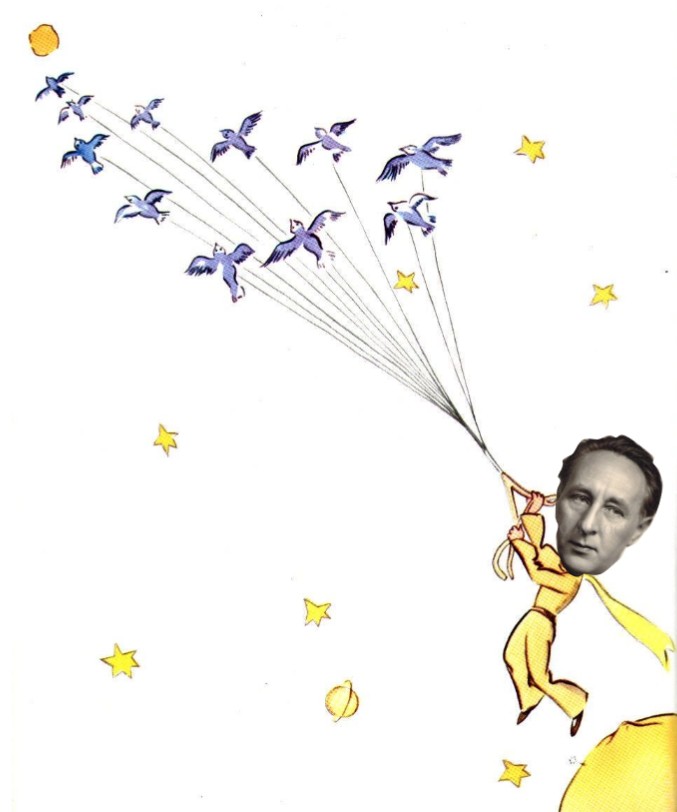
    NOTE: Giant artwork is mine; don’t blame Bard

    Fisher Center at Bard

Tag Cloud

Aaron Copland (93) Beethoven (95) Composer (114) Film Music (125) Film Score (143) Film Scores (255) Halloween (94) John Williams (189) KWAX (229) Leonard Bernstein (101) Marlboro Music Festival (125) Movie Music (140) Opera (202) Philadelphia Orchestra (89) Picture Perfect (174) Princeton Symphony Orchestra (106) Radio (87) Ralph Vaughan Williams (85) Ross Amico (244) Roy's Tie-Dye Sci-Fi Corner (290) The Classical Network (101) The Lost Chord (268) Vaughan Williams (103) WPRB (396) WWFM (881)

DON’T MISS A BEAT

Receive a weekly digest every Sunday at noon by signing up here


RECENT POSTS