Tag: Literary Adaptations

  • Movie Music & Literary Lives on Picture Perfect

    Movie Music & Literary Lives on Picture Perfect

    Words on the printed page captivate us so completely that it’s natural to assume that the lives of writers must be rich, full of incident, and very dramatic indeed. Surely that is sometimes the case. Who among us could keep up with a Byron or a Pushkin or a Poe?

    Yet, with even the most outlandish writers, Hollywood for some reason often feels the need to fabricate. How else to explain “Devotion” (1943), Warner Brothers’ salute to the Brontës? Then again, the temptation must be strong to characterize the sisters who penned “Jane Eyre” and “Wuthering Heights” as tortured Romantics.

    Ida Lupino plays Emily, the creator of Cathy and Heathcliff, and Olivia de Havilland, Charlotte, who conceived Jane and Rochester. Nancy Coleman is their sister Anne, who wrote “The Tenant of Wildfell Hall,” and Arthur Kennedy, their dissolute brother Branwell. The film also features Sidney Greenstreet as William Makepeace Thackeray, Paul Henreid as an Irish priest, and – well, you get the idea. The casting, at times, strains credulity.

    However, the music by Erich Wolfgang Korngold is up to the composer’s usual high standard. Korngold himself became so enamored of one of its themes that he recycled it for use in the first movement of his Violin Concerto. This week on “Picture Perfect,” we’ll have chance to sample some of it.

    We’ll also hear selections from movies about Iris Murdoch (“Iris,” with music by James Horner), the Bard of Avon (“Shakespeare in Love,” with an Academy Award-winning score by Stephen Warbeck), and Samuel Clemens (“The Adventures of Mark Twain,” by Max Steiner).

    Writers are such characters, especially when they’re depicted on the big screen. Everything’s writ large, on “Picture Perfect,” music for the movies, now in syndication on KWAX, the radio station of the University of Oregon!


    Clip and save the start times for all three of my recorded shows:

    PICTURE PERFECT, the movie music show – Friday at 8:00 PM EST/5:00 PM PST

    SWEETNESS AND LIGHT, the light music program – ALL NEW! – Saturday at 11:00 AM EST/8:00 AM PST

    THE LOST CHORD, unusual and neglected rep – Saturday at 7:00 PM EST/4:00 PM PST

    Stream them, wherever you are, at the link!
    https://kwax.uoregon.edu/

  • Gilded Age Novels in Film: Picture Perfect

    Gilded Age Novels in Film: Picture Perfect

    “The Gilded Age” was a term coined by none other than Mark Twain to describe the era extending roughly from the end of Reconstruction (following the Civil War) to the turn of the 20th century. He didn’t mean it as a compliment. A gilded age is one which conceals serious social problems beneath a veneer of gold. This week on “Picture Perfect,” we have an hour of music from films based on novels of, or about, the period.

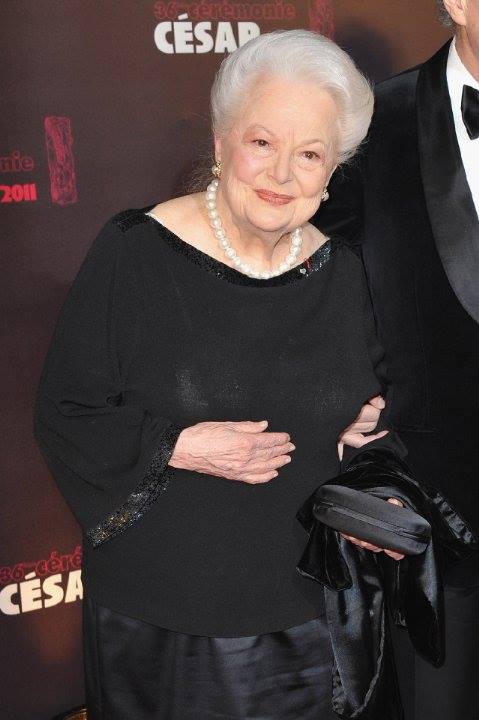
    “The Heiress” (1949) is based on a play by Ruth and Augustus Goetz, which in turn was adapted from Henry James’ novel, “Washington Square.” Olivia De Havilland is the “plain Jane” heiress of the title, Ralph Richardson her overbearing father, and Montgomery Clift, the adventurer who may or may not be out for her fortune. De Havilland (100 years-old today!) won an Oscar for her portrayal, as did the music, by Aaron Copland.

    “The Age of Innocence” (1993) is based on a novel by one-time James correspondent and close friend, Edith Wharton. The book was published in 1920, but looks back to the 1870s, its story dealing with the impending marriage of an upper class couple and the appearance of a disreputable interloper who threatens their happiness. The title is an ironic play on the outward manners of New York society, in contrast to its inward machinations. The novel earned a Pulitzer Prize, the first Pulitzer awarded to a woman.

    The film, which starred Daniel Day-Lewis, Michelle Pfeiffer and Wynona Rider, was something of a curve ball from director Martin Scorsese. Veteran composer Elmer Bernstein provided a lovely, Brahmsian score.

    “The Magnificent Ambersons” (1942) is based on another Pultizer Prize winner, this time by Booth Tarkington, from 1918. The novel is part of trilogy that tells the story of the declining fortunes of three generations of an aristocratic Midwestern family, between the end of the Civil War and the early years of the 20th century. With industrialism on the rise, the Ambersons’ “old money” wealth and prestige wane.

    “Ambersons” became the basis for only the second film directed by Orson Welles. By that time, however, the fall-out from “Citizen Kane” caused the film to be removed from Welles’ control and re-cut by the studio, shaving a full hour off the original running time. It says something about the quality of the film that it yet remains in itself a magnificent achievement.

    The score was by Bernard Herrmann, CBS staff composer from Welles’ radio days. Herrmann had followed Welles to Hollywood to provide the music for “Citizen Kane.” Like the film, the score was drastically edited, with half the music removed. The famously irascible Herrmann, who had just written his Academy Award winning music for “The Devil and Daniel Webster,” was so angry that he threatened legal action if his name was not removed from the credits.

    The action of “Mr. Skeffington” (1944), based on a 1940 novel by Elizabeth van Arnim, begins at a point some consider the end of the Gilded Age, the eve of World War I. Bette Davis stars as a woman so enamored of her own beauty and the suitors it attracts that she fails to value the affections of the man who eventually becomes her husband. Mr. Skeffington, played by Claude Rains, is a Jewish financier, riding high in the ‘teens, but whose fortunes change when he’s caught in Europe during the rise of the Nazis.

    Both Davis and Rains earned Academy Award nominations for their work. The vivid score is by Franz Waxman. Davis was going through a period of emotional turmoil during the filming, so that she was allegedly insufferable to everyone during the entire shoot. Someone finally poisoned her eyewash. When the police questioned the director, Vincent Sherman, he wished them good luck with their investigation. “If you asked everyone on the set who would have committed such a thing, everyone would raise their hand!”

    Clearly all that glitters is not gold. We peel back the veneer of prosperity with “Novels of the Gilded Age,” on “Picture Perfect,” this Friday evening at 6 EDT, on WWFM – The Classical Network; or listen to it later as a webcast at wwfm.org.


    Olivia de Havilland receives her Oscar for “The Heiress,” with the orchestra playing a few bars of Aaron Copland’s score:

    #OliviaDeHavilland 100

    PHOTOS: (Clockwise from left) Olivia de Havilland today; in “The Heiress;” and with her Oscar in 1950

  • Literary Christmas Movie Music Guide

    Literary Christmas Movie Music Guide

    ADVENT CALENDAR – DAY 19

    Remember when movies used to be inspired by books, as opposed to toys and video games?

    This week on “Picture Perfect,” we’ll have an hour of music from movies adapted from novels and short stories on Christmas themes, or with memorable Christmas moments.

    We’ll begin with Alfred Newman’s score for “O. Henry’s Full House,” a 1952 anthology based on five separate stories of O. Henry, each adapted by a different screenwriter and directed by a separate director. The film is doubly literary in that each of its segments is introduced by none other than John Steinbeck. We’ll be listening to music from the final portion, based on the classic Christmas story, “The Gift of the Magi.”

    Louisa May Alcott’s “Little Women” features a memorable Christmas chapter, in which the Marches help out a neighbor in need by donating their Christmas breakfast – only to be rewarded later in the day with a feast of their own. “Little Women” has been adapted to film at least five times (reportedly with another on the way). Thomas Newman – son of Alfred – wrote the Academy Award-nominated score for the 1994 version, the one with Winona Ryder and Susan Sarandon.

    Miklós Rózsa won his third Academy Award for “Ben-Hur” (filmed three times), in 1959. We’ll be listening to music from the prologue and Nativity scene. General Lew Wallace’s novel, published in 1880, became the bestselling work of American fiction for the next 50 years. Its streak was broken in 1936 by Margaret Mitchell’s “Gone with the Wind.”

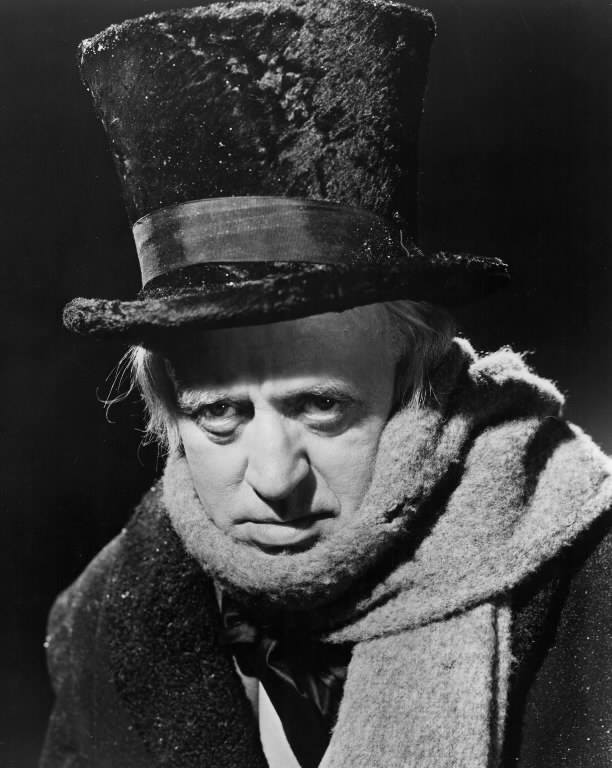
    Finally, we’ll have a suite from the 1951 adaptation of Charles Dickens’ “A Christmas Carol.” I can’t even count how many times that one’s been filmed. This particular version stars Alastair Sim as Scrooge. The music was composed by Richard Addinsell – he of the “Warsaw Concerto” fame – and the performance is conducted by David Newman, Alfred Newman’s OTHER musical son.

    I hope you’ll join me for a literary Christmas, this Friday evening at 6 ET, with a repeat Saturday morning at 6; or that you’ll listen to it later as a webcast at http://www.wwfm.org.

Tag Cloud

Aaron Copland (92) Beethoven (95) Composer (114) Film Music (123) Film Score (143) Film Scores (255) Halloween (94) John Williams (187) KWAX (229) Leonard Bernstein (101) Marlboro Music Festival (125) Movie Music (138) Opera (202) Philadelphia Orchestra (89) Picture Perfect (174) Princeton Symphony Orchestra (106) Radio (87) Ralph Vaughan Williams (85) Ross Amico (244) Roy's Tie-Dye Sci-Fi Corner (290) The Classical Network (101) The Lost Chord (268) Vaughan Williams (103) WPRB (396) WWFM (881)

DON’T MISS A BEAT

Receive a weekly digest every Sunday at noon by signing up here


RECENT POSTS