
Bohuslav Martinů turns up in a murder mystery from 2009!!!
Tag: Literature
-

Journalism’s Decline & Language’s Future
Boy oh boy, the internet may be a great leveler, in terms of opening up the world to more voices, but my oh my, how journalistic standards have fallen.
How many barely literate articles have I tried to wade through in the past week? I don’t know if any of them would have earned a C had they been submitted to any of my high school English teachers. The quality of the movie criticism, similarly, has plummeted. There’s something to be said for pushing past the gatekeepers and making the world a more democratic place, but I have to tell you, I kind of miss the gatekeepers. At least the standards were higher.
On a related note, I notice an alarming trend, even among publishers (see the recent blowup about editing the works of Roald Dahl, Agatha Christie, Ian Fleming, and others, for perceived insensitivity issues, but also to bring the language “current”), to weed out obscure words, or words that have taken on other meanings in contemporary usage (gay and queer, for example). Are we to the point now where it’s felt to be necessary to weed-whack the English language so that even the most brutish among us can be trusted to understand what they are reading? Have people forgotten about the existence of dictionaries?
In the meantime, “words” like LOL and OMG (and even the heart symbol?) have found their way into the Oxford English Dictionary.
I wonder if anyone reads – or is capable of reading – Poe or Conan Doyle for pleasure anymore.“But, in spite of these things, it was a gay and magnificent revel.”
― Edgar Allan Poe, “Masque of the Red Death”
“‘It was a confession,’ I ejaculated.”
― Arthur Conan Doyle, “The Red-Headed League”
Both bound to draw titters in the classroom. (Will I be misconstrued if I write titters?) But this in itself should be a learning opportunity.
Unfortunately, everyone is operating in such a climate of fear – fear of over-protective parents, fear of employers guided by zero-tolerance policies designed to head off the next controversy or frivolous lawsuit. Surely, Charles Dickens or Victor Hugo would have a field day with the abuse of “justice.”
How does anyone learn about anything if, as a society, it becomes the norm for us to obliterate anything that offends us, without a deeper understanding of what it is we are even reading? In winnowing the language down to a few thousand of the most frequently used words we sacrifice nuance and color. Many words may have similar or even the same meanings, but employing them in specific contexts lends richness and savor to well-written prose.
We should be able to use a word like “queer” without it stirring controversy in certain parts of the country. And at the risk of being accused of “othersidism,” we should also be able to confront what is now considered offensive language in a mature, enlightened manner. The past is the past. Learn from it, and try to do better.
As someone who cares deeply about literature and “culture,” I am tired of being squeezed between angry mobs on the so-called Left and Right. You want change? Do what you can to contribute to your own culture, in the present, but leave the past the hell alone.
Also, please write better.
-
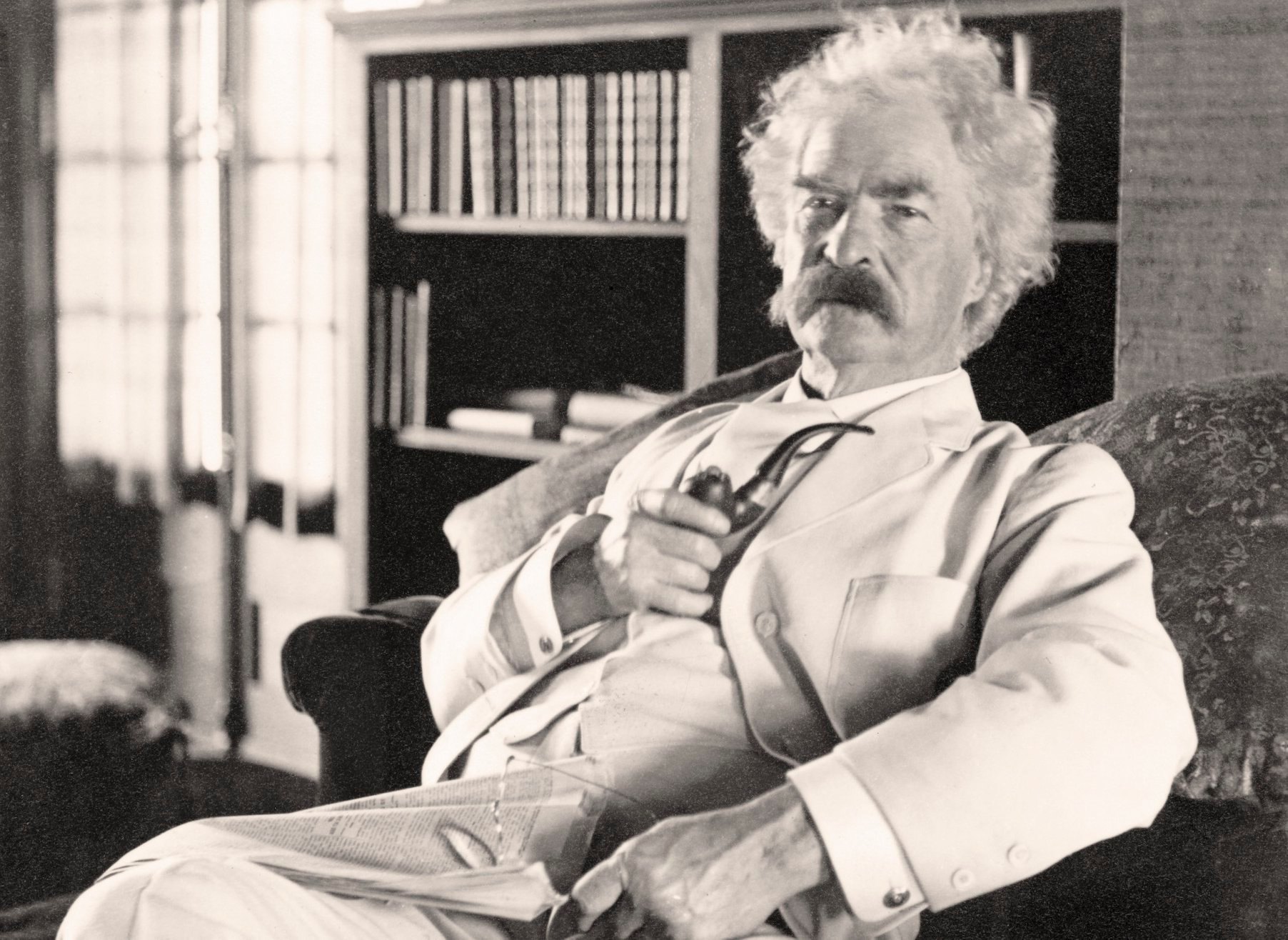
Twain’s Take on Music & Opera
When I was in my late teens and early 20s, no writer enthralled me more than Mark Twain. His observations could be so contemporary, so scathing, and so hilarious.
As with much else, Twain had a lot to say about music. He was not a big fan of classical music, least of all opera. Or so he maintained. Everyone loves a good bon mot, so we all remember the withering zingers.
But taken collectively, Twain’s reactions are more of a mixed bag. He likes the stuff he knows and enjoys Wagner in moderation. At the very least, he concedes that he wants to like “the higher music,” but would like to do so without expending the time, the effort, and the attention it would take to make it more rewarding, or at the very least comprehensible. Somehow, he just never caught the spark that for me flared into a wildfire. Perhaps if at the time the ability to hear the music had been more accessible.
I gather, more than anything, it’s the phonies that he found repellent, and justifiably so. He singles out those who make a big display of themselves, humming along to ensure everyone around them recognizes their authority and absorption. It’s worth noting that this was at a time when going to the opera was more of a rarified experience, for many financially prohibitive, and perceived as a social gathering of the upper classes.
Twain’s experiences with music were in the days before records, before classical radio, even before supertitles at the opera. He refers to melodies he knows from having encountered them on a hand-organ or a music box as the extent of his music education. These, he confesses, he finds delightful when heard in the opera house. So it seems the potential was there. What he lacked was regular exposure, without the annoyance and affectations of other people – a few more positive experiences. What he might have thought in this more democratic age of cell phone disruptions is anyone’s guess.
Twain on opera:
http://www.twainquotes.com/Opera.htmlOf course, he could be just as irreverent about the banjo:
It’s okay, Sam. You may hate classical music, but we still love you. Happy birthday.
Tag Cloud
Aaron Copland (94) Beethoven (95) Composer (114) Film Music (148) Film Score (143) Film Scores (255) Halloween (97) John Williams (196) KWAX (232) Leonard Bernstein (105) Marlboro Music Festival (125) Movie Music (163) Mozart (91) Opera (215) Philadelphia Orchestra (90) Picture Perfect (174) Princeton Symphony Orchestra (110) Radio (90) Ross Amico (244) Roy's Tie-Dye Sci-Fi Corner (290) The Classical Network (101) The Lost Chord (269) Vaughan Williams (107) WPRB (397) WWFM (881)