Tag: Louis Armstrong

  • American Music Greats Born on This Day

    American Music Greats Born on This Day

    A great day for American music.

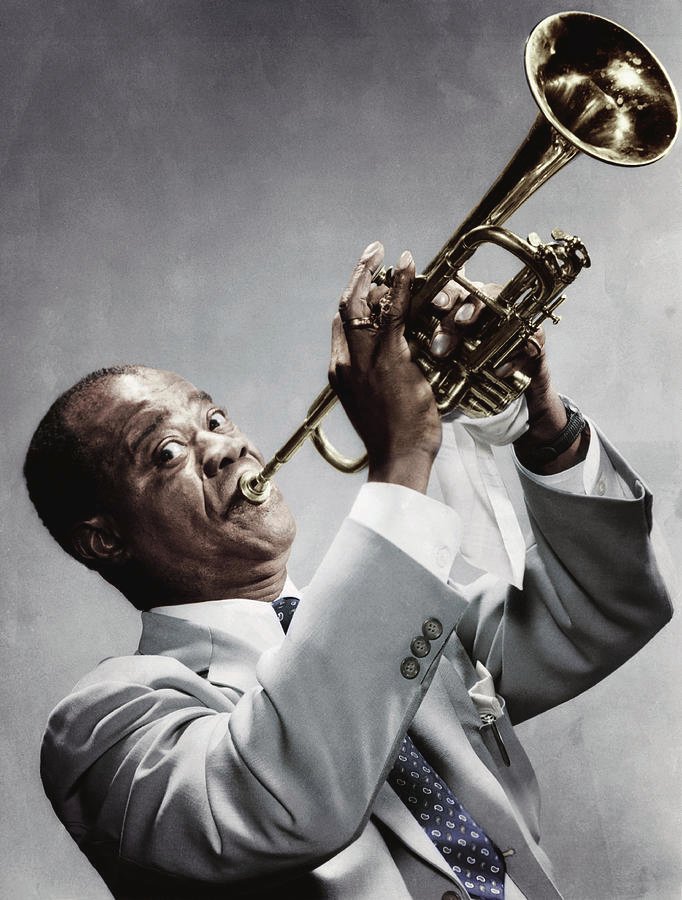
    Seminal jazz artist and pop cultural icon Louis Armstrong was born on this date in 1901. Armstrong’s birth certificate didn’t come to light until years after his death, so he always celebrated his birthday on July 4. Can’t get much more American than that.

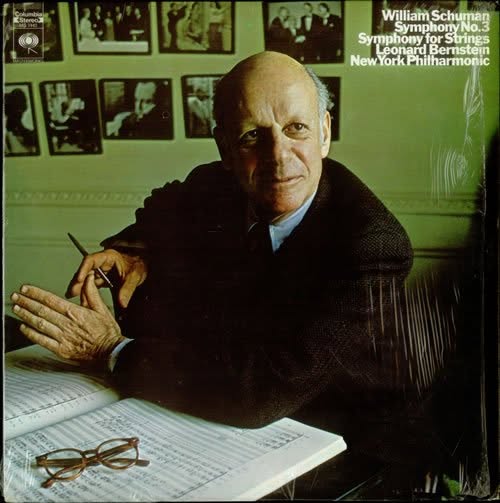
    William Schuman, president of the Julliard School (1945-61) and Lincoln Center (1961-69), and first recipient of the Pulitzer Prize for Music for his cantata “A Free Song” in 1943, was born on this date in 1910. In his day, he was regarded as one of our great American symphonists. His Symphony No. 3 (1941) was especially well-regarded.
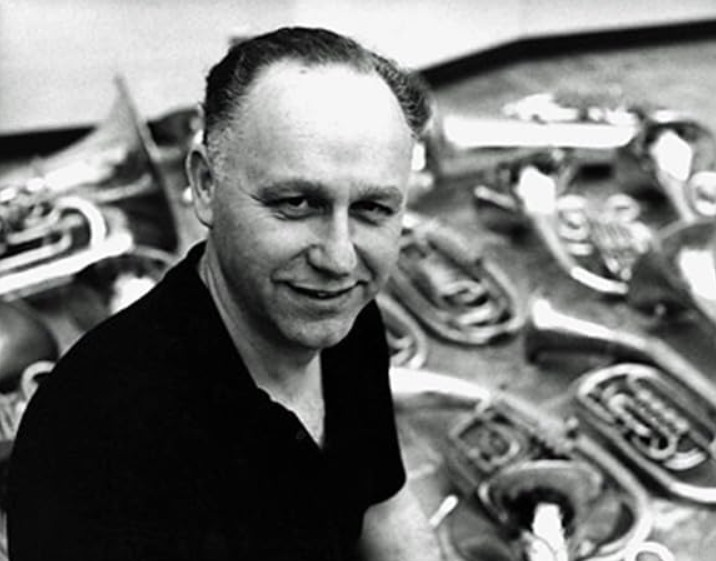
    Film composer David Raksin, who got his start working with Chaplin on “Modern Times,” but best-remembered for his music for the noir classic “Laura,” was born in Philadelphia on this date in 1912. Due to his longevity – Raksin lived to see 92 – he became an invaluable fount of information about old Hollywood.
    Pretty great country, that could produce that array of talent. Happy birthday, gentlemen. Thanks for all the music.


    Armstrong live in 1933

    With Velma Middleton, “All That Meat and No Potatoes”

    William Schuman on “What’s My Line?”

    Schuman, Symphony No. 3

    Raksin talks about working with Chaplin on “Modern Times”

    Raksin plays “Laura”

  • Paris Blues Armstrong Newman Poitier & Racism

    Paris Blues Armstrong Newman Poitier & Racism

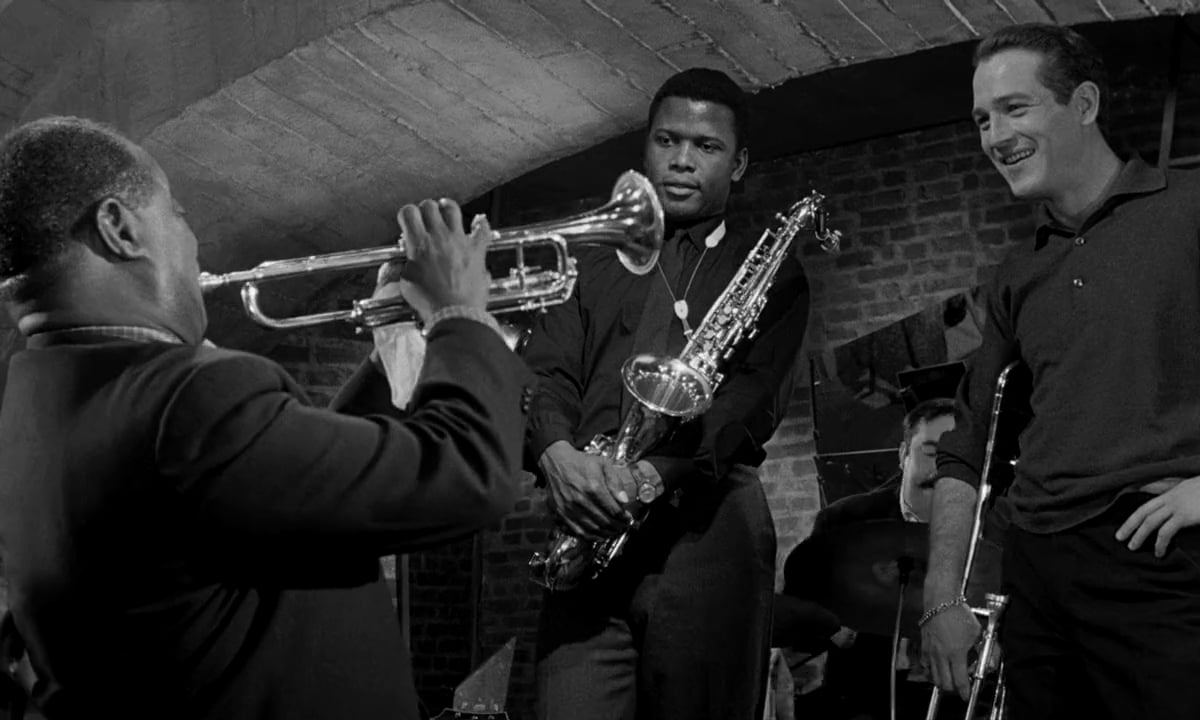
    Here’s a link to the “Battle Royal” scene from “Paris Blues” (1961). Louis Armstrong raises the roof of a subterranean jazz bar with Paul Newman and the late Sidney Poitier.

    Duke Ellington was nominated for an Academy Award in the category of “Best Music, Scoring of a Musical Picture,” but to no one’s surprise, lost to Saul Chaplin, Johnny Green, Sid Ramin, and Irwin Kostal for “West Side Story.” Poitier’s onscreen saxophone playing was recorded by Paul Gonsalves. Newman’s trombone part was recorded by Murray McEachern.

    The film contrasts American racism of the era with Paris’ comparative acceptance of Black people. “Here in Paris, I’m Eddie Cook, musician – period,” observes Poitier’s character, “not Eddie Cook, negro musician.”

    However, the interracial romance of Harold Flender’s 1957 novel was an extra mile United Artists was unwilling to go. Instead, the film version takes a more conservative route of pairing Poitier with Diahann Carroll. Poitier, disappointed with the change, later remarked that “cold feet… took the spark out of it.”

  • Louis Armstrong’s Real Birthday Surprise!

    Louis Armstrong’s Real Birthday Surprise!

    It’s not everyone who can choose the time and circumstances of their birth.

    One of the most important figures in American music really had no idea when he was born. So he and his manager settled on July 4. What could be more American than that? Furthermore, 1900 signified the start of a new century, the beginning of a new era. Thus it was that Louis Armstrong was “born” in New Orleans on July 4, 1900.

    It wasn’t until the 1980s, well after Armstrong’s death in 1971, that a researcher discovered Armstrong’s baptismal records and it was established that his actual birthdate was August 4, 1901. So Armstrong would have been 120 years-old today. He died fifty years ago, on July 6.

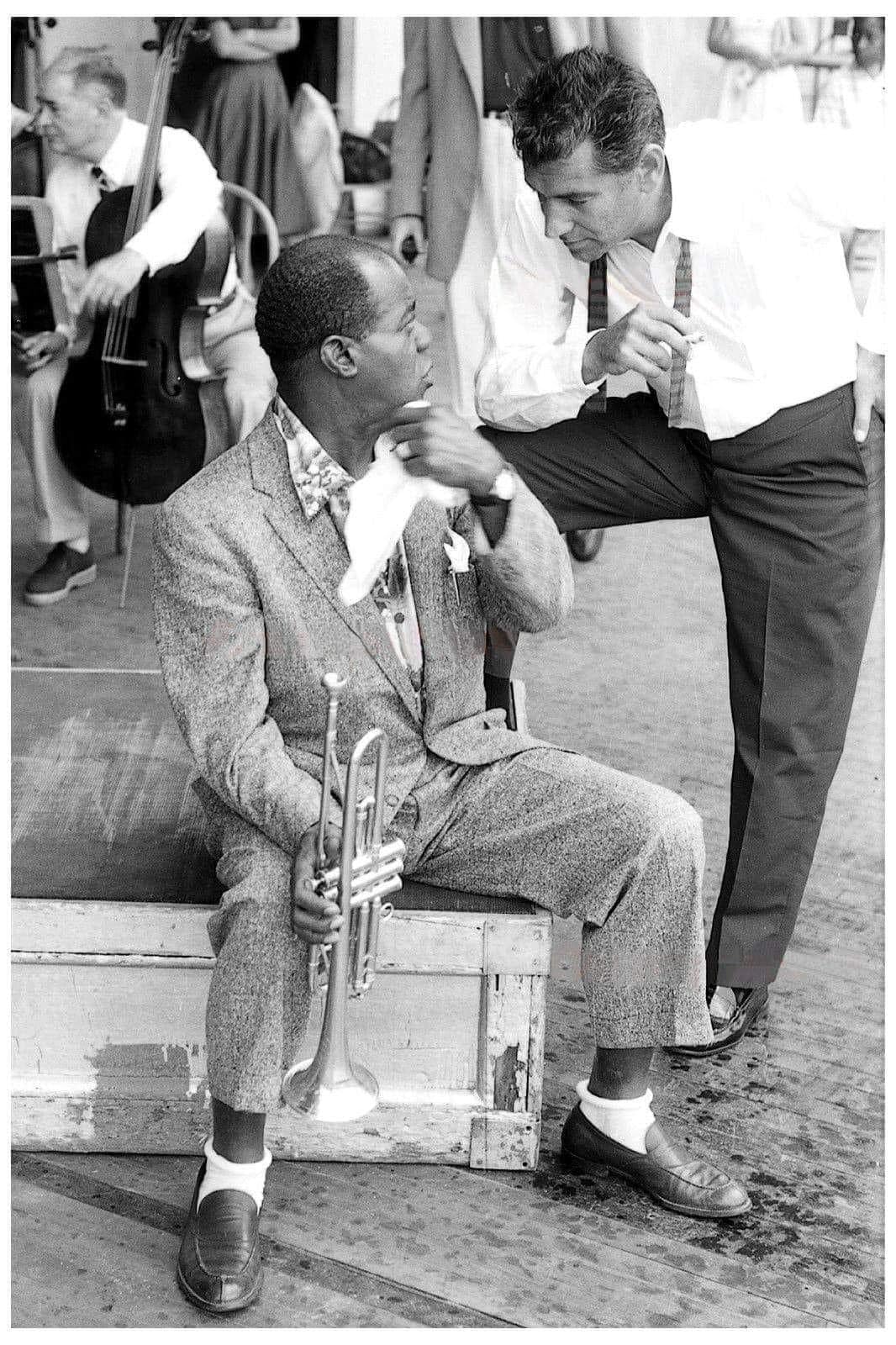
    Here is a special document, indeed. Armstrong and his All-Stars perform “St. Louis Blues,” with the New York Philharmonic conducted by Leonard Bernstein (Bernstein’s name mispronounced by Edward R. Murrow!) at Lewisohn Stadium on July 14, 1956. The composer, W.C. Handy, is in attendance.

    Happy birthday, Satchmo!

  • Remembering

    Remembering

    It’s a fairly well-known fact that my birthday is July 4. Or at any rate, once somebody learns it, they’re not likely to forget.

    For years, I thought I shared the date with Louis Armstrong. But it turns out Armstrong had no idea when he was born. It wasn’t until the 1980s that a researcher discovered Armstrong’s baptismal records and confirmed his official birthday was August 4, 1901.

    Oh well, at least I’ve still got Stephen Foster (born July 4, 1826).

    Armstrong, one of the most important figures in American jazz, as well as one of the most beloved musicians of the 20th century, died 50 years ago today.

    That’s right, the world lost Satchmo and Stravinsky in the same year.


    With Velma Middleton, singing (and playing) “All That Meat and No Potatoes”

    With uncanny Danny, namedropping the masters, in “The Five Pennies”

    With the Duke on Ed Sullivan


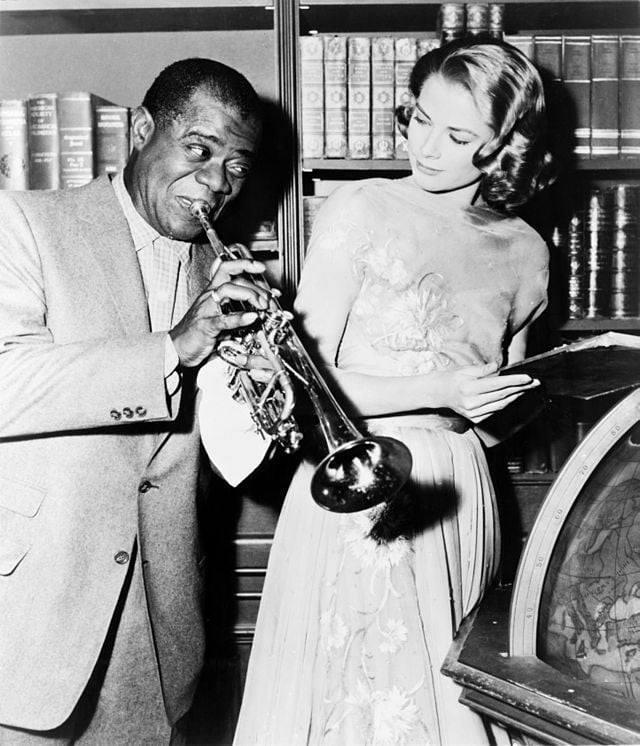
    PHOTO: Playing with Grace, on the set of “High Society”

  • August 4: A Birthday Bonanza of American Music

    August 4: A Birthday Bonanza of American Music

    I learned something very interesting this morning. Today is the birthday of Louis Armstrong, with whom I always assumed I shared a birthday of July 4. It turns out Armstrong had no idea when he was born, and it wasn’t until the 1980s that a researcher discovered his baptismal records, confirming that he was born on August 4, 1901. Armstrong, of course, rose from impoverished origins in New Orleans to become not only one of the most important figures in American jazz, but also one of the most recognizable and beloved musicians of the 20th century.

    Two other notable American musicians were born on this date. William Schuman, the winner of the inaugural Pulitzer Prize for Music in 1943 (for his Cantata No. 2 “A Free Song”), was born in 1910. He was president of the Juilliard School from 1945, resigning the position in 1961 to become president of Lincoln Center. He received a special Pulitzer in 1985 for his “contribution to American music as composer and educational leader.” His most famous works are his “New England Triptych,” after Revolutionary Era anthems of William Billings, and his Symphony No. 3, one of the great American contributions to the form, though I encourage you to check out his baseball opera, “The Mighty Casey,” for a lighter side of this often austere composer.

    Finally, film composer David Raksin was born on this date in Philadelphia in 1912. Best-known for the standard “Laura” (from the motion picture of the same name), Raksin got his start working for Charlie Chaplin on “Modern Times,” whipping the self-styled auteur’s musical ideas into their final form. Their relationship could be contentious (Chaplin fired him at least once), but they remained lifelong friends. Because of his longevity – Raksin lived to be 92 – he assumed the unofficial position of senior statesman for film composers of Hollywood’s Golden Age. He was brimming with anecdotes about his colleagues, both in the music department and beyond.

    Happy birthday, gentlemen, and thanks for the music!

    Armstrong sings and plays “All That Meat and No Potatoes”:

    William Schuman on “What’s My Line?”

    Raksin plays “Laura”:
    https://www.youtube.com/watch?v=jTVVqUT_pDw

    Raksin talks about working with Chaplin on “Modern Times”:

    PHOTO: Louis Armstrong and Grace Kelly on the set of “High Society”

Tag Cloud

Aaron Copland (92) Beethoven (95) Composer (114) Film Music (123) Film Score (143) Film Scores (255) Halloween (94) John Williams (187) KWAX (229) Leonard Bernstein (101) Marlboro Music Festival (125) Movie Music (138) Opera (202) Philadelphia Orchestra (89) Picture Perfect (174) Princeton Symphony Orchestra (106) Radio (87) Ralph Vaughan Williams (85) Ross Amico (244) Roy's Tie-Dye Sci-Fi Corner (290) The Classical Network (101) The Lost Chord (268) Vaughan Williams (103) WPRB (396) WWFM (881)

DON’T MISS A BEAT

Receive a weekly digest every Sunday at noon by signing up here


RECENT POSTS