Tag: Lyric Symphony

  • Alexander Zemlinsky Vienna’s Musical Outlier

    Alexander Zemlinsky Vienna’s Musical Outlier

    Poor Alexander Zemlinsky. Unlucky in love with Alma Schindler, later the wife of Gustav Mahler (among others), and overshadowed professionally by his pupil (and one-time brother-in-law) Arnold Schoenberg. On the 150th anniversary of his birth, he remains fin de siècle Vienna’s great musical outlier.

    Zemlinsky is yet another very interesting composer whose profile has risen somewhat thanks to recordings. In particular, he received a boost during the compact disc era, a time when the market became oversaturated with endless duplications of the standard repertoire, and producers scrambled to exhume accessible music lurking at the fringes.

    In himself, Zemlinsky was a remarkable talent. He studied theory with Robert Fuchs and composition with Anton Bruckner. Early on, he received support from Johannes Brahms. Later, he met Schoenberg, to whom he gave lessons in counterpoint. He was the only formal teacher Schoenberg ever had. Interestingly, he was also mentor to Erich Wolfgang Korngold, who went from toast-of-Vienna musical wunderkind to seminal Hollywood film composer.

    Like just about everyone else, Zemlinsky became embroiled in a torrid love affair with Alma Schindler. He even proposed marriage. Alma seemed keen on the idea at first but was soon dissuaded by family and peers. Gustav Mahler became a champion of Zemlinsky’s music, despite the fact that both men happened to love the same woman.

    By his own assessment, Zemlinsky was not an attractive man, and perhaps there was something autobiographical in his decision to set Oscar Wilde’s short story “The Birthday of the Infanta” as an opera, which he titled “The Dwarf.” (SPOILER ALERT: The Dwarf is spurned and dies of a broken heart.)

    Zemlinsky is probably best known for his “Lyric Symphony,” for vocal soloists and orchestra, on texts of Rabindranath Tagore, and the large-scale symphonic poem “The Mermaid,” after Hans Christian Andersen.

    However, I have always been partial to this early Symphony in B-flat, written in the shadow of Brahms and Dvořák:

    The Clarinet Trio, Op. 3, frequently performed as a piano trio (with a viola taking the clarinet part)

    “The Mermaid”

    A recent performance of the “Lyric Symphony”:

    Happy sesquicentenary, Alexander Zemlinsky!


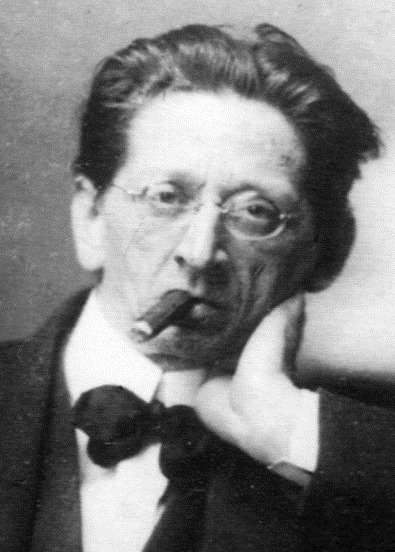
    PHOTO: Zemlinsky smokes the sourest cigar in the world
  • Alexander Zemlinsky Rediscovered Vienna’s Lost Romantic

    Alexander Zemlinsky Rediscovered Vienna’s Lost Romantic

    Alexander Zemlinsky is yet another very interesting composer of fin de siècle Vienna whose profile has risen thanks to recordings. In the compact disc era, as record producers pushed to find a niche beyond the gilded temple of the standard repertoire, opulent late-romantic figures like Zemlinsky began to emerge.

    In himself, he was a remarkable talent. He studied theory with Robert Fuchs and composition with Anton Bruckner. Early on, he received support from Johannes Brahms. Later, he met Arnold Schoenberg, who became his pupil and son-in-law. He was also the mentor of the wunderkind Erich Wolfgang Korngold.

    He was further helped by Gustav Mahler. Like just about everyone else, he was swept up into a torrid love affair with Alma Schindler, later Frau Mahler. There was even a marriage proposal. Alma seemed to be keen on the idea at first but was soon dissuaded by family and peers.

    By his own assessment, Zemlinsky was not an attractive man, and perhaps there was a bit of autobiography in his choice to set Oscar Wilde’s short story “The Birthday of the Infanta” as an opera, which he titled “The Dwarf.” (SPOILER ALERT: The Dwarf is spurned and dies of a broken heart.)

    Zemlinsky is probably best known for his “Lyric Symphony,” for vocal soloists and orchestra, on texts of Rabindranath Tagore, and the large-scale symphonic poem “The Mermaid,” after Hans Christian Andersen.

    However, I have always been partial to this early Symphony in B-flat, written in the shadow of Brahms and Dvořák. Personally I prefer the Chailly recording, but it doesn’t appear to be posted on YouTube, so I’ll take what I can get:

    https://www.youtube.com/watch?v=DP51rIgk4ac

    Happy birthday, Alexander Zemlinsky!

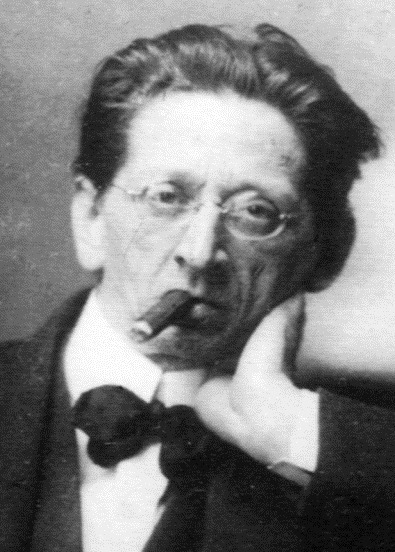
    PHOTO: Zemlinsky smokes the sourest cigar in the world

  • Lorin Maazel A Musical Farewell

    Lorin Maazel A Musical Farewell

    Lorin Maazel, one of the outstanding conductors of his generation, died last week at the age of 84. A musical prodigy, Maazel made his conducting debut at the age of 8. Between 9 and 15, he conducted most of the major American orchestras, including the NBC Symphony, at the invitation of Arturo Toscanini.

    Over the course of his career, he held posts with many prominent musical organizations, including the Deutsche Oper Berlin, the Berlin Radio Symphony Orchestra, the Cleveland Orchestra, L’Orchestre National de France, the Pittsburgh Symphony Orchestra, the Bavarian Radio Symphony Orchestra and the New York Philharmonic. In addition, he was briefly general manager and artistic director of the Vienna State Opera.

    We honor Maazel tonight on “The Lost Chord” with two of his over 300 recordings. The main feature will be Alexander Zemlinsky’s “Lyric Symphony,” representative of his fruitful collaboration with the Berlin Philharmonic, an orchestra with which he had marvelous chemistry. However, after the death of Herbert von Karajan, the heir apparent was passed over as music director in favor of Claudio Abbado, Maazel abruptly terminated the relationship, stating essentially that he wanted Abbado to be able to do his thing.

    Thankfully the Maazel-Berlin partnership yielded some fine recordings. The Zemlinsky, rarely heard, was written between 1922 and 1923, a song-symphony based on poems by Rabindranath Tagore, who, in 1913, was awarded the Nobel Prize for Literature. This 1982 performance features soprano Julia Varady and her husband, baritone Dietrich Fischer-Dieskau.

    Maazel was also a composer and a talented violinist. He studied the violin from the age of 5. It was the sale of his 1783 Guadagnini that helped fund the Castleton Festival, held every summer at Maazel’s Virginia farm. He died there as a result pneumonia, no doubt the result of his self-imposed, unrelenting work schedule.

    As an encore, we’ll have an example of Maazel’s artistry as a violinist, taken from one of his “New Year’s Concert in Vienna” recordings. Maazel was a regular conductor of the New Year’s concerts following the death of Willi Boskovski. After seven appearances in a row, the practice was implemented of using a different conductor each year, likely to make telecasts and recordings more marketable. Maazel returned four additional times. The last was in 2005. From 1996, Maazel will lead the Vienna Philharmonic as well as play the melting violin solo in Josef Strauss’ “The Girl from Nasswald.”

    That’s “Maazel, Farewell.” You can hear it tonight at 10 ET, or, if you can’t sleep, tune in for the repeat Friday morning at 3. Of course, you can always listen to it later as a webcast, at http://www.wwfm.org.

    Here’s a clip of Maazel playing Mozart with the Vienna Philharmonic, the slow movement of the Violin Concerto No. 3 in G Major, K. 216 (the first and third movements are also posted, if you have a desire to hear more):

    https://www.youtube.com/watch?v=Y9BdRCfQ4Cg

Tag Cloud

Aaron Copland (92) Beethoven (95) Composer (114) Film Music (123) Film Score (143) Film Scores (255) Halloween (94) John Williams (187) KWAX (229) Leonard Bernstein (101) Marlboro Music Festival (125) Movie Music (138) Opera (202) Philadelphia Orchestra (89) Picture Perfect (174) Princeton Symphony Orchestra (106) Radio (87) Ralph Vaughan Williams (85) Ross Amico (244) Roy's Tie-Dye Sci-Fi Corner (290) The Classical Network (101) The Lost Chord (268) Vaughan Williams (103) WPRB (396) WWFM (881)

DON’T MISS A BEAT

Receive a weekly digest every Sunday at noon by signing up here


RECENT POSTS