Tag: Manhattan Chamber Players

  • Bach $1750 Finale Fundraiser Today

    Bach $1750 Finale Fundraiser Today

    Johann Sebastian Bach died in 1750. By coincidence, we have exactly $1750 left in challenge money.

    I hope you’ll join us this morning on The Classical Network for a special Bach finale to our “Gathering of Gratitude” fundraiser. That will take place from 10 a.m. to 1 p.m. EST, and then we will be THROUGH with this autumn campaign! Your dollars will be doubled up to the amount of $1750, and then we are DONE. I hope you will support us TODAY at 1-888-232-1212 or by donating online at wwfm.org. Then stick around and enjoy our weekly broadcast of “Bach at 1.”

    Today is also your LAST CHANCE to get in on our celebratory “Gratitude Gala,” which we are all very much looking forward to. The gala will take place at the Mercer County Community College Conference Center, on MCCC’s West Windsor campus, this Friday (Saint Cecilia’s Day), from 6 to 9 p.m. There will be food, there will be drink, there will be conversation with our hosts and celebrity guests, and there will be music, courtesy of Manhattan Chamber Players.

    A contribution in the amount of $200 will generate a golden ticket for you and a guest to attend. But we need to hear from you TODAY, in order to get an accurate headcount, so that we’ll be able to pick up enough booze! Again, that number is 1-888-232-1212, or join us online at wwfm.org, and click on donate.

    Once we’ve taken care of business, we can put our financial concerns to bed, and I’ll be on at 4:00 with a late afternoon/early evening of music made possible by YOU – including warm acknowledgements of the birthdays today of Johann Friedrich Fasch, Carl Maria von Weber, Ignaz Paderewski and Eugene Ormandy. Of course, there’s plenty more where that came from.

    Bach may have died in 1750, but his music is alive and kicking, thanks to the generous support of our listener-members. Thanks so much for 37 years of WWFM – The Classical Network!
  • Wagner Mendelssohn Feud & Chamber Music

    Wagner Mendelssohn Feud & Chamber Music

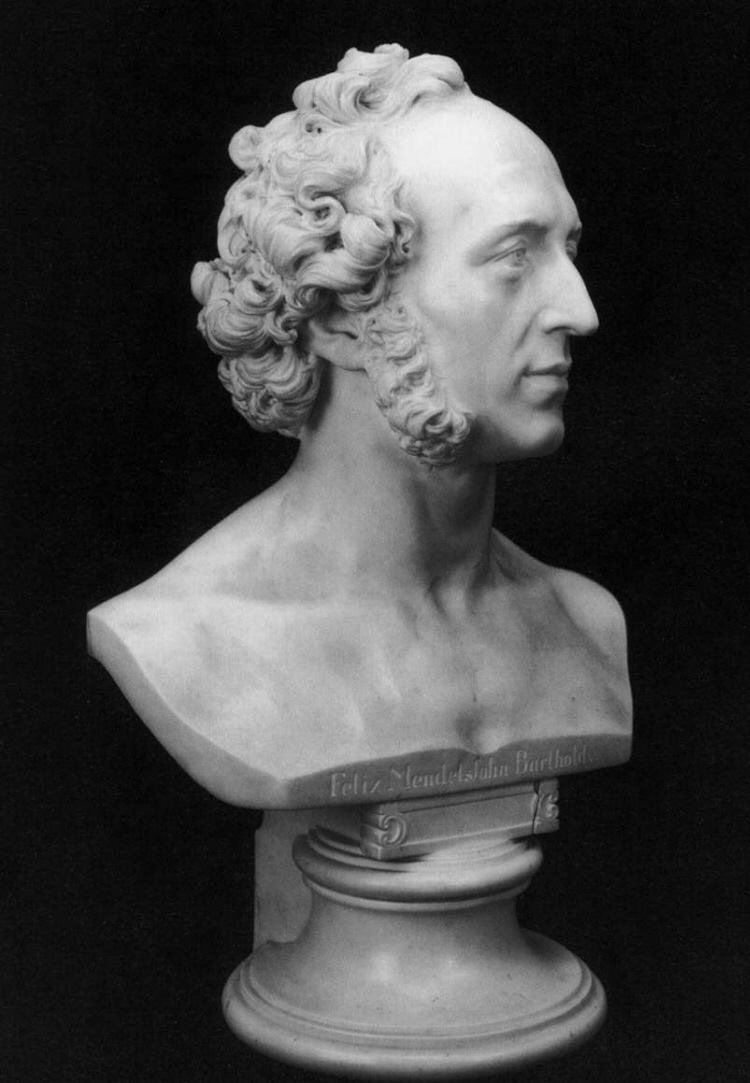
    Richard Wagner, of course, was not very fond of Felix Mendelssohn. He had given the manuscript of his early Symphony in C major to Mendelssohn as a “gift” in 1836, and then became resentful when Mendelssohn didn’t make a special case for the work in his position as kapellmeister of the Leipzig Gewandhaus Orchestra. For this, Wagner never forgave him. Nevermind the fact that the symphony had been performed by the Leipzig orchestra in 1833.

    Okay, so Wagner may have been a little disappointed, but he could have stopped short of his notorious screed “Judaism in Music,” first published in 1850, in which Mendelssohn was singled out for preferential treatment. But at least he was in good company. Wagner also targeted Giacomo Meyerbeer, who had helped secure the first performance of Wagner’s break-out success, “Rienzi,” in 1842. (The conductor Hans von Bülow joked that “Rienzi” was Meyerbeer’s best opera.) Mendelssohn had already been dead for three years, and Wagner published his essay under a pseudonym. Not exactly fair play, by any standard.

    Ironically, the tract wound up damaging his own reputation more than Mendelssohn’s. It’s a good thing for Wagner that his genius was such that we still revere his innovative music dramas even in the shadow of his own psychological frailty.

    Mendelssohn, too, remains in the canon, his own genius undiminished. Mendelssohn’s String Quintet No. 1 in A minor will be the concluding work on today’s Noontime Concert on The Classical Network, which will be made up of performances by the Manhattan Chamber Players.

    Also on the program will be Maurice Ravel’s Introduction and Allegro for Harp, Flute, Clarinet, and String Quartet, Johannes Brahms’ Clarinet Trio, and John Blasdale’s Elegy in F sharp minor, a work for string quartet inspired by Beethoven’s Piano Sonata in E major, Op. 109. The broadcast will be drawn from two concerts given at the Baruch Performing Arts Center in December and April. The Baruch Performing Arts Center is located on 25th Street, between Lexington and 3rd Avenues, in New York City.

    This Thursday, the Manhattan Chamber Players will be joined by formidable cellist Peter Wiley. Wiley is a veteran of both the Beaux Arts Trio and the Guarneri Quartet. The program, titled “Cello Power,” will include Wolfgang Amadeus Mozart’s String Quartet in B flat major, K. 589, and the String Quintets by Alexander Glazunov and Franz Schubert. The concert will take place at 7:30 p.m. at Holy Trinity Lutheran Church, New York City, 3 West 65th Street, at the corner of 65th and Central Park West. For more information, visit manhattanchamberplayers.com.

    Following today’s Noontime Concert broadcast, I’ll mark Wagner’s birthday anniversary with some unusual works and exceptional performances – maybe even the Symphony in C. We’ll find beauty in the beast, between 12 and 4 p.m. EDT, on WWFM – The Classical Network and wwfm.org.

  • Haydn Strauss Brahms on WWFM Today

    Haydn Strauss Brahms on WWFM Today

    I don’t what it is, but for some reason I’ve really been on a Haydn kick recently. How fortuitous, then, that a Haydn string quartet would be at the heart of today’s Noontime Concert.

    Members of the Manhattan Chamber Players will perform music for various combinations of strings by Richard Strauss, Haydn, and Brahms.

    We’ll hear the Sextet from Strauss’ final opera, “Capriccio” (1942). The extended movement is not an arrangement, by rather an intimate introduction to an opera which poses the question: which is the greater art, poetry or music? In the opera, the composer Flamand rehearses his new composition at the chateau of Countess Madeleine, who is divided in her affections between Flamand and his rival, the poet Olivier.

    Haydn’s String Quartet No. 19 in C minor, Op. 17, No. 4 (c. 1770), mingles agitation with pathos. You can feel the composer teetering into his “sturm und drang” phase.

    On the other hand, Brahms’ String Quintet No. 1 in F Major, Op. 88 (1882), couldn’t be more different. Brahms doubles the violas for the piece, which he described to Clara Schumann as “one of my finest works.” He also intimated to his publisher, Simrock, “You have never heard such a beautiful work from me.” This was no idle boast. The work is occasionally referred to as the “Spring” Quintet. Brahms completed the piece at a spa in Upper Austria, and the work exudes warmth, contentment, and even joy.

    Then stick around – I will further indulge my Haydn fancy with his magnificent oratorio, “The Seasons,” in advance of the composer’s birthday, which is coming up this Saturday. This is music that truly never goes out of season.

    Strings are the thing on today’s Noontime Concert, and then soloists and chorus sing the praises of spring, courtesy of Haydn, from 12 to 4 p.m. EDT, on WWFM – The Classical Network and wwfm.org.

  • Hanukkah Music & Holiday Concerts on Classical Network

    Hanukkah Music & Holiday Concerts on Classical Network

    Hanukkah begins at sunset. Get ready for the Festival of Light.

    String quintets by Mozart will illuminate your lunch hour, on today’s Noontime Concert on The Classical Network. The Manhattan Chamber Players will perform the Quintet No. 2 in C minor, K. 406, and the Quintet No. 4 in G minor, K. 516.

    The musicians will appear with guest artist/violist Samuel Rhodes tomorrow night (Wednesday at 7:30) in concert in Engelman Recital Hall at Baruch College in New York City. The program will include Maurice Ravel’s “Introduction and Allegro” for harp, flute, clarinet, and string quartet, Frank Bridge’s “Lament” for two violas, Brahms’ Clarinet Trio in A minor, and Arnold Schoenberg’s “Verklärte Nacht.” A pre-concert talk will be given at 7:00. You’ll find more information at manhattanchamberplayers.com.

    We’ll also hear the Symphony No. 3 by English composer Stanley Bate, on his birthday, and Ralph Vaughan Williams’ ballet “On Christmas Night,” inspired by Charles Dickens’ “A Christmas Carol.”

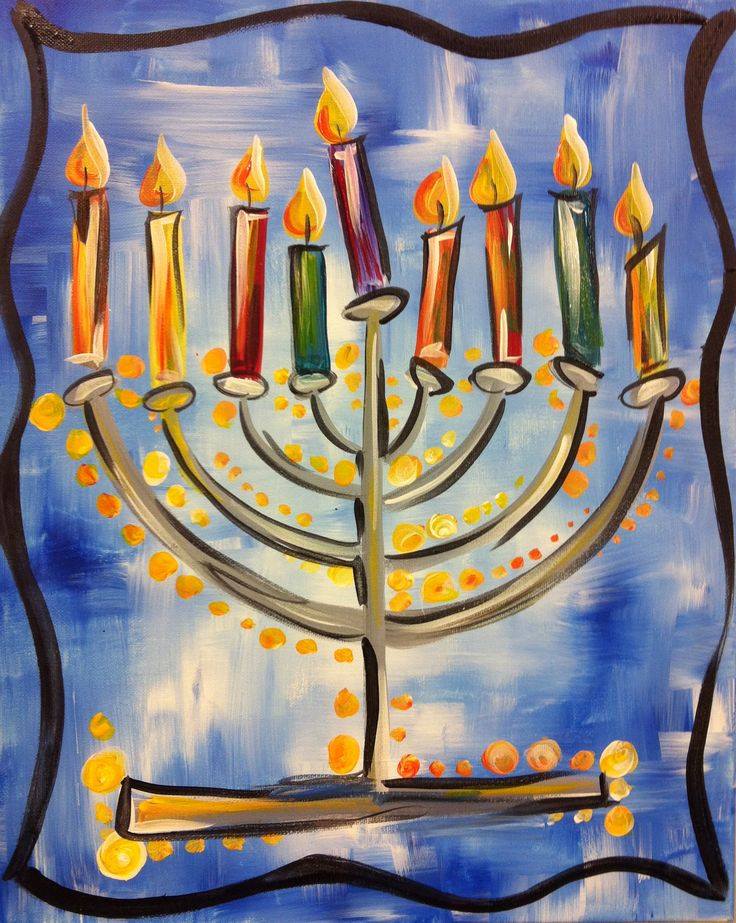
    If you like Benjamin Britten’s “A Ceremony of Carols,” I think you’ll enjoy Samuel Adler’s “The Flames of Freedom.” The cantata, scored for three-part treble chorus, is based on ten well-known Hanukkah songs and hymns, alongside original music to two other liturgical Hanukkah texts. The work is cast in eight movements to represent the eight candles of the menorah.

    Then, in the festive spirit of midwinter celebrations of all cultures, we’ll hear Christopher Rouse’s “Karolju,” a wholly fabricated holiday blow-out based on a kind of pidgin text drawn from many different languages. Even the title is pure invention, suggestive of the word “carol,” but ending with “u” (because the composer always liked words that end with “u”). Hey, just like “Merry Christmas” and “Happy Hanukkah,” it’s the thought that counts.

    There will be much multi-cultural merriment, this Tuesday from 12 to 4 p.m. EST, on WWFM – The Classical Network and wwfm.org.

Tag Cloud

Aaron Copland (92) Beethoven (95) Composer (114) Film Music (123) Film Score (143) Film Scores (255) Halloween (94) John Williams (187) KWAX (229) Leonard Bernstein (101) Marlboro Music Festival (125) Movie Music (138) Opera (202) Philadelphia Orchestra (89) Picture Perfect (174) Princeton Symphony Orchestra (106) Radio (87) Ralph Vaughan Williams (85) Ross Amico (244) Roy's Tie-Dye Sci-Fi Corner (290) The Classical Network (101) The Lost Chord (268) Vaughan Williams (103) WPRB (396) WWFM (881)

DON’T MISS A BEAT

Receive a weekly digest every Sunday at noon by signing up here


RECENT POSTS