Tag: Marlboro Music Festival

  • Two Ludwigs at Marlboro

    Two Ludwigs at Marlboro

    It’s a tale of two Ludwigs, on this week’s “Music from Marlboro.”

    For a time, Ludwig Spohr (1784-1859) – recognized everywhere, outside of his native Germany, as Louis (pronounced “Louie,” as in the French) – was as highly regarded as Ludwig van Beethoven (1770-1827).

    A triple threat – a violinist, a conductor, and a composer – he churned out music in all genres. He wrote 9 symphonies, 10 operas, 15 violin concertos, 4 clarinet concertos, and 36 string quartets. Add to those, innumerable chamber works for all sorts of instrumental combinations, with a special emphasis on the harp – since the harp was the instrument of his wife, with whom he often appeared in concert.

    Following his death, in 1859, Spohr’s reputation plummeted. It wasn’t until the late 20th century that his music underwent a significant revival.

    Today, we’ll have chance to enjoy his Sextet for Strings in C major, Op. 140, a comparatively late work, but one imbued with a remarkably youthful spirit. A supporter of German unification, republicanism, and democratic causes, Spohr was inspired by the revolutions that swept across Europe in 1848.

    From the 1980 Marlboro Music Festival, we’ll hear it performed by violinists Pina Carmirelli and Veronica Knittel, violists Philipp Naegele and Karen Dreyfus, and cellists Peter Wiley and Georg Faust.

    A friend of Beethoven, Spohr participated in a memorable run-through of his colleague’s “Ghost” Trio, with the composer banging away at an out-of-tune piano. He also played in the premiere of Beethoven’s Seventh Symphony.

    By way of contrast, but also honoring their association, we’ll open the hour with Beethoven’s Octet for Winds in E-flat major, Op. 103, from 1792. Despite the high opus number, the work was actually written in the composer’s hometown of Bonn, prior to his move to Vienna.

    We’ll hear it in a 1957 recording featuring Marlboro cofounder Marcel Moyse, as director of an ensemble made up of oboists Alfred Genovese and Earl Schuster, clarinetists Harold Wright and Richard Lesser, bassoonists Anthony Checchia and Roland Small, and hornists Myron Bloom and Richard Mackey.

    Get ready to flip your wig for two Ludwigs, on this week’s “Music from Marlboro,” this Wednesday evening at 6:00 EST, on WWFM – The Classical Network and wwfm.org.

    Marlboro School of Music and Festival: Official Page


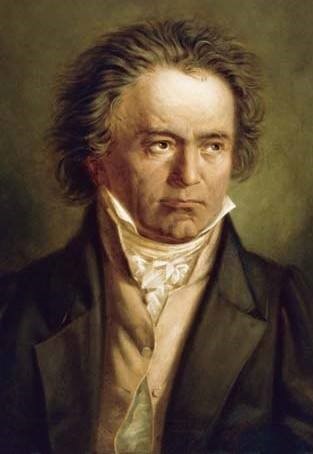
    When the cravat was king: Beethoven (left) and Louis Spohr
  • Remembering Peter Serkin Marlboro Legend

    Remembering Peter Serkin Marlboro Legend

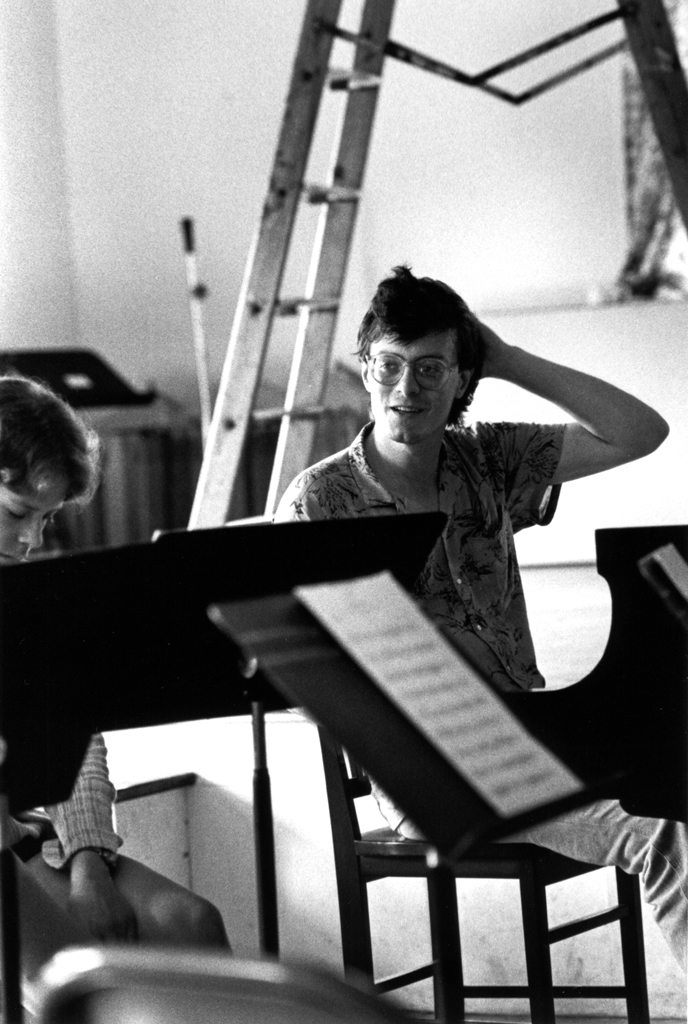
    With the passing of Peter Serkin on Saturday at the age of 72, a major voice of the Marlboro Music Festival has fallen silent. On this week’s “Music from Marlboro,” we’ll pay tribute to this extraordinary artist.

    Serkin was barely beyond a toddler when his father, Rudolf Serkin, and maternal grandfather, Adolf Busch, co-founded the Marlboro Music School and Festival in 1951. Rudolf Serkin, of course, was one of the great pianists of the 20th century. Busch, his frequent recital partner, was the noted violinist, composer, and anti-fascist. As you can imagine, that’s quite a legacy to have to live up to!

    Naturally, the younger Serkin was absorbed into the family trade and soon developed into a brilliant musician in his own right. He was already performing in public at the age of 12. At 19, he was recognized with a special Grammy Award.

    But in his early 20s, the business of making music began to ring hollow. He became frustrated with the grind of being a performer and disagreed with the way in which musicians’ interpretations were being evaluated. He decided it was time to do some serious soul-searching.

    In the late ‘60s, he turned his back on the concert platform to confront bigger questions in his own life. He dropped out, traveled to India, and moved to rural Mexico to seek peace with his wife and daughter.

    Then one Sunday morning, he happened to overhear Bach being broadcast over a neighbor’s radio. It was then that he felt the tug back to his true calling.

    When he returned, it was with a freshness of purpose. Serkin employed his intelligence and introspection in probing more deeply into the classics and in exploring new frontiers with contemporary music.

    Of all the great chamber ensembles that had their roots in Marlboro, few were more adventurous than Tashi, a group Serkin co-founded. It was a Marlboro performance of Messiaen’s “Quartet for the End of Time” that inspired him to form the group, alongside Ida Kavafian, Fred Sherry, and Richard Stoltzman. Their recording of the quartet is still venerated as the benchmark.

    Among composers who wrote works specifically for Serkin were Luciano Berio, Oliver Knussen, Peter Lieberson, Bright Sheng, Toru Takemitsu, and Charles Wuorinen. He was also an ardent champion of the music of Stefan Wolpe.

    We’ll celebrate Peter Serkin this evening, with two recordings tied to his Marlboro experiences.

    An affection for Max Reger is something Peter held in common with his father and grandfather. He recorded Reger’s Cello Sonata No. 4 in A minor, with Mischa Schneider, at Marlboro in 1963. The composer’s characteristic tension between Baroque polyphony and fin de siècle chromaticism holds no terrors for either musician. Serkin was only 16 when he sat down before the microphones.

    Then Peter will join Rudolf Serkin for an ebullient performance of Mozart’s Concerto for Two Pianos, recorded in New York the previous year, with the Marlboro Festival Orchestra conducted by Alexander Schneider.

    PLEASE NOTE: This Peter Serkin tribute is too great to be confined within a single hour. Because of the musical content of this evening’s program, “Music from Marlboro” will begin FIVE MINUTES EARLIER THAN USUAL, at 5:55 EST. Set your watches and dial us up early to enjoy my scintillating intro, on WWFM – The Classical Network and wwfm.org.

    Marlboro School of Music and Festival: Official Page

  • Remembering Peter Serkin Rebel Pianist

    Remembering Peter Serkin Rebel Pianist

    I am stunned to learn of the death of Peter Serkin. As the confluence of two dizzyingly talented musical tributaries (his father was Rudolf Serkin, and his mother was the daughter of Adolf Busch), it couldn’t have been easy to make his own way.

    Yet he proved himself early, both as a graduate of the Curtis Institute of Music and as a brilliant participant in the Marlboro Music Festival. I recently broadcast a jaw-dropping recording he made at age of 16 of Busoni’s “Fantasia contrappuntistica.” By then, he had already been performing in public for four years. At 19, he was recognized with a special Grammy Award.

    But it was the ‘60s, so Serkin decided he didn’t want to play anymore. He dropped out, traveled to India, and moved to Mexico. He always did follow his own path. It was when he overheard music of Bach being played on a neighbor’s radio, one Sunday morning, that he finally came to grips with who he was.

    When he returned to the concert stage, not only could he play Bach and Beethoven with the best of them, he also pushed deep into contemporary territory. He was a champion of the works of Stefan Wolpe, and Toru Takemitsu, Charles Wuorinen, and Peter Lieberson all wrote pieces for him. He also became one of the founders of the new music ensemble Tashi.

    Over a career that spanned six decades, Serkin didn’t just emerge from the shadows of his father and grandfather, he established himself as a formidable artist in his own right, one with a distinctive and inimitable profile.

    R.I.P. Peter Serkin. To me, you’ll always be the Easy Rider of classical pianists.

    https://www.nytimes.com/2020/02/01/arts/music/peter-serkin-dead.html


    Serkins fils and père play Schubert:
    https://www.youtube.com/watch?v=wlD9haP7g0g

    Serkin, 16, and Richard Goode, 20, play Busoni:

    Serkin plays Leon Kirchner:

    Tashi, from Messiaen’s “Quartet for the End of Time”:

    Serkin plays the “Goldberg Variations”:

  • Classical Music Birthdays & Butterflies Today

    Classical Music Birthdays & Butterflies Today

    Purely by chance (well, also because I happen to like the music), our first hour on The Classical Network this afternoon will be all-English, as we celebrate the birthdays today of Frederick Delius and Havergal Brian. Along the way, we’ll also take a trip to a butterfly’s ball and enjoy a grasshopper’s dance.

    In Hour No. 2, we’ll celebrate the anniversaries of the births of Danish composer Ludolf Nielsen, French operatic master Daniel-François-Esprit Auber, and Chinese-American violinist Cho-Liang Lin.

    It will be an all-French program, avec piano, on “Music from Marlboro,” with chamber music by Francis Poulenc and Gabriel Fauré, from the legendary Marlboro Music Festival, tonight at 6.

    Pull up a chair or cut a rug. It’s not just be the butterflies and grasshoppers who’ll be having a ball, from 4 to 6 p.m. EST, on WWFM – The Classical Network and wwfm.org.

  • Poulenc vs. Fauré: A Musical Feud

    Poulenc vs. Fauré: A Musical Feud

    Francis Poulenc once described Gabriel Fauré’s music as physically unbearable. Florent Schmitt, who studied with Fauré, hated Poulenc’s Sextet for Piano and Winds. At its premiere, he described it as wandering and vulgar.

    Turnabout is fair play, on this week’s “Music from Marlboro.”

    Poulenc labored over his Sextet for the better part of a decade. He began work on the composition in 1931, when he was in his early 30s. Then he subjected it to a complete overhaul, so that he came to regard it as a completely different piece. In 1939, with Europe on the brink of war, Poulenc extensively revised it again. The sextet reached its definitive form, with France under Nazi occupation, in 1940.

    The outer movements are frantic, but at the work’s core is the soul of the composer, jovial, wistful, and altogether irresistible. Some have regarded it as an affectionate parody of the 18th century divertimento. (It is described by the composer as a divertissement.) In particular, it seems to inhabit a world not all that far from Mozart’s slow movements.

    We’ll hear Poulenc’s reviled Sextet, performed at the Marlboro Music Festival in 2015, by flutist Marina Piccinini, oboist Mark Lynch, clarinetist Narek Arutyunian, bassoonist Brad Balliett, hornist Lauren Hunt, and pianist Zoltan Fejérvári.

    Then we’ll turn to music by Poulenc’s musical nemesis. Fauré completed his Piano Quartet No. 2 in G minor in 1887, when he was 42, just about a year older than Poulenc was when his Sextet reached its definitive form.

    The work may come as something as a surprise to anyone expecting the fairly chaste atmosphere of the Requiem, begun around the same time. In contrast to the Elysian serenity conjured in his great choral opus, the quartet is passionate and personal. The evocative slow movement, which the composer described as “a vague reverie,” was inspired by the memory of evening bells at the village of Cadirac, in the south of France, which he knew as a child.

    The quartet was performed at Marlboro in 2001, by pianist Gilbert Kalish, violinist Catherine Cho, violist Melissa Reardon, and cellist Raman Ramakrishnan.

    While it’s true that, as a young man, Poulenc had a violent reaction to Fauré’s music, it is one that became tempered with experience. “I hated Fauré until I was 30 and then I realized that he was a very great composer. So I made an effort with myself and began to admire him. It’s an attitude I’ve maintained and built on, but physically it is for me an unbearable kind of music, what can I do about it?”

    Um, and things were going so well, until that last little bit…

    It’s an uneasy truce, on the next “Music from Marlboro,” this Wednesday evening at 6:00 EST, on WWFM – The Classical Network and wwfm.org.

    Marlboro School of Music and Festival: Official Page

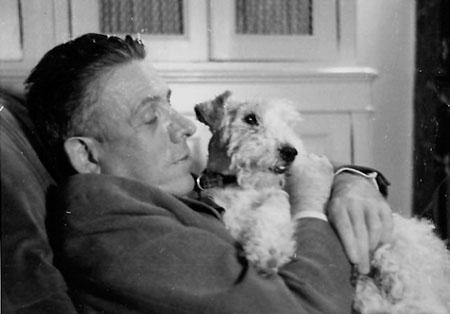
    Poulenc: The more I listen to Fauré, the more I love my dog

Tag Cloud

Aaron Copland (92) Beethoven (94) Composer (114) Film Music (116) Film Score (143) Film Scores (255) Halloween (94) John Williams (185) KWAX (228) Leonard Bernstein (99) Marlboro Music Festival (125) Movie Music (131) Opera (197) Philadelphia Orchestra (86) Picture Perfect (174) Princeton Symphony Orchestra (106) Radio (86) Ralph Vaughan Williams (85) Ross Amico (244) Roy's Tie-Dye Sci-Fi Corner (290) The Classical Network (101) The Lost Chord (268) Vaughan Williams (99) WPRB (396) WWFM (881)

DON’T MISS A BEAT

Receive a weekly digest every Sunday at noon by signing up here


RECENT POSTS