Tag: Max Bruch

  • Bruch’s Moses A Passover Oratorio Rediscovered

    Bruch’s Moses A Passover Oratorio Rediscovered

    With Passover upon us, last week I was going through my collection, looking for something to listen to, and I was astonished by how many recordings I have of works inspired by Moses, the plagues, the Exodus, and the Ten Commandments. In the oratorio department alone, there’s Handel’s “Israel in Egypt,” Leopold Koželuch’s “Moise in Egitto,” Paul Dessau’s “Haggadah del Pesach,” and R. Nathaniel Dett’s “The Ordering of Moses.” I’m pretty sure somewhere I’ve also got a recording of Anton Rubinstein’s “Moses.”

    Here’s another one I picked up from Princeton Record Exchange for $2 in 2022 and, like the Rubinstein, never got around to listening to it – until now. And it’s been in my player more or less all week. Max Bruch’s “Moses” is no Mendelssohn’s “Elijah,” but it’s agreeable enough, and it has its own rewards as entertainment, even if it never quite seems to achieve the lift – that level of transcendence – you experience when everything comes together in the greatest masterworks.

    “Elijah” invites the most obvious comparison for several reasons. Aside from the fact that Elijah’s cup is present and filled at the Passover Seder, Mendelssohn’s dynamic, moving rendition of the prophet’s story was the most successful Biblical oratorio of the 19th century, and it’s the only one that still seems to get performed with any frequency.

    Also, taking into account Bruch’s most popular works, most people I think would classify him as a composer of the Mendelssohnian variety, a conservative Romantic, as opposed to a radical, Wagnerian one. It’s not for no reason that in the glory days of the LP, Bruch’s evergreen Violin Concerto No. 1 was always on the flip side of recordings of Mendelssohn’s own masterpiece in the genre.

    So imagine my surprise to discover that Bruch’s “Moses” contains at least as much Wagner as it does Mendelssohn. Perhaps even more so. The irony of classical music’s most notorious antisemite (i.e. Wagner) being mentioned in connection with an oratorio about the most revered of Jewish prophets is not lost on me. I hasten to add, I am speaking more of the Wagner of “Tannhäuser” and “Lohengrin” than of “The Ring” and “Tristan.” You won’t find any of the harmonic innovation, but you will find leitmotif and certainly a Wagnerian influence in the choral writing and in the dramatic vocal parts for Moses (bass), Aaron (tenor), and the Angel of the Lord (soprano).

    All the soloists on this Orfeo recording from 1999, featuring the Bamberg Symphony conducted by Claus Peter Flor, do service to the material, with Michael Volle the standout in the title role.

    Interestingly, another work it brings to mind is Josef Rheinberger’s “The Star of Bethlehem.” Different season, different faith, but something about Bruch’s handling of Moses’ inspirational leitmotif recalls – for me, anyway – Rheinberger’s Christmas cult classic, composed in 1890, five years before Bruch’s Passover oratorio. Again for this listener, Bruch’s “Moses” never achieves the same lift or touching sincerity.

    Another widely-held assumption, of course, is that Bruch himself was Jewish. It’s easy to understand why, as his treatment of the Yom Kippur chant “Kol Nidre” for cello and orchestra is easily the most popular of the classical music settings. Bruch handles the tune with great sensitivity and evidently pours his heart into it. So it surprises many (as it did, later, the Nazis) to learn that Bruch was indeed Protestant. He did, however, recognize a good tune when he heard one, and clearly when he took up his pencil he was inspired.

    It always knocks me off my pins to be reminded that Bruch was born in 1838 – five years after Brahms and three years before Dvořák – yet he died in 1920. Brahms checked-out in 1897 and Dvořák in 1904. Romanticism was still very much in its glorious twilight. What changes Bruch lived through! For someone who was clearly an heir of Mendelssohn to have experienced the era of “The Rite of Spring” boggles the mind.

    Anyway, if you’re interested to hear what Bruch does with the Moses story, here’s a link. Just don’t go into it expecting anything special from the Golden Calf episode, which is nowhere near the level of that in Schoenberg’s “Moses und Aron.” It’s more like the Druid shenanigans of Mendelssohn’s “Die erste Walpurgisnacht” – more apt to amuse than to scandalize or to conjure any sense of genuine transgression or blasphemy.

    A nice effort from Bruch, but unlikely to dislodge Elijah from his chariot. Still, someone might consider performing it sometime.

  • Yom Kippur Music Reflection on “Lost Chord”

    Yom Kippur Music Reflection on “Lost Chord”

    The Jewish High Holy Days are a period of reflection, ten days of awe and repentance. This Sunday night on “The Lost Chord,” the mood is largely meditative for Yom Kippur.

    In 1950, Jacob Weinberg composed a string quartet, published as his Opus 55. The work falls into three movements, bearing the respective subtitles “Rosh Hashanah” (the Jewish New Year), “Yom Kippur” (the Day of Atonement) and “Sukkot” (the harvest festival).

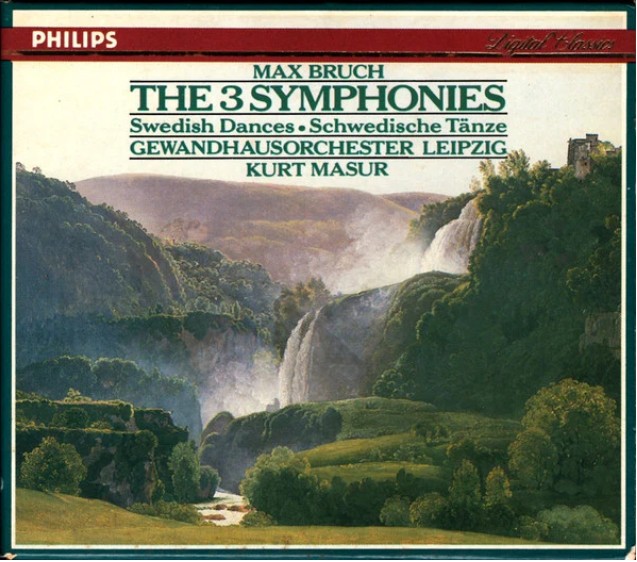
    Weinberg’s “Yom Kippur” is based on the famous sung prayer “Kol Nidre” that opens the Yom Kippur Eve service, best known to gentiles, probably, through a setting for cello by Max Bruch. Bruch, though not Jewish, always had a good ear for characteristic melodies of different cultures (further exemplified by his “Scottish Fantasy,” “Swedish Dances,” “Suite on Russian Themes,” etc.).

    Likewise, Emil Nikolaus von Reznicek – he of “Donna Diana Overture” fame – was moved by the Yom Kippur melody, on which he wrote a large-scale set of orchestral variations. In contrast to the reverential setting by Bruch, Reznicek puts the theme through a befuddling array of permutations, pivoting back and forth from light to serious. It’s not synagogue music, but it is fascinating.

    The hour will conclude with a reverential setting by Patrick Sinozich of ”Avinu Malkeynu” (“Our Father, Our King”) by Max Janowski, performed by Chicago a cappella.

    Make room for rumination. I hope you’ll join me for “Tones of Atonement,” this Sunday night at 10:00 EDT, on WWFM – The Classical Network and wwfm.org.

  • Ferdinand Hiller

    Ferdinand Hiller

    Who was Ferdinand Hiller, and what does he have to do with the most famous setting of “Kol Nidre” in all of classical music?

    Hiller, born to Jewish parents in 1811 (his father changed his name from Hildesheim), was a child prodigy. By 10, he was playing Mozart piano concertos in public, and by 12, he completed his first original composition. As a child, he met Felix Mendelssohn, who was two years his senior. Their friendship deepened in their teens and endured for over 20 years. Eventually, Hiller succeeded Mendelssohn as director of the Leipzig Gewandhaus Orchestra, which likely precipitated a rapid cooling between them. Within four years, Mendelssohn was dead at the age of 38.

    Hiller, who nearly doubled his friend’s lifespan (he died in 1885), composed in all forms – opera, symphony, concerto, chamber and instrumental works, and choral music, including an oratorio, “The Destruction of Jerusalem.” An outstanding pianist, he became the dedicatee of Robert Schumann’s Piano Concerto. Chopin also dedicated his three Nocturnes, Op. 15, to him.

    Hiller was a forceful writer on music and an influential teacher. His star pupil was Max Bruch, who was not Jewish. Bruch became acquainted with the cantorial chant “Kol Nidre” after being introduced by Hiller to the Berlin hazzan, Abraham Lichtenstein. In 1880, the same year that Bruch composed his “Scottish Fantasy” for the violinist Pablo de Sarasate, he embarked on his famous cello elegy.

    “Even though I am a Protestant, as an artist I deeply felt the outstanding beauty of these melodies,” Bruch wrote in 1889. He uses the plural because the second section of the work is a treatment of a setting by Isaac Nathan of Lord Byron’s “Oh! Weep for those that wept by Babel’s stream.”

    “Kol Nidre” – the traditional prayer, not the cello work – opens the evening service on Yom Kippur. The Day of Atonement, the holiest day on the Jewish calendar, begins tonight at sunset.


    Bruch, “Kol Nidrei”

    Nathan’s setting of Byron, which supplies the work’s B-section.

    Selections from Hiller’s neglected oratorio, “The Destruction of Jerusalem”

    His once popular Piano Concerto No. 2

    An absorbing article on the power, influence, and universality of “Kol Nidre”

    https://www.timesofisrael.com/how-the-haunting-kol-nidre-melody-harnessed-the-power-to-convert/


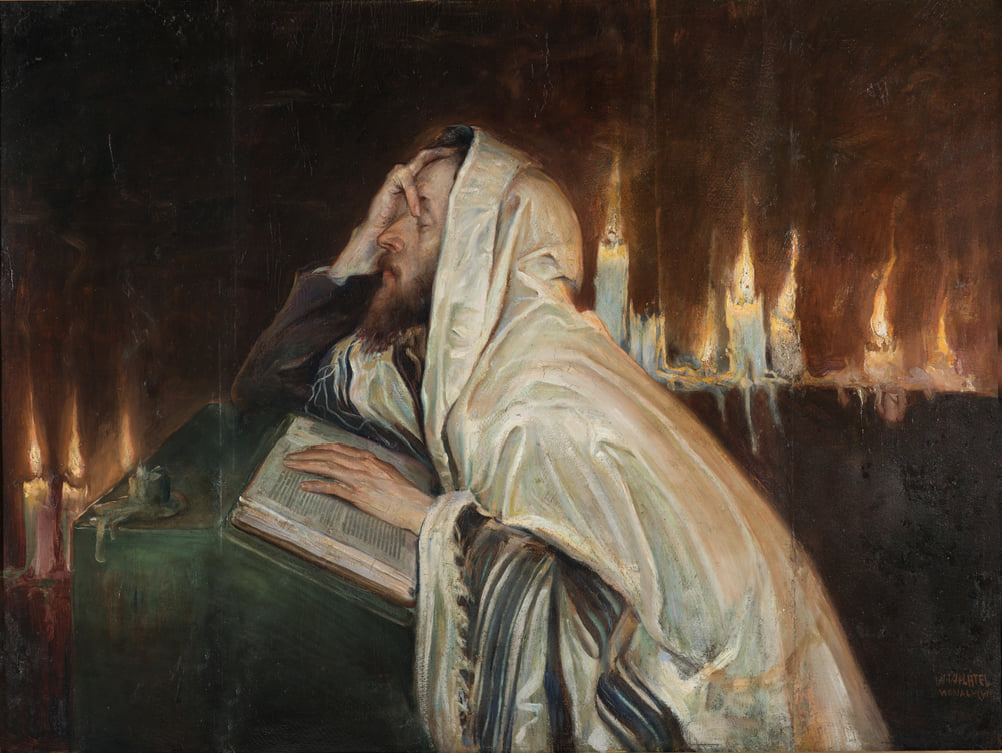
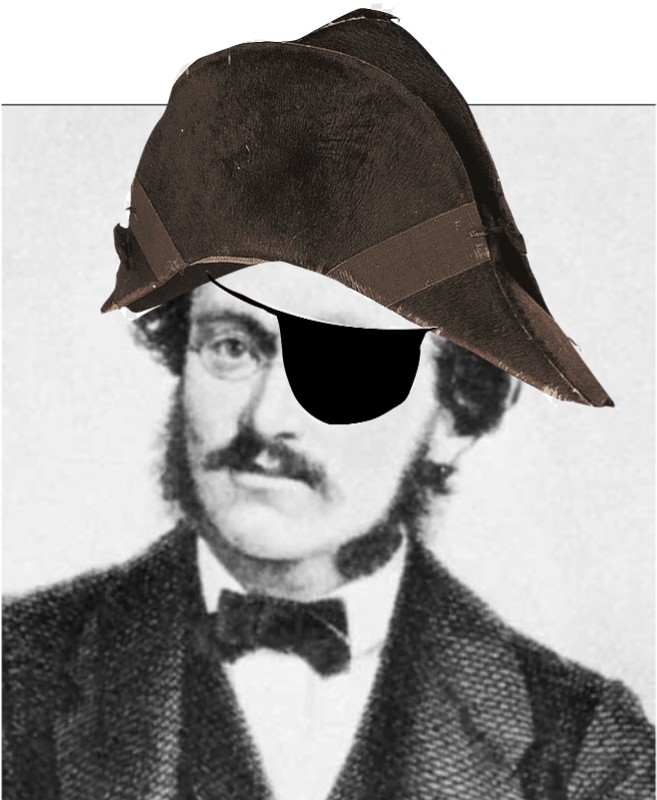
    IMAGES (counterclockwise from top): “Kol Nidre” by Wilhelm Wachtel; Ferdinand Hiller; Janos Starker’s classic recording of “Kol Nidrei;” and its composer, Max Bruch

  • Bruch’s Odysseus Rediscovered

    Bruch’s Odysseus Rediscovered

    It says something about how highly regarded was Max Bruch’s “Odysseus” that none other than Johannes Brahms selected it for his farewell performance in 1875 as Director of the Society of the Friends of Music in Vienna. Bruch’s oratorio racked up an impressive number of performances. Within two years of its premiere in 1873, it was given no less than 45 times. In fact, in Bruch’s heyday, the work was considered second in excellence only to his imperishable Violin Concerto No. 1 in G minor.

    Yet by the time of the composer’s death, in 1920, he was considered an artifact of a bygone era. “Odysseus” was a relic of the 19th century, and in the 19th century it would remain, until liberated by musicologist and conductor Leon Botstein in the late 1990s. Thanks to Botstein, we’ll get to enjoy the complete oratorio today on WPRB, as we listen to a full morning of music inspired by Homer.

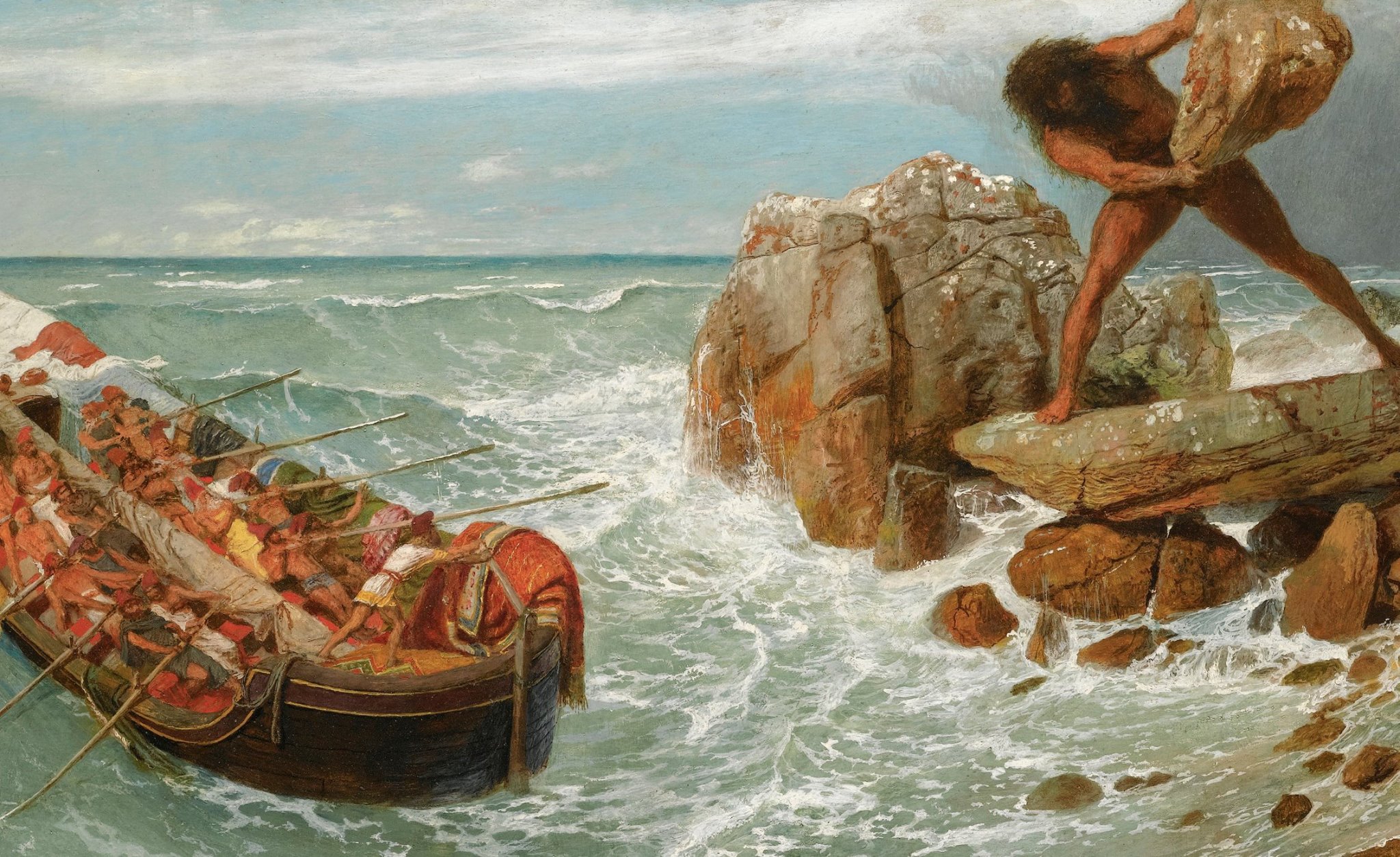
    Bruch’s oratorio perhaps unforgivably omits the cathartic bloodletting at the tale’s climax, when Odysseus slays his wife’s unwanted suitors, who have overrun his home in his absence. But Benjamin Britten was not so squeamish. Britten embraced all the inherent drama and adventure of epic vengeance in his music for radio, “The Rescue of Penelope.” We’ll cap the morning with this full-blooded work, which will be narrated by Dame Janet Baker.

    Along the way, we’ll also have music by Gabriel Fauré, Marc-Antoine Charpentier, Ernst Boehe, Jean-Philippe Rameau, Jacques Offenbach, John Harbison, Hector Berlioz, and Jerome Moross, among others.

    There will be more wine for Polyphemus, from 6 to 11 EDT, on WPRB 103.3 FM and at wprb.com. We’re always trying hard to rock your world, on Classic Ross Amico.

  • Classical Birthday & Movie Music on WWFM Friday

    Classical Birthday & Movie Music on WWFM Friday

    There will be plenty of candles on the cake today. Join me at 4:00 EST in celebrating the birthday anniversaries of Max Bruch, Alexander Scriabin, and Maurice Abravanel. I’ll also have a musical remembrance of conductor Georges Prêtre, who died on Wednesday at the age of 92.

    “Picture Perfect” comes your way at 6:00. Now that we’ve had a taste a snow, it’s time to take in some wintry scenes from world cinema. We’ll hear music from “The Snowstorm” (1964), by Georgy Sviridov, “The Demon of the Himalayas” (1935), by Arthur Honegger, “Scott of the Antarctic” (1948), by Ralph Vaughan Williams, and “Alexander Nevsky” (1938), by Sergei Prokofiev.

    It’s Friday afternoon. Chill out with WWFM – The Classical Network and at wwfm.org.

Tag Cloud

Aaron Copland (92) Beethoven (95) Composer (114) Film Music (118) Film Score (143) Film Scores (255) Halloween (94) John Williams (185) KWAX (229) Leonard Bernstein (99) Marlboro Music Festival (125) Movie Music (133) Opera (197) Philadelphia Orchestra (86) Picture Perfect (174) Princeton Symphony Orchestra (106) Radio (87) Ralph Vaughan Williams (85) Ross Amico (244) Roy's Tie-Dye Sci-Fi Corner (290) The Classical Network (101) The Lost Chord (268) Vaughan Williams (102) WPRB (396) WWFM (881)

DON’T MISS A BEAT

Receive a weekly digest every Sunday at noon by signing up here


RECENT POSTS