Tag: Max Steiner

  • Classical Music Birthdays Princeton Composers on WWFM

    Classical Music Birthdays Princeton Composers on WWFM

    Our chests swell with local pride this afternoon, as we hear music by Princeton composers Steven Mackey, Paul Lansky, and Milton Babbitt (on his birthday). Then things turn all cinematic, as we sample from some classic film scores by two titans of Hollywood’s Golden Age, Max Steiner and Dimitri Tiomkin, also born on May 10. Maxim Shostakovich, whose birthday it is, will conduct music by his father, and we’ll enjoy music by Baroque violinist Jean-Marie Leclair, born on this date in 1697.

    That’s a lot of birthday cards to fill out, but we’ll manage, from 4 to 7 p.m. EDT, on WWFM – The Classical Network and wwfm.org.
  • Steiner and Tiomkin Hollywood Giants

    Steiner and Tiomkin Hollywood Giants

    There are only so many days in a year, so it shouldn’t come as a surprise that two giants in a particular field would share a birthday anniversary. Hence, we have Rachmaninoff and Busoni on April 1, and Heifetz and Kreisler on February 2. May 10 marks the birthdays of Max Steiner and Dimitri Tiomkin.

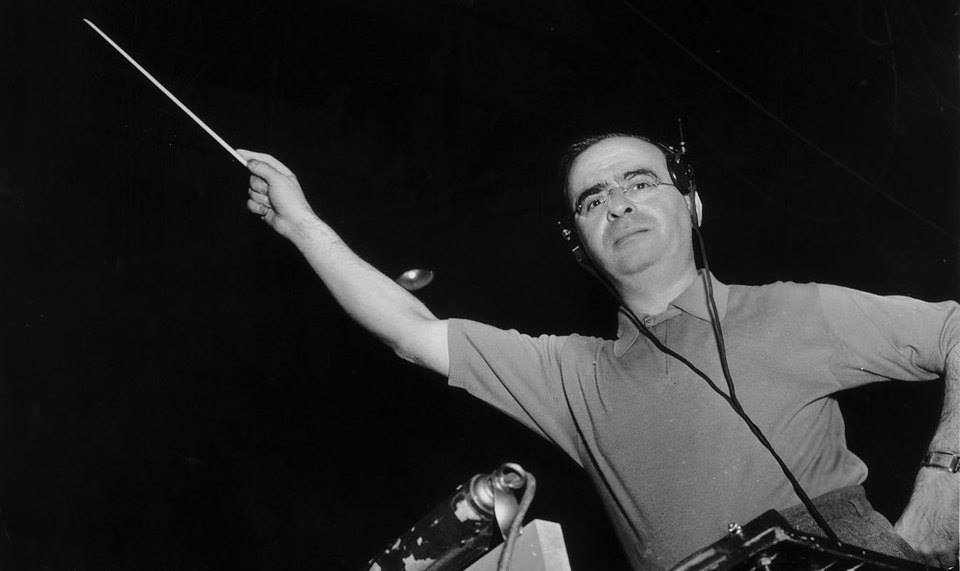
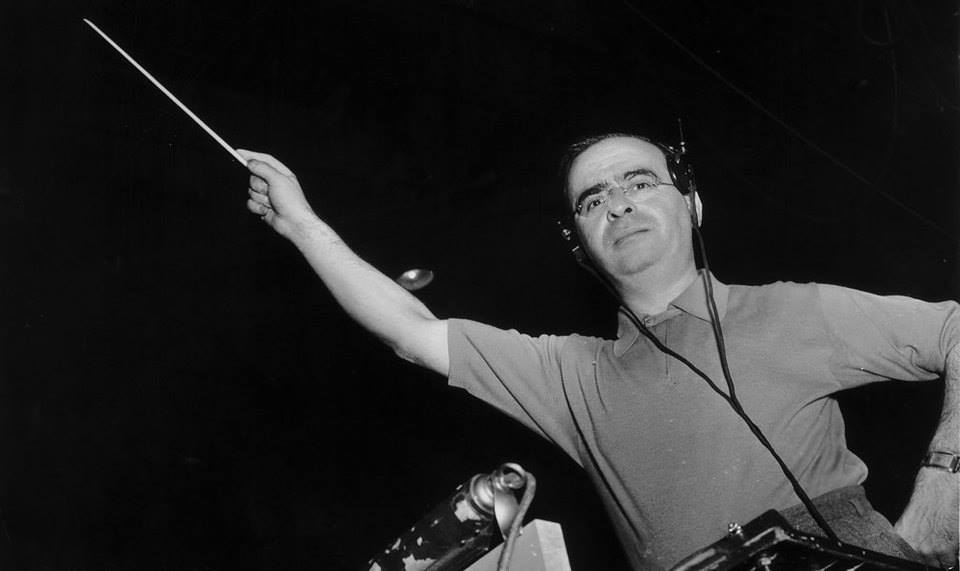
    Steiner (1888-1971), the literal godson of Richard Strauss, helped transplant the sound of fin de siècle Vienna to the realm of cinematic dreams. He composed over 300 film scores for RKO and Warner Brothers, earning 24 Academy Award nominations and winning three – for “The Informer,” “Now, Voyager” and “Since You Went Away” – though he is unquestionably better remembered today for his work on “King Kong,” “Gone with the Wind” and “Casablanca.”

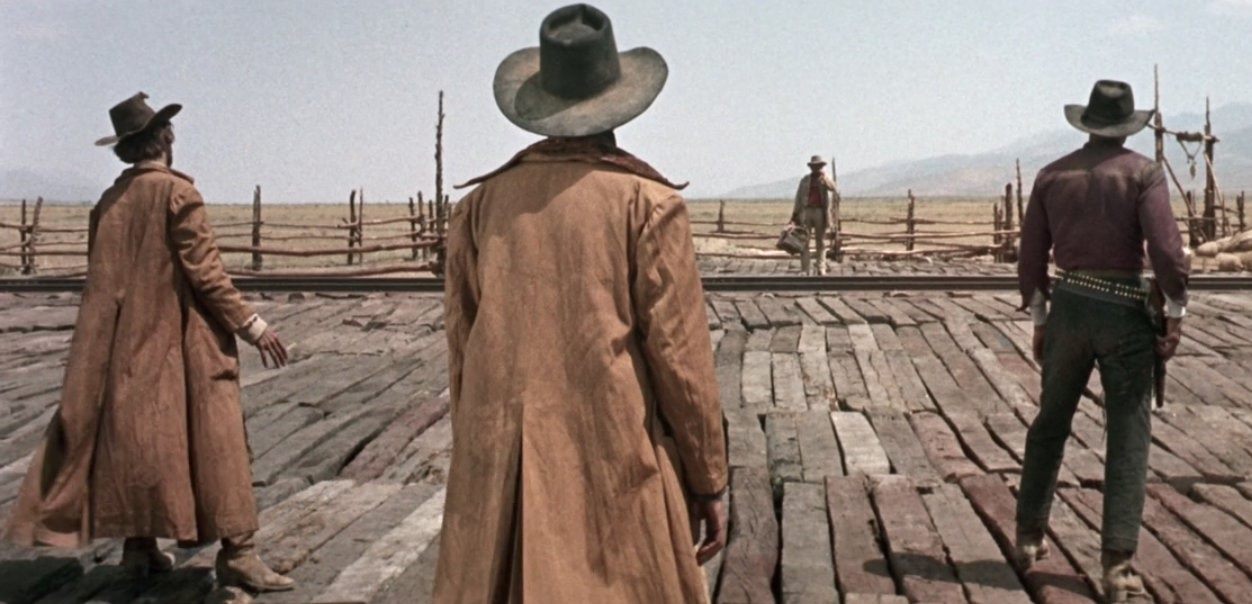
    Tiomkin (1894-1979), a pupil of Alexander Glazunov, was born in Ukraine. He settled in the United States, where he composed music for films in all genres, though in the 1950s he enjoyed particular success writing for Westerns, including the Academy Award-winning “High Noon.” When asked why this would be the case, that a composer born half a world away would have such a command of this distinctly American idiom, Tiomkin replied, “A steppe is a steppe is a steppe.”

    Tiomkin was honored with four Academy Awards – three for Best Original Score (for “High Noon,” “The High and the Mighty” and “The Old Man and the Sea”) and one for Best Original Song (“The Ballad of High Noon”).

    Here’s a transcript of his reception speech, when winning the Oscar for “The High and the Mighty” in 1955:

    “Lady and gentlemen, because I working in this town for twenty-five years, I like to make some kind of appreciation to very important factor what make me successful to lots of my colleagues in this town. I’d like to thank Johannes Brahms, Johann Strauss, Richard Strauss, Beethoven, Mozart, George Gershwin, Jerome Kern, Wagner, Tchaikovsky, Rimsky-Korsakov. Thank you.”

    You can watch here:

    Steiner’s “Now, Voyager”:

    Tiomkin’s “Land of the Pharoahs”:

    If you have an interest in Hollywood composers and what they achieved on screen and in the concert hall, you might want to set aside your Thursday morning this week to join me on WPRB 103.3 FM and at wprb.com. I’ll tell you a little more about it tomorrow.


    PHOTOS: Steiner conducts (top); Tiomkin composes

  • Bette Davis Film Music Rebroadcast This Weekend

    Bette Davis Film Music Rebroadcast This Weekend

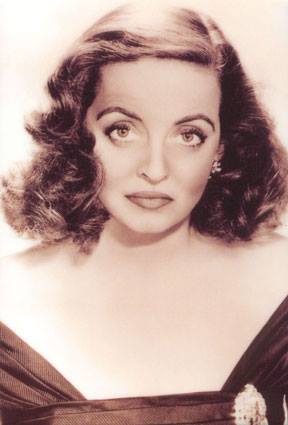
    PLEASE NOTE: If you are a lover of classic film music and also an early riser, tomorrow morning’s rebroadcast of “Picture Perfect” (6 ET) comes deep from within the archive. Because of the nature of tonight’s special two-hour Oscar Party, full of references to the 8:00 broadcast of the Princeton Symphony Orchestra’s “A Silver Screen Salute,” I’ve decided to bypass the daunting editing process and instead selected a tribute to Bette Davis from 2011.

    The program will include music from “Now, Voyager” (Max Steiner), “Mr. Skeffington” (Franz Waxman), “All About Eve” (Alfred Newman) and “The Private Lives of Elizabeth and Essex” (Erich Wolfgang Korngold).

    Davis was nominated for ten Academy Awards, and won twice, early, for Dangerous (1935) and Jezebel (1938), though she turned in solid performances for pretty much her entire career. There is little about her style which doesn’t scream “ACTING!” So it seems only an appropriate choice for this Academy Awards weekend.

    Listen to it here: http://www.wwfm.org.

    In fact, if you read this between 8 and 10 tonight, tune in to catch the Princeton Symphony Orchestra concert. It’s a lot of fun.

    BTW – Tonight’s “Picture Perfect” Oscar Party will be archived on the WWFM website as a webcast. However, the PSO “Silver Screen Salute” will not.

  • Gone With The Wind 75th Anniversary

    Gone With The Wind 75th Anniversary

    Frankly, my dear, an awful lot of people have given a damn.

    “Gone with the Wind,” which opened on December 15, 1939, is one of the most beloved films ever made. It was also one of the most successful. Adjusting for inflation, GWTW is still the highest grossing film of all time. At 21st century ticket prices, its global gross is estimated to be in the neighborhood of 3.3 and 3.8 billion dollars. That’s roughly a billion dollars more than “Avatar,” “Star Wars,” and “Titanic.” Quite an achievement for a 3 ½ hour movie from 1939!

    This Friday evening, we’ll celebrate the 75th anniversary of this landmark film with an extended suite from Max Steiner’s score. Steiner wrote over three hours of music for GWTW, of which 2 hours and 36 minutes were used. Incredibly, he accomplished this in twelve weeks, while at the same time writing scores for three other movies. GWTW was one of 13 films the composer scored that year. By 1939, he had already been in Hollywood for ten years and had provided music for 100 movies.

    There will be just enough time at the end of the hour to sample music from Steiner’s “Four Wives,” written concurrently with his score for GWTW. “Four Wives” is a sequel to “Four Daughters.” It was followed by a third film, “Four Mothers.” The series is mostly forgotten, save by classic movie buffs, but it has the distinction of having introduced John Garfield as a cynical pianist from the wrong side of the tracks.

    The series also starred the three Lane sisters – the singing trio Priscilla, Rosemary, and Lola – and Gale Page, as the musical daughters of Claude Rains, who plays a Schubert-loving music professor, befuddled by popular trends.

    We’ll hear Earl Wild, the pianist, in the “Symphonie moderne,” drawn from Steiner’s score.

    Join me, as we celebrate 75 years of “Gone with the Wind,” on “Picture Perfect,” music for the movies, this Friday evening at 6 ET, with a repeat Saturday morning at 6; or listen to it later as a webcast at http://www.wwfm.org.

Tag Cloud

Aaron Copland (93) Beethoven (95) Composer (114) Film Music (126) Film Score (143) Film Scores (255) Halloween (94) John Williams (189) KWAX (229) Leonard Bernstein (101) Marlboro Music Festival (125) Movie Music (141) Mozart (87) Opera (203) Philadelphia Orchestra (89) Picture Perfect (174) Princeton Symphony Orchestra (107) Radio (87) Ross Amico (244) Roy's Tie-Dye Sci-Fi Corner (290) The Classical Network (101) The Lost Chord (268) Vaughan Williams (103) WPRB (396) WWFM (881)

DON’T MISS A BEAT

Receive a weekly digest every Sunday at noon by signing up here


RECENT POSTS