Tag: Mendelssohn

  • Mendelssohn, Isbin & More on The Classical Network

    Mendelssohn, Isbin & More on The Classical Network

    Sure, we’ll have plenty of Mendelssohn today on The Classical Network, on his birthday. We’ll also pay tribute to Palestrina and hear a wacky concerto by Johann Georg Abrechtsberger, who was a teacher of Beethoven. Where Albrechtsberger got the idea he should be writing concertos for Jew’s harp – you know, Snoopy’s favorite instrument – is anybody’s guess. Those concertos also include a solo part for the mandora, a kind of lute popular in the late 18th and early 19th centuries.

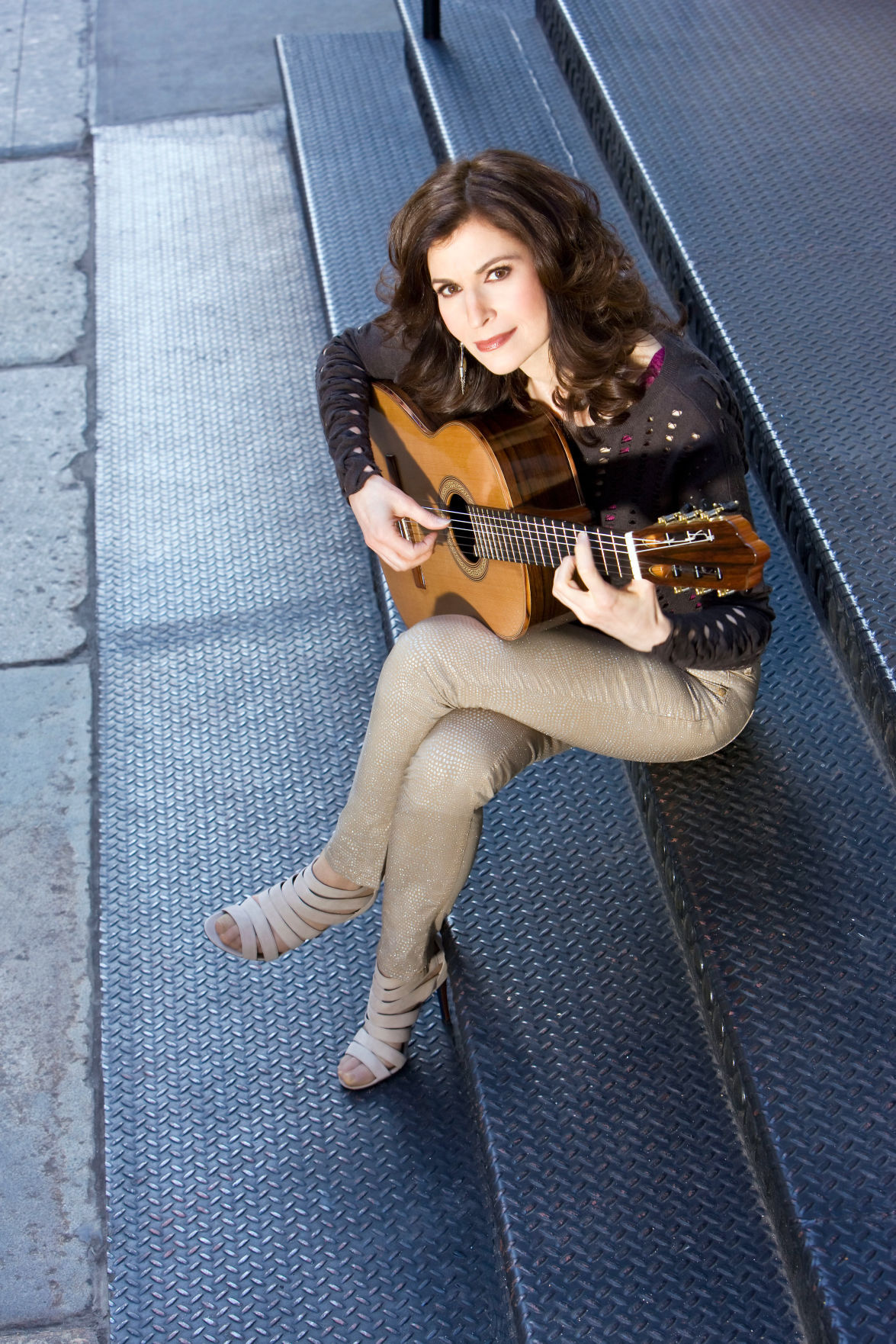
    While we’re on the subject of unbowed strings, at the heart of today’s program will be an interview with Sharon Isbin. Isbin, of course, is one of the great guitarists of our time. She’ll be talking about her new album, of music by Boccherini, Castelnuovo-Tedesco, Turina, and Vivaldi, on the Cedille Records label, “Souvenirs of Spain and Italy,” made with the Pacifica Quartet.

    Isbin will perform on a gala benefit concert for JCC Thurnauer School of Music, at Bergen County Academies Auditorium, in Hackensack, NJ, this Sunday at 4 p.m. Our conversation will take place this afternoon around 5:00.

    Whether you’ve the munchies for Mendelssohn, a palate for Palestrina, or a craving for Castelnuovo-Tedesco, you’ll want to bring your appetite, from 4 to 7 p.m. EST, to WWFM – The Classical Network and wwfm.org.

  • Walpurgis Night Faust Symphony on The Classical Network

    Walpurgis Night Faust Symphony on The Classical Network

    When the sun sets this evening, we will be in the grip of Walpurgisnacht!

    Walpurgis Night, the eve of the feast day of Saint Walpurga, is a time when evil spirits are believed to roam the earth. Tradition holds that this is the night of a witches’ sabbath and orgy of the damned, held high atop the Brocken, the tallest peak of the Harz Mountains in central Germany. It’s the last blast of diablerie before May Day. In Goethe’s “Faust,” Mephistopheles guides his imperiled charge into a swirling cauldron of witches and demons so as to complete his moral degradation.

    This Tuesday afternoon on The Classical Network, we’ll anticipate the worst (or the best?), with Franz Liszt’s “A Faust Symphony.” That will be followed by another work inspired by Goethe, Felix Mendelssohn’s “Die erste Walpurgisnacht” (“The First Walpurgis Night”), in which prankish Druids get the best of their superstitious occupiers. It ain’t exactly “Faust,” but it will do.

    First, on today’s Noontime Concert, a ray of light, as we listen to Marianna Prjevalskaya – Concert Pianist, in recital from Merkin Hall at Kaufman Music Center,129 West 67th Street, in New York City. Merkin’s Tuesday Matinees present a new generation of critically acclaimed, extraordinary young performers in a concert hall known for its near-perfect acoustics.

    On Prjevalskaya’s program will be the Piano Sonata in A major, Op. 2, No. 2, by Beethoven; two Rhapsodies, Op. 79, by Johannes Brahms; and six selections from the two books of Preludes, by Claude Debussy.

    Then the Brocken, she’ll be rockin’. Join me, if you dare, from 12 to 4 p.m. EDT, on WWFM – The Classical Network and wwfm.org.

  • Mendelssohn & Reger: Bridging Worlds at Marlboro

    Mendelssohn & Reger: Bridging Worlds at Marlboro

    On this week’s “Music from Marlboro,” we’ll have music by two undersold composers who seemed trapped between two worlds.

    While Felix Mendelssohn and Max Reger were very much figures of their respective times, they both found abundant inspiration in music of the past, frequently the distant past. In addition, they often gave the impression of being just a little tentative when it came to exploring musical trends of the present.

    Common to both was an overarching respect for the works of Johann Sebastian Bach. It was Mendelssohn, of course, who at the age of 20 would engineer the first modern performance of Bach’s “St. Matthew Passion.”

    Reger composed a lot of fugues and sets of variations, fancying himself the heir of Beethoven and Brahms; but also, in his own gargantuan, overbaked way, modeling himself on the Baroque’s most outstanding genius.

    Though both Mendelssohn and Reger subsumed romantic characteristics into their music, neither did so at the expense of traditional forms. There are exceptions to every rule, as they say, but generally speaking Mendelssohn’s more emotional utterances seemed to flow most convincingly in the works of his early maturity.

    When he came to write his String Quartet in A minor, it was not Bach but Beethoven who was foremost in his thoughts. The composer was 18 years-old at the time of Beethoven’s death in 1827. He was clearly intoxicated by the Master’s late quartets, which had only recently been published.

    Though certainly influenced by Beethoven, Mendelssohn’s own essay in the form is quite at odds with the introspection of Beethoven’s Op. 135. In contrast, he infuses his own quartet’s Classical structure with a passionate Romanticism. That the synthesis would be so successful is hardly surprising from a teenaged marvel who, within the last two years, had already written an astonishing Octet for Strings and the overture to “A Midsummer Night’s Dream.” In his quartet, Mendelssohn also explores the possibilities of cyclic form more exhaustively than just about any other composer before César Franck.

    We’ll hear the Quartet in A minor performed at the 1995 Marlboro Music Festival by violinists Lisa-Beth Lambert and Hiroko Yajima, violist Annemarie Moorcroft, and cellist Sophie Shao.

    There are times when Reger’s music can be beyond rigorous. In fact, it might be better termed “Regerous.” Perhaps the craziest exemplar of vertiginous Teutonic counterpoint, he could write organ music of such density that the individual voices get lost in a tangle, deep inside a knot, somewhere in an impenetrable thicket.

    However, on two pianos, it all seems to make sense. The program will begin with a 1977 performance of Reger’s “Introduction, Passacaglia and Fugue,” Op, 96, performed by Marlboro stalwart Luis Batlle and a 19 year-old Yefim Bronfman.

    Were they born too late, or merely uneasy with the more progressive impulses of their times? Quiet your head and enjoy the music. I hope you’ll join me for works by Reger and Mendelssohn on the next “Music from Marlboro,” this Wednesday evening at 6:00 EST, on WWFM – The Classical Network Network and wwfm.org.

    Marlboro School of Music and Festival: Official Page
  • Bach & Mendelssohn from Marlboro Festival

    Bach & Mendelssohn from Marlboro Festival

    On this week’s “Music from Marlboro,” we get a good start on 2019, with music by Felix Mendelssohn, bounding out of the gate at 16 years-old with one of the most astonishing works in the repertoire.

    Mendelssohn’s Octet for Strings in E-flat is the piece that established him as music’s foremost preternatural genius. Hear a 1960 performance from the legendary Marlboro Music Festival, featuring violinists Jaime Laredo, Alexander Schneider, Arnold Steinhardt and John Dalley, violists Michael Tree and Samuel Rhodes, and cellists Leslie Parnas and David Soyer.

    Holy smokes! In case you didn’t notice, the performers include the entire Guarneri String Quartet – which didn’t formally come together as a group until four years later, at Marlboro – and then some.

    Of course, Mendelssohn was also the most important figure in the revival of the music of Johann Sebastian Bach, at the age of 20 spearheading the first performance since Bach’s death of the “St. Matthew Passion.”

    Equally important to Bach’s rehabilitation was Pablo Casals, who rediscovered Bach’s cello suites in a Catalan bookshop at the age of 13. Casals championed the pieces for the remainder of his days. Thanks to him, what had previously been regarded as dimly-recollected etudes are now standard repertoire.

    Casals was affiliated with the Marlboro Music Festival from 1960 to 1973, the last 13 years of his life. We’ll hear Casals conduct Marlboro musicians in Bach’s Bradenburg Concerto No. 5. Flutist Ornulf Gulbransen, violinist Alexander Schneider, and pianist Rudolf Serkin are standouts in this 1964 recording. Serkin, of course, was the Marlboro Music School and Festival’s founding artistic director.

    Begin the new year with inspirational performances of music by Bach and Mendelssohn – a surefire balm for the back-to-work blues – on the next “Music from Marlboro,” this Wednesday evening at 6:00 EST, on WWFM – The Classical Network and wwfm.org.

    Marlboro School of Music and Festival: Official Page
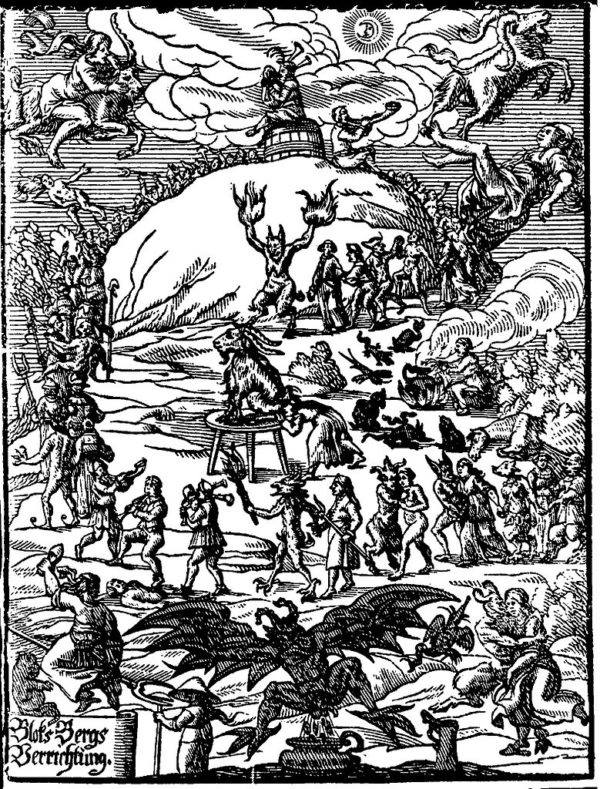

    PHOTO: Pablo Casals, Alexander Schneider, and Rudolf Serkin will feature prominently on this week’s “Music from Marlboro.”

  • Verdi, Mendelssohn & Italian Music from Marlboro

    Verdi, Mendelssohn & Italian Music from Marlboro

    Viva Italia!

    We’re off to sunny Italy for this week’s “Music from Marlboro.”

    Like a kind of musical Hannibal, Giuseppe Verdi brought elephants to the operatic stage. The premiere of “Aida” in Cairo in 1871 featured a dozen pachyderms and fifteen camels into the bargain. But when a Naples performance of Verdi’s grandest grand opera was delayed, the composer sought diversion on a much smaller scale. Verdi tossed off his first piece of chamber music at the age of 60.

    The String Quartet in E minor was given an informal performance at the Hotel delle Crocelle on April 1, 1873. Said Verdi of his latest creation, “I don’t know whether the Quartet is beautiful or ugly, but I do know that it’s a Quartet!” We’ll get to hear it in a 1969 performance featuring violinists Pina Carmirelli and Endre Granat, violist Martha Strongin Katz, and cellist Ronald Leonard.

    Felix Mendelssohn’s Symphony No. 4 – known as the “Italian” – had its origins in a European tour undertaken by the composer between 1829 and 1831. Mendelssohn’s Italian sojourn threw him into ecstasies. In a letter to his parents, he effused, “Italy at last! …[W]hat I have all my life considered as the greatest possible felicity is now begun, and I am basking in it. …[T]hank you, my dear parents, for having given me all this happiness.”

    The composer did his best to capture his impressions in music. The symphony’s first performance in London in 1833, which Mendelssohn himself conducted, made him the most emulated composer in England for the remainder of the 19th century. However, despite the work’s overwhelmingly positive reception, he continued to feel a nagging dissatisfaction with it. He revised the symphony in 1834, with plans for further changes, and the score was never published in his lifetime. He even claimed that it caused him some of the bitterest moments of his career. Naturally, it went on to become his best-loved symphony.

    We’ll hear Pablo Casals lead an enviable roster of musicians from the 1963 Marlboro Music Festival. It’s difficult to single anyone out, but Bernard Goldberg, John Mack, Myron Bloom, Shmuel Ashkenasi, Jaime Laredo, Caroline Levine, Irene Serkin, Sidney Curtiss, Samuel Rhodes, Herman Busch, Lynn Harrell, Julius Levine, and all four members of the Guarneri String Quartet are among the personnel. Casals was affiliated with Marlboro for the last 13 years of his life, from 1960 until his death, at the age of 96, in 1973.

    We’ve got sunshine on a rainy day on the next “Music from Marlboro,” this Wednesday evening at 6:00 EDT, on WWFM – The Classical Network and wwfm.org.


    This summer’s Marlboro Music Festival continues through August 12. Find out more at marlboromusic.org.

    Marlboro School of Music and Festival: Official Page

Tag Cloud

Aaron Copland (92) Beethoven (95) Composer (114) Film Music (120) Film Score (143) Film Scores (255) Halloween (94) John Williams (185) KWAX (229) Leonard Bernstein (100) Marlboro Music Festival (125) Movie Music (135) Opera (198) Philadelphia Orchestra (88) Picture Perfect (174) Princeton Symphony Orchestra (106) Radio (87) Ralph Vaughan Williams (85) Ross Amico (244) Roy's Tie-Dye Sci-Fi Corner (290) The Classical Network (101) The Lost Chord (268) Vaughan Williams (103) WPRB (396) WWFM (881)

DON’T MISS A BEAT

Receive a weekly digest every Sunday at noon by signing up here


RECENT POSTS