Tag: Mendelssohn

  • Mendelssohn Genius at 16 Marlboro Music Fest

    Mendelssohn Genius at 16 Marlboro Music Fest

    What were you doing when you were 16 years old? If you were Felix Mendelssohn, you would have been composing one of the most astonishing works in the repertoire. And the year after that you would go on to write an equally impressive overture to “A Midsummer Night’s Dream.”

    Mendelssohn’s Octet for Strings in E-flat is the work that established him as music’s foremost preternatural genius. Hear a 1960 performance from the legendary Marlboro Music Festival, featuring violinists Jaime Laredo, Alexander Schneider, Arnold Steinhardt and John Dalley, violists Michael Tree and Samuel Rhodes, and cellists Leslie Parnas and David Soyer. Holy smokes! In case you didn’t notice, the personnel includes the entire Guarneri String Quartet, technically founded at Marlboro four years later, and then some.

    The piece was chosen as another one of our listener favorites. I’ll be continuing to mop up some of last week’s playlists compiled for our “Play It Again” membership campaign, along with some thoughtful choices to commemorate the anniversaries of D-Day and the assassination of Robert F. Kennedy. The fundraiser may be over, but, by all means, if you feel moved to support us, you may do so at any time at wwfm.org.

    The favorites continue at 4:00 EDT; “Music from Marlboro” begins at 6:00. Join me in commiseration over our misspent youth, on WWFM – The Classical Network and wwfm.org.

    Marlboro School of Music and Festival: Official Page

  • Wagner Mendelssohn Feud & Chamber Music

    Wagner Mendelssohn Feud & Chamber Music

    Richard Wagner, of course, was not very fond of Felix Mendelssohn. He had given the manuscript of his early Symphony in C major to Mendelssohn as a “gift” in 1836, and then became resentful when Mendelssohn didn’t make a special case for the work in his position as kapellmeister of the Leipzig Gewandhaus Orchestra. For this, Wagner never forgave him. Nevermind the fact that the symphony had been performed by the Leipzig orchestra in 1833.

    Okay, so Wagner may have been a little disappointed, but he could have stopped short of his notorious screed “Judaism in Music,” first published in 1850, in which Mendelssohn was singled out for preferential treatment. But at least he was in good company. Wagner also targeted Giacomo Meyerbeer, who had helped secure the first performance of Wagner’s break-out success, “Rienzi,” in 1842. (The conductor Hans von Bülow joked that “Rienzi” was Meyerbeer’s best opera.) Mendelssohn had already been dead for three years, and Wagner published his essay under a pseudonym. Not exactly fair play, by any standard.

    Ironically, the tract wound up damaging his own reputation more than Mendelssohn’s. It’s a good thing for Wagner that his genius was such that we still revere his innovative music dramas even in the shadow of his own psychological frailty.

    Mendelssohn, too, remains in the canon, his own genius undiminished. Mendelssohn’s String Quintet No. 1 in A minor will be the concluding work on today’s Noontime Concert on The Classical Network, which will be made up of performances by the Manhattan Chamber Players.

    Also on the program will be Maurice Ravel’s Introduction and Allegro for Harp, Flute, Clarinet, and String Quartet, Johannes Brahms’ Clarinet Trio, and John Blasdale’s Elegy in F sharp minor, a work for string quartet inspired by Beethoven’s Piano Sonata in E major, Op. 109. The broadcast will be drawn from two concerts given at the Baruch Performing Arts Center in December and April. The Baruch Performing Arts Center is located on 25th Street, between Lexington and 3rd Avenues, in New York City.

    This Thursday, the Manhattan Chamber Players will be joined by formidable cellist Peter Wiley. Wiley is a veteran of both the Beaux Arts Trio and the Guarneri Quartet. The program, titled “Cello Power,” will include Wolfgang Amadeus Mozart’s String Quartet in B flat major, K. 589, and the String Quintets by Alexander Glazunov and Franz Schubert. The concert will take place at 7:30 p.m. at Holy Trinity Lutheran Church, New York City, 3 West 65th Street, at the corner of 65th and Central Park West. For more information, visit manhattanchamberplayers.com.

    Following today’s Noontime Concert broadcast, I’ll mark Wagner’s birthday anniversary with some unusual works and exceptional performances – maybe even the Symphony in C. We’ll find beauty in the beast, between 12 and 4 p.m. EDT, on WWFM – The Classical Network and wwfm.org.

  • Derby Day My Bet’s on Mendelssohn

    Derby Day My Bet’s on Mendelssohn

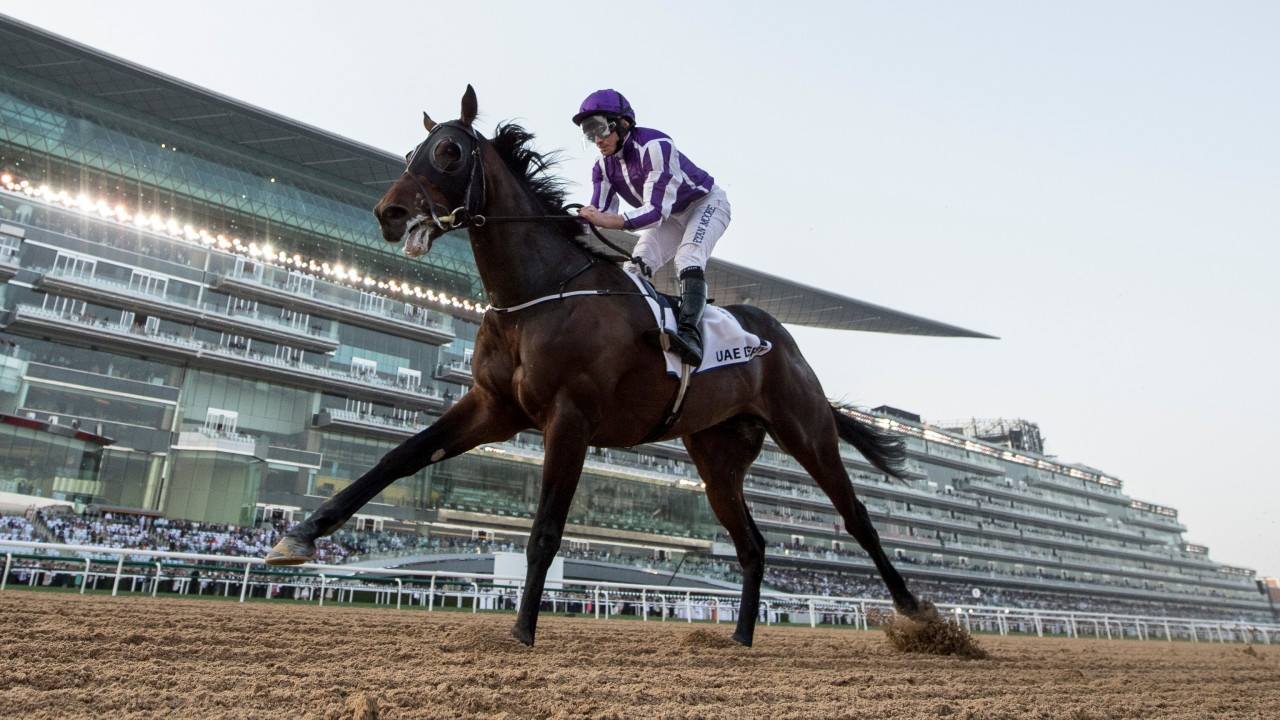
    May 5 = Derby Day. I have no idea who else is running, but my money is on Mendelssohn!

    https://www.nytimes.com/2018/05/03/sports/horse-racing/mendelssohn-kentucky-derby.html

    As every sportswriter in the land scrambles to explain the origin of his name… (“You know, the guy who wrote the Wedding March…”)

    Post time is at 6:34 EDT; the race begins at 6:46.

  • Schumann & Mendelssohn: Musical Friendship

    Schumann & Mendelssohn: Musical Friendship

    On this week’s “Music from Marlboro,” we’ll have works by two composers who were definitely BFF.

    Though for some reason I always peg Robert Schumann as significantly younger, he and Felix Mendelssohn were in fact born only a year apart (Mendelsson in 1809 and Schumann in 1810).

    Schumann’s ideas were more progressive, for one, at least on the surface. Mendelssohn, more of a classicist, achieved superstardom early as one of music’s great child prodigies. The two met in 1835. Schumann was a struggling artist with ambitions to become a piano virtuoso – ambitions frustrated by a hand injury he sustained a few years earlier. He was in the process of composing a string of piano masterworks that would help cement his lasting fame.

    Mendelssohn was from a well-to-do family, the grandson of philosopher Moses Mendelssohn, and currently Kapellmeister of the Leipzig Gewandhaus Orchestra. He had given his first concert at the age of nine and composed two of his most astonishing masterpieces while yet in his teens (the Octet for Strings in 1825, at the age of 16, and the Overture to “A Midsummer Night’s Dream” in 1826). What the two men shared in common, aside from a passion for music, were an intellectual curiosity and a love of literature.

    Needless to say, they became fast friends. Mendelssohn conducted Schumann’s orchestral works, they entertained themselves by playing chamber music, and they engaged in engrossing discussions about the nature and direction of their art in the wake of Beethoven. It was a friendship that would last for the remainder of their lives.

    Mendelssohn died in 1847 at the age of 38; Schumann, who struggled with mental illness since at least 1833, began to exhibit psychotic behavior and asked to be placed in an institution in 1854. He died there two years later at the age of 46.

    Schumann’s “Andante and Variations” was composed in 1843, in the wake of two chamber music masterworks, the Piano Quintet and the Piano Quartet, both in the key of E flat major. For the composer, sadly, three times was not to be a charm. Part of the problem was the unusual instrumentation, which calls for two pianos, two cellos, and horn. Early performances in the Schumann home were so loud, it may have contributed to his disgust with the piece. At Mendelssohn’s suggestion, he arranged it for two pianos alone. It was only in 1868 that Johannes Brahms, another of Schumann’s friends, recognized the worth of the original version and gave its first public performance with the composer’s widow, Clara, in 1868.

    We’ll hear it today, performed at the Marlboro Music Festival in 1985 by husband-and-wife pianists Claude Frank and Lilian Kallir, cellists Melissa Meell and Peter Stumpf, and hornist Julie Landsman.

    We’ll also have Mendelssohn’s String Quartet in A minor, written in 1827, a few months after Beethoven’s death. Mendelssohn was 18 years-old at the time and clearly intoxicated by Beethoven’s late quartets, which had only recently been published. Though certainly influenced by the deceased master, Mendelssohn’s own essay in the form is quite at odds with the introspection of Beethoven’s Op. 135. In contrast, he infuses the quartet’s Classical structure with a passionate Romanticism. He also explores the possibilities of cyclic form more exhaustively than any other composer, possibly, before César Franck. We’ll hear it performed at the 1995 Marlboro Music Festival by violinists Lisa-Beth Lambert and Hiroko Yajima, violist Annemarie Moorcroft, and cellist Sophie Shao.

    I hope you’ll join me for works by Schumann and Mendelssohn, on the next “Music from Marlboro,” this Wednesday evening at 6:00 EST, on WWFM – The Classical Network and wwfm.org.

    Marlboro School of Music and Festival: Official Page


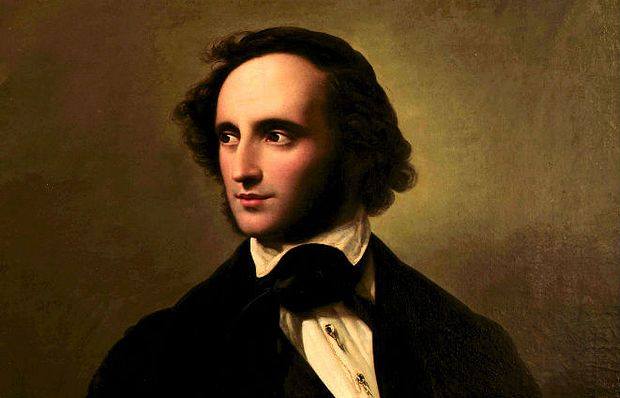
    Robert Schumann (left) and his “brother from another mother”
  • Dog Crashes Orchestra Hilarious Video

    Dog Crashes Orchestra Hilarious Video

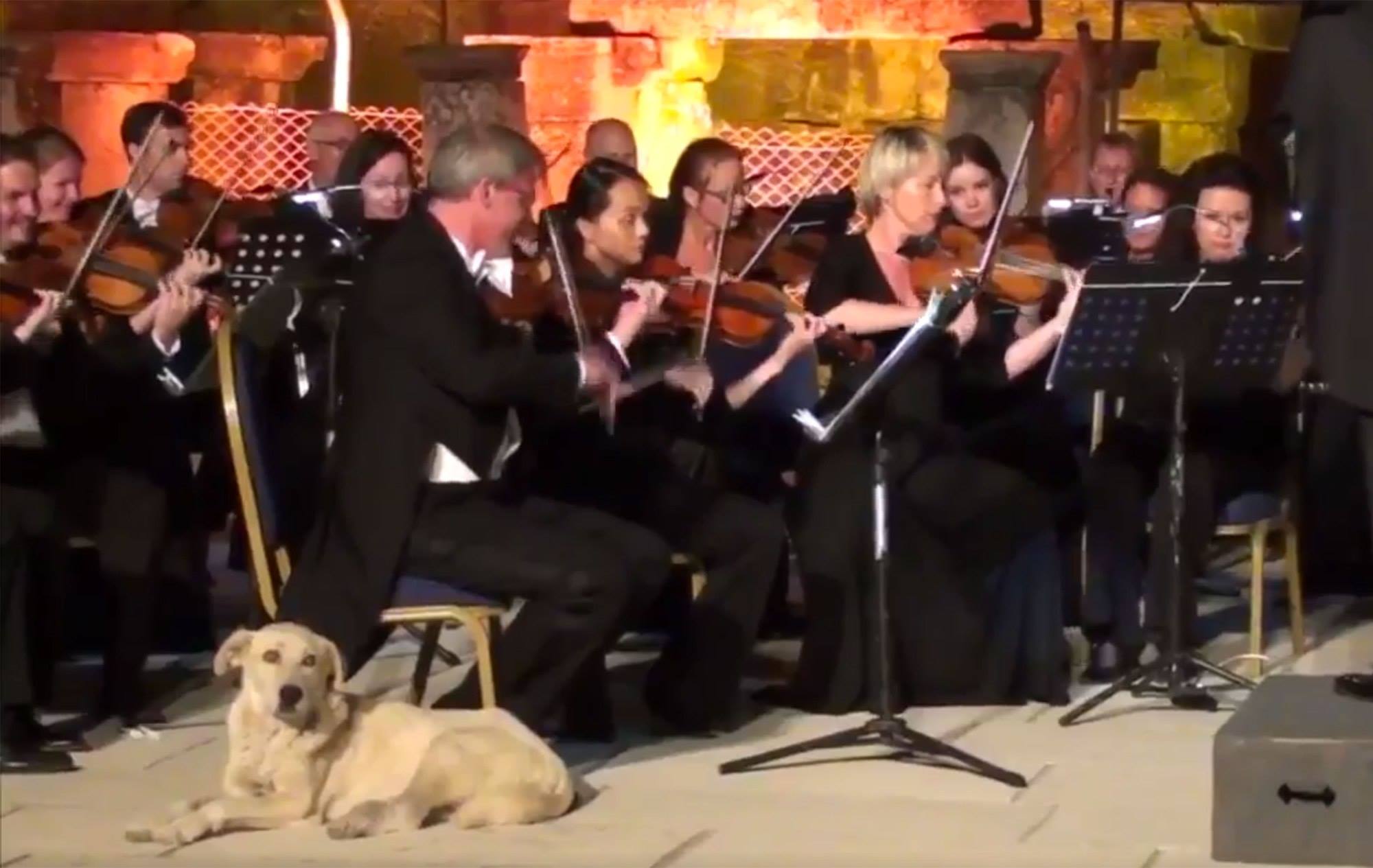
    This adorable video of a music-loving dog crashing a performance of the Vienna Chamber Orchestra in Ephesus has been circulating since June 27, when Turkish pianist Fazil Say posted it on his Facebook page. It has been forwarded to me so many times, I feel I should share it already. I had been saving it for the weekend, so that I wouldn’t have to write much! The music, by the way, is Mendelssohn’s “Italian” Symphony. Mark Laycock, isn’t this your band?

    https://www.youtube.com/watch?v=jdg2OGL8CIA

Tag Cloud

Aaron Copland (92) Beethoven (95) Composer (114) Film Music (120) Film Score (143) Film Scores (255) Halloween (94) John Williams (185) KWAX (229) Leonard Bernstein (100) Marlboro Music Festival (125) Movie Music (135) Opera (198) Philadelphia Orchestra (88) Picture Perfect (174) Princeton Symphony Orchestra (106) Radio (87) Ralph Vaughan Williams (85) Ross Amico (244) Roy's Tie-Dye Sci-Fi Corner (290) The Classical Network (101) The Lost Chord (268) Vaughan Williams (103) WPRB (396) WWFM (881)

DON’T MISS A BEAT

Receive a weekly digest every Sunday at noon by signing up here


RECENT POSTS