Tag: Metropolitan Opera

  • Montemezzi’s Lost Opera A Rediscovery

    Montemezzi’s Lost Opera A Rediscovery

    If opera will not come to the middle of the mountain, the middle of the mountain will come to opera!

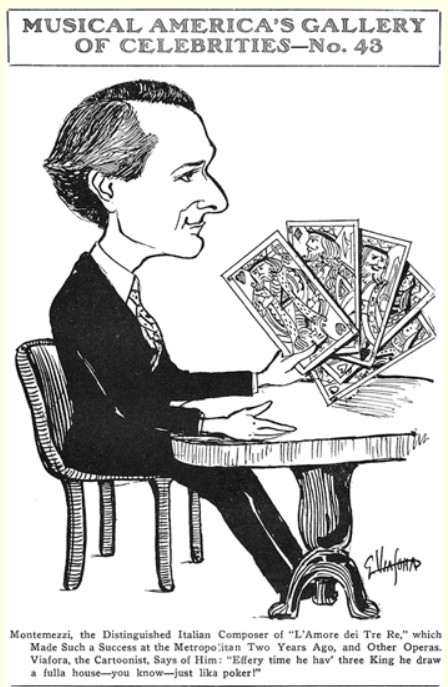
    Today marks the 150th anniversary of the birth of Italo Montemezzi (Montemezzi, if I am not mistaken, literally translating as “half-mountain”).

    A representative of that vast artistic lineage of one-hit wonders, Montemezzi is pretty much known for his opera “L’amore dei tre re” (“The Love of Three Kings”), which one might assume from the title to be a heartwarming Christmas piece about the three Magi, along the lines of Gian Carlo Menotti’s “Amahl of the Night Visitors.” If so, one would be mistaken.

    “L’amore dei tre re” is an overheated historical tragedy, centering around a love triangle – perhaps even a ménage à quatre – in which everyone winds up dead or inconsolable. Another great night at the theater! Only in opera does one set foolish, deadly traps to ensnare the guilty, only to have the scheme backfire horribly.

    “L’amore dei tre re” opened at La Scala in 1913 to mixed reviews. But what do the Italians know about opera? When it made its way abroad, it became an international success. In the U.S., it was hailed as “the best operatic work coming from Italy since Verdi’s ‘Falstaff.’” In 1918, it was sung at New York’s Metropolitan Opera by Enrico Caruso, Claudia Muzio, and Pasquale Amato.

    Alas, the mania for “The Love of Three Kings” proved to be but a flare. The opera had its moment, but after World War II, frequency of performances declined to the point where now, if it’s ever done at all, it’s an event.

    Unabashedly decadent, coyly erotic, dramatic, and dreamlike, “Three Kings” may be Italian, but it was written by a composer who had assimilated broader musical influences. The score cranks up the heat, in kind of a mélange of Wagner, Strauss, and Debussy.

    It won’t turn up very often at your friendly neighborhood opera house. Happily, there’s a fine recording of the work in modern sound (i.e. stereo), featuring Anna Moffo, Placido Domingo, and Cesare Siepi.

    That said, here’s an interesting document from the Met in 1941, with the composer conducting on a broadcast introduced by Milton Cross!

    In 1948, the New York Times described “L’amore dei tre re” as “a tone poem for voices and orchestra,” lauding it as “the most poetic and aristocratic of Italian operas” and declaring of its composer, “He never descends beyond the loftiest level.”

    Not bad! Where is it now?

    We’ll keep a candle in the window for you on your sesquicentenary, Italo Montemezzi.

  • Marian Anderson at the Met 70 Years Ago

    Marian Anderson at the Met 70 Years Ago

    It was on this date 70 years ago that Marian Anderson made her Metropolitan Opera debut, as the sorceress Ulrica, in Verdi’s “Un ballo in maschera” (“A Masked Ball”), making her the first African American singer to appear in a solo role on the Met stage.

    Anderson, whose talent was described by Arturo Toscanini as “a voice one hears once in a hundred years,” was already in her late 50s, at the far end of a singing career that had already made her a household name and a reluctant symbol for social justice. Her legendary recital from the steps of the Lincoln Memorial took place on Easter, 1939 – nearly 16 years earlier – after she was shut out of performing at Constitution Hall by the Daughters of the American Revolution because of her skin color. Ironically, this only served to increase her exposure. The audience gathered on the National Mall was estimated at 75,000, with millions listening to the live radio broadcast in their kitchens and living rooms across the nation.

    Anderson’s belated appearance at the Met may have signaled a new era, but progress was slow, and the administration was careful about which singers it sent to tour in certain areas of the country.

    It would be churlish of me to observe that, in order for a Black woman to make it on stage at the Met, she had to be dressed like Screamin’ Jay Hawkins. Because it is opera, after all, and everyone dresses like that.

    The first male African American soloist appeared on the Met stage only a few weeks later. Baritone Robert McFarrin sang Amonasro in Verdi’s “Aida.” McFerrin was the father of “Don’t Worry, Be Happy” singer Bobby McFerrin, to give you an idea of how recent this history is.

    Now it’s not unusual to see Black singers in whatever role. Opera is fantasy, after all. Everything is heightened. It shouldn’t matter if different cultures and social strata are inexplicable melting pots. In the past, no one thought twice if a white Canadian sang Otello or an Italian woman sang Cio-Cio-San or if the principals were a mix of French, German, Irish, and American.

    The core of opera is great singing. And no matter how outlandish the plots or settings or costumes or make-up, the most enduring examples of the form deal in emotional truth. It’s one of the few arenas in which all men and women are received with an enthusiasm commensurate with their talent.

  • Sarah Caldwell Opera Pioneer at 100

    Sarah Caldwell Opera Pioneer at 100

    While soprano Dame Kiri Te Kanawa rightly takes center stage today, as the musical world showers her with rose petals for her 80th birthday, spare a piece of cake for Sarah Caldwell.

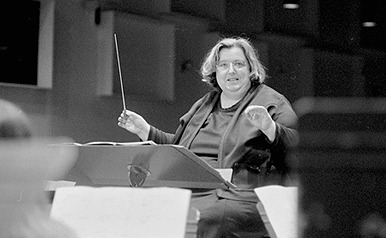
    Today marks the 100th anniversary of Caldwell’s birth. With her own hands, she molded the Opera Company of Boston, for 32 years an organization distinguished by its bold programming, insightful productions, and esteemed singers (including Beverly Sills, Joan Sutherland, Shirley Verrett, Marilyn Horne, Jon Vickers, and James McCracken).

    Caldwell tackled works that struck fear in the hearts of major companies, operas such as Prokofiev’s “War and Peace,” Schoenberg’s “Moses und Aaron,” Roger Sessions’ “Montezuma,” Peter Maxwell Davies’ “Taverner,” and Rodion Shchedrin’s “Dead Souls.” She spearheaded the first complete American staging of Berlioz’s “Les Troyens.” She was also the first in the U.S. to employ Mussorgsky’s original orchestrations for “Boris Godunov.”

    She had her detractors, to be sure. For many of her productions in Boston, she served not only as conductor, but as stage director. Some felt this diluted her powers, but there is no questioning her magnificent ambition. On a shoestring budget, she drove her team as hard as she pushed herself, which was very hard indeed. Often it led to its share of backstage drama and cost overruns.

    Caldwell became the first woman to conduct at the Metropolitan Opera (in “La traviata” in 1976, with Sills). The same year, a production of “The Barber of Seville” (again with Sills) was televised over PBS. In 1978, she returned to the Met to conduct “L’elisir d’amore,” with José Carreras and Judith Blegen.

    A non-operatic highlight, surely, was when she joined the New York Philharmonic for a program of women composers – in 1974! – as only the second woman ever to conduct the orchestra (Nadia Boulanger was the first, in 1939 and 1962), presenting works by Ruth Crawford Seeger, Lili Boulanger, and Thea Musgrave. Time Magazine dubbed her “Music’s Wonder Woman.”

    She also conducted the Pittsburgh Symphony Orchestra, the Saint Paul Chamber Orchestra, and the Boston Symphony Orchestra.

    Caldwell founded the organization that became the Opera Company of Boston (originally known as the Opera Group) in 1958, with $5000.

    She didn’t have the best head for money and she could be politically naïve. In Boston, a cultural exchange with the Soviet Union tanked at the box office. Later, she entered into an agreement with the Marcos regime to bring opera to the Philippines. To her credit, she pulled out of the deal, but it brought her some bad publicity.

    In 1993, at 68, she became principal guest conductor of the Sverdlovsk Philharmonic Orchestra of Ekaterinburg, Russia.

    Clearly, Caldwell was a force of nature.

    She died in 2006 at the age of 82.


    Caldwell conducts “The Barber of Seville” at the Met (with Sills, Alan Titus, Donald Gramm, Henry Price, and Samuel Ramey)

    Hindemith, again with Sills, in Boston – oh my goodness, unless I’m very much mistaken, Aaron Copland provides the spoken addendum, at around 12:20!

    “Otello” with Vickers and Verrett

    “Norma” excerpts with Sills and John Alexander

    A Musical Adventure in Siberia

    Shostakovich Cello Concerto

    Interviewed by Bruce Duffie

    https://www.bruceduffie.com/caldwell.html

  • Free Doctor Atomic Opera Stream Before It’s Gone

    Free Doctor Atomic Opera Stream Before It’s Gone

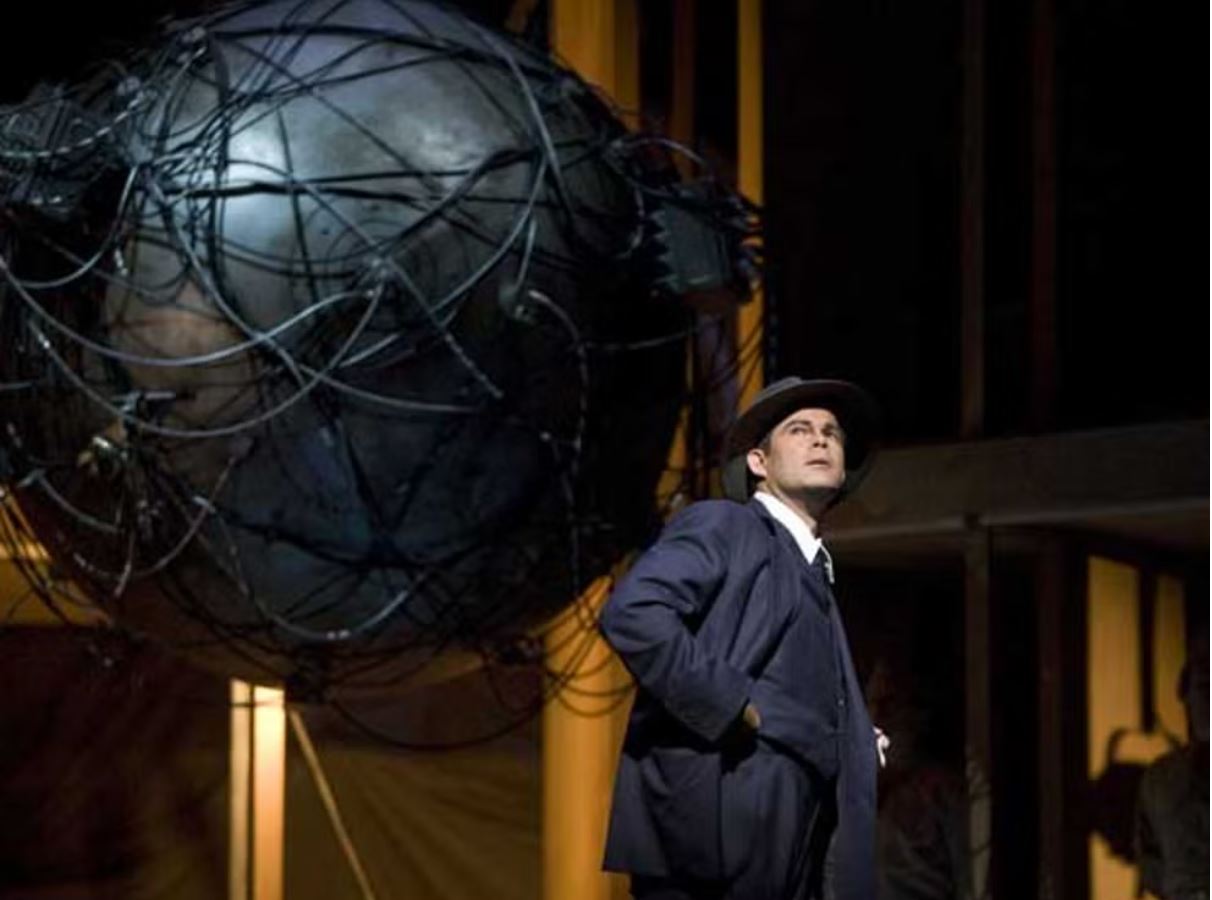
    Okay, so I’m a little late to the table. Following on the heels of yesterday’s post about classical music relating to the current Barbenheimer phenomenon (including works inspired by Oppenheimer and, believe it or not, Barbie), I learned that the Metropolitan Opera is streaming John Adams’ Oppenheimer opera, “Doctor Atomic” (2005), free through Thursday. Watch it here.

    http://www.metopera.org/season/on-demand/opera/?upc=811357012130&fbclid=IwAR1O_nucSW5YjgGbOf-jWEchhfUujXBm6uXK14GETtIp7xn3WTKRqQz_1_E

    And if you missed yesterday’s post, an atomic dud apparently, here’s the link.

    https://www.facebook.com/photo/?fbid=1138484557070606&set=a.883855802533484

    More about Adams’ “Doctor Atomic”

    https://www.metopera.org/discover/education/educator-guides/doctor-atomic/

  • Kaija Saariaho Dies at 70

    Kaija Saariaho Dies at 70

    Kaija Saariaho, the first woman to have a work staged at New York’s Metropolitan Opera in over 100 years – since Ethel Smyth’s “Der Wald” in 1903! – has died. Saariaho was one of Finland’s foremost composers.

    Saariaho’s “L’Amour de loin” (“Love from Afar”) was performed at the Met in 2016. Originally presented in Salzburg 16 years earlier, the opera is a meditation on the idealized love between a French troubadour and a countess of Tripoli. The two are separated by the Mediterranean Sea.

    Saariaho’s most recent opera, “Innocence,” composed in 2018, examines the aftermath of a school shooting in Helsinki. “Innocence” is projected to be heard at the Met in the 2025-26 season.

    In February 2021, Saariaho was diagnosed with glioblastoma, an aggressive form of brain cancer, but was able to carry on successfully until fairly recently, when she entered the terminal phase of her illness. Her last completed work was a trumpet concerto, “Hush,” completed in March and scheduled for performance in Helsinki in August.

    Saariaho was born in Helsinki in 1952. She studied at the Sibelius Academy with Paavo Heininen. Following summer courses in Darmstadt, she attended the Hochschule für Musik Freiburg, where she studied with Brian Ferneyhough and Klaus Huber. In Darmstadt, she was influenced by a concert of spectral music by Tristan Murail and Gérard Grisey. This led her to Paris to study electronic music at the avant-garde institute IRCAM.

    Saariaho claimed to experience a kind of synesthesia, in which all of her senses were engaged in composition. She once commented that “the visual and the musical world are all one to me.”

    She was married to composer, computer scientist, and sometimes collaborator Jean-Baptiste Barrière. The two were separated for a time, as the COVID-19 pandemic intensified while she was away, visiting Helsinki, and they were forced to live apart. “L’Amour de loin,” indeed!

    Even in the years she lived abroad in Germany and France, she always held Finland very dear. Like Sibelius, she found inspiration in the country’s ample natural world, citing specifically the big forests she knew during the summers of her childhood; also the sounds of wind, waves, and footsteps in the snow.

    In April, Saariaho endowed the construction of a new organ at the Helsinki Music Center with one million euros (US $1,072,450) . She was also the chair of the International Kaija Saariaho Organ Composition Competition.

    During her career, she was the recipient of many awards. In 2011, “L’Amour de loin” was recognized with a Grammy for Best Opera Recording.

    This morning, she died peacefully at her home in Paris. At the time of her death, she was counted among the world’s leading composers. Saariaho was 70 years-old.


    “L’Amour de loin” at the Met

    “Graal théâtre” for violin and orchestra

    “Orion”

    “Nymphéa (Jardin Secret III) for string quartet and electronics

    “Six Japanese Gardens” for percussion

    “Sept Papillons” for solo cello

    A brief interview with the composer

Tag Cloud

Aaron Copland (92) Beethoven (95) Composer (114) Film Music (123) Film Score (143) Film Scores (255) Halloween (94) John Williams (187) KWAX (229) Leonard Bernstein (101) Marlboro Music Festival (125) Movie Music (138) Opera (202) Philadelphia Orchestra (89) Picture Perfect (174) Princeton Symphony Orchestra (106) Radio (87) Ralph Vaughan Williams (85) Ross Amico (244) Roy's Tie-Dye Sci-Fi Corner (290) The Classical Network (101) The Lost Chord (268) Vaughan Williams (103) WPRB (396) WWFM (881)

DON’T MISS A BEAT

Receive a weekly digest every Sunday at noon by signing up here


RECENT POSTS