Tag: Milos Forman

  • Amadeus at 40 Examining Genius and Jealousy

    Amadeus at 40 Examining Genius and Jealousy

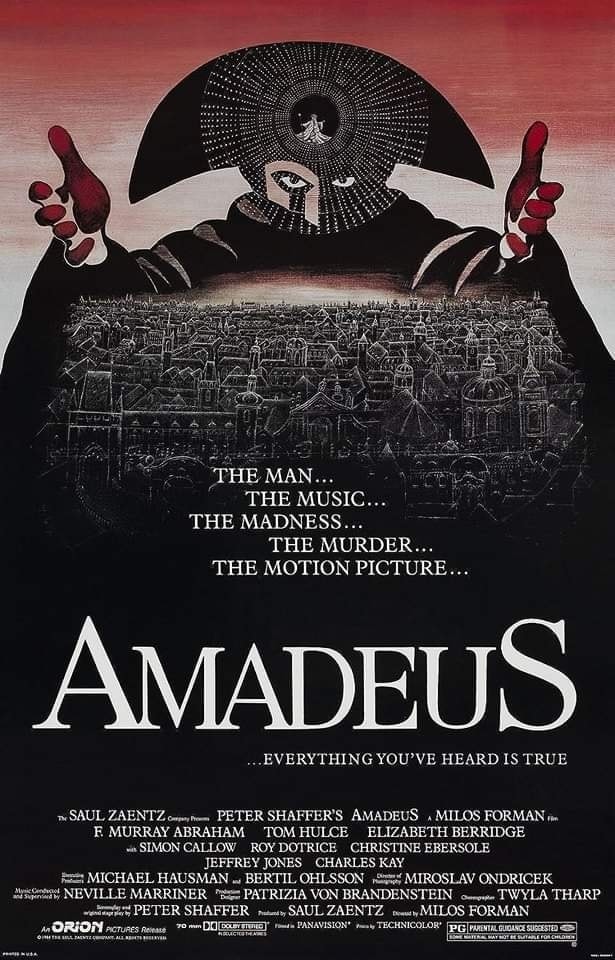
    “Amadeus” opened nationwide on this date 40 years ago.

    Milos Forman’s film of Peter Shaffer’s play is that rarest of animals: popular entertainment set in the world of classical music that doesn’t talk down to the audience and actually for the most part gets it right.

    By this I do not mean the historical facts, with which the creators play fast and loose (to the best of our knowledge, Salieri did NOT plot Mozart’s death, and in fact got along with him as well as any rival possibly could), but rather the broader truths underlying the all-too-human dilemmas that face the film’s “antagonist,” with whom every one of us can relate.

    Why does this jerk I work with get all the recognition? What does this idiot have that I don’t? What is the source of genius? Why does it so seldom match up with personal ambition? How can a spark of the divine exist in this… creature? What is the nature of creativity? Why is talent so random? What do I do with these feelings of resentment? How does jealousy corrupt?

    Furthermore, the film is a hell of a lot of fun, with plenty of broad, crowd-pleasing moments – the emperor is a boob, the court musicians ludicrous schemers, and the artists flagrant bohemians who swill from wine bottles as they stride the colorful streets of Vienna (really Prague), shop for fright wigs, and have very silly laughs – without ever teetering over into farce.

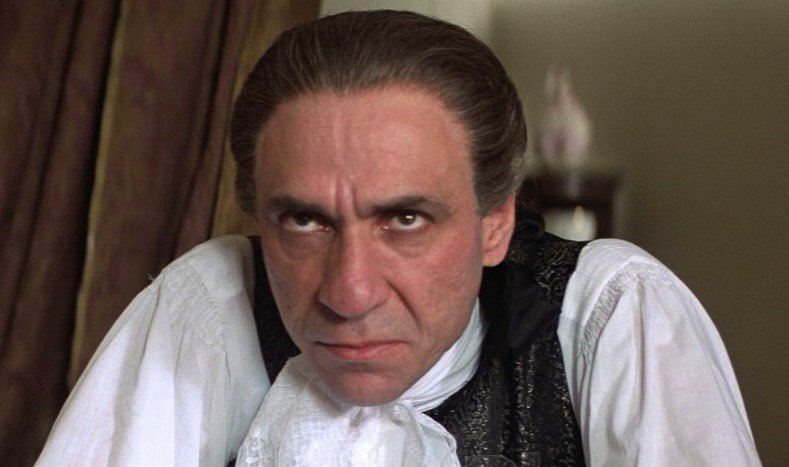
    Critics AND audiences lapped it up, and the film was decorated with eight Academy Awards, including those for Best Picture, Best Director, Best Adapted Screenplay (for Shaffer), and Best Actor (F. Murray Abraham in the performance of his career).

    Avoid the director’s cut, except as a curiosity or “bonus feature.” It was assembled too long after the fact and changes the tone of the picture, expanding the running time by 20 minutes and hardening the original PG rating to an R. A new 4K UHD Blu-Ray of the theatrical cut is imminent, if it’s not out already.

    Sadly, they just don’t make ‘em like this anymore. Happy 40th, “Amadeus.”

  • Amadeus Turns 40 New Miniseries Arrives

    Amadeus Turns 40 New Miniseries Arrives

    I had been holding off until Antonio Salieri’s birthday (Salieri born on this date in 1750) to share two bits of news, which, because of my self-imposed delay, you may have already heard by now.

    First, Milos Forman’s highly entertaining and Academy Award winning film of Peter Shaffer’s play is coming to 4K UHD Blu-ray for its 40th anniversary. (The film was released in September 1984.) This is the theatrical cut, as opposed to the more widely-circulated-in-recent-years director’s cut. (Stop with these directors’ cuts supplanting the versions we originally fell in love with, please!) Forman’s revision adds 20 minutes and hardens the original PG rating to an R. Interesting to see once, in my opinion, but it should be treated as a curiosity and consigned to the bonus features. I have no firm information as to whether or not it will be included in the new set, however. If you want to devote the time to doing a more intensive search, you may be able to find out more.

    The other bit of news – again, perhaps old news at this point, but the first I am mentioning it – is that “Amadeus” has been adapted into a new miniseries, projected to stream later this year. For his source material, screenwriter Joe Barton is apparently sidestepping Shaffer (and perhaps his copyright?) by going back to the Alexander Pushkin play “Mozart and Salieri” of 1830, which cemented the legend of Salieri’s enmity for Mozart. The play was previously adapted as an opera of the same name by Nikolai Rimsky-Korsakov.

    In the latest version, Will Sharp will play Wolfie and Paul Bettany will assume the role of Salieri. They’ll have some big buckled shoes to fill, as both Forman’s leads – Tom Hulce as Mozart and F. Murray Abraham as Salieri – were nominated for Best Actor, and Abraham took home the Academy Award – as, for that matter, did Forman’s film, which was honored as Best Picture, among its total eight-Oscar haul.

    That said, any popular entertainment that takes classical music seriously can’t be a bad thing. If nothing else, it will remind audiences of, and perhaps attract new viewers to, the 1984 classic.

    Happy birthday, Antonio Salieri!

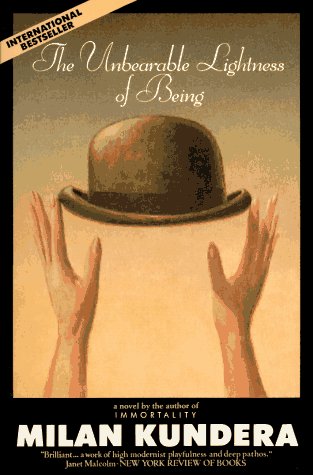
  • Milan Kundera Dies Author of *Unbearable Lightness*

    Milan Kundera Dies Author of *Unbearable Lightness*

    The Czech writer Milan Kundera has died. His father was concert pianist and musicologist Ludvik Kundera, a colleague of Leoš Janáček. Ludvik headed the Janáček Music Academy in Brno from 1948 to 1961.

    Milan himself had considered a career in music, but instead gravitated toward literature. After he was busted down by the Communist Party for his subversive views, he supplemented his income as a jazz musician. He eventually fled Czechoslovakia in 1975 to make Paris his home.

    There was plenty of Janáček on the soundtrack of Philip Kaufman’s film adaptation of Kundera’s most famous novel, “The Unbearable Lightness of Being,” which starred Daniel Day Lewis, Juliette Binoche, and Lena Olin. Kundera described his novels as polyphonic symphonies, and he likened “The Book of Laughter and Forgetting” to a set of Beethoven variations.

    For a time, he taught film theory at Prague’s Academy of Performing Arts. Among his students was Miloš Forman, who would go on to direct the Academy Award winning adaptation of Peter Schaffer’s play, “Amadeus.”

    “They [human lives] are composed like music,” Kundera observes in “The Unbearable Lightness of Being.” “Guided by his sense of beauty, an individual transforms a fortuitous occurrence (Beethoven’s music, death under a train) into a motif, which then assumes a permanent place in the composition of the individual’s life. Anna could have chosen another way to take her life. But the motif of death and the railway station, unforgettably bound to the birth of love, enticed her in her hour of despair with its dark beauty. Without realizing it, the individual composes his life according to the laws of beauty even in times of greatest distress.

    “It is wrong, then, to chide the novel for being fascinated by mysterious coincidences (like the meeting of Anna, Vronsky, the railway station, and death or the meeting of Beethoven, Tomas, Tereza, and the cognac), but it is right to chide man for being blind to such coincidences in his daily life. For he thereby deprives his life of a dimension of beauty.”

    At the time of his death, Kundera was 94-years-old.


    Kundera’s obituary in the New York Times

    https://www.nytimes.com/2023/07/12/world/europe/milan-kundera-dead.html

    Trailer for “The Unbearable Lightness of Being”

    The soundtrack

    https://en.wikipedia.org/wiki/The_Unbearable_Lightness_of_Being_(soundtrack)#:~:text=The%20soundtrack%20is%20composed%20of,Jarmila%20%C5%A0ul%C3%A1kov%C3%A1%20and%20Vojt%C4%9Bch%20Jochec.

    Once again, I neglected to observe Janáček’s birthday this year. (Janáček was born on July 3, 1854.) Here I celebrate in 2019:

  • Salieri Beyond Amadeus The Music of a “Mediocrity”

    Salieri Beyond Amadeus The Music of a “Mediocrity”

    Happy birthday, Antonio Salieri! Patron saint of mediocrities everywhere. Or so “Amadeus” would have us believe.

    I first encountered this article in The New Yorker back in 1985. The piece takes the form of a letter to Milos Forman, director of the Oscar-winning adaptation of Peter Shaffer’s stage play.

    Is it the funniest thing ever? No, but, much like Salieri himself, it has its moments, and somehow I’ve never forgotten it. (For the record, Franz Schubert’s middle name is Peter.)

    Salieri composed 37 operas, in addition to orchestral works, concertos, chamber music, and sacred pieces. And what do you know? A lot of his music is quite good! He was no Mozart, maybe – but who was?


    Beethoven’s Variations on “La stessa, la stessissima,” cited in the article

    The theme, from Salieri’s “Falstaff”

    Overture to “Les Horaces”

    Concerto for Flute, Oboe and Orchestra

    “Das Lob der Musik” (“The Praise of Music”)

    A Mozart and Salieri collaborative effort, the cantata “Per la ricuperata salute di Ofelia”

    “De Profundis”

    “I absolve you.”

  • Mozart’s Birthday Amadeus and Don Giovanni

    Mozart’s Birthday Amadeus and Don Giovanni

    It’s Mozart’s birthday.

    By coincidence, I just happened to rewatch “Amadeus” (1984) earlier this week, for the first time in many years. Of course, I’d seen it a bunch of times before.

    This was the theatrical cut. With all apologies to Miloš Forman, it has been my experience that directors’ cuts tend to be in most ways inferior, especially when recut so long after the fact. (Forman’s was issued in 2002.) Or maybe George Lucas has just made me skittish.

    Unfortunately, once a director’s cut appears on home video, it tends to displace the original in all formats, including streaming.

    Thankfully I’ve got my trusty old, double-sided DVD. Yeah, I have to flip it an hour and 50 minutes into the movie, but I grew up during the LP era, so I can take it.

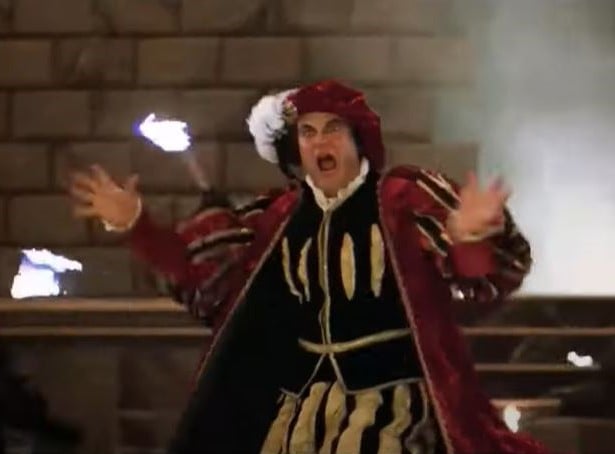
    All that aside, has there ever been a staged “Don Giovanni” as cool as this one?

    https://www.youtube.com/watch?v=i1QyaKs6E5w

    And the audience is like, WTF?

    So true to life.

Tag Cloud

Aaron Copland (92) Beethoven (95) Composer (114) Film Music (119) Film Score (143) Film Scores (255) Halloween (94) John Williams (185) KWAX (229) Leonard Bernstein (99) Marlboro Music Festival (125) Movie Music (134) Opera (198) Philadelphia Orchestra (87) Picture Perfect (174) Princeton Symphony Orchestra (106) Radio (87) Ralph Vaughan Williams (85) Ross Amico (244) Roy's Tie-Dye Sci-Fi Corner (290) The Classical Network (101) The Lost Chord (268) Vaughan Williams (102) WPRB (396) WWFM (881)

DON’T MISS A BEAT

Receive a weekly digest every Sunday at noon by signing up here


RECENT POSTS