Tag: Montserrat Caballé

  • Manuel de Falla’s Atlántida: A Lost Masterpiece

    Manuel de Falla’s Atlántida: A Lost Masterpiece

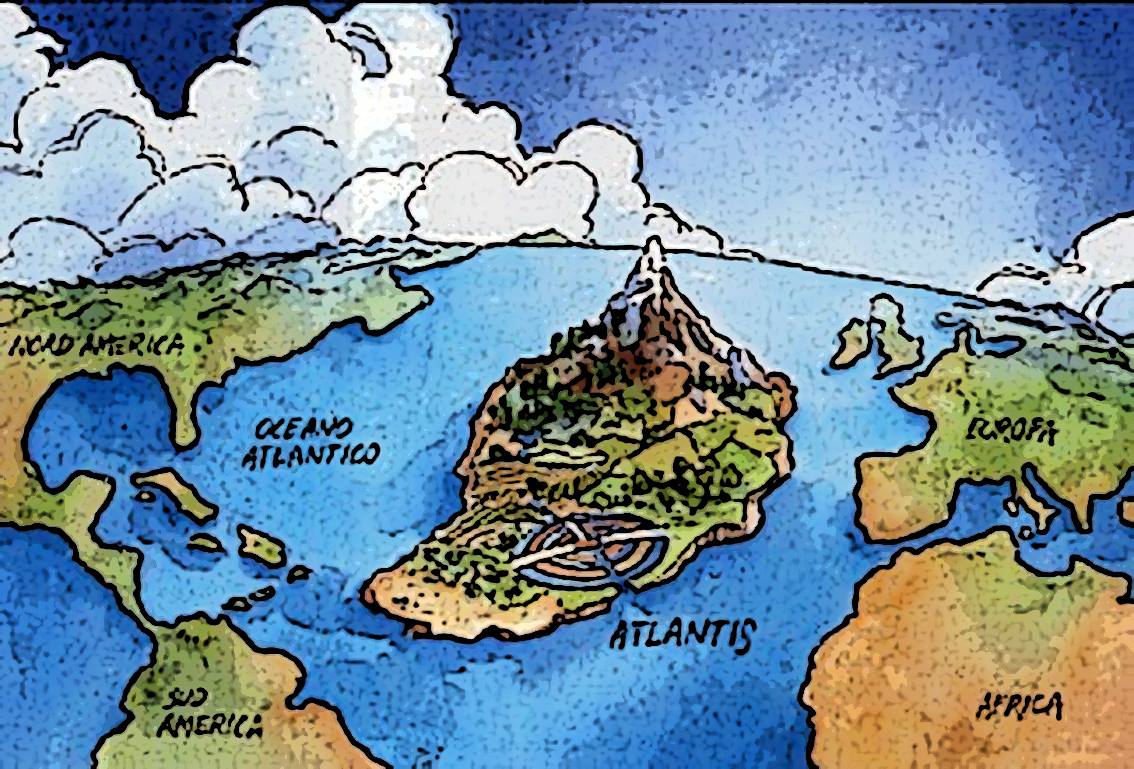
    On this most controversial of federal holidays, here’s a reminder of Manuel de Falla’s scenic cantata “Atlántida.” “Atlántida” tells the story of the lost continent of Atlantis, with appearances by Hercules, Pyrene (the Queen of the Pyrenees), the Hesperides (nymphs who tend a blissful garden), Queen Isabella… and a shipwrecked Christopher Columbus.

    Distilled to its essence, the plot, synthesized from legends and myths into a grandiose verse epic by 19th century Catalan poet Jacint Verdaguer, follows the great flood that submerged Atlantis, Hercules sparing Spain from its waters, and from Spain the discovery of the New World.

    Interestingly, Falla eschews the overtly Spanish idioms that make his ballets, “El amor brujo” and “The Three-Cornered Hat,” so insistently memorable. The result is something much more austere, akin to the choral works of Stravinsky and Arthur Honegger.

    It is Falla’s most ambitious work, at which he labored for 20 years, up until his death in 1946. The composer envisioned it as his magnum opus, yet it is very seldom heard. Falla disciple Ernesto Halffter arranged the incomplete sketches into a performing edition, which he conducted at the work’s premiere in 1961. He revised the piece in 1976, at the request of Falla’s publisher, allegedly bringing the work closer to the composer’s vision.

    There are a few recordings on YouTube, and some in better sound, but here’s a notable television broadcast featuring Montserrat Caballé and Teresa Berganza, with Jesús López Cobos conducting. Caballé and Berganza are interviewed as part of an intermission feature, around the 48-minute mark. Depending on your proficiency with Spanish, you may need to use some sort of translator.

    Columbus Day was established as a federal holiday by President Benjamin Harrison in 1892 to coincide with the 400th anniversary of Columbus’ voyage; but his true intention was to stem anti-immigrant sentiment and violence against Italian-Americans. (11 Italian immigrants had recently been lynched in New Orleans by American “nativists.”) There was no sinister agenda to force Columbus down anyone’s throats or to excuse his personal flaws. Rather, Columbus Day was perceived as a time to celebrate American patriotism, citizenship, and social progress. That’s how people thought back then, in those hopelessly naïve times, before social media.

    But really, my aim in posting this is not political, but musical, even if it is the one day a year I pause to acknowledge my Italian-American side.

  • Falla’s Atlántida A Columbus Day Discovery

    Falla’s Atlántida A Columbus Day Discovery

    On this most controversial of federal holidays, here’s a reminder of Manuel de Falla’s scenic cantata “Atlántida.” “Atlántida” tells the story of the lost continent of Atlantis, with appearances by Hercules, Pyrene (the Queen of the Pyrenees), the Hesperides (nymphs who tend a blissful garden), Queen Isabella… and a shipwrecked Christopher Columbus.

    Distilled to its essence, the plot, synthesized from legends and myths into a grandiose verse epic by 19th century Catalan poet Jacint Verdaguer, follows the great flood that submerged Atlantis, Hercules sparing Spain from its waters, and from Spain the discovery of the New World.

    Interestingly, Falla eschews the overtly Spanish idioms that make his ballets, “El amor brujo” and “The Three-Cornered Hat,” so insistently memorable. The result is something much more austere, akin to the choral works of Stravinsky and Arthur Honegger.

    It is Falla’s most ambitious work, at which he labored for 20 years, up until his death in 1946. The composer envisioned it as his magnum opus, yet it is very seldom heard. Falla disciple Ernesto Halffter arranged the incomplete sketches into a performing edition, which he conducted at the work’s premiere in 1961. He revised the piece in 1976, at the request of Falla’s publisher, allegedly bringing the work closer to the composer’s vision.

    There are a few recordings on YouTube, and some in better sound, but here’s a notable television broadcast featuring Montserrat Caballé and Teresa Berganza, with Jesús López Cobos conducting. Caballé and Berganza are interviewed as part of an intermission feature, around the 48-minute mark. Depending on your proficiency with Spanish, you may need to use some sort of translator.

    Columbus Day was established as a federal holiday by President Benjamin Harrison in 1892 to coincide with the 400th anniversary of Columbus’ voyage; but his true intention was to stem anti-immigrant sentiment and violence against Italian-Americans. (11 Italian immigrants had recently been lynched in New Orleans by American “nativists.”) There was no sinister agenda to force Columbus down anyone’s throats or to excuse his personal flaws. Rather, Columbus Day was perceived as a time to celebrate American patriotism, citizenship, and social progress. That’s how people thought back then, in those hopelessly naïve times, before social media.

    But really, my aim in posting this is not political, but musical, even if it is the one day a year I pause to acknowledge my Italian-American side.
  • Montserrat Caballé Google Doodle Celebrates La Superba

    Montserrat Caballé Google Doodle Celebrates La Superba

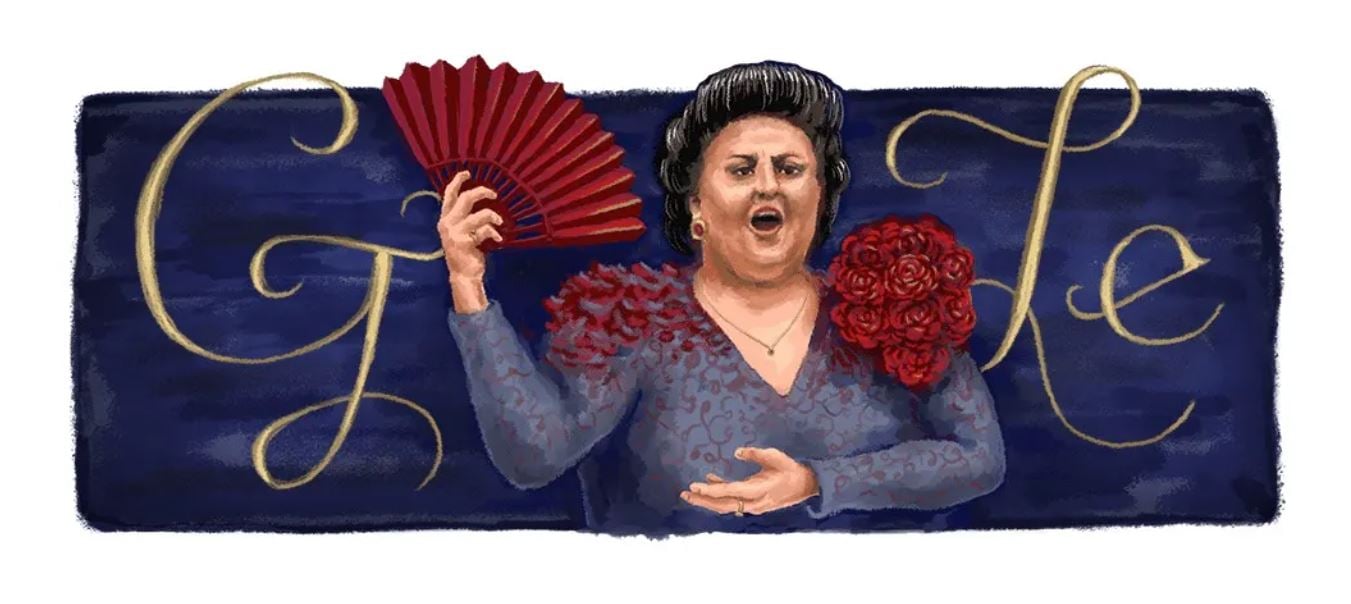
    Montserrat Caballé gets a Google Doodle on what would have been her 89th birthday. Naturally in Google’s write-up, they emphasize her collaboration with Freddie Mercury, with imbedded video of “Barcelona.” Oh yeah, she also happened to be one of the greatest sopranos of her generation. I guess that’s why they called her “La Superba.”

    Google Doodle pays tribute to Spanish opera singer Montserrat Caballé on 89th birthday

    From her American debut, filling in for a indisposed Marilyn Horne. The performance earned her a 25-minute standing ovation.

    “Il Pirata”

    Hypnotic in “Maria Stuarda,” with great anecdote in the comments section about Caballé upstaged by a peacock!

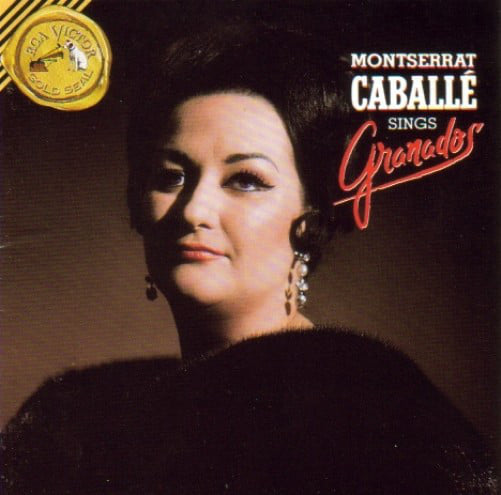
    A favorite Caballé album of songs by Enrique Granados

    Meltingly beautiful Donizetti

    Lock up the crystal! Superhuman in “Don Carlo.”

    Quite a blast from “Hérodiade”

  • Granados and Freddie Mercury Barcelona Connection

    Granados and Freddie Mercury Barcelona Connection

    What do Enrique Granados and Freddie Mercury have in common?

    Granados undertook piano studies in Barcelona and, following an interlude at the Paris Conservatory, returned to achieve his first successes there in the 1890s. A century later, Mercury sang his smash hit “Barcelona” in the city, in duet with soprano – and Barcelona native – Montserrat Caballé.

    Caballé, a champion of Granados’ songs, was approached to come up with something celebratory, after Barcelona was selected as the home of the 1992 Summer Olympics. She enlisted Mercury, an enthusiastic operaphile and a Caballé fan. Furthermore, she suggested that “Barcelona” should be more than just a single, and that their teaming should encompass an entire album. Mercury was delighted. They began recording together in 1987.

    Sady, both Granados and Mercury wound up dying before their time. Granados drowned while attempting to save his wife after their ship was torpedoed by a German submarine in 1916; Mercury succumbed to AIDS-related illness in 1991.

    Following Mercury’s death, “Barcelona” was embraced as the official anthem of the 1992 Summer Games. During the opening ceremony, Caballé sang her part live, opposite Mercury on a video screen. Fueled by Olympic fever, the song became one of the biggest “solo” hits of Mercury’s career.

    Finally, Granados and Mercury both wore signature mustaches. Mercury had already shaved his prior to this live performance:

    Caballé sings Granados’ “The Maiden and the Nightingale”:

    Caballé remembers Freddie Mercury in her final interview. (The subtitles are a little choppy, but someone provides a more fluent translation in the comments section beneath the video.)

    This post is what happens when the birthday of Enrique Granados coincides with the Summer Olympics!

  • Montserrat Caballé Remembered on WWFM

    Montserrat Caballé Remembered on WWFM

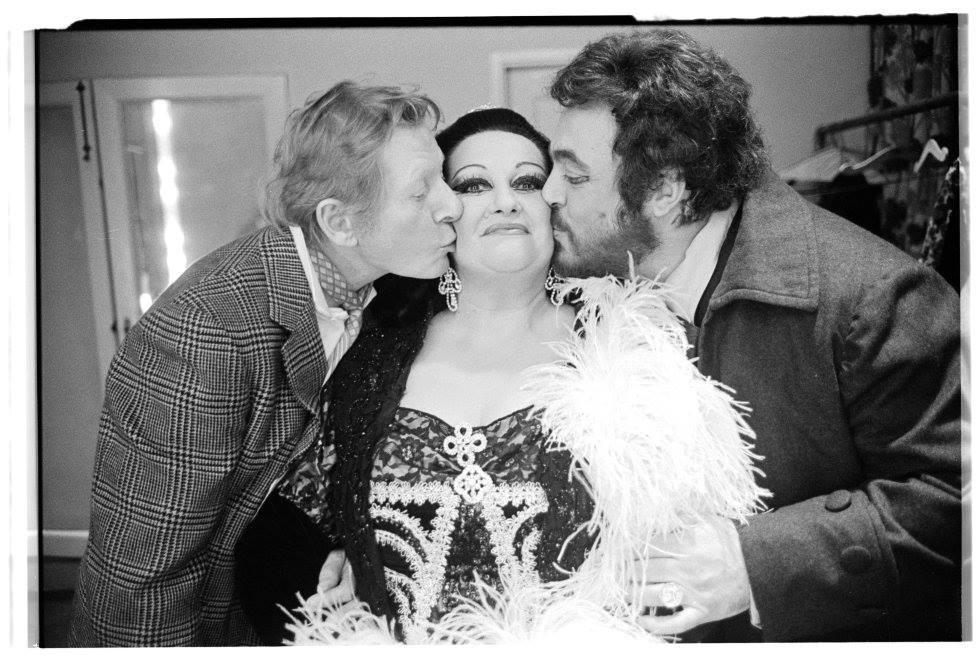
    The late Montserrat Caballé gets double-smooched by Danny Kaye and Luciano Pavarotti. Caballé, one of the great sopranos, died on Saturday at the age of 85. Tune in to hear her recording of Enrique Granados’ “Canciones amatorias,” settings of Spanish Renaissance love poems, this afternoon in the 4:00 hour EDT, on WWFM – The Classical Network and wwfm.org.

Tag Cloud

Aaron Copland (92) Beethoven (95) Composer (114) Film Music (123) Film Score (143) Film Scores (255) Halloween (94) John Williams (187) KWAX (229) Leonard Bernstein (101) Marlboro Music Festival (125) Movie Music (138) Opera (202) Philadelphia Orchestra (89) Picture Perfect (174) Princeton Symphony Orchestra (106) Radio (87) Ralph Vaughan Williams (85) Ross Amico (244) Roy's Tie-Dye Sci-Fi Corner (290) The Classical Network (101) The Lost Chord (268) Vaughan Williams (103) WPRB (396) WWFM (881)

DON’T MISS A BEAT

Receive a weekly digest every Sunday at noon by signing up here


RECENT POSTS