Ask for me tomorrow, and you shall find me a grave man!
This week on “The Lost Chord,” with Hallowe’en lurking like a mad clown astride a vampiric spider around a Caligari corner, we’ll seek our thrills in the comparative safety of three American experiments in controlled terror.
Wander the creepy cornfields of the overactive imagination with music by George Crumb (“A Haunted Landscape”), Morton Gould (“Jekyll and Hyde Variations”), and Dominick Argento (“Le Tombeau d’Edgar Poe”).
All three composers have fairly local connections. Crumb, born in Charleston, West Virginia, on October 24, 1929, made his home outside Philadelphia for some 57 years. He died in Media, PA, in 2022. Argento, born in York, PA, on October 27, 1927, died in Minneapolis in 2019. Gould, born in Queens on December 10, 1913, died in Orlando in 1996.
These tricksters were treated to the Pulitzer Prize for Music – Crumb in 1968, Argento in 1975, and Gould in 1995.
Walk softly around three spine-tingling exercises in American Gothic. Join me, if you dare, for “Grave Endeavors,” on “The Lost Chord,” now in syndication on KWAX, the radio station of the University of Oregon!
Clip and save the start times for all three of my recorded shows:
PICTURE PERFECT, the movie music show – Friday at 8:00 PM EDT/5:00 PM PDT
SWEETNESS AND LIGHT, the light music program – ALL NEW! – Saturday at 11:00 AM EDT/8:00 AM PDT
THE LOST CHORD, unusual and neglected rep – Saturday at 7:00 PM EDT/4:00 PM PDT
Just as KWAX allows for the continued broadcast of “The Lost Chord” – no longer affiliated with WWFM after twenty years, but still available in syndication – Howard Pollack’s biography, “Samuel Barber: His Life and Legacy,” preserves the story behind the composer’s Symphony No. 2.
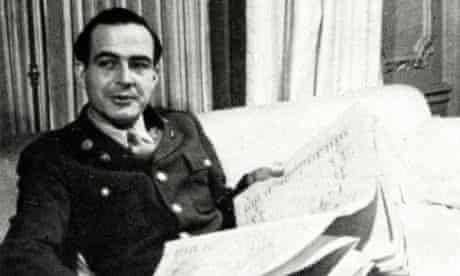
Barber’s music will be among my featured works this week on a program devoted to works conceived for the U.S. armed forces. Barber was serving in the U.S. Army Air Force when he was approached to write a symphony in 1943.
Every two weeks, he would report to a colonel at West Point to demonstrate his progress. Here’s a passage from Pollack’s book, with a nice Princeton connection on p. 236.
“As it [the symphony] was one of my most complicated works, I had no idea what [the colonel] expected to hear. I rather thought it might be something like ‘You’re in the Army Now.’ So I was a little nervous when I reported to play for him on a battered-up piano in the back of the army theater. All he said was, “Well, corporal, it’s not quite what we expected from you. Since the air force uses all sorts of the most modern technical devices, I’d hoped you’d write this symphony in quarter-tones. But do what you can, do what you can, corporal.”
Barber actually made some concession toward this general expectation by employing, in the second movement’s final section, an “electrical ‘tone generator’” constructed by Bell Telephone Laboratories in imitation of the low-frequency radio signals used to help pilots navigate during these years. The composer even traveled to the company’s Princeton location to investigate the matter. “In the end, it never did work right,” recalled Barber. “I remember [conductor Serge] Koussevitzky having a fit at rehearsal and shouting “Throw the damn thing out.” When Barber revised the work in 1946, he rewrote the small tone-generator part for E-flat clarinet.
Barber was very proud of the work when it was completed, thinking it one of his best pieces. However, with the passage of time, he came to feel embarrassed by it, perhaps because of its programmatic roots – although he always emphasized that the work was meant to reflect the emotional response to events rather than the events themselves – or perhaps because of the war itself, the ties to which he felt dated the piece. Whatever the case, after a few drinks one afternoon, he convinced his publisher to allow him back to the office to tear up the score. Of course, the piece had been published, so this was largely a symbolic gesture, and the Symphony No. 2 was revived after his death.
Parenthetically, Barber did authorize the publication of the work’s Andante as a free-standing piece, called “Night Flight.” The score is prefaced by an epigraph by Antoine de Saint-Exupery (aviator and author of “The Little Prince”), from his novel of the same name, drawn from a passage depicting the final moments of a pilot’s doomed flight: “A single radio post still heard him. The only link between him and the world was a wave of music, a minor modulation. Not a lament, no cry, yet purest of sounds that ever spoke despair.”
We’ll hear a recording of Barber’s complete, reconstituted symphony with Marin Alsop and the Royal Scottish National Orchestra.
In addition, we’ll hear Morton Gould’s Symphony No. 4, his first large scale work for symphonic band. Gould’s symphony, composed in 1952 for the United States Military Academy at West Point, calls for a “marching machine,” but on the recording we’ll hear, a classic on the Mercury label, the feet will be those of the 120 musicians of the Eastman School Symphony Band. Frederick Fennell will direct the Eastman Wind Ensemble.
Remember the sacrifice of Americans at war, while listening to “Orchestrated Maneuvers,” on “The Lost Chord,” now in syndication on KWAX, the radio station of the University of Oregon. Stream it at the link below.
Keep in mind, KWAX is on the West Coast, so there’s a three-hour time difference – actually rather convenient for those of us located in the vicinity of WWFM. Here are the conversions of the respective air-times of my shows:
PICTURE PERFECT – Fridays on KWAX at 5:00 PACIFIC TIME (8:00 PM EDT)
THE LOST CHORD – Saturdays on KWAX at 4:00 PACIFIC TIME (7:00 PM EDT)
Ask for me tomorrow, and you shall find me a grave man!
This Sunday night on “The Lost Chord,” with Hallowe’en lurking like a mad clown astride a vampiric spider around a Caligari corner, we’ll seek our thrills in the comparative safety of three American experiments in controlled terror.
Wander the creepy cornfields of the overactive imagination with music by George Crumb (“A Haunted Landscape”), Morton Gould (“Jekyll and Hyde Variations”), and Dominick Argento (“Le Tombeau d’Edgar Poe”).
All three composers have fairly local connections. Crumb, born in Charleston, West Virginia, on October 24, 1929, makes his home outside Philadelphia. Argento, born in York, PA, on October 27, 1927, died in Minneapolis in 2019. Gould, born in Queens on December 10, 1913, died in Orlando in 1996.
These tricksters were treated to the Pulitzer Prize for Music – Crumb in 1968, Argento in 1975, and Gould in 1995.
Walk softly around three spine-tingling exercises in American Gothic. Join me, if you dare, for “Grave Endeavors,” this Sunday night at 10:00 EDT, on WWFM – The Classical Network and wwfm.org.
This Sunday night on “The Lost Chord,” get ready for Memorial Day with two symphonies composed for the armed forces.
Morton Gould wrote his Symphony No. 4, his first large scale piece for symphonic band, in 1952, for the United States Military Academy at West Point. The score calls for a “marching machine,” but on the recording we’ll hear, now a classic on the Mercury label, the feet are those of the 120 musicians of the Eastman School Symphony Band. Frederick Fennell directs the Eastman Wind Ensemble.
Samuel Barber composed his Symphony No. 2 in 1943, while he was serving in the U.S. Army Air Force. 20 years later, he revised and published its slow movement as a separate piece, titled “Night Flight.” He then jettisoned – and actually tried to destroy – the rest of the symphony. The work was reconstituted only after the composer’s death, from rediscovered parts in a warehouse in the UK. We’ll hear a recording with Marin Alsop and the Royal Scottish National Orchestra.
Reflect on the sacrifice of Americans at war, on “Orchestrated Maneuvers” – American military symphonies for Memorial Day – this Sunday night at 10:00 EDT, on WWFM – The Classical Network and wwfm.org.
PHOTO: Corporal Samuel Barber with the score of his Second Symphony
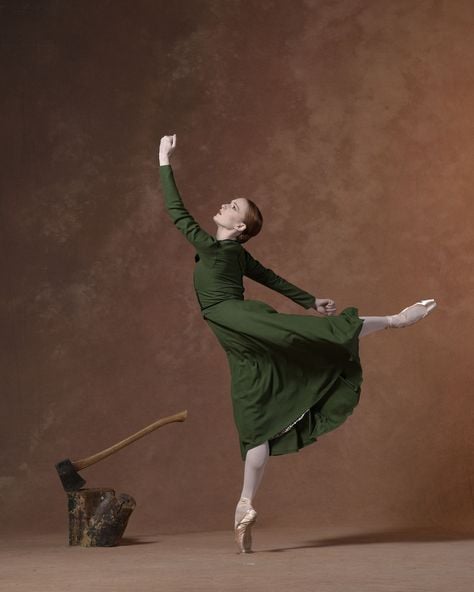
Morton Gould’s “Fall River Legend,” written for Agnes De Mille, inspired by the infamous Lizzie Borden murder case. Howard Hanson conducts, on his birthday.