Tag: Morton Gould

  • American Gothic Halloween Music

    American Gothic Halloween Music

    Ask for me tomorrow, and you shall find me a grave man!

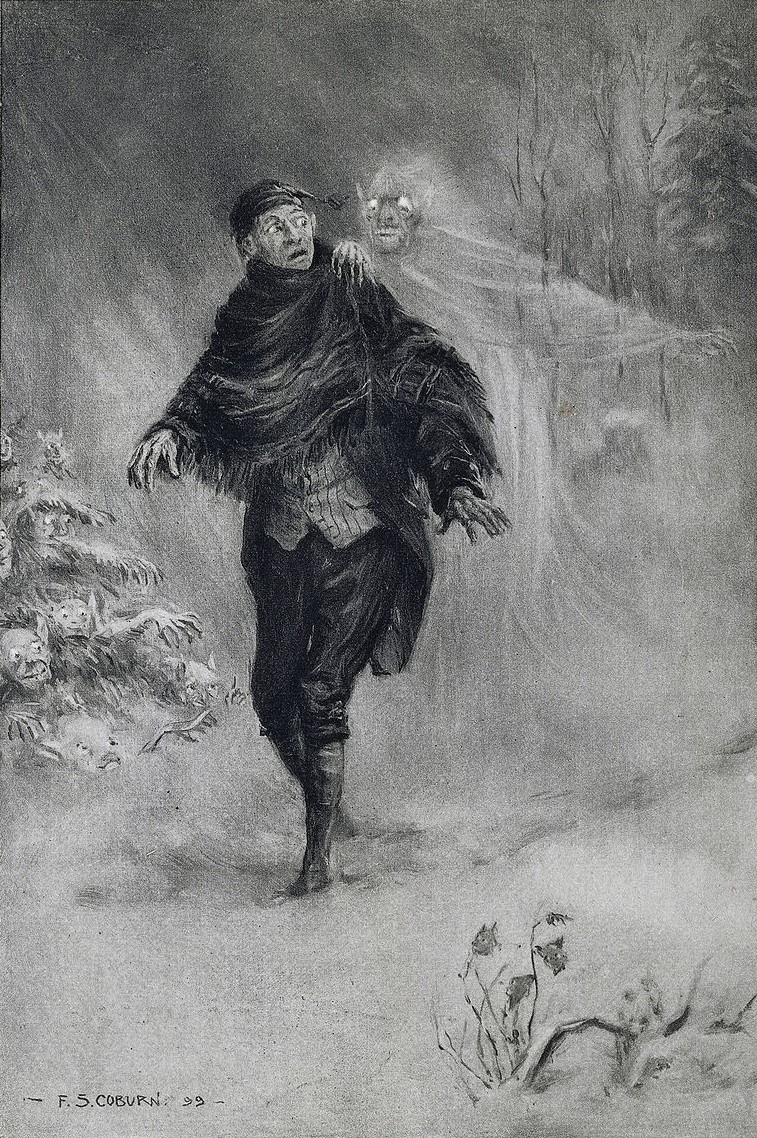
    This Sunday night on “The Lost Chord,” with Hallowe’en lurking like a mad clown astride a vampiric spider around a Caligari corner, we’ll seek our thrills under the comparatively safe conditions of three American experiments in controlled terror.

    Wander the creepy cornfields of the overactive imagination with music by George Crumb (“A Haunted Landscape”), Morton Gould (“Jekyll and Hyde Variations”), and Dominick Argento (“Le Tombeau d’Edgar Poe”).

    Crumb, who was born on October 24, 1929, makes his home outside Philadelphia. Argento, who hails from York, PA, was born on October 27, 1927. Gould, born and bred in Queens, died in 1996 at the age of 82. All three composers were honored with the Pulitzer Prize for Music.

    Walk softly around these spine-tingling exercises in American Gothic. Join me, if you dare, for “Grave Endeavors,” this Sunday night at 10:00 EDT, on WWFM – The Classical Network and wwfm.org.

  • Jewish Film Music for the High Holy Days

    Jewish Film Music for the High Holy Days

    This week on “Picture Perfect,” to coincide with the Jewish High Holy Days, we’ll have music from movies and television series inspired by aspects of the Jewish experience.

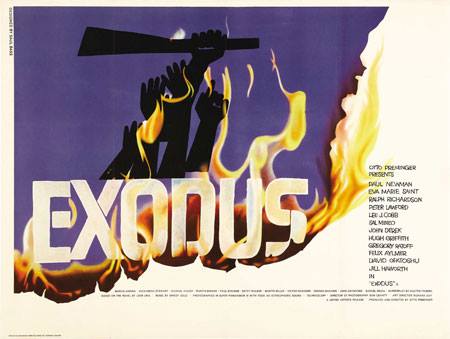
    We’ll begin with “Exodus” (1960), based on the bestselling novel by Leon Uris, about the founding of the State of Israel. The book is said to have been the biggest seller in the United States since “Gone With the Wind.” The film was directed by Otto Preminger. Paul Newman and Eva Marie Saint lead an all-star cast. Ernest Gold’s stirring music was recognized with an Academy Award and is probably his best-known achievement.

    Barry Levinson’s semi-autobiographical “Avalon” (1990) explores the immigrant experience and, for better or worse, the assimilation of a Jewish family into American life. Alongside his work on “The Natural,” Randy Newman’s score is probably one of his best-loved.

    We’ll round out the hour with music from two acclaimed television scores: for the NBC mini-series “Holocaust” (1978), written by the esteemed concert composer Morton Gould, and Emmy Award-winning music from the PBS series “Heritage: Civilization and the Jews” (1984), by John Duffy.

    I hope you’ll join me as we celebrate the Jewish experience this week, on “Picture Perfect” – music for the movies – this Friday evening at 6 EDT, on WWFM – The Classical Network and wwfm.org.

  • Military Symphonies for Memorial Day

    Military Symphonies for Memorial Day

    This Sunday night on “The Lost Chord,” in anticipation of Memorial Day, we’ll have two symphonies composed for the armed forces.

    Morton Gould wrote his Symphony No. 4 for the United States Military Academy at West Point. It was his first large scale piece for symphonic band. The score calls for a “marching machine,” but the recording we’ll hear, issued on the Mercury label, employs the feet of 120 musicians of the Eastman School Symphony Band. Frederick Fennell directs the Eastman Wind Ensemble.

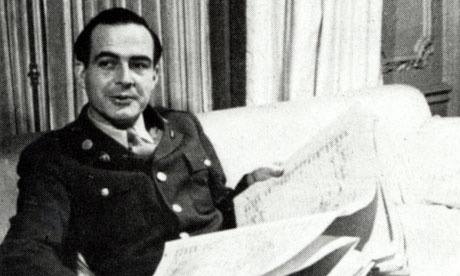
    Samuel Barber composed his Symphony No. 2 in 1943, while he was serving in the U.S. Army Air Force. 20 years later, he revised and published the slow movement as a separate opus, titled “Night Flight,” and then jettisoned – and actually tried to destroy – the rest. The work was reconstituted after the composer’s death, and is now back in circulation. We’ll hear a recording with Marin Alsop and the Royal Scottish National Orchestra.

    I hope you’ll join me for “Orchestrated Maneuvers” – American military symphonies for Memorial Day – tonight at 10:00 EDT, on WWFM – The Classical Network and wwfm.org.


    PHOTO: Corporal Samuel Barber with the score of his Second Symphony

  • Jewish Songwriters Christmas Music’s Unsung Heroes

    Jewish Songwriters Christmas Music’s Unsung Heroes

    It’s been said that the best Christmas music was written by Jews. The statement is in reference, I’m sure, to the many outstanding Jewish composers and lyricists of the mid-20th century.

    Think about it: “The Christmas Song (Chestnuts Roasting),” “Silver Bells,” “I’ll Be Home for Christmas,” “Winter Wonderland,” “Let It Snow! Let It Snow! Let It Snow!,” “Do You Hear What I Hear?,” “Home for the Holidays,” “Rudolph the Red-Nosed Reindeer,” and that heavyweight champ among Christmas songs, “White Christmas.” All were written or co-written by Jews.

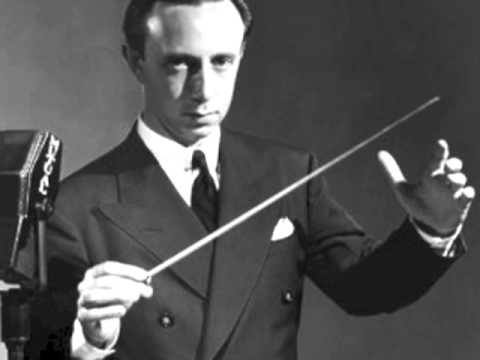
    I think of this in reference to the birthday today of Morton Gould (1913-1996). Gould put together some delightful suites of traditional carols, which he recorded at least twice. Above and beyond his contributions to the Christmas season, Gould did so much to make classical music “popular.” Listeners who enjoyed Gould weren’t made to feel as if they were listening to something that was good for them. They were listening to music they enjoyed. Gould was most always accessible, tuneful, brightly orchestrated, and rhythmically exciting.

    Sure, he wrote for the concert hall, but he also wrote for Broadway. He wrote for film, he wrote for radio, he wrote for television. His arrangements were always highly professional, and his original music polished to a sheen. Unfortunately, this very professionalism often led to his being underrated as a serious a composer. No one was more surprised than he when he was belatedly recognized with a Pulitzer Prize for Music, for his “Stringmusic,” in 1995. He was 81 years-old.

    His music could hang on a gimmick, as in his “West Point Symphony,” which employs a marching machine, his “Tap Dance Concerto,” for dancing soloist, or his late children’s piece, “The Jogger and the Dinosaur,” which incorporates a rapper. But he could also, on occasion, engage in genuine experimentation. Take his “Jekyll and Hyde Variations,” in which he employs serial techniques, bending them to his own distinctively Gouldian ends.

    And lest you chalk up the Jewish Christmas song to cold, commercial calculation (a harsh way of looking at the fact that a composer has to eat), consider Irving Berlin. Berlin was born into a religious family in Russian, where Christmas brought with it the justified fear of drunken pogroms. Though admittedly more secular in his maturity, Berlin came to regard Christmas in America as a warm domestic tradition.

    Beautiful music is beautiful music. These artists are hardly defined by their contributions to Christmas, of course, but American Gentiles would do well to think on them with a special degree of gratitude. What would the season be without “White Christmas?” God bless America, God bless Irving Berlin, and happy birthday, Morton Gould.


    Gould’s “Serenade of Carols”

    https://www.youtube.com/watch?v=k0E_PG0obqw

    Berlin’s “White Christmas”

    https://www.youtube.com/watch?v=w9QLn7gM-hY

    An article on this very topic:

    http://jewishworldreview.com/1214/jewz_xmas.php3


    PHOTOS: Gould conducts; Berlin scrawls
  • Jewish Film Music for the High Holy Days

    Jewish Film Music for the High Holy Days

    This week on “Picture Perfect,” to coincide with the Jewish High Holy Days, we’ll have music from movies and television series depicting aspects of the Jewish experience.

    We’ll begin with “Exodus” (1960), based on the bestselling novel by Leon Uris, about the founding of the State of Israel. The book is said to have been the biggest seller in the United States since “Gone With the Wind.” The film was directed by Otto Preminger. Paul Newman and Eva Marie Saint led an all-star cast. Ernest Gold’s stirring music was recognized with an Academy Award and is probably his best-known achievement.

    Barry Levinson’s semi-autobiographical “Avalon” (1990) explores the immigrant experience and, for better or worse, the assimilation of a Jewish family into American life. Alongside his work on “The Natural,” Randy Newman’s score is probably one of his best-loved.

    We’ll round out the hour with music from two acclaimed television scores: for the NBC mini-series “Holocaust” (1978), written by the esteemed concert composer Morton Gould, and Emmy Award-winning music from the PBS series “Heritage: Civilization and the Jews” (1984), by John Duffy.

    I hope you’ll join me as we celebrate the Jewish experience this week, on “Picture Perfect” – music for the movies – this Friday evening at 6 ET, with a repeat Saturday morning at 6; or that you’ll listen to it later as a webcast at wwfm.org.

Tag Cloud

Aaron Copland (92) Beethoven (95) Composer (114) Film Music (119) Film Score (143) Film Scores (255) Halloween (94) John Williams (185) KWAX (229) Leonard Bernstein (99) Marlboro Music Festival (125) Movie Music (134) Opera (198) Philadelphia Orchestra (87) Picture Perfect (174) Princeton Symphony Orchestra (106) Radio (87) Ralph Vaughan Williams (85) Ross Amico (244) Roy's Tie-Dye Sci-Fi Corner (290) The Classical Network (101) The Lost Chord (268) Vaughan Williams (102) WPRB (396) WWFM (881)

DON’T MISS A BEAT

Receive a weekly digest every Sunday at noon by signing up here


RECENT POSTS