Tag: Movie Music

  • Movie Music for New Beginnings

    Movie Music for New Beginnings

    This week on “Picture Perfect,” we greet the new year with music from movies about renewal, starting over, new beginnings, and second chances – including “The Natural” (by Randy Newman), “The Best Years of Our Lives” (Hugo Friedhofer), “The Accidental Tourist” (John Williams), and “It’s a Wonderful Life” (Dimitri Tiomkin).

    We look to the future with hope and fortitude, this Friday evening at 6:00 EST, on WWFM – The Classical Network and wwfm.org.
  • Thanksgiving Movie Music Picture Perfect

    Thanksgiving Movie Music Picture Perfect

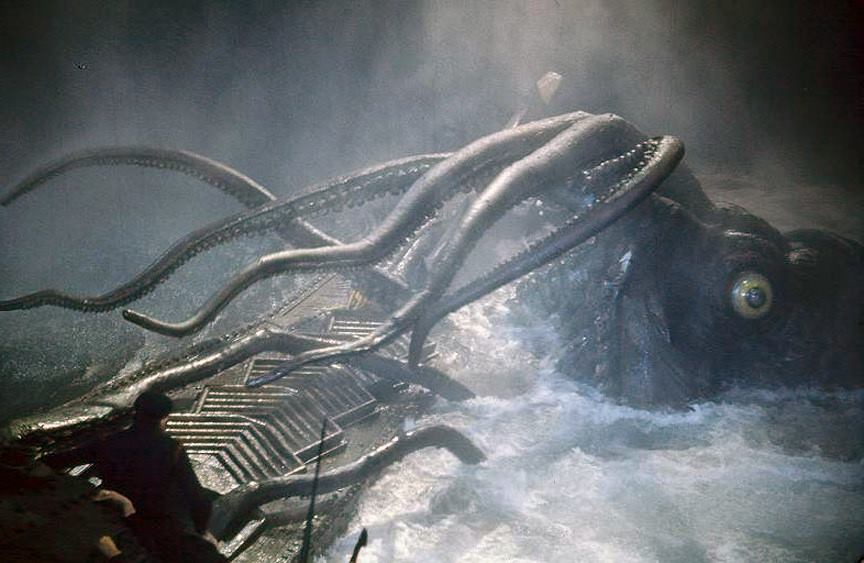
    This week on “Picture Perfect,” we set the table for Thanksgiving.

    Gary Cooper and Dorothy McGuire star in “Friendly Persuasion” (1956), based on the novel by Jessamyn West. The film’s portrayal of family and the resolution of moral conflict, as pacifist Quakers deal with issues both big and small – from the American Civil War, to the introduction of a “sinful” musical instrument into the household – make “Friendly Persuasion,” in my opinion, a good choice for this time of year.

    The film was nominated for six Oscars, with Dimitri Tiomkin’s score nominated twice. The title song went on to become the popular hit “Thee I Love.” Only Dimitri Tiomkin would use balalaikas to depict Quaker life!

    None other than Aaron Copland composed music for a big screen adaptation of Thorton Wilder’s “Our Town” (1940). The play, which opened at Princeton’s McCarter Theatre, won the Pulitzer Prize for Drama only two years earlier. Copland was at the height of his “populist” period. “El Salon Mexico” and “Billy the Kid” had already been written, and “Fanfare for the Common Man,” “A Lincoln Portrait,” “Rodeo” and “Appalachian Spring” would follow within just a few years.

    The concert version of “Our Town” has been in circulation for decades, but it’s only fairly recently that a recording of the complete score was made available. It was issued briefly on the Naxos label, available only as a download. The recording is now extremely scarce, possibly because of copyright issues.

    The film’s portrayal of small town America and the playwright’s poignant observation, “Do any human beings ever realize life while they live it? Every, every minute?,” are timely reminders that there are things we should all be thankful for, while they – and we – are here for us to appreciate them.

    “Witness” (1985) may seem like an unusual choice for Thanksgiving, with its themes of police corruption and violence, but when honest cop Harrison Ford goes on the lam, he experiences the “plain” lifestyle of a close-knit Amish community. The highlight of Maurice Jarre’s score is a sequence called “Building the Barn,” in which the community comes together to raise a barn for a newly married couple.

    Finally, we’ll listen to selections from “Plymouth Adventure” (1952), with its depictions of William Bradford, John Alden, Miles Standish and Priscilla Mullins. Spencer Tracy stars as the cynical captain of The Mayflower, Gene Tierney is his forbidden love interest, Van Johnson appears as Alden, and Lloyd Bridges is the first mate. If you’re curious to see the film, Turner Classic Movies: TCM will broadcast it this Sunday at 2 p.m. EST.

    The music is by Miklós Rózsa, who, already at this stage of his career, was MGM’s go-to composer for historical drama. Seven years later, Rózsa would take home his third Academy Award, for his classic score to “Ben-Hur.”

    There’s not a turkey among them! It’s never too early to give thanks this week on “Picture Perfect” – music for the movies – this Friday evening at 6:00 EST, on WWFM – The Classical Network and wwfm.org.

  • Madness & Piano Movie Music on WWFM

    Madness & Piano Movie Music on WWFM

    This week on “Picture Perfect,” practice makes psychotic, as we listen to music from movies about madness and the piano.

    Laird Cregar plays an unhinged pianist-composer, who, whenever he hears a loud, discordant sound, is compelled to commit murder, in the 1945 film “Hangover Square.” Bernard Herrmann wrote the moody, romantic score, which includes a piano concerto, played by Cregar’s character during the film’s conflagration finale.

    Peter Lorre is an unstable musicologist who is haunted by the disembodied hand of a murdered pianist with a penchant for Brahms’ arrangement of Bach’s Chaconne, in “The Beast with Five Fingers,” from 1946. Max Steiner wrote the music. The piano is played on the film’s soundtrack by Victor Aller, the brother-in-law of Felix Slatkin, and therefore Leonard Slatkin’s uncle.

    Alan Alda plays a frustrated pianist who falls in with a ring of Satanists, in “The Mephisto Waltz” from 1971. This time, Jerry Goldsmith blends Franz Liszt with amplified instruments and electronics to memorably eerie effect. Five years later, Goldsmith would win his only Academy Award for his music to “The Omen.”

    Finally, Hans Conried plays a dictatorial pedagogue in “The 5000 Fingers of Dr. T,” released in 1953, which holds the distinction of being the only feature film written by Dr. Seuss. The film features outrageous production design (including a gargantuan keyboard for 500 enslaved boys) and whimsical songs.

    The composer was Frederick Hollander, born in London. Hollander came to fame in Germany as Friedrich Hollander. His best-known international success was with “The Blue Angel,” with Marlene Dietrich, who introduced his song, “Falling in Love Again. With the rise of the Nazis, Hollander fled to the United States, where he worked on over 100 films.

    It’s madness and the piano this week, on “Picture Perfect,” music for the movies, this Friday evening at 6:00 EDT, on WWFM – The Classical Network and wwfm.org.

  • Hitchcock & Herrmann: The Torn Curtain Fall

    Hitchcock & Herrmann: The Torn Curtain Fall

    Composer Bernard Herrmann produced three indisputable masterpieces with Alfred Hitchcock: “Vertigo,” “North by Northwest,” and “Psycho” (the biggest success of them all).

    However, Hitchcock became increasingly insecure as things began to change within the studio system. The emphasis shifted more and more to the bottom line, and the pressure exerted extended to every aspect of his subsequent films.

    Following “The Birds” and “Marnie,” Hitchcock became desperate for another hit. It was the studio’s thinking that its music scores should forthwith be attuned to a younger sensibility. In particular, they were interested in a hit single which would help promote their films. Herrmann’s reliance on a symphony orchestra was deemed old fashioned.

    By the time Hitchcock and Herrmann began work on “Torn Curtain,” in 1966, the tension between director and composer was at a breaking point. When Herrmann didn’t produce what Hitchcock requested, the composer was fired halfway through the first day’s recording sessions.

    Herrmann’s replacement was John Addison, who was a hot commodity, having won the Academy Award in 1963 for his music for Tony Richardson’s freewheeling adaptation of “Tom Jones.” Ironically, instead of going “popular,” as the studio wanted, save for one incongruous, Mancini-esque song at the end, Addison did what all of Hitch’s subsequent composers did – he emulated Herrmann. “Torn Curtain” failed to gain traction with younger audiences, and the film was not a success.

    Herrmann and Hitchcock would never work together again. The “Torn Curtain” debacle spelled the end of one of the greatest artistic partnerships in all of cinema.

    Join me for selections from Herrmann’s original, rejected score, alongside jettisoned music for “2001: A Space Odyssey” (by Alex North), “Edge of Darkness” (John Corigliano) and “The Battle of Britain” (Sir William Walton), this Friday evening at 6:00 EDT. It’s an hour of rejected scores on “Picture Perfect,” music for the movies, on WWFM – The Classical Network and wwfm.org.
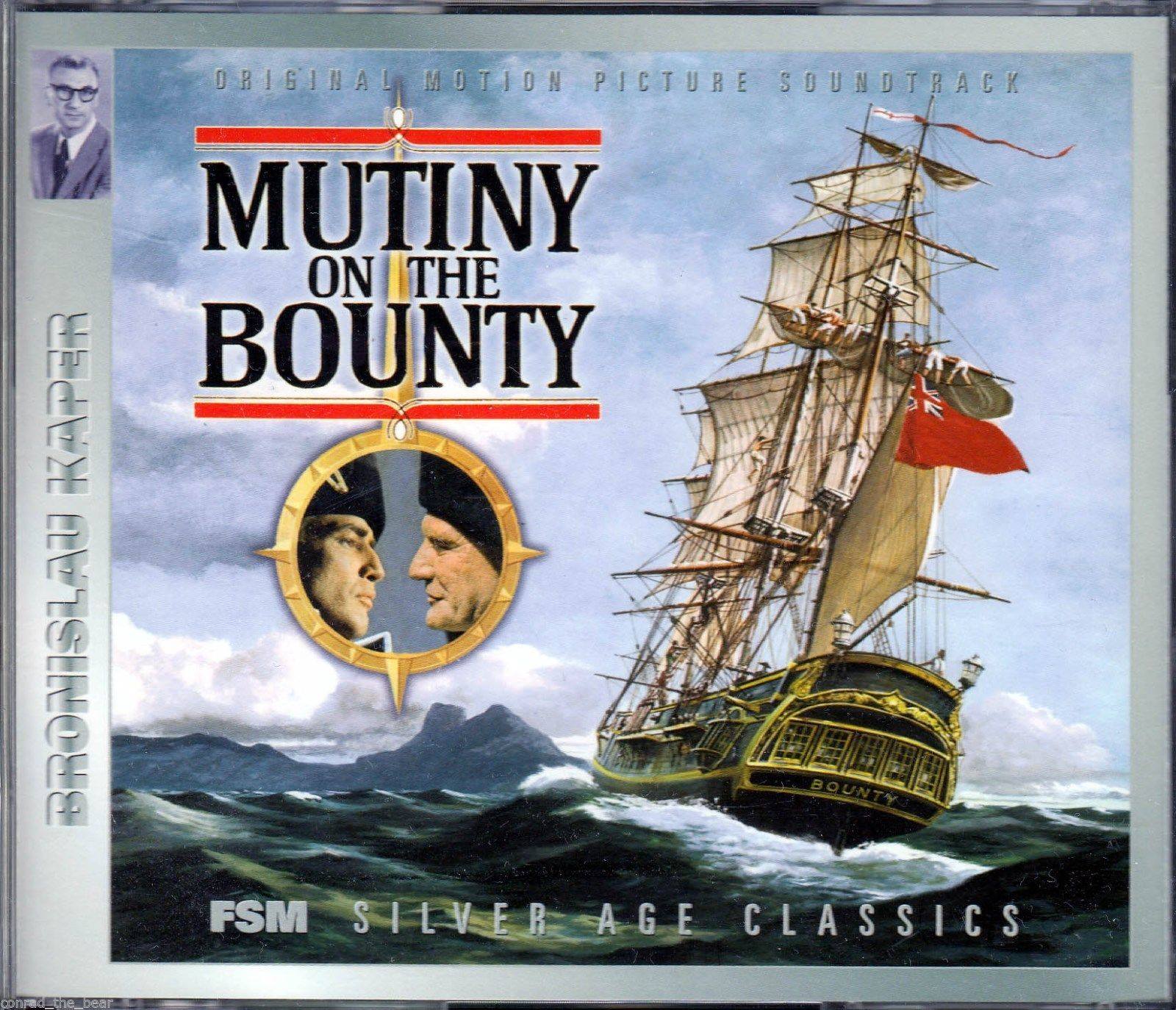

    PHOTO: Hitch and Herrmann – who’d have predicted anything could have gone wrong?

  • July 4th Movie Music Celebrating Independence

    July 4th Movie Music Celebrating Independence

    With the Fourth of July right around the corner, fortify yourself with an hour of cinematic fifes and drums. This week on “Picture Perfect,” we look ahead to Independence Day.

    We’ll hear selections from the 2000 film, “The Patriot,” in which slow-burning pacifist Mel Gibson is pushed too far by ruthless British officer Jason Isaacs and reverts to his bloody French and Indian War ways. By the end of the film, he is literally waving the flag to John Williams’ triumphant score.

    Then we’ll hear a suite from the 1942 Jack Benny-Ann Sheridan fixer-up comedy, “George Washington Slept Here,” based on the play by Moss Hart and George S. Kaufman – not really about the Revolution, beyond the fact that the ramshackle Pennsylvania farm house purchased by a transplanted New York couple is alleged to have been the resting place of the Revolution’s most famous general. The music is by Adolph Deutsch.

    The 1985 film, “Revolution,” seemed to have everything going for it. The director was Hugh Hudson, whose “Chariots of Fire” was the big winner at the 1981 Academy Awards; its star was Al Pacino; and its composer was John Corigliano, who went on to win the Pulitzer Prize for Music for his Symphony No. 2 and an Academy Award for “The Red Violin.” Yet “Revolution” bombed horribly – so horribly that Pacino gave up making movies for the next four years. James Galway plays the flute and pennywhistle on the film’s soundtrack.

    Finally, we’ll hear music from the longest continuously-shown film in cinematic history, “Williamsburg: The Story of a Patriot,” created exclusively for the tourist attraction of Colonial Williamsburg. The film features future “Hawaii Five-O” star Jack Lord, and the score is by none other than Bernard Herrmann.

    Here’s a clip from “Williamsburg,” with some of Herrmann’s music:

    https://www.youtube.com/watch?v=A0VXfVhenXQ

    We celebrate Independence Day this week, on “Picture Perfect,” music for the movies, this Friday evening at 6:00 EDT, on WWFM – The Classical Network and wwfm.org.
    PLEASE SUPPORT IT RIGHT NOW BY CALLING 1-888-232-1212. THANK YOU!


    PHOTO: George Washington wagers he can crack a walnut with his bare hand in “Williamsburg: The Story of a Patriot”

Tag Cloud

Aaron Copland (93) Beethoven (95) Composer (114) Film Music (141) Film Score (143) Film Scores (255) Halloween (94) John Williams (195) KWAX (229) Leonard Bernstein (103) Marlboro Music Festival (125) Movie Music (156) Mozart (89) Opera (212) Philadelphia Orchestra (89) Picture Perfect (174) Princeton Symphony Orchestra (108) Radio (88) Ross Amico (244) Roy's Tie-Dye Sci-Fi Corner (290) The Classical Network (101) The Lost Chord (268) Vaughan Williams (103) WPRB (396) WWFM (881)

DON’T MISS A BEAT

Receive a weekly digest every Sunday at noon by signing up here


RECENT POSTS