Tag: Movie Scores

  • Halloween Radio Special on KWAX

    Halloween Radio Special on KWAX

    Since Halloween falls on a Friday this year – one week from today – I hope you’ll indulge me this weekend as all three of my radio shows will tie in to my favorite holiday.

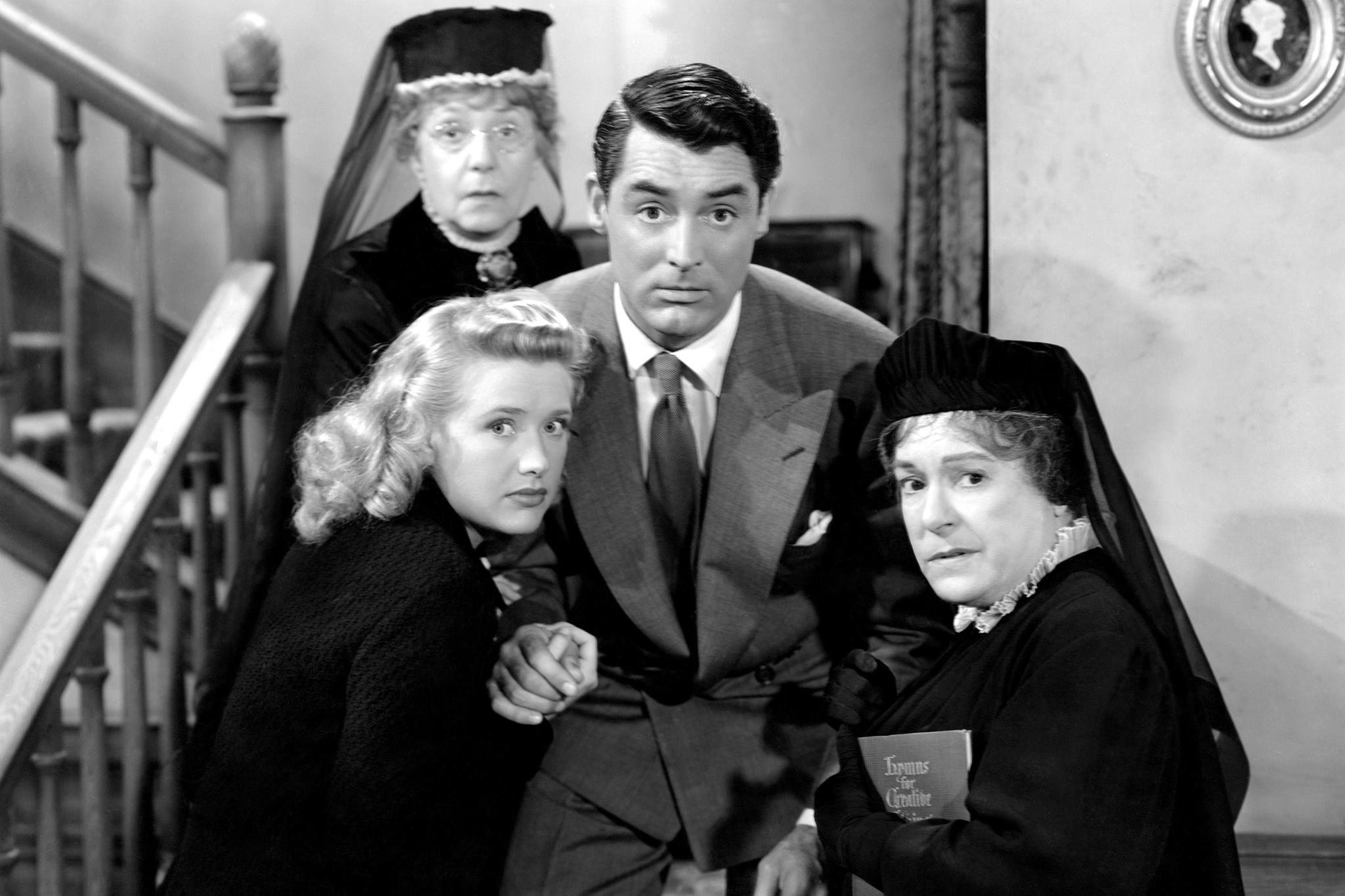
    First, on “Picture Perfect,” music for the movies (Friday at 8:00 p.m. EDT/5:00 p.m. PDT), we’ll enjoy scores from spooky or macabre comedies, including “Arsenic and Old Lace” (Max Steiner), “The Trouble with Harry” (Bernard Herrmann), “The Ghost and Mr. Chicken” (Vic Mizzy), and “Beetlejuice” (Danny Elfman).

    Then, tomorrow on “Sweetness and Light” (Saturday morning at 11:00 EDT/8:00 PDT), it will be a light music Halloween, with spooktacular selections associated with haunted ballrooms, ostracized imps, reanimated skeletons, nimble witches, adept sorcerers, ghost removal specialists, consumerist zombies, dancing lunatics, boogey men, headless horsemen, boy wizards, and galloping devils.

    Finally, on “The Lost Chord” (Saturday at 7:00 p.m. EDT/4:00 p.m. PDT), écoutez to French music for the season, including Maurice Ravel’s “Gaspard de la nuit,” after grotesque poetry of Aloysius Bertrand (with pianist Gina Bachauer and narrator Sir John Gielgud), a fragment of an unfinished opera inspired by Edgar Allan Poe’s “The Fall of the House of Usher” by Claude Debussy, and an etude subtitled “Scherzo diabolico” by the misanthropic and reclusive Charles-Valentin Alkan.

    But wait! There’s more!

    Since “Picture Perfect” falls on a Friday, I’ll have one more chance next week, on Halloween proper, when I’ll offer a playlist of evocative and ear-catching vintage horror and science fiction scores from the 1950s, with enough narration and gaudy sound effects to provide the perfect soundtrack for your Trick-or-Treat.

    All air times for the above shows are reiterated below. Stream them wherever you are from KWAX, the radio station of the University of Oregon!

    https://kwax.uoregon.edu/


    PICTURE PERFECT, the movie music show – Friday at 8:00 PM EDT/5:00 PM PDT

    SWEETNESS AND LIGHT, the light music program – Saturday at 11:00 AM EDT/8:00 AM PDT

    THE LOST CHORD, unusual and neglected rep – Saturday at 7:00 PM EDT/4:00 PM PDT

  • Back to School Movie Music Scores on KWAX

    Back to School Movie Music Scores on KWAX

    It’s back to school time!

    Time to take notes, as we get all pedantic about music from movies with academic settings, including selections from “Goodbye, Mr. Chips” (Richard Addinsell), “Dead Poets Society” (Maurice Jarre), “Back to School” (Danny Elfman), “Mr. Holland’s Opus” (Michael Kamen), and “Tom Brown’s School Days” (again, Richard Addinsell).

    Minds will be sharpened and buttons will be pushed, on “Picture Perfect,” music for the movies, now in syndication on KWAX, the radio station of the University of Oregon!


    Clip and save the start times for all three of my recorded shows:

    PICTURE PERFECT, the movie music show – Friday at 8:00 PM EDT/5:00 PM PDT

    SWEETNESS AND LIGHT, the light music program – Saturday at 11:00 AM EDT/8:00 AM PDT

    THE LOST CHORD, unusual and neglected rep – Saturday at 7:00 PM EDT/4:00 PM PDT

    Stream them, wherever you are, at the link!

    https://kwax.uoregon.edu/

  • Vatican Movie Music Pope-pourri on Picture Perfect

    Vatican Movie Music Pope-pourri on Picture Perfect

    This week on “Picture Perfect,” with conclaves and popes very much in the news lately, it’s an hour of music from movies set in the Vatican.

    It would appear that Alex North (born just south of Philadelphia, in Chester, Pa.) was Hollywood’s “go to” composer for papal scores. In “The Shoes of the Fisherman” (1968), Anthony Quinn plays Kiril Pavlovich Lakota, an archbishop who serves 20 years in a Siberian labor camp. He is released and sent to Rome where is promoted to the cardinalate. When the Pope dies, suddenly, Lakota, a dark horse candidate, is elected as his replacement. The story balances Lakota’s internal struggles and personal torments with mounting global turmoil. North juxtaposes the melancholy lyricism of Russian folksong with the steely grandeur of his music for the Vatican.

    “The Agony and the Ecstasy” (1965), about the war of wills between Michelangelo (played by Charlton Heston) and the warrior-pope Julius II (played by Rex Harrison) over the painting of the ceiling of the Sistine Chapel, suggested a completely different approach. North’s other Vatican score is rich in allusions to authentic music of the era – and of the Church – which is most impressive when we think that the Early Music Movement was, at the time, in its very infancy, and the music of the pre-Baroque would not have been particularly well known.

    Otto Preminger’s “The Cardinal” (1963) follows a fictional Boston Irish Catholic priest from his ordination in 1917 to his appointment as cardinal on the eve of World War II. Tom Tryon played the lead. Tryon later became a best-selling author (as THOMAS Tryon), with books such as “The Other” and “Harvest Home.” An interesting factoid: the Vatican’s liaison officer for the production was none other than Joseph Ratzinger, later Pope Benedict XVI.

    The composer this time was Jerome Moross. The producers of the recording we’ll be sampling incorporate the sound of the actual bell of St. Paul’s Cathedral into the opening of the suite.

    Christopher Reeve may have been trying just a bit too hard to shake his “Superman” image when he signed on to “Monsignor” (1982). Reeve stars as a Roman Catholic priest whose ascent through the ranks at the Vatican parallels his underhanded dealings with a mafia don and an affair with a woman in the postulant stage of becoming a nun (none other than Geneviève Bujold).

    Likewise, composer John Williams received his only nomination from the Golden Raspberry Awards for Worst Original Score. Tune in for this rare opportunity to hear music from Williams’ first project after his Academy Award-winning contribution to “E.T.”

    It’s a Pope-pourri of scores from movies set in the Vatican this week, on “Picture Perfect,” now in syndication on KWAX, the radio station of the University of Oregon!


    Clip and save the start times for all three of my recorded shows:

    PICTURE PERFECT, the movie music show – Friday at 8:00 PM EDT/5:00 PM PDT

    SWEETNESS AND LIGHT, the light music program – Saturday at 11:00 AM EDT/8:00 AM PDT

    THE LOST CHORD, unusual and neglected rep – Saturday at 7:00 PM EDT/4:00 PM PDT

    Stream them, wherever you are, at the link!

    https://kwax.uoregon.edu/

  • Saints on Screen Classic Movie Scores

    Saints on Screen Classic Movie Scores

    This week on “Picture Perfect,” on this November 1st, the saints go marching in.

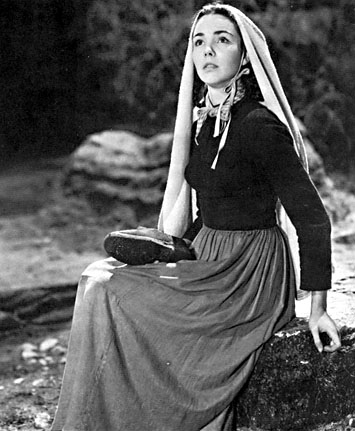
    We’ll hear a suite from “The Song of Bernadette” (1943), one of Jennifer Jones’ finest hours. Jones was honored with an Academy Award for her performance. The film was nominated in 12 categories. Franz Werfel’s novel relates the story of Bernadette Soubirous, a Lourdes peasant prone to visions of the Blessed Virgin Mary.

    Igor Stravinsky made several attempts to break into Hollywood film scoring, but he couldn’t keep up with the relentless schedule. He took a crack at the “Apparition of the Virgin” scene, but then had second thoughts. The project went to Alfred Newman, who won his third of nine Oscars. Stravinsky’s music was recycled in the second movement of his “Symphony in Three Movements.”

    The life of Joan of Arc has been translated to film many times. In the case of “Saint Joan” (1957), Otto Preminger adapted the play by George Bernard Shaw. Newcomer Jean Seberg was cast in the title role. Her inexperience brought her in for a sound critical drubbing. Even an old hand like screenwriter Graham Greene was not immune to critical barbs for the liberties he took in reworking Shaw’s play. Despite all that, the score, by Russian-born English composer Mischa Spoliansky, is lovely.

    By contrast, the film of “A Man for All Seasons” (1966), after the play of Robert Bolt, was lavishly praised, especially Paul Scofield’s performance as Sir Thomas More, for which he received an Academy Award for Best Actor. The film was the recipient of six Oscars in all, including that for Best Picture. The period-inflected score is by Georges Delerue.

    Henryk Sienkiewicz’s international bestseller, “Quo Vadis,” incorporates into its narrative Saints Peter and Paul, but the truly interesting characters are the cynical Petronius, who really knows how to throw a party, and the quite mad Nero, who plays the lyre, even as Rome burns.

    Miklós Rózsa’s score has been much-lauded for its attempt at historical authenticity – allegedly it incorporates early Greek, Hebrew and Sicilian melodies – though its popularity has been eclipsed, somewhat, by Rózsa’s “Ben-Hur” and “King of Kings.” “Quo Vadis” is really the film in which Rózsa lays out the blueprint for a decade or more of big screen piety. Bernard Herrmann called it “the score of a lifetime.”

    I hope you’ll join me for “Lives of the Saints,” on this All Saints’ Day, on “Picture Perfect,” music for the movies, now in syndication on KWAX, the radio station of the University of Oregon!


    Clip and save the start times for all three of my recorded shows:

    PICTURE PERFECT, the movie music show – Friday at 8:00 PM EDT/5:00 PM PDT

    SWEETNESS AND LIGHT, the light music program – ALL NEW! – Saturday at 11:00 AM EDT/8:00 AM PDT

    THE LOST CHORD, unusual and neglected rep – Saturday at 7:00 PM EDT/4:00 PM PDT

    Stream them, wherever you are, at the link!

    https://kwax.uoregon.edu/


    PHOTO: Jennifer Jones and the Lourdes’ prayer

  • Napoleonic Wars: Classic Movie Scores

    Napoleonic Wars: Classic Movie Scores

    There is a bon mot you may have heard to the effect that England and America are two countries divided by a common language. The observation is sharp and spot-on, so naturally it has been attributed to two of the greatest wits of their day, George Bernard Shaw and Oscar Wilde. Yet these attributions are without verifiable foundation. (The closest Wilde ever came in print: “We really have everything in common with America nowadays except, of course, the language.”)

    Similarly, we all know what is meant by “Napoleon complex.” But did you know there is every possibility that Napoleon was not short? Like the commonality of language that divides the English and the Americans (and I know that Shaw and Wilde were Irish), it turns out that there may be some confusion over Napoleon’s actual height on account of two different systems of measurement that happened to use the same terms.

    Be that as it may, this week on “Picture Perfect,” with Bastille Day (July 14) right around the corner, we’ll surge to power on the allegedly diminutive shoulders of Napoleon Bonaparte. The focus will be on the Napoleonic Wars – which is to say, movies set, at least in part, between about 1803 and 1815.

    There is a lot of unlikely casting in these films. The first English language adaptation of Leo Tolstoy’s “War and Peace” (1956) stars Audrey Hepburn, Henry Fonda, and Mel Ferrer, with Herbert Lom as Napoleon. Lom is fine; but Henry Fonda? At least the music is by Nino Rota.

    Stanley Kramer’s “The Pride and the Passion” (1957) is loosely based on the novel “The Gun,” by C.S. Forester. Forester is best known for the nautical adventures of Horatio Hornblower – also set during the Napoleonic Wars.

    The film depicts the story of a British officer (Cary Grant) who is ordered to retrieve a large cannon from Spain. But before he can do so, he must lend assistance to the leader of the Spanish guerillas (Frank Sinatra!) in the transport of the weapon across 600 miles of treacherous ground to reclaim the city of Avila from the French. Further complications arise from their respective feelings for Sinatra’s mistress (Sophia Loren).

    The score is by Trenton-born George Antheil, self-proclaimed “Bad Boy of Music.” Antheil achieved lasting notoriety as the composer of the raucous “Ballet Mécanique” in the 1920s. He would later embrace a more conservative language for his symphonies and for his music for the movies. Antheil composed over 30 film scores. “The Pride and the Passion” would be his last.

    Ridley Scott’s first feature, “The Duellists” (1977), is based on a story by Joseph Conrad. It relates the tale of an obsessive duellist (Harvey Keitel), who takes it as a personal affront when he is arrested by a fellow hussar (Keith Carradine) for crossing swords with the mayor’s nephew, whom he has fatally wounded. This sets the two men in a kind of combative pas de deux, a series of duels that spans the entire Napoleonic era. The sheer beauty of the film is matched by Howard Blake’s haunting score.

    Abel Gance’s “Napoleon” (1927) is widely regarded as one of the towering achievements in all of cinema. I’ve had the good fortune to see it on the big screen twice. However, it was with a new score by Carmine Coppola, the father of Francis Ford Coppola, who financed the film’s revival. The original score was by Arthur Honegger. Honegger was the famed French composer (of Swiss birth), who was one of the members of Les Six, a lose collective of artists that also included Francis Poulenc and Darius Milhaud.

    Gance’s epic was gargantuan at the time I saw it, in the 1980s – about four hours long. The most recent restoration, previewed at the Cannes Film Festival in May, brings the running time to 7 hours. That’s still down from a 9 ½ hour version shown in 1927!

    The epic is crowned by a grandiose triptych, for which the screen widens to accommodate the simultaneous projection of three reels – an extraordinary innovation for its time. “Napoleon” is full of such touches. Apparently, there had even been a sequence shot in 3-D, which was left on the cutting room floor. If you’re at all interested in the squandered potential of cinema, this is a film which must be seen in the theater.

    I hope you’ll join me for music from big movies set during the Napoleonic Wars. It will be a satisfying show by any measure, on “Picture Perfect,” music for the movies, now in syndication on KWAX, the radio station of the University of Oregon!


    Clip and save the start times for all three of my recorded shows:

    PICTURE PERFECT, the movie music show – Friday at 8:00 PM EDT/5:00 PM PDT

    SWEETNESS AND LIGHT, the light music program – ALL NEW! – Saturday at 11:00 AM EDT/8:00 AM PDT

    THE LOST CHORD, unusual and neglected rep – Saturday at 7:00 PM EDT/4:00 PM PDT

    Stream them, wherever you are, at the link!

    https://kwax.uoregon.edu/


    Frank Strobel conducted an orchestra of 250 musicians in the premiere of the most recent restoration of Gance’s “Napoleon” on July 4 & 5.

    250-Piece Orchestra Accompanies ‘Napoleon by Abel Gance’ At Two-Day Restoration Premiere

    PHOTO: A brooding Harvey Keitel in the extraordinarily beautiful “The Duellists”
Tag Cloud

Aaron Copland (92) Beethoven (95) Composer (114) Film Music (120) Film Score (143) Film Scores (255) Halloween (94) John Williams (185) KWAX (229) Leonard Bernstein (100) Marlboro Music Festival (125) Movie Music (135) Opera (198) Philadelphia Orchestra (88) Picture Perfect (174) Princeton Symphony Orchestra (106) Radio (87) Ralph Vaughan Williams (85) Ross Amico (244) Roy's Tie-Dye Sci-Fi Corner (290) The Classical Network (101) The Lost Chord (268) Vaughan Williams (103) WPRB (396) WWFM (881)

DON’T MISS A BEAT

Receive a weekly digest every Sunday at noon by signing up here


RECENT POSTS