Tag: Movie Scores

  • John Williams Scores the Presidents

    John Williams Scores the Presidents

    In a career that’s spanned over 60 years, John Williams has had opportunities to score just about every kind of film. Inevitably, these would include several fictionalized accounts of the American presidents. This week on “Picture Perfect,” just in time for Presidents Day, we’ll exercise our executive power and sample music from four of them.

    “JFK” (1991) is one of three collaborations between Williams and director Oliver Stone. The film has more to do with conspiracy theories surrounding the Kennedy assassination than anything to do with his presidency. A controversial feature, no doubt – Walter Cronkite dressed down Roger Ebert after he gave it a positive review – still, a compelling piece of cinema. It certainly inspired an effective score.

    Kevin Costner plays New Orleans district attorney Jim Garrison, Sissy Spacek, his wife, and Gary Oldman, Lee Harvey Oswald. Tommy Lee Jones and Joe Pesci are unforgettable as a pair of outlandish conspirators (if you ever wanted to see Jones painted gold, then this is the movie for you), and Donald Sutherland delivers a virtuoso 16-minute monologue as a government whistleblower who identifies himself only as “X.”

    Williams and Stone had previously worked together on “Born on the Fourth of July.” Later, they would reunite for a second presidential collaboration, a character study of Richard Milhous Nixon – in a film called, well, “Nixon” (1995). Anthony Hopkins, as the president, leads another impressive cast, which includes Joan Allen, Powers Boothe, Ed Harris, Bob Hoskins, E.G. Marshall, David Hyde Pierce, Paul Sorvino, Mary Steenburgen, and James Woods.

    Williams also wrote the music for Steven Spielberg’s “Amistad” (1997). The film, about a mutiny on a slave ship in 1839 and the resulting courtroom drama, features two American presidents: Nigel Hawthorne plays Martin van Buren, the sitting president; and again, Anthony Hopkins appears, in a memorable supporting turn, as aging former president John Quincy Adams. Adams argues the defense of the Africans who took part in the mutiny.

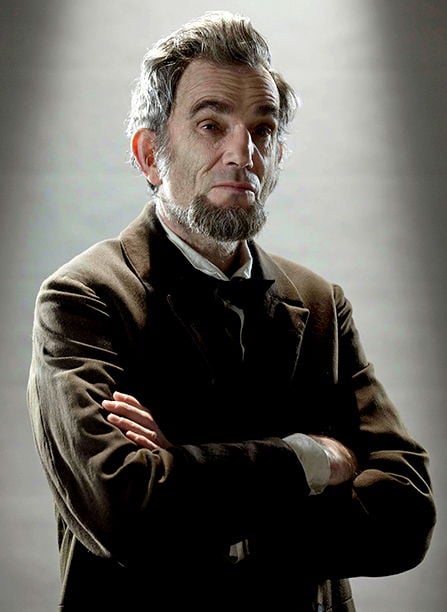
    Finally, Daniel Day-Lewis plays the nation’s 16th president, in Spielberg’s “Lincoln” (2012). He’s lent strong support by Sally Field as Mary Todd Lincoln, David Strathairn as Secretary of State William Steward, and Tommy Lee Jones, this time as Thaddeus Stevens.

    It’s a bold assessment, but Day-Lewis elevates “Lincoln,” the film, to greatness, with arguably one of the most amazing performances in cinematic history. Day-Lewis’ gentle but shrewd Man of Destiny would go to any lengths to hold the country together. Williams taps into America’s proud musical heritage, clearly influenced by Copland and the folksier side of Ives, to create a score of stirring nobility.

    I hope you’ll join me as we continue with our observance of John Williams’ 90th birthday. Williams’ scores will be represented through at least St. Patrick’s Day, on “Picture Perfect,” music for the movies. The presidents take precedence, this Saturday evening at 6:00 EST, on WWFM – The Classical Network and wwfm.org.


    PHOTOS: (clockwise from left) Day-Lewis as Lincoln; Hopkins as Nixon; poster for “JFK;” Hopkins as John Quincy Adams

  • Great Detective Movie Music

    Great Detective Movie Music

    This week on “Picture Perfect,” what do Sherlock Holmes, Hercule Poirot, Sam Spade, Dick Tracy, and Inspector Clouseau have in common? Get clued in, with music from movies about the great detectives.

    Billy Wilder’s “The Private Life of Sherlock Holmes” (1970) is an unusually melancholy meditation from a director often celebrated for his hard-edged comedies. That’s not to say Wilder didn’t make more serious films, or that his Sherlock Holmes lacks humor or irreverence, but the lasting impression is somewhat elegiac.

    A good part of the reason was his request of composer Miklós Rózsa (who had written music for the director’s much earlier classics, “Double Indemnity” and “The Lost Weekend”) to adapt his own Violin Concerto, a recording of which Wilder had played incessantly during pre-production. The heart-rending slow movement, especially, appears prominently, and mirrors Holmes’ sense of isolation, to say nothing of his retreats into music and drug addiction.

    The great Albert Finney memorably portrayed Agatha Christie’s fastidious detective, Hercule Poirot, in “Murder on the Orient Express” (1974). The first and best of the all-star Christie thrillers, this one featured, among others, Lauren Bacall, Martin Balsam, Ingrid Bergman, Sean Connery, John Gielgud, Anthony Perkins, Richard Widmark, and Michael York. Bergman’s performance was recognized with an Academy Award for Best Supporting Actress.

    The catchy score, by Richard Rodney Bennett, was also nominated, but the Oscar that year went to Nino Rota and Carmine Coppola, for their music for “The Godfather, Part II.”

    Warren Beatty’s amusing homage to comic strip hero “Dick Tracy” (1990) is worthwhile for its starry cameos, sharp production design, and retro score by Danny Elfman. Elfman’s love theme sounds as if it could have been written by any number of composers from Hollywood’s golden age, all under the influence of George Gershwin.

    Lending a touch of noir, Humphrey Bogart plays private dick Sam Spade, in John Huston’s adaptation of Dashiell Hammett’s “The Maltese Falcon” (1941). Bogart, at his hardboiled best, is bolstered by a game supporting cast, including Mary Astor, Peter Lorre, Sidney Greenstreet, and Elisha Cook, Jr.

    The music is by Adolph Deutsch, one of the less remembered names of Hollywood’s heyday, although he scored such enduring films as “Father of the Bride,” “Little Women” (1949), and “Some Like It Hot.” He also provided background music for the big screen adaptation of “Oklahoma,” and conducted the orchestra in musicals like “Seven Brides for Seven Brothers” and “Annie Get Your Gun.”

    Finally, to wrap things up on a lighter note, we’ll enjoy a potpourri assembled from the “Pink Panther” comedies of Blake Edwards. Peter Sellers plays the bumbling Inspector (later Chief Inspector) Clouseau. The insinuating, breezy, and “cool” scores are by Henry Mancini.

    I hope you’ll join me for this hour with the great detectives, on “Picture Perfect,” music for the movies. To miss it would be a crime, this Saturday evening at 6:00 EST, on WWFM – The Classical Network and wwfm.org

  • Thanksgiving Movie Music on WWFM

    Thanksgiving Movie Music on WWFM

    IT’S A THANKSGIVING MIRACLE!

    Today’s membership drive wrapped up a little early – which means that “PICTURE PERFECT” is on the air!! Pull up a chair and join me for a Thanksgiving feast of Americana film scores.

    None other than Aaron Copland wrote the music for a big screen adaptation of Thorton Wilder’s Pulitzer Prize winning play “Our Town.” The composer was at the height of his “populist” period. “El Salón México” and “Billy the Kid” had already been written, and “Fanfare for the Common Man,” “Lincoln Portrait,” “Rodeo” and “Appalachian Spring” would follow within just a few years. Clearly, there was no better choice in capturing the essence of small-town America.

    The concert version of “Our Town” has been in circulation for decades, but it was only in 2011 that a complete recording of the score was made available, briefly, as a digital download.

    Gary Cooper and Dorothy McGuire star in “Friendly Persuasion” (1956), based on the novel by Jessamyn West. The film’s portrayal of family and the resolution of moral conflict, as pacifist Quakers deal with issues both big and small – from the American Civil War, to the introduction of a “sinful” musical instrument into the household – make “Friendly Persuasion,” in my opinion, a good choice for this time of year.

    The film was up for six Oscars, with Dimitri Tiomkin’s score nominated twice. The title song went on to become the popular hit “Thee I Love.” Only Dimitri Tiomkin would use balalaikas to depict Quaker life!

    “Witness” (1985) may seem like an unusual choice for Thanksgiving, with its themes of police corruption and violence, but when honest cop Harrison Ford goes on the lam, he experiences the “plain” lifestyle of a close-knit Amish community. The highlight of Maurice Jarre’s score is a sequence called “Building the Barn,” in which the community comes together to raise a barn for a newly married couple.

    Finally, we’ll hear selections from “Plymouth Adventure” (1952), with its depictions of William Bradford, John Alden, Miles Standish and Priscilla Mullins. Spencer Tracy stars as the cynical captain of The Mayflower, Gene Tierney is his forbidden love interest, Van Johnson appears as Alden, and Lloyd Bridges is the first mate.

    The music is by Miklós Rózsa, who already, at this stage of his career, was MGM’s go-to composer for historical drama. Seven years later, Rózsa would take home his third Academy Award for his classic score to “Ben-Hur.”

    It’s never too early to give thanks. There’s not a turkey among them, on “Picture Perfect,” music for the movies, this Saturday evening at 6:00 EST, on WWFM – The Classical Network and wwfm.org!


    Martha Scott and William Holden in “Our Town” (1940)

  • John Williams’ J

    John Williams’ J

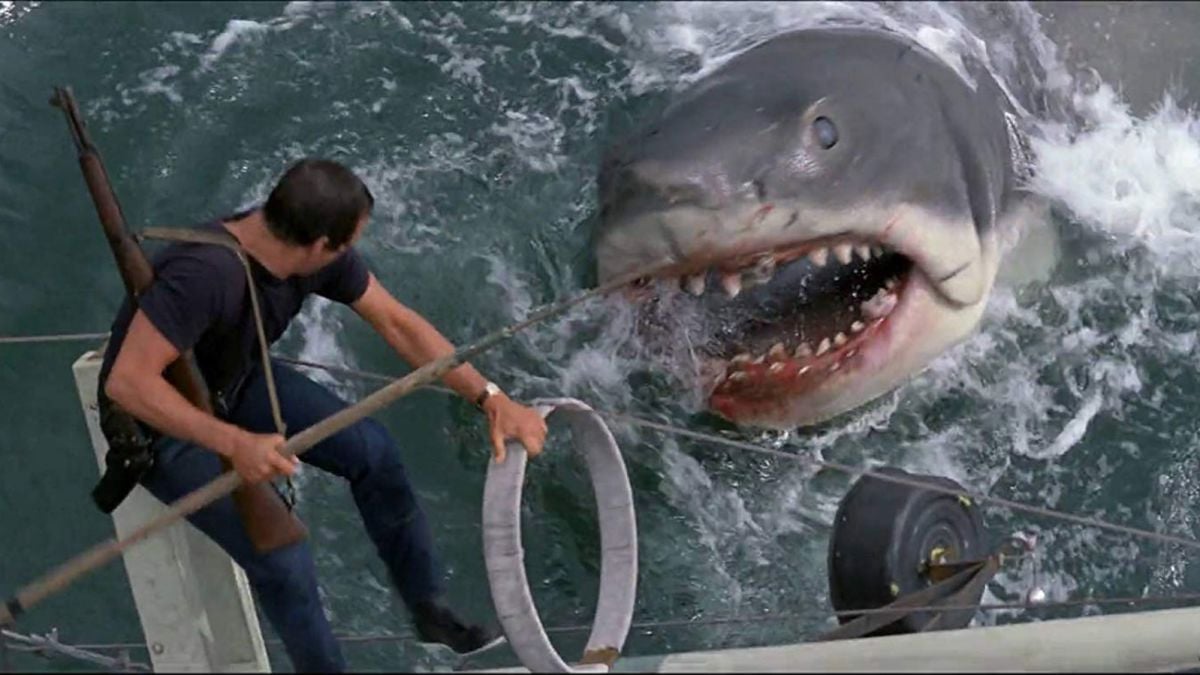
    At last, an article about John Williams’ music for “Jaws” that looks beyond the shark theme. (Follow the link below.)

    Granted, that two-note motive is destined for immortality, memorable in a way few other movie themes are, and will likely outlive anything else the composer ever wrote – even “Star Wars,” if you can get your head around that – but there is so much more to this masterful score.

    The determined “shark cage” fugue, the high-spirited nautical theme, the neo-Baroque tourist music, all serve to elevate “Jaws” and lend it dimension. In other hands, this might have played as a straightforward horror film. Spielberg’s suspense-thriller is transformed in large part through its music into an exhilarating summer entertainment – a genuine good time at the movies.

    Roy and I will discuss this seminal summer blockbuster, to kick off the Fourth of July weekend, on the next Roy’s Tie-Dye Sci-Fi Corner, livestreamed on Facebook, this Friday evening at 7:00 EDT.

    Be forewarned: the article at the link contains spoilers, and so will our show. (Also, it is advisable to avoid all sequels!)

    An appreciation of John Williams’ “Jaws” here:

    https://www.rogerebert.com/features/revisiting-john-williams-score-for-jaws-45-years-later

    A definite high point from the film (you might want to watch the movie first, if you haven’t seen it):

    Alas, Williams couldn’t save “Jaws 2,” but it was not for want of trying:

  • Celebrating Steiner and Tiomkin Movie Music Legends

    Celebrating Steiner and Tiomkin Movie Music Legends

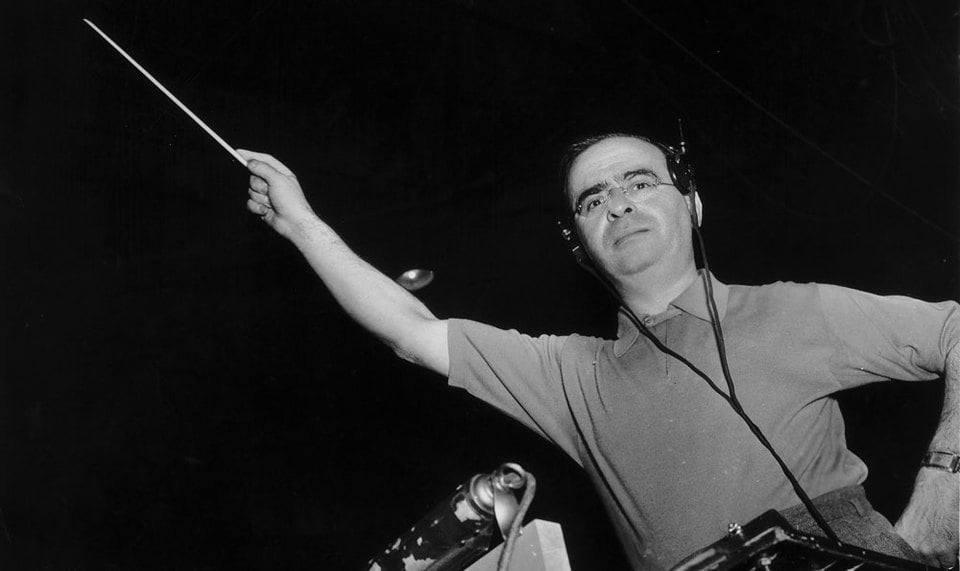
    On Friday, May 7, the classical music world celebrated the dual birthdays of Johannes Brahms and Peter Ilych Tchaikovsky. But for those who care about film music, there’s May 10 – the anniversary of the births of Max Steiner and Dimitri Tiomkin.

    Steiner (1888-1971), the literal godson of Richard Strauss, was instrumental in transplanting the sound of fin de siècle Vienna to the realm of cinematic dreams. He composed over 300 film scores for RKO and Warner Brothers, earning 24 Academy Award nominations and winning three – for “The Informer,” “Now, Voyager” and “Since You Went Away” – though he is unquestionably better remembered today for his work on “King Kong,” “Gone with the Wind” and “Casablanca.”

    Tiomkin (1894-1979), a pupil of Alexander Glazunov, was born in Ukraine. He settled in the United States, where he composed music for films in all genres, though in the 1950s he enjoyed particular success writing for Westerns, including the Academy Award-winning “High Noon.” When asked why this would be the case, that a composer born halfway around the world would have such a command of this distinctly American idiom, Tiomkin replied, “A steppe is a steppe is a steppe.”

    Tiomkin was honored with four Academy Awards – three for Best Original Score (for “High Noon,” “The High and the Mighty” and “The Old Man and the Sea”) and one for Best Original Song (“The Ballad of High Noon”).

    Here’s a transcript of his acceptance speech, delivered after being handed the Oscar for “The High and the Mighty” in 1955:

    “Lady and gentlemen, because I working in this town for twenty-five years, I like to make some kind of appreciation to very important factor what make me successful to lots of my colleagues in this town. I’d like to thank Johannes Brahms, Johann Strauss, Richard Strauss, Beethoven, Mozart, George Gershwin, Jerome Kern, Wagner, Tchaikovsky, Rimsky-Korsakov. Thank you.”

    You can watch it here:

    Though Steiner and Tiomkin were both very well-connected in the wider musical world, comparatively speaking, neither left very much in the way of classical concert music. In 2019, Intrada Records put out a diverting 2-CD set of Tiomkin’s brightly-scored ballet music, dances composed in Paris for his wife, Albertina Rasch, in 1927-1932, prior to his work in film. It’s good mid-morning music, but would also be wonderful for afternoon drive-time – if only I had a live air shift! You can sample some of it by following the link. Already detectable is Tiomkin’s trademark snarling brass, in a number titled “Mars” (the second track in this YouTube playlist):

    In 2020, Oxford University Press published a book by Steven C. Smith, “Music by Max Steiner: The Epic Life of Hollywood’s Most Influential Composer.” Read my impressions of this authoritative biography, unbelievably the first full-length treatment of Steiner’s life and achievements, here. Then get yourself a copy!

    Also last year, while I was twiddling my thumbs, waiting to get back to work, I put together a Steiner-Tiomkin crossword puzzle. The clues not only allude to specifics of their respective lives and careers, but they should also be of ample interest, I hope, to classic movie buffs. So even if you’re convinced you don’t know a lot about music, do check it out if, like me, you happen to watch a lot of movies from the ‘30s, ‘40s, and ‘50s.

    To fill out the puzzle, follow the link and select “solve online” at the bottom of the page. You’ll then be able to type directly into the squares. Once you feel you’ve exhausted the puzzle, you’ll find the solutions by clicking on “Answer Key PDF.”

    https://www.armoredpenguin.com/crossword/Data/2020.05/1007/10071219.977.html?fbclid=IwAR3_LH48DW_z4Zy7RZmD8-lryFTVOKybs6Kb28ZccpCfAXjQkTUYXR8Vknw

    Happy birthday to Max Steiner and Dimitri Tiomkin, two composers who enriched generations of movie lovers by keeping it “reel!”

    Steiner’s “Now, Voyager”

    Tiomkin’s “Land of the Pharaohs”

    A great, two-part interview with Steiner:

    Part 1 https://www.youtube.com/watch?v=eQuNnzH6_g8
    Part 2 https://www.youtube.com/watch?v=jmJLTn_6UOY

    The official Dimitri Tiomkin website:

    Welcome to DimitriTiomkin.com


    PHOTOS: Steiner conducts (top); Tiomkin composes

Tag Cloud

Aaron Copland (92) Beethoven (95) Composer (114) Film Music (120) Film Score (143) Film Scores (255) Halloween (94) John Williams (185) KWAX (229) Leonard Bernstein (100) Marlboro Music Festival (125) Movie Music (135) Opera (198) Philadelphia Orchestra (88) Picture Perfect (174) Princeton Symphony Orchestra (106) Radio (87) Ralph Vaughan Williams (85) Ross Amico (244) Roy's Tie-Dye Sci-Fi Corner (290) The Classical Network (101) The Lost Chord (268) Vaughan Williams (103) WPRB (396) WWFM (881)

DON’T MISS A BEAT

Receive a weekly digest every Sunday at noon by signing up here


RECENT POSTS