Tag: Movie Scores

  • Oscar Weekend Snubbed Scores Spotlighted

    Oscar Weekend Snubbed Scores Spotlighted

    Does anyone even know it’s Academy Awards weekend? Has anyone actually seen any of the movies? Or at least heard of most of them? No doubt about it, this will be Oscar’s strangest year.

    Since I’m still cut off from studio broadcast, thanks to COVID-19, we’ll have to forgo my annual three-hour celebration of the movies – a festive playlist made up of music associated with Academy Award winning classics, alongside selections from the current year’s nominees.

    Be that as it may, Oscar doesn’t always get it right.

    As something of a stopgap, this week on “Picture Perfect,” we’ll revisit some enduring and culturally significant movies, most of which were honored in other categories, but were denied the statuette for Best Original Score.

    Tune in for selections from “Citizen Kane” (Bernard Herrmann), “The Magnificent Seven” (Elmer Bernstein), “The Big Country” (Jerome Moross), and “Gone with the Wind” (Max Steiner).

    One doesn’t need a statuette to be a winner. I hope you’ll join me for “They Been Robbed,” on “Picture Perfect,” music for the movies, this Saturday evening at 6:00 EDT, on WWFM – The Classical Network and wwfm.org.


    If you’re really jonesing for the glories of Oscars past, last year’s Oscar Party is still available as a webcast – though of course, last year’s nominees are no longer current. Make yourself a bowl of popcorn and listen here:

    https://www.wwfm.org/post/picture-perfect-february-7-oscar-party-2020

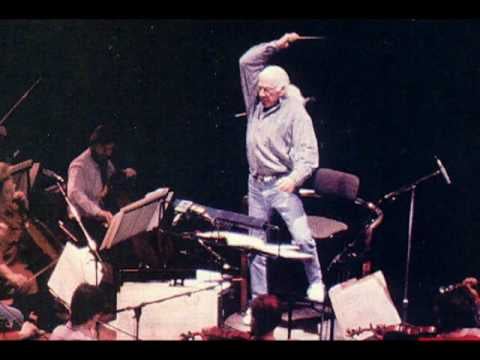
  • Jerry Goldsmith A Shadowed Genius

    Jerry Goldsmith A Shadowed Genius

    He may have been the older composer (by three years), but if we’re to go by dates on a wall calendar, Jerry Goldsmith was born two days after John Williams. And despite being one of the greatest film composers of his age, he never could wholly escape Williams’ shadow.

    Blame it on the blockbusters.

    By the late ‘70s, once the studios got their heads around the unprecedented box office of “Jaws” and “Star Wars,” Goldsmith started to get tossed either projects Williams passed on, or cheap knockoffs of Williams’ successes.

    Williams got “Star Wars;” Goldsmith got “Star Trek: The Motion Picture.” Williams got “Superman;” Goldsmith (first choice, but he had to turn it down) got “Supergirl.” Williams got “Raiders of the Lost Ark;” Goldsmith got “King Solomon’s Mines” (the Richard Chamberlain version). Williams got “E.T. The Extra-Terrestrial;” Goldsmith got “Baby: The Secret of the Lost Legend.”

    Don’t get me wrong: Goldsmith was an amazing composer, and his talents were matched to plenty of enduring classics: “The Sand Pebbles” (1966), “The Blue Max” (1966), “The Flim-Flam Man” (1967), “Planet of the Apes” (1968), “Patton” (1970), “Papillon” (1973), “Chinatown” (1974), “The Wind and the Lion” (1975), “MacArthur” (1977), “The Boys from Brazil” (1978), “The Great Train Robbery” (1979), “Alien” (1979, butchered in the sound editing), and numerous incarnations of “Star Trek” (beginning in 1979).

    He could also write like the wind. He had just ten days to compose and record a replacement score for “Chinatown” (after Phillip Lambro’s original was rejected). The result is one of the most effective scores of the 1970s.

    Sadly, the movies got weaker. In 1997, he stepped in for Randy Newman on “Air Force One.” Does anyone even care?

    By his final decade, he was stuck writing music for garbage like “The Mummy” (1999), “The Haunting” (1999), and “Looney Tunes: Back in Action” (2003). A notable exception was “L.A. Confidential” (1997), but rarely were his later projects up to his talent.

    Goldsmith himself expressed frustration at his music being drowned out by ever more-elaborate sound effects, which is why his scores became more streamlined – and less memorable – in the ‘90s. He would have lost his mind in these days of laptop editing, when films can be trimmed and shuffled within an inch of their lives, right up until the day of distribution.

    But he was one of the last of the greats, and he lived through a great era, so we certainly have enough to cherish.

    For television, he wrote music for “Dr. Kildare,” “The Twilight Zone,” “Gunsmoke,” “The Man from U.N.C.L.E.,” “The Waltons,” and “Barnaby Jones.” He was the recipient of five Emmy Awards.

    Incredibly, despite EIGHTEEN nominations, he was honored with but a single Oscar, for his influential score to “The Omen” (1976). Goldsmith died in 2004, at the age of 75. If he were to come back today, he would mop the joint with all the Hans Zimmers of the world.

    Happy birthday, Jerry Goldsmith. I sure does miss you.


    The Man from U.N.C.L.E.:

    Planet of the Apes:

    Patton:

    Chinatown:

    The Wind and the Lion:

    The Omen:

    Star Trek: The Motion Picture:

  • Musical Stocking Stuffers A Movie Christmas

    Musical Stocking Stuffers A Movie Christmas

    This week on “Picture Perfect,” join me for an hour of musical stocking stuffers.

    We’ll begin with selections from “Miracle on 34th Street,” from 1947. Maureen O’Hara, Natalie Wood, and Edmund Gwenn star. Gwenn won an Academy Award for his portrayal of Kris Kringle. Cyril J. Mockridge’s alternately bustling and sentimental score employs “Jingle Bells” as its Santa motif.

    Then, drawing from the countless adaptations of Charles Dickens’ “A Christmas Carol,” we’ll turn to a 1938 version, featuring Reginald Owen as Scrooge. Franz Waxman’s music draws on traditional carols and, when Scrooge undergoes his Christmas morning transformation, a sly riff on Georges Bizet’s “Jeux d’enfants.”

    For those who enjoy a little carnage with their Christmas, we’ll also hear selections from “Home Alone.” The 1990 film, in which diminutive Macaulay Culkin subjects would-be burglars Joe Pesci and Daniel Stern to a battery of cartoon violence, features a candy-coated score by John Williams.

    There are those who consider “Ben-Hur” to be among the greatest film scores of all-time. From Miklós Rózsa’s work on the 1959 Oscar champ, we’ll hear music from the film’s opening Nativity sequence.

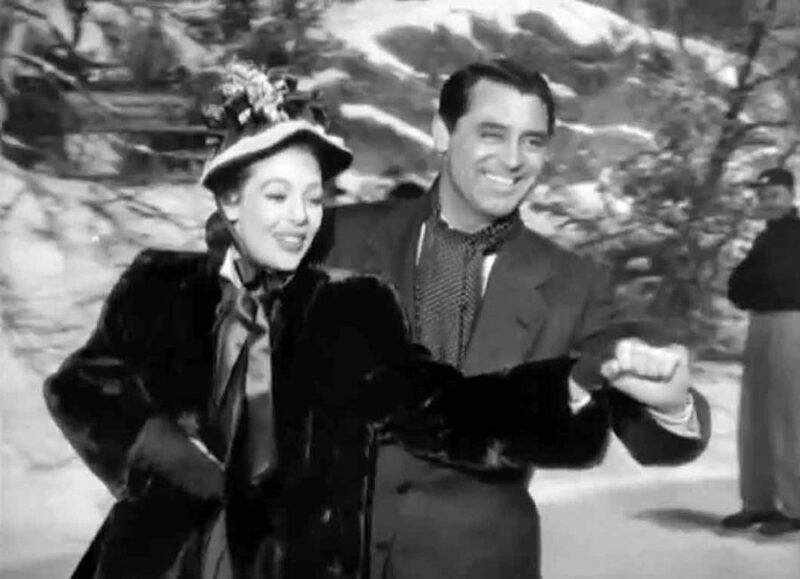
    Then, Cary Grant plays an angel who answers the prayers of David Niven, attempting to raise funds for a new cathedral, in “The Bishop’s Wife.” Along the way, Grant also happens to fall for Lauretta Young. Monty Woolley, Elsa Lanchester, and James Gleason add to the whimsy. This charming 1947 romantic fantasy sports a memorable score by Hugo Friedhofer.

    Finally, any sentiment in “The Holly and the Ivy,” from 1952, is hard-earned. Ralph Richardson plays the clueless patriarch of a troubled family, a village parson more concerned with his parishioners than those living under his own roof. When the family reunites for Christmas, longstanding frictions continue to wear, but they are gradually resolved. Malcolm Arnold’s score gives little hint of the film’s inherent drama. However, he does provide some boisterous arrangements of some familiar carols.

    I hope you’ll join me for a cinematic Christmas this week, on “Picture Perfect,” music for the movies. Yule be glad you did, this Saturday evening at 6:00 EST, on WWFM – The Classical Network and wwfm.org.

  • Max Steiner: Hollywood’s Epic Composer

    Max Steiner: Hollywood’s Epic Composer

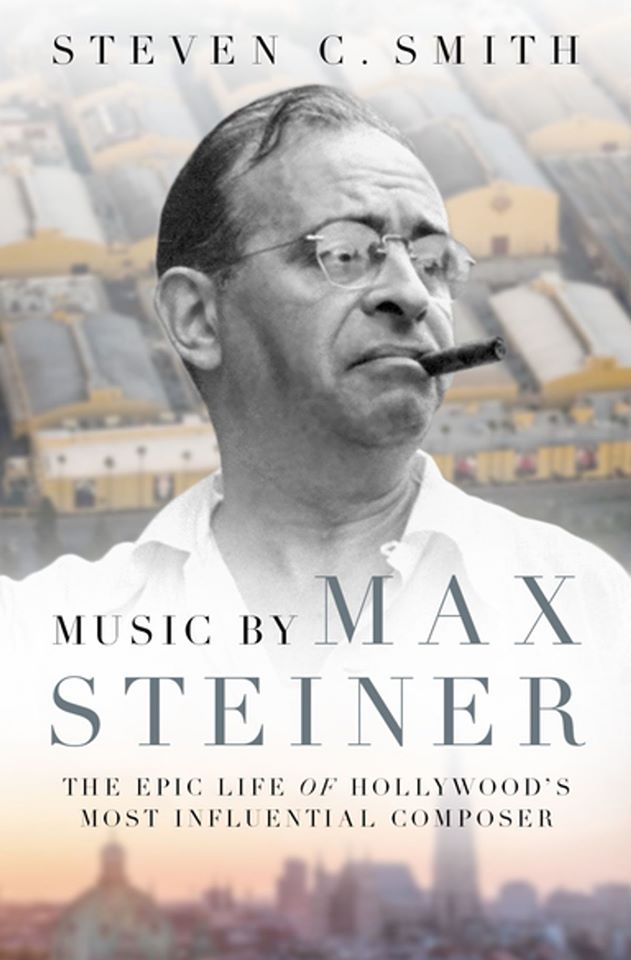
    It’s an unfortunate coincidence that I happened to finish this book on the anniversary of Olivia de Havilland’s death. De Havilland was one of the dozens of subjects interviewed or researched for this authoritative biography of Max Steiner, unbelievably the first full-length treatment of one of the movies’ most celebrated composers.

    Steiner might be said to have had one foot in Vienna and one on the Great White Way. His grandfather, for whom he was named, was a formative influence on the development of Viennese operetta, and his father, also very much involved with the theater, built an entertainment city within the city, which included among its wonders the Riesenrad, the giant Ferris wheel used so memorably in “The Third Man.” In the New World, Steiner worked as music director for the Gershwins, Jerome Kern, and others. But it was in Hollywood, at the dawn of talking pictures, that he was to make his greatest mark.

    Steiner pioneered the concept of the Wagnerian-Straussian underscore, in films such as “Bird of Paradise,” “King Kong,” and “She,” an approach that would set the industry standard for decades. Indeed, many of Steiner’s technical, if not musical, innovations are still employed in the process of adding music to film.

    You’d think that, for being such a powerful and lucrative asset to RKO, Warner Brothers, and David O. Selznick (for whom he scored “Gone with the Wind”), Steiner would have been better appreciated, even seen as indispensable – and to an extent he was, whenever a prestige picture needed a little added luster, or a middling one some emergency TLC.

    Sadly, the studio system began to crumble sooner than one might think. Already in the late ‘40s, contracts were not being renewed, and Steiner, in common with many of the legendary actors and directors he had worked with, all at once found himself a free agent. This meant that he had to scramble for much of his later work.

    Also, despite being well paid – or well enough, by the day’s standards – he had all sorts of drains on his income. An appreciation for the good life, several alimonies, the support of his parents, unchecked generosity, and a profligate child left him scrambling. In fact, he was nearly always saddled with enormous debt and literally working around the clock to meet impossible deadlines. This continued until a late-in-life miracle, the theme to “A Summer Place” becoming an unexpectedly popular hit, brought him financial security.

    But life is strife, and Steiner still had his share of personal miseries. He struggled with failing eyesight for his entire adulthood (he scored at least one of his films while legally blind, though thankfully cataract surgery brought him back to the point where he could at least see), and a rocky relationship with his son led the kind of heartbreak that is every parent’s nightmare.

    Music remained a refuge. Steiner was a man who clearly took joy in the act of composing, and he was a master at solving the puzzle of how to match just the right kind of music to a particular kind of film. His home life could be volatile, the hours were certainly terrible, but he kept up a playful, almost child-like disposition. His scores are peppered with outrageous puns and side-notes to his orchestrators, many of them of an astonishingly bawdy nature.

    While some of his music may seem a little old fashioned today, at times mawkish and even a little cartoon-like (“Mickey Mousing,” or matching music too closely to an onscreen action, was one of Steiner’s weaknesses), he was undeniably a force to be reckoned with. Personally, I still find his idiom highly attractive. There would be no “Star Wars” or “The Lord of the Rings” without Max Steiner.

    Steven C. Smith’s “Music by Max Steiner: The Epic Life of Hollywood’s Most Influential Composer” is published by Oxford University Press. The study is generously annotated, with a bibliography, for those of a scholarly bent, but also compellingly written, so as to satisfy the more casual reader. If you’re at all curious about the art of film scoring, or simply a classic movie buff – Steiner knew everyone from Johann Strauss II to Frank Sinatra – this book is for you.

    Smith is also the author of “A Heart at Fire’s Center: The Life and Music of Bernard Herrmann” (1991). Let’s hope it’s not another 30 years before he tackles Franz Waxman, Alfred Newman, or someone equally worthy!

    Oxford Academic (Oxford University Press)

  • Sherlock Holmes Movie Music Scores

    Sherlock Holmes Movie Music Scores

    The game is afoot! This week on “Picture Perfect,” it’s an hour of music from movies inspired by the world’s greatest detective.

    “Sherlock Holmes” (2009) features Robert Downey Jr. and Jude Law, in Michael Ritchie’s post-“Matrix” take on the master detective. While some of the film adaptations over the years may have glossed over the character’s physicality, Ritchie’s revisionist Holmes perhaps errs a mite too far in the other direction. Hans Zimmer wrote the music, he too going against received wisdom, and in the process coming up with one of his more interesting scores, if only for the quirky instrumentation, which includes a Hungarian cimbalom, accordion, fiddles and a broken pub piano.

    Perhaps it’s unfair to put Zimmer up against an old pro like Miklós Rózsa. Rózsa wrote the music for Billy Wilder’s melancholy portrait of the great detective, “The Private Life of Sherlock Holmes” (1970). Wilder requested that the composer adapt his lovely Violin Concerto for the project, a recording of which the director had listened to repeatedly during the writing of the screenplay. Rózsa and Wilder had previously collaborated on “Double Indemnity” and “The Lost Weekend.”

    The Sherlock Holmes comedy, “Without a Clue” (1988), represents a missed opportunity of sorts. The hope had been for Sean Connery to play Watson opposite Michael Caine’s Holmes, a longed-for reunion between the two who had worked so well together in “The Man Who Would Be King.” In the end, it was Ben Kingsley who assumed the role.

    The fun conceit that sets “Without a Clue” apart is that Holmes is the fictional creation of mastermind Watson, who in reality is the gifted crime-solver. Through necessity, Watson hires a second-rate actor to play the role of Holmes. Of course, the actor turns out to be a bumbling idiot. Henry Mancini provides the British Light Music style score, with a nod to Edmund White’s “Puffin’ Billy” (familiar stateside as the theme to “Captain Kangaroo”).

    Finally, the Steven Spielberg-produced “Young Sherlock Holmes” (1985) offers a conjectural origins story, including Holmes and Watson’s first meeting as teenagers (ignoring the particulars laid out by Arthur Conan Doyle in his stories, with Watson already a war veteran who had served in Afghanistan). It’s all for fun, though it’s unfortunate the filmmakers felt the need to interject ‘80s-style special effects, rather than simply trust in the inherent magic of the subject matter. “Young Sherlock Holmes” features the first photorealistic, fully computer-generated character (a stained glass knight). Also, some Indiana Jones B-movie antics involving an Egyptian cult seem especially out of place.

    Interestingly, the film’s screenwriter, Chris Columbus, went on to direct the first two Harry Potter films. By my recollection, “Young Sherlock Holmes,” with its boarding school setting, has some of that same feel.

    The music, by Bruce Broughton, is certainly buoyant and beautiful, in the best John Williams tradition. Broughton scored a handful of big screen hits, notably “Silverado” and “Tombstone,” though arguably it is in the medium of television that he’s made his greatest impact. Thus far, his work has been recognized with a record 10 Grammy Awards.

    It’s elementary, my dear Watson. Join me for “Picture Perfect,” this Friday evening at 6:00 EDT, on WWFM – The Classical Network and wwfm.org.

Tag Cloud

Aaron Copland (92) Beethoven (95) Composer (114) Film Music (120) Film Score (143) Film Scores (255) Halloween (94) John Williams (185) KWAX (229) Leonard Bernstein (100) Marlboro Music Festival (125) Movie Music (135) Opera (198) Philadelphia Orchestra (88) Picture Perfect (174) Princeton Symphony Orchestra (106) Radio (87) Ralph Vaughan Williams (85) Ross Amico (244) Roy's Tie-Dye Sci-Fi Corner (290) The Classical Network (101) The Lost Chord (268) Vaughan Williams (103) WPRB (396) WWFM (881)

DON’T MISS A BEAT

Receive a weekly digest every Sunday at noon by signing up here


RECENT POSTS