Tag: Movie Scores

  • Gilded Age Novels on Film A Picture Perfect Series

    Gilded Age Novels on Film A Picture Perfect Series

    The opening scene of Martin Scorsese’s “The Age of Innocence,” in which Newland Archer (Daniel Day-Lewis) first glimpses his cousin, Ellen Olenska, during a performance of Gounod’s “Faust,” was actually shot at the Academy of Music in Philadelphia. I remember the call for anyone with a tux to come down to the Academy so that they could fill out the balconies with extras. Sadly, I had to work (not that I owned a tux).

    “The Age of Innocence” is but one of the films we’ll be treating this week on “Picture Perfect,” as the focus will be on adaptations from novels of, or about, the Gilded Age. “The Gilded Age” was a term coined by none other than Mark Twain to describe the era extending roughly from the end of Reconstruction (following the Civil War) to the turn of the 20th century. He didn’t mean it as a compliment. A gilded age is one which conceals serious social problems beneath a veneer of gold.

    “The Heiress” (1949) was adapted from a play by Ruth and Augustus Goetz, which in turn was based on the Henry James’ novel, “Washington Square.” Olivia De Havilland is the “plain Jane” heiress of the title, Ralph Richardson her overbearing father, and Montgomery Clift, the adventurer who may or may not be out for her fortune. De Havilland won an Oscar for her portrayal, as did the music, by Aaron Copland.

    “The Age of Innocence” (1993) is based on a novel by one-time James correspondent and close friend, Edith Wharton. The book was published in 1920, but looks back to the 1870s, its story dealing with the impending marriage of an upper class couple and the appearance of a disreputable interloper who threatens their happiness. The title is an ironic play on the outward manners of New York society, in contrast to its inward machinations. The novel earned a Pulitzer Prize, the first Pulitzer awarded to a woman. The film was something of a curve ball from director Martin Scorsese, who made his name on meaner streets. Veteran composer Elmer Bernstein provided a lovely, Brahmsian score.

    “The Magnificent Ambersons” (1942) is based on another Pulitzer Prize winner, this time by Booth Tarkington, from 1918. The novel is part of trilogy that tells the story of the declining fortunes of three generations of an aristocratic Midwestern family, between the end of the Civil War and the early years of the 20th century. With industrialism on the rise, the Ambersons’ “old money” wealth and prestige wane.

    “Ambersons” became the basis for only the second film directed by Orson Welles. By that time, however, the fall-out from “Citizen Kane” caused the film to be removed from Welles’ control and re-cut by the studio, shaving a full hour off the original running time. It says something about the quality of the film that it yet remains in itself a magnificent achievement.

    The score was by Bernard Herrmann, CBS staff composer from Welles’ radio days. Herrmann had followed Welles to Hollywood to provide the music for “Citizen Kane.” Like the film, the score was drastically edited, with half the music removed. The famously irascible Herrmann, who had just written his Academy Award winning music for “The Devil and Daniel Webster,” was so angry that he threatened legal action if his name was not removed from the credits.

    The action of “Mr. Skeffington” (1944), based on a 1940 novel by Elizabeth von Arnim, begins at a point some consider the end of the Gilded Age, the eve of World War I. Bette Davis stars as a woman so enamored of her own beauty and the suitors it attracts that she fails to value the affections of the man who eventually becomes her husband. Mr. Skeffington, played by Claude Rains, is a Jewish financier, riding high in the ‘teens, but his fortunes change when he’s caught in Europe during the rise of the Nazis.

    Both Davis and Rains earned Academy Award nominations for their work. The vivid score is by Franz Waxman. Davis was going through a period of emotional turmoil during the filming, so that she was allegedly insufferable to everyone during the entire shoot. Someone finally poisoned her eyewash. When the police questioned the director, Vincent Sherman, he wished them good luck with their investigation. “If you asked everyone on the set who would have committed such a thing, everyone would raise their hand!”

    Certainly all that glitters is not gold, this week. We peel back the veneer of prosperity with “Novels of the Gilded Age,” on “Picture Perfect,” music for the movies, now in syndication on KWAX, the radio station of the University of Oregon!


    Remember, KWAX is on the West Coast, so there’s a three-hour difference for those of you listening in the East. Here are the respective air-times for all three of my recorded shows (with East Coast conversions in parentheses):

    PICTURE PERFECT, the movie music show – Friday on KWAX at 5:00 PM PACIFIC TIME (8:00 PM EST)

    SWEETNESS AND LIGHT, the light music program – ALL NEW! – Saturday on KWAX at 8:00 AM PACIFIC TIME (11:00 AM EST)

    THE LOST CHORD, unusual and neglected rep – Saturday on KWAX at 4:00 PM PACIFIC TIME (7:00 PM EST)

    Stream all three, at the times indicated, by following the link!
    https://kwax.uoregon.edu/

  • John Williams’ Genius Beyond the Screen

    I’m a little late in sharing this – the article ran yesterday – but I couldn’t agree more with the premise. Anyone who sneers at John Williams’ indelible themes doesn’t understand the full extent of his artistry, and those who continue to approach film music as mere grist for pops concerts (especially in “pops” arrangements) is doing film music at its best a serious disservice. I wish someone would have the guts to present extended passages from these scores without the images, so that listeners can appreciate more fully what the composer has achieved. Yeah, they’re not symphonies, but it takes a special kind of talent to make this type of music work as often as John Williams has. If there’s anyone else alive that can maintain this balancing act between the dramatically appropriate and musically satisfying as well as he does, I don’t know of it.

    The article is written by Frank Lehman, Associate Professor of Music at Tufts University. It’s refreshing to see an appreciation piece written by someone who understands the inner workings of the music and can actually express himself in musical terms. Too often, these kinds of articles are written by well-meaning fans, who don’t really possess a larger perspective or the necessary tools to communicate musically. Not to trash the fans. Williams is who he is he is, in large part, because of them. But if his music is to be taken seriously, we need people like Lehman.

    The article is interactive, with plenty of film and sound clips to illustrate the writer’s points. I wouldn’t want all newspaper articles to be done like this, but for a music piece, especially one about how music works with the movies, this was very well done. Great job, and a fun read, @[100059174186752:2048:The New York Times]!

  • Bette Davis Hollywood Icon on Picture Perfect

    Bette Davis Hollywood Icon on Picture Perfect

    Fasten your seat belts – it’s going to be a bumpy night!

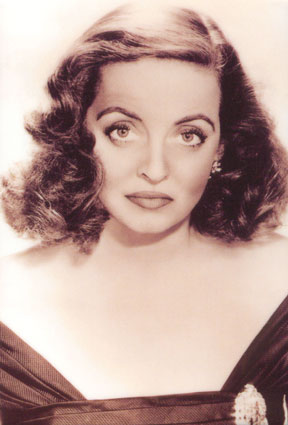
    This week on “Picture Perfect,” for Academy Awards weekend, the focus is on Bette Davis.

    A two-time Academy Award-winner, Davis was the first actor to receive ten nominations, five of them in consecutive years. She remains one of the most recognizable figures from Hollywood’s Golden Age.

    Enjoy an assortment of classic scores composed for her indelible films, including “Now, Voyager” (Max Steiner), “Mr. Skeffington” (Franz Waxman), “All About Eve” (Alfred Newman), and “The Private Lives of Elizabeth and Essex” (Erich Wolfgang Korngold).

    Davis’ wins came early – she received statuettes for “Dangerous” (1935) and “Jezebel” (1938) – but she turned in solid performances for pretty much her entire career. There is little about her style which doesn’t scream “ACTING!” So it seems only an appropriate choice for this Academy Awards weekend.

    It’s a grand throwback to an era when the big screen was filled by larger-than-life personalities. You can always bet on Bette, on “Picture Perfect,” music for the movies, this Saturday evening at 6:00 EST, on WWFM – The Classical Network and wwfm.org.

  • Epic Dragon Movie Scores on Picture Perfect

    Epic Dragon Movie Scores on Picture Perfect

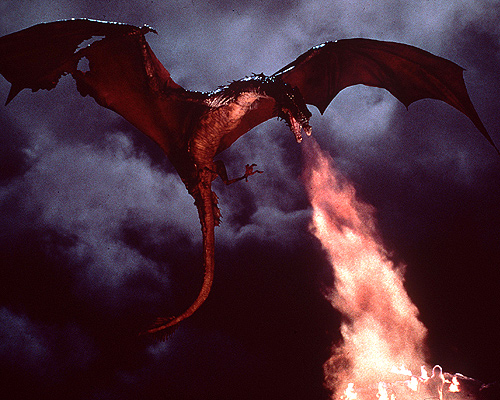
    Prepared to get all fired up. This week on “Picture Perfect,” there be dragons!

    Who doesn’t enjoy a good dragon movie? Unfortunately, there are so few of them. Inevitably, the stories fail to live up to the production design, the special effects, and, yes, often the music.

    One score that Universal Pictures definitely took to, like a dragon to its hoard, was that for “Dragonheart” (1996). The film starred Dennis Quaid, with Sean Connery supplying the voice of the film’s dragon, Draco. The studio loved the music so much that it was used in its movie trailers for years, so don’t be surprised if you recognize it, even if you never saw the film. The composer was Randy Edelman.

    Alex North wrote one of the finest dragon scores for “Dragonslayer” (1981). “Dragonslayer” caused a bit of stir on its release, since it was an early foray by Disney into more mature territory. The film featured shocking (for the time) onscreen immolations and dismemberment.

    The story is a fairly generic sorcerer’s apprentice tale. However, the dragon, Vermithrax Pejorative, easily carries the movie, which also features a late performance by Sir Ralph Richardson as the master sorcerer. The composer reused portions of his rejected score for Stanley Kubrick’s “2001: A Space Odyssey.” A number of critics, including Pauline Kael, praised the result.

    The film was nominated for an Academy Award for its outstanding visual effects, but lost out to “Raiders of the Lost Ark.” George Lucas’ Industrial Light and Magic provided the effects for both. In my humble assessment, Phil Tippett’s “go motion” dragon has yet to be surpassed.

    Many years later, Disney competitor DreamWorks released “How to Train Your Dragon” (2010), a wholly computer-animated film. The story is one of forbidden friendship between a young Viking and a scaly representative of his tribe’s hereditary foes. Despite the Viking characters and setting, the score has an overt Celtic flavor and the actors speak with a Scottish burr (!). The music was by John Powell.

    Purely animated films are often more successful in creating an organic, believable world than those supposedly “live action” films that place actors in front of green screens and surround them with video game pyrotechnics. Only director Peter Jackson could have devised a way to pad J.R.R. Tolkien’s classic bedtime story, “The Hobbit,” into three bloated installments, darkening the tone, tying it in with lore from Tolkien’s “The Silmarillion,” and self-consciously anticipating the events in the equally self-indulgent film versions of “The Lord of the Rings.”

    Howard Shore supplied the music for all of the Middle Earth movies. He was recognized with three Academy Awards – one for “The Fellowship of the Ring,” in 2001, and two for “The Return of the King” in 2003, for which he also provided the Best Original Song. We’ll hear a selection of his music for the second of the films inspired by “The Hobbit,” subtitled “The Desolation of Smaug” (2013). The part of the dragon, by the way, was voiced by Benedict Cumberbatch.

    Feel the burn! Fire your imagination and rekindle your affection for dragons, on “Picture Perfect,” music for the movies, this Saturday evening at 6:00 EST, on WWFM – The Classical Network and wwfm.org.

  • Oscars Decline A Longtime Viewer Bails

    Oscars Decline A Longtime Viewer Bails

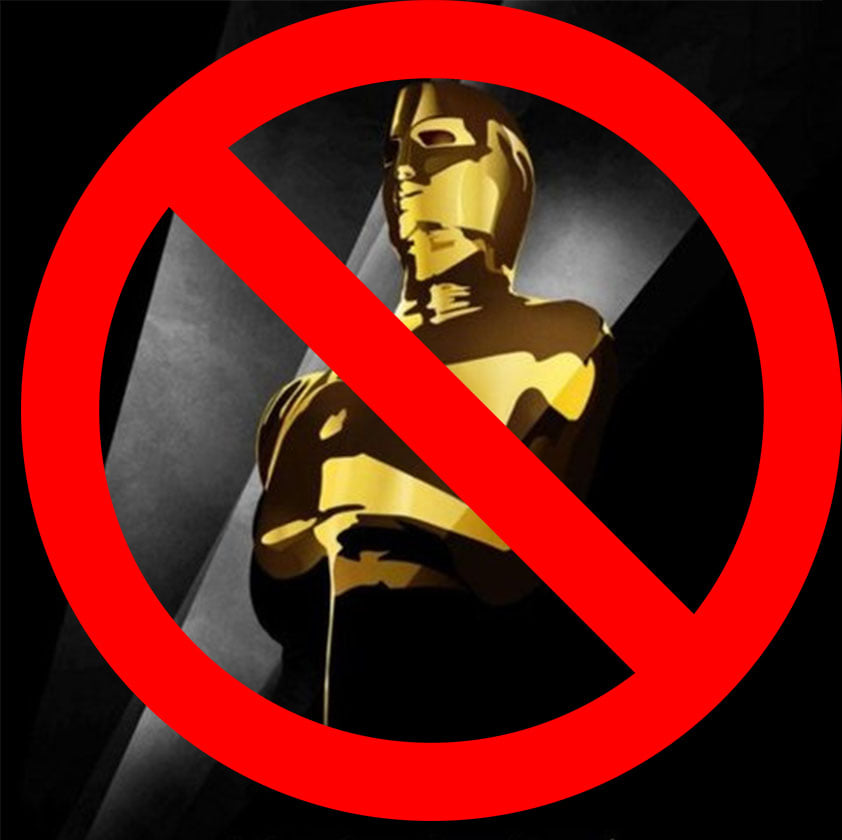
    As someone who’s watched the Academy Awards for probably 50 years, I’ve hung on by my fingernails for an awfully long time. Yet somehow, The Academy keeps finding ways to keep tilting the platform and smearing grease under the soles of my feet.

    The Oscars used to at least pay lip-service to the rich history of the industry it celebrates. There were montages assembled from celluloid classics. Iconic stars from yesteryear would take the stage to hand out important awards. And at the end of the night, the credits would roll over a medley of classic movie themes.

    Last year, they squeezed the “In Memoriam” segment, the very soul of the evening, like it was a sponge. This is often the most poignant part of the broadcast, as we’re reminded of all those who devoted decades of their lives to crafting the entertainment that, once upon a time, made our days brighter, or those who were taken from us too soon.

    Instead, each “memory” flashed by so quickly, a rapid succession of images edited with such manic intensity that each of them blew past before a number of them could even register, with jarring cuts that often didn’t even match the inappropriately up-tempo music bed. With the passing of the years, I get the impression that no one involved with the ceremony even knows who most of these people are anymore.

    I have to say, because of COVID and because of what I read about what to expect from the ceremony, for the first time in nearly a half-century, I didn’t even bother to watch. But I caught enough of it on the web the next day to be glad that I didn’t.

    I mean, the Academy has made plenty of boneheaded decisions over the years. Playing people off-stage, a huge pet-peeve of mine. The ones most likely to get played off are the technicians or documentarians or short-filmmakers whose passion and drive for excellence carried them from comparative obscurity to a few minutes at the podium. You know, the little people. The stars can ramble on as long as they want about anything.

    Also, relegating the humanitarian awards and honorary Oscars to a separate ceremony, and then distilling them to soundbites for broadcast. Inexcusably disrespectful. Someone who devotes his or her life to the business, and you’re going to have them accept their award in a room full of technicians? These are the people I want to hear more from, not less! They are the legends, and they have stories to tell.

    Since 2009, recipients dismissed as unworthy of inclusion in the actual, real-time broadcast include (among others) film historian Kenneth Brownlow, Roger Corman, Jean-Luc Godard, James Earl Jones, Angela Lansbury, Maureen O’Hara, Lalo Schifrin, ubiquitous casting director Lynn Stalmaster, Donald Sutherland, Cicely Tyson, Eli Wallach, and Lina Wertmuller. Any one of these is deserving of a sustained standing ovation at the actual, televised awards ceremony.

    This year, The Academy is doubling-down with the announcement, made last month, that certain key categories have been deemed too insignificant, again, to be included in the Academy Awards broadcast:

    Animated short
    Documentary short
    Film editing
    Makeup and hairstyling
    Live-action short
    Original score
    Production design
    Sound

    Some pretty egregious deletions. Editing, sound, production design, make-up and hairstyling, and score are essential components to the overall impact of a film, and music is right up near the top (along with editing).

    This is only the Academy’s latest slap against musicians. Having the orchestra piped-in from offsite was another indignity and a major annoyance for several years. And I thought Julia Roberts addressing Awards music director Bill Conti as “stick man” was embarrassing…

    Furthermore, the new ruling deprives me of the pleasure of rooting against Hans Zimmer.

    As we’ve learned from the Olympics, in the age of social media, our satisfaction is diminished as results are posted as soon as the announcement is made. Which means those “honored” in the hour before the broadcast will be common knowledge by the time of their fleeting mention during the show. It’s like trying to tape a ball game for later enjoyment and then hoping not to hear any mention of the final score.

    The omission of these categories from the ceremony is unconscionable. Yet there’s always plenty of time for inane segments involving people texting in to polls about their favorite jump-scare moments, or the host taking selfies in the audience, or ordering out for pizzas for the stars. If you’re going to waste valuable air time, at least make it entertaining and bring back Billy Crystal.

    And don’t get me started on the red carpet prelude, which makes me despair for the intelligence of the average viewer. Keep your vacuous chatter and tabloid BS out of my Oscars. What good sports these stars must be to be able to run this shallow gauntlet. Imagine if Glenn Ford had climbed out of a limo and someone tried to engage him in this kind of nonsense. It would take them all night to sweep the teeth out of the carpet.

    There has been a sad, inexorable decline in the quality of the ceremony in recent decades and a seeming shift in what the focus of the Oscars should be. I’m not one of these people that dismisses the Awards out of hand as being obnoxiously self-congratulatory, with a bunch of Hollywood types slapping each other on the back. I mean, that’s essentially what the ceremony was created for in the first place – to celebrate excellence in the industry. The television broadcast is an afterthought, or it should be.

    Instead, the Academy keeps casting overboard what it seems to regard as ballast, in a losing bid to retain its dwindling viewership. Forget about it, Academy. It’s over. Not only do you not have a clue about what made the ceremony enjoyable or worthwhile to anyone who loves the movies, but mainstream movies are so terrible now that the only films worth being lauded are those that have become difficult to chase down in a theater and which don’t have as broad an appeal to the average viewer.

    To be clear, I don’t believe one should pander to the audience, but maybe if the major studios still offered a wide variety of high-quality films in different genres, instead of twelve months a year of effing superhero movies and sci-fi dystopias, we wouldn’t be looking at a pallet piled high with Netflix or Amazon originals that only a small segment of the public has bothered seek out on cable, while the masses continue to flock to theaters to watch the latest, grimmest Batman or bloated James Bond.

    As a radio host, for the last number of years, I’ve done my best to use the lemons to make lemonade. Academy Awards weekend became an excuse to celebrate Oscar history, as I continued to program memorable film scores from many of the screen’s great classics. But as the years pass, and one mediocre honoree bleeds into another, that vein is getting smaller and smaller.

    Not having the freedom to do that kind of show anymore, going forward, I choose to celebrate not by watching the Academy Awards, but by ordering a pizza, loading up a playlist of classic film scores for my own enjoyment, and then working through a pile of DVDs of some of my favorite Oscar-decorated films.

    In short, so long, Academy. Thanks for the memory.

Tag Cloud

Aaron Copland (92) Beethoven (95) Composer (114) Film Music (120) Film Score (143) Film Scores (255) Halloween (94) John Williams (185) KWAX (229) Leonard Bernstein (100) Marlboro Music Festival (125) Movie Music (135) Opera (198) Philadelphia Orchestra (88) Picture Perfect (174) Princeton Symphony Orchestra (106) Radio (87) Ralph Vaughan Williams (85) Ross Amico (244) Roy's Tie-Dye Sci-Fi Corner (290) The Classical Network (101) The Lost Chord (268) Vaughan Williams (103) WPRB (396) WWFM (881)

DON’T MISS A BEAT

Receive a weekly digest every Sunday at noon by signing up here


RECENT POSTS