Tag: Movie Soundtracks

  • Viking Movie Music Swords Fjords and Soundtracks

    Viking Movie Music Swords Fjords and Soundtracks

    We’ve got the need for mead!

    This week on “Picture Perfect,” it’s an hour of swords and fjords, as we travel north for music from movies about the Norsemen.

    In “The Long Ships” (1963), two Viking brothers, played by the unlikely pair of Richard Widmark and Russ Tamblyn, make off with a king’s funeral ship – and the king’s daughter – as they set sail on a quest for the fabled “Mother of Voices,” an enormous solid gold bell – also coveted by a Moorish prince, played by the late Sidney Poitier. Needless to say, camp value is high. The music for this British-Yugoslavian production is by the Serbian composer Dusan Radic.

    “Prince Valiant” (1954), based on the enduring comic strip by Hal Foster, is set in the days of King Arthur, though Val himself is a Viking prince of the kingdom of Scandia. And indeed Vikings play an important role in the film. Victor McLaglen is Val’s Viking pal Boltar, Janet Leigh is Princess Aleta, James Mason the villainous Sir Brack, and Sterling Hayden a ridiculous Gawain. Robert Wagner dons the signature page-boy haircut.

    The score is every bit as vivid as the film’s Technicolor. We’ll hear selections from a very special recording, with the composer himself, Franz Waxman, conducting.

    Michael Crichton’s 1976 novel, “Eaters of the Dead,” presents an unlikely, fish-out-of-water alliance, between historic Persian ambassador of the 10th century, Ahmad ibn Fadlan, and a band of Vikings. They overcome their cultural differences to face off against the Wendol, humanoid creatures who periodically emerge from the mist to feed on human flesh.

    Crichton’s story was filmed in 1997 and ultimately released as “The 13th Warrior” (1999), with Antonio Banderas as Ibn Fadlan. The production was plagued by misfortune. The original director, John McTiernan, who found success with “Die Hard,” was fired for running over-budget, and Crichton himself was brought in to re-shoot a number of the scenes. Nevertheless, the film proved to be a box office failure. But any movie to feature a Jerry Goldsmith score – and Vikings! – can’t be all bad.

    The legendary Jack Cardiff, who actually directed “The Long Ships,” provided the stunning cinematography for “The Vikings” (1958). The film stars Kirk Douglas, Tony Curtis, Janet Leigh, and Ernest Borgnine. Although unintentionally amusing on several levels, “The Vikings” is highly regarded for its attention to detail and stabs at historical accuracy – particularly in regard to its Viking dragon boats.

    Also impressive is the haunting score by Mario Nascimbene, which we’ll hear in a digital re-recording, issued on the Prometheus Records label, featuring the City of Prague Philharmonic Orchestra and Chorus, conducted by Nic Raine. The recording is like mead from Valhalla.

    I hope you’ll join me for an hour of runes and tunes. It’s the definitive mix-tape for your dragonship, on “Picture Perfect, music for the movies, now in syndication on KWAX, the radio station of the University of Oregon!


    Remember, KWAX is on the West Coast, so there’s a three-hour difference for those of you listening in the East. Here are the respective air-times for all three of my recorded shows (with East Coast conversions in parentheses):

    PICTURE PERFECT, the movie music show – Friday on KWAX at 5:00 PM PACIFIC TIME (8:00 PM EST)

    SWEETNESS AND LIGHT, the light music program – ALL NEW! – Saturday on KWAX at 8:00 AM PACIFIC TIME (11:00 AM EST)

    THE LOST CHORD, unusual and neglected rep – Saturday on KWAX at 4:00 PM PACIFIC TIME (7:00 PM EST)

    Stream all three, at the times indicated, by following the link!
    https://kwax.uoregon.edu/

  • Film Noir: Shadows, Style, and Soundtracks

    Film Noir: Shadows, Style, and Soundtracks

    We haven’t even emerged from the midwinter holidays yet (tomorrow is Epiphany), but already, for my first show of the new year, the shadows are very long indeed.

    This week on “Picture Perfect,” we revisit the world of film noir, a genre notoriously slippery to define, but easy to know when you see it – with its long shadows and moral ambiguities; cock-eyed camera angles and snappy repartee; isolation and innuendo. It’s a genre where a pair of gams is an invitation to the gallows; where a man’s best friend – and sometimes his worst enemy – is his Colt .38; where only cigarettes and bourbon can ease the pain.

    The labyrinthine mystery at the heart of “The Big Sleep” (1946) is so disorienting, even the book’s author, Raymond Chandler, couldn’t tell whodunit. Who cares? Humphrey Bogart and Lauren Bacall get some more steamy dialogue to satisfy fans of “To Have and Have Not,” and there’s plenty of Bogey pounding the pavement and tossing off tart one-liners in pursuit of the truth. But my favorite scene involves Dorothy Malone, who runs the hottest bookstore in town. Whenever there are gallows to be built or gangsters to be beaten, Warner Brothers could be counted on to assign Max Steiner.

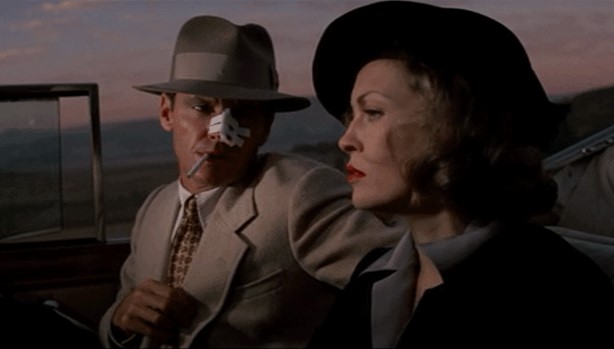
    “Chinatown” (1974) is one of the best of the neo-noirs of the 1970s. This time, Jack Nicholson plays private dick J.J. Gittes, who takes on a seemingly routine case that begins to spiral out of control. When producer Robert Evans rejected Philip Lambro’s original score, Jerry Goldsmith stepped in as a last-minute replacement. The composer was hired with the understanding that he had only ten days to write and record new music. For his effort, Goldsmith received an Academy Award nomination.

    The Coen Brothers clearly love noir, from their first feature, “Blood Simple,” to their Academy Award winners, “Fargo” and “No Country for Old Men,” to their unlikely and absurdly entertaining reimagining of “The Big Sleep,” “The Big Lebowski.” “Miller’s Crossing” (1990) was one of the more underappreciated of these. The film follows the well-worn device of an anti-hero playing two sides off of one another, until he is the last one standing – shades of Dashiell Hammett’s “Red Harvest,” with a healthy dose of “The Glass Key” thrown in, for good measure. The Irish-inflected score is by Coen regular Carter Burwell.

    Before he became stereotyped as a composer for epic films like “Ben-Hur,” “King of Kings,” and “El Cid,” Miklos Rozsa was the king of noir, providing scores for genre classics such as “Double Indemnity” and “The Strange Love of Martha Ivers.” We’ll hear a suite assembled from three such projects: “Brute Force” (1947), a hard-hitting prison drama, starring Burt Lancaster as a desperate inmate and a contemptible Hume Cronyn as a sadistic guard; “The Killers” (1946), also starring Lancaster as a marked boxer; and “The Naked City” (1948), with Barry Fitzgerald leading a police investigation into the murder of a young model. The suite is titled “Background to Violence.”

    Put on your rumpled linen suit, draw the Venetian blinds, and play the sap for nobody this week. It’s film noir in the gritty city, on “Picture Perfect,” music for the movies, now in syndication on KWAX, the radio station of the University of Oregon!

    BTW – Have you heard I’ve got a new show? Check out “Sweetness and Light,” now entering its third week, Saturday mornings on KWAX. It’s music calculated to charm and to cheer (the very opposite of noir, in fact), and this week it’s all inspired by books. That brings my tally at KWAX to three. See below for air times.


    Remember, KWAX is on the West Coast, so there’s a three-hour difference for those of you listening in the East. Here are the respective air-times for all three of my recorded shows (with East Coast conversions in parentheses):

    PICTURE PERFECT, the movie music show – Friday on KWAX at 5:00 PM PACIFIC TIME (8:00 PM ON THE EAST COAST)

    SWEETNESS AND LIGHT, the light music program – ALL NEW – Saturday on KWAX at 8:00 AM PACIFIC TIME (11:00 AM ON THE EAST COAST)

    THE LOST CHORD, unusual and neglected rep – Saturday on KWAX at 4:00 PM PACIFIC TIME (7:00 PM ON THE EAST COAST)

    Stream all three, at the times indicated, by following the link!
    https://kwax.uoregon.edu/


    PHOTO: Forget it, Jake; it’s Chinatown.

  • John Williams Film Music Lion

    He’s a reminder of what film music could be if only composers would be allowed to do their thing, instead of churning out yet another non-descript, inexpensive moan-and-groan that’s convenient to edit right up until the final print is struck. Somebody have the courage to let composers get back to composing, already. Maybe your movies will have more soul. For now, John Williams is the last of the lions.

  • Brontë Sisters Movie Music Valentine’s Special

    Brontë Sisters Movie Music Valentine’s Special

    I read Charlotte Brontë’s “Shirley” as part of a Victorian novel class in college, but it was only last year that I finally got around to picking up “Jane Eyre,” around Valentine’s Day. And I loved it! So I determined that this year I would do the same with her sister Emily’s “Wuthering Heights.”

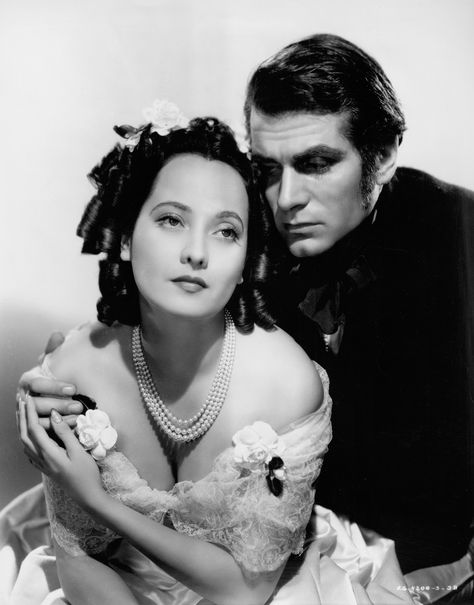
    Unfortunately, the classic William Wyler film, with Merle Oberon and Laurence Olivier, is too deeply embedded in my brain. I’m about a third of the way through, and I find I’m not transported, as I was by Charlotte’s “Jane,” even having also seen multiple film versions of the latter. I understand that the Wyler adaptation only covers the first part of the novel, so perhaps I’ll find it more absorbing once I enter unfamiliar territory.

    In any case, there’s no love like star-crossed love. February will be rather overheated this week on “Picture Perfect,” as we revisit music from movies inspired by the Brontës. As may be gleaned from my comments above, the Brontë sisters were responsible for some of the most tortured romances in English literature.

    We’ll begin with one of the all-time classics, Wyler’s beloved adaptation of Emily Brontë’s “Wuthering Heights.” The 1939 film stars Oberon as Cathy, Olivier as Heathcliff, and David Niven as Edgar, “that milksop with buckles on his shoes.” Alfred Newman’s score is one of the most moving of his storied career.

    Then we’ll turn to Charlotte Brontë’s “Jane Eyre.” The 1943 adaptation features Joan Fontaine as Jane and Orson Welles as Rochester. The music is by Bernard Herrmann, who had written scores for Welles as a director, both for “Citizen Kane” and “The Magnificent Andersons,” as well as for his Mercury Theatre radio shows. Welles involvement in “Jane Eyre,” however, was strictly as an actor.

    A 1971 television movie of “Jane Eyre” stars Susannah York as Jane and George C. Scott as Rochester. The music, in this instance, is by an up-and-coming John Williams, still a few years away from becoming a household name, for his work on “Jaws,” “Star Wars,” “Raiders of the Lost Ark,” and “E.T. The Extra-Terrestrial.” Williams has said that his score for “Jane Eyre” is one of his personal favorites.

    We’ll conclude with a piece of biographical fiction about the Brontë siblings, a 1943 Warner Brothers production called “Devotion.” The film stars Ida Lupino as Emily, Olivia de Havilland as Charlotte, Nancy Coleman as Anne, and Arthur Kennedy as their dissolute brother Branwell. It also features Sidney Greenstreet as William Makepeace Thackeray, Paul Henreid as an Irish priest, and – well, you get the idea. The casting, at times, strains credulity.

    De Havilland had originally been slated to play Emily, and her real-life sister, Joan Fontaine, was to play Charlotte. When an offer came through for Fontaine to play Charlotte’s most famous creation, Jane Eyre – opposite Orson Welles’ Rochester, over at 20th Century Fox – De Havilland pivoted into the role vacated by her sister. In the end, “Jane Eyre” wound up being the better film.

    By far the most attractive element of “Devotion” is the rich score provided by Erich Wolfgang Korngold. Korngold himself became so enamored with one of its themes that he resurrected it for use in the first movement of his Violin Concerto.

    I hope you’ll join me for a Yorkshire pudding of passion, torment, and cruelty. Sigh along to tortured romances of the Brontës for Valentine’s Day, on “Picture Perfect,” music for the movies, this Saturday evening at 6:00 EST, on WWFM – The Classical Network and wwfm.org.

  • Trains on Film: Music for Movie Lovers

    Trains on Film: Music for Movie Lovers

    Trains have always been very good for drama. They are symbols of departures and arrivals. They are conveyors of prisoners and vehicles of escape. They are objects of romance and objects to “hobo around” on. They are harbingers of civilization, and they are transports be robbed. You can fight on top of them. You can make out with Eva Marie Saint, or you can protect Marie Windsor so that she can testify against the mob. You can shuffle off to Buffalo.

    From the beginning, trains have provided good escapist fun at the movies. This week on “Picture Perfect,” we’ve got an hour of music from four memorable films in which trains play an important role.

    In “Strangers on a Train” (1951), arguably Alfred Hitchcock’s most underrated film of the 1950s, Farley Granger plays a tennis pro who unwittingly becomes involved in a double-murder plot (criss-cross!) through a chance encounter on a passenger train with a psychopath named Bruno (probably Robert Walker’s finest performance). The music is by Dimitri Tiomkin, who scored four films for Hitch – including “Shadow of a Doubt,” “I Confess,” and “Dial M for Murder.”

    Burt Lancaster stars in a film titled, simply, “The Train” (1964), as a reluctant railroad inspector who is persuaded to join the French Underground’s efforts to delay the transport of masterpieces looted from the museums of Paris by the Nazis, since Allied liberation of France is imminent. Paul Scofield plays the art-loving German officer determined to move the art at all costs. Real trains were destroyed in the making of the film, real dynamite was employed, and Lancaster, as was often the case, did all his own stunts. The score is by Maurice Jarre.

    “Murder on the Orient Express” (1974) is based on one of the best-known Agatha Christie vehicles involving her recurring character, celebrated detective Hercule Poirot. The late Albert Finney portrays Poirot most memorably in this, the first and best of the all-star Christie thrillers, set on a long-distance passenger train connecting Paris to Istanbul. The list of suspects includes Lauren Bacall, Martin Balsam, Ingrid Bergman, Sean Connery, John Gielgud, Anthony Perkins, Richard Widmark, and Michael York. The unforgettable score is by Richard Rodney Bennett.

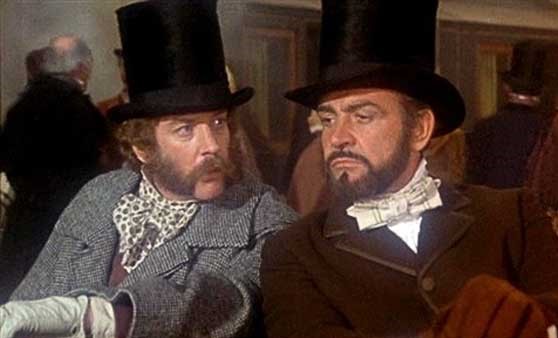
    Finally, we turn to the lighthearted caper “The Great Train Robbery” (1979), starring Sean Connery, Donald Sutherland, and Leslie-Anne Down. Michael Crichton wrote the screenplay, after his own novel, which in turn was based on an actual historical incident – an 1855 heist, in which an unbelievable amount of gold disappeared from a moving train. Crichton also directed the film. The music is by the great Jerry Goldsmith.

    All aboard! We’ll be taking the train today, on “Picture Perfect,” music for the movies, this Saturday evening at 6:00 EDT, on WWFM – The Classical Network and wwfm.org.


    TOP: Sutherland and Connery

    BOTTOM (left to right): Farley Granger and Alfred Hitchcock pass in the night; Finney as Hercule Poirot; Lancaster means business

Tag Cloud

Aaron Copland (92) Beethoven (95) Composer (114) Film Music (120) Film Score (143) Film Scores (255) Halloween (94) John Williams (185) KWAX (229) Leonard Bernstein (100) Marlboro Music Festival (125) Movie Music (135) Opera (198) Philadelphia Orchestra (88) Picture Perfect (174) Princeton Symphony Orchestra (106) Radio (87) Ralph Vaughan Williams (85) Ross Amico (244) Roy's Tie-Dye Sci-Fi Corner (290) The Classical Network (101) The Lost Chord (268) Vaughan Williams (103) WPRB (396) WWFM (881)

DON’T MISS A BEAT

Receive a weekly digest every Sunday at noon by signing up here


RECENT POSTS