Tag: Movie Soundtracks

  • Horse Racing Movie Soundtracks on the Air

    Horse Racing Movie Soundtracks on the Air

    It’s a rare horse race where everyone comes out a winner. This week on “Picture Perfect, it’s bound to be a photo finish, with four beautiful and rousing scores from films about horses and horse racing.

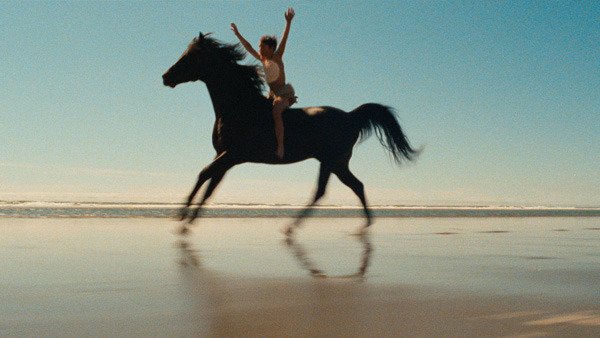
    “The Black Stallion” (1979), based on the classic novel by Walter Farley, depicts the bonding of a shipwrecked boy and an Arabian stallion, whose shared destiny takes them to the race track. Mickey Rooney’s uncharacteristically subdued performance as the former trainer who finds a new lease on life earned him an Academy Award nomination for Best Supporting Actor.

    Francis Ford Coppola executive produced the film, and his father, Carmine Coppola, wrote the music. Reportedly the unsung Shirley Walker, who had been hired as an orchestrator, wound up contributing a fair amount to it, when the composer was put off by requests from director Carroll Ballard that portions of the music be rewritten.

    “The Reivers” (1969), after William Faulkner’s Pulitzer Prize winning novel, is a coming-of-age story about a boy swept into automobile theft and illicit horse racing in the American South. Mark Rydell directed, and Steve McQueen stars as the rakish Boon Hogganbeck. The narration is by Burgess Meredith, who reprises his role in the recording we’ll hear, with John Williams conducting his own music.

    For the film, Williams provided an alternately wistful and carefree Americana score. It’s said that the music for “The Reivers” is what moved Steven Spielberg to hire him to write the music for his first theatrical feature, “The Sugarland Express.” The Spielberg association brought Williams to “Jaws,” the first of his truly iconic film scores. He also worked with Mark Rydell on “The Cowboys” (1972), “Cinderella Liberty” (1973), and “The River” (1984).

    It was inevitable that the nonfiction bestseller “Seabiscuit: An American Legend” would be given the big Hollywood treatment. The miraculous ascent of the real-life dark horse who became a symbol of hope during the Great Depression seemed tailor-made for dramatization.

    Though it presses all the right buttons, “Seabiscuit” (2003) is not to be confused with a superior documentary that was shown on PBS around the same time. Nonetheless, the film, which stars Tobey McGuire, Jeff Bridges, and Chris Cooper, was nominated for seven Academy Awards, including Best Picture. Randy Newman wrote the music.

    Finally, we’ll turn to “Hidalgo” (2004), also allegedly based on a true story, though the source material – the memoir of distance rider Frank T. Hopkins – has also inspired a fair degree of skepticism. In 1890, Hopkins became the first American invited to compete in a centuries-old 3000-mile survival race across the Arabian Desert.

    Viggo Mortensen plays Hopkins, and Omar Sharif is the sheik who asks him to put up or shut up, over the claim made by Buffalo Bill’s Wild West Show that he and his horse are the greatest distance runners in the world. The music is by James Newton Howard.

    It will be a dead heat in June, with the wind in our hair. Enjoy an hour of equine film scores, on “Picture Perfect,” music for the movies, this Saturday evening at 6:00 EDT, on WWFM The Classical Network and wwfm.org.

  • Memorial Day Movie Soundtracks Salute Valor

    Memorial Day Movie Soundtracks Salute Valor

    It’s all about valor and sacrifice this week on “Picture Perfect,” as we anticipate Memorial Day.

    Memorial Day has its roots in Decoration Day, established in 1868 to honor the Civil War dead. We’ll hear music from “Glory” (1989), inspired by the extraordinary courage of Colonel Robert Gould Shaw’s 54th Massachusetts Voluntary Regiment, an all African American outfit that distinguished itself in an impossible assault on Fort Wagner, near Charleston, South Carolina. The outstanding cast features Morgan Freeman, Matthew Broderick, and Cary Elwes, with an Oscar-winning performance by Denzel Washington. The poignant score is by James Horner.

    Gary Cooper had one of his best roles as “Sergeant York” (1941), based on the true story of Alvin C. York, who went from backwoods hell-raiser to devout pacifist. After a period of soul-searching, York was able to reconcile his strong moral convictions with the unfortunate reality that sometimes it really is necessary to fight. He went on to distinguish himself on the battlefield and become one of the most-decorated soldiers of the First World War. The folksy score, evocative of York’s Tennessee roots, is by Max Steiner.

    In director Michael Cimino’s “The Deer Hunter” (1978), three men from a small Pennsylvania steel town serve in Vietnam, then struggle to cope with the war’s psychological impact. The harrowing film, especially memorable for its scenes of Russian roulette in a P.O.W. camp, won five Academy Awards, including Best Picture and Best Director. Christopher Walken was honored with the award for Best Supporting Actor. Stanley Myers wrote the music. We’ll hear his famous “Cavatina,” performed by guitarist John Williams, not to be confused with…

    … composer John Williams, who provided one of his sparser scores for “Saving Private Ryan” (1998). Steven Spielberg’s war-is-hell narrative yet manages to honor the sacrifice of the fighting men of World War II. The opening – a sustained “you-are-there” battle sequence on Omaha Beach – is unforgettable. Remarkably, it is presented wholly without music, Williams preferring to allow the tension of the mise-en-scène to speak for itself. Spielberg picked up his second Academy Award for Best Director. The film, however, inexplicably, lost to “Shakespeare in Love.”

    I hope you’ll join me for music from these cinematic meditations on the costs and consequences of war, as we honor the sacrifice of soldiers who died while serving in America’s armed forces, this Saturday evening at 6:00 EDT, on WWFM – The Classical Network and wwfm.org.
  • Viking Movie Music Swords Fjords and Soundtracks

    Viking Movie Music Swords Fjords and Soundtracks

    We’ve got the need for mead!

    This week on “Picture Perfect,” it’s an hour of swords and fjords, as we travel north for music from movies about the Norsemen.

    In “The Long Ships” (1963), two Viking brothers, played by the unlikely pair of Richard Widmark and Russ Tamblyn, make off with a king’s funeral ship – and the king’s daughter – as they set sail on a quest for the fabled “Mother of Voices,” an enormous solid gold bell – also coveted by a Moorish prince, played by the late Sidney Poitier. Needless to say, camp value is high. The music for this British-Yugoslavian production is by the Serbian composer Dusan Radic.

    “Prince Valiant” (1954), based on the enduring comic strip by Hal Foster, is set in the days of King Arthur, though Val himself is a Viking prince of the kingdom of Scandia. And indeed Vikings play an important role in the film. Victor McLaglen is Val’s Viking pal Boltar, Janet Leigh is Princess Aleta, James Mason the villainous Sir Brack, and Sterling Hayden a ridiculous Gawain. Robert Wagner dons the signature page-boy haircut.

    The score is every bit as vivid as the film’s Technicolor. We’ll hear selections from a very special recording, with the composer himself, Franz Waxman, conducting.

    Michael Crichton’s 1976 novel, “Eaters of the Dead,” presents an unlikely, fish-out-of-water alliance, between historic Persian ambassador of the 10th century, Ahmad ibn Fadlan, and a band of Vikings. They overcome their cultural differences to face off against the Wendol, humanoid creatures who periodically emerge from the mist to feed on human flesh.

    Crichton’s story was filmed in 1997 and ultimately released as “The 13th Warrior” (1999), with Antonio Banderas as Ibn Fadlan. The production was plagued by misfortune. The original director, John McTiernan, who found success with “Die Hard,” was fired for running over-budget, and Crichton himself was brought in to re-shoot a number of the scenes. Nevertheless, the film proved to be a box office failure. But any movie to feature a Jerry Goldsmith score – and Vikings! – can’t be all bad.

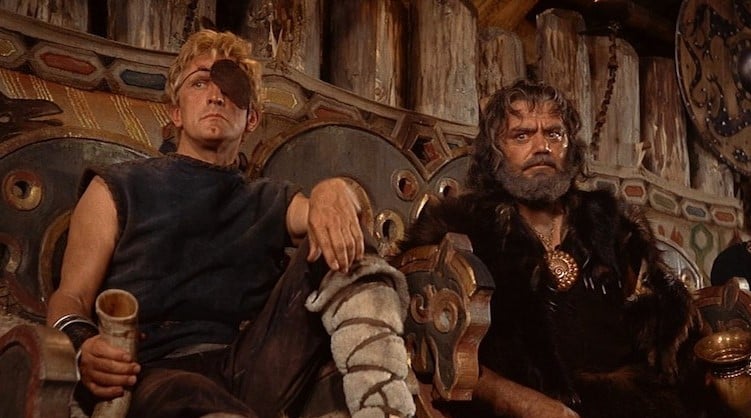
    The legendary Jack Cardiff, who actually directed “The Long Ships,” provided the stunning cinematography for “The Vikings” (1958). The film stars Kirk Douglas, Tony Curtis, Janet Leigh, and Ernest Borgnine. Although unintentionally amusing on several levels, “The Vikings” is highly regarded for its attention to detail and stabs at historical accuracy – particularly in regard to its Viking dragon boats.

    Also impressive is the haunting score by Mario Nascimbene, which we’ll hear in a digital re-recording, issued on the Prometheus Records label, featuring the City of Prague Philharmonic Orchestra and Chorus, conducted by Nic Raine. The recording is like mead from Valhalla.

    I hope you’ll join me for an hour of runes and tunes. It’s the definitive mix-tape for your dragonship, on “Picture Perfect, music for the movies, this Saturday evening at 6:00 EST, on WWFM – The Classical Network and wwfm.org.

  • Movies About Music Fellini Corigliano Korngold

    Movies About Music Fellini Corigliano Korngold

    This week on “Picture Perfect,” get ready for an exercise in postmodern self-reflexivity, as we enjoy music from movies about music and musicians.

    Federico Fellini’s “Orchestra Rehearsal” (1978) is a mock-documentary that presents the symphony orchestra as a metaphor for the human condition. Full of political overtones, the film explores the joys, sorrows, frustrations and triumphs of the musicians, who struggle with the concepts of individual liberty, tyranny and the collective good. The project would mark the final collaboration between Fellini and Nino Rota. The two artists first came together in 1952 on Fellini’s “The White Sheik.” They would go on to create such classics as “La Strada,” “Nights of Cabiria,” “La dolce vita” and “8 ½.”

    We’ll also hear music from the Canadian art house hit “The Red Violin” (1998). The film traces the history of the fictional title instrument from its creation in 17th century Cremona to the present day. The violin passes through the hands of a child prodigy, into those of a romantic virtuoso in the Paganini mold; then to China during the Cultural Revolution; and finally to a Canadian auction house. John Corigliano wrote the Academy Award-winning music, which is performed on the soundtrack by violinist Joshua Bell.

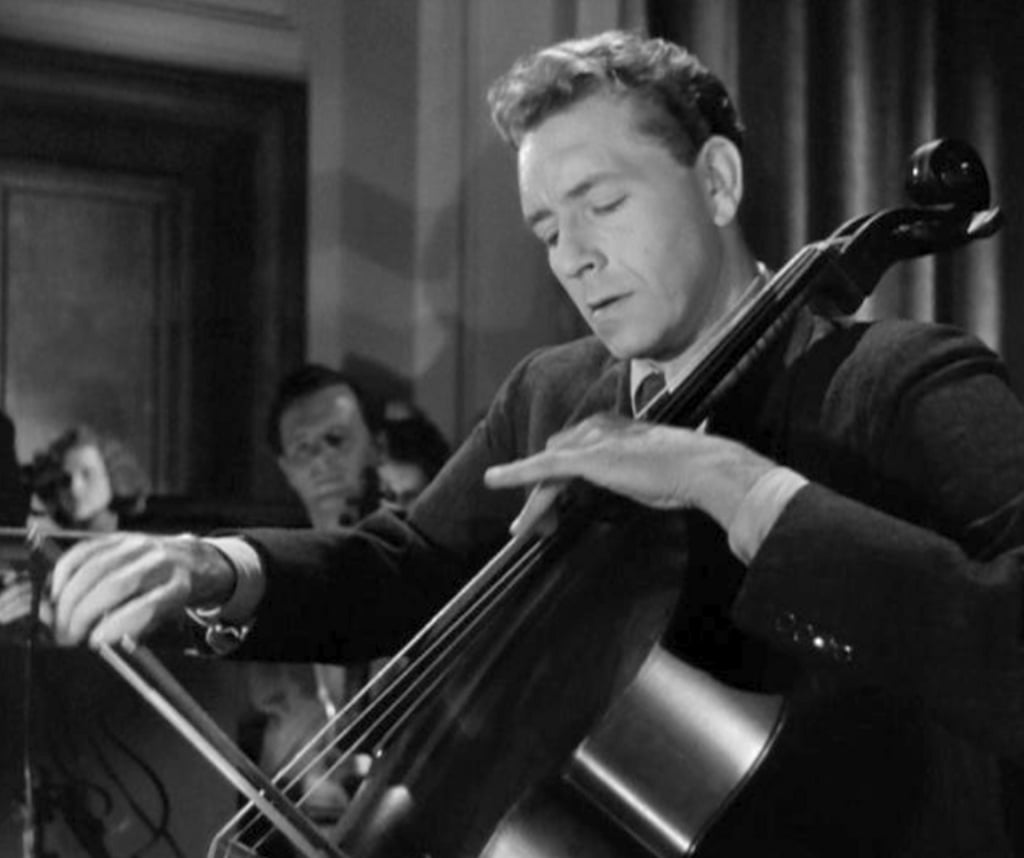
    Finally, we’ll turn to a classical music film noir from Hollywood’s Golden Age. “Deception” (1946) tells the tale of a dangerous love triangle between Bette Davis, Paul Henreid and Claude Rains. Much of the plot hinges on the premiere of a new cello concerto by a celebrated – though fictional – composer, played by Rains, who puts a fragile cellist, his rival in love, played by Henreid, through the psychological ringer. The music, which serves as both underscore and crux of the story, is by Erich Wolfgang Korngold. The composer subsequently published the on-screen concerto as his Op. 37.

    All aboard the musical ouroboros! Join me for music from movies about music and musicians, this Saturday evening at 6:00 EDT, on WWFM – The Classical Network and wwfm.org.


    The overheated trailer for “Deception”

    PHOTO: Henreid wore a special jacket to accommodate the arms of two professional cellists who stood behind him as he emoted. On the film’s soundtrack the concerto was performed by Eleanor Aller Slatkin, mother of Leonard Slatkin.

  • Artistic Drama Behind the Masterpieces on Screen

    Artistic Drama Behind the Masterpieces on Screen

    How to translate visual art to the big screen? Generally, by focusing on the drama in the artists’ lives, that’s how.

    And what drama!

    This week on “Picture Perfect,” expand your palette with music from movies about the great artists. “The Agony and the Ecstasy” (1965), based on the novel of Irving Stone, dramatizes the friction between Michelangelo (Charlton Heston) and his benefactor, Pope Julius II (Rex Harrison), over the painting of the ceiling of the Sistine Chapel. For his part, Michelangelo would have been perfectly content to stick to sculpture. Alex North’s score is an Early Music banquet, with allusions to – and sometimes outright quotations of – music of the Renaissance.

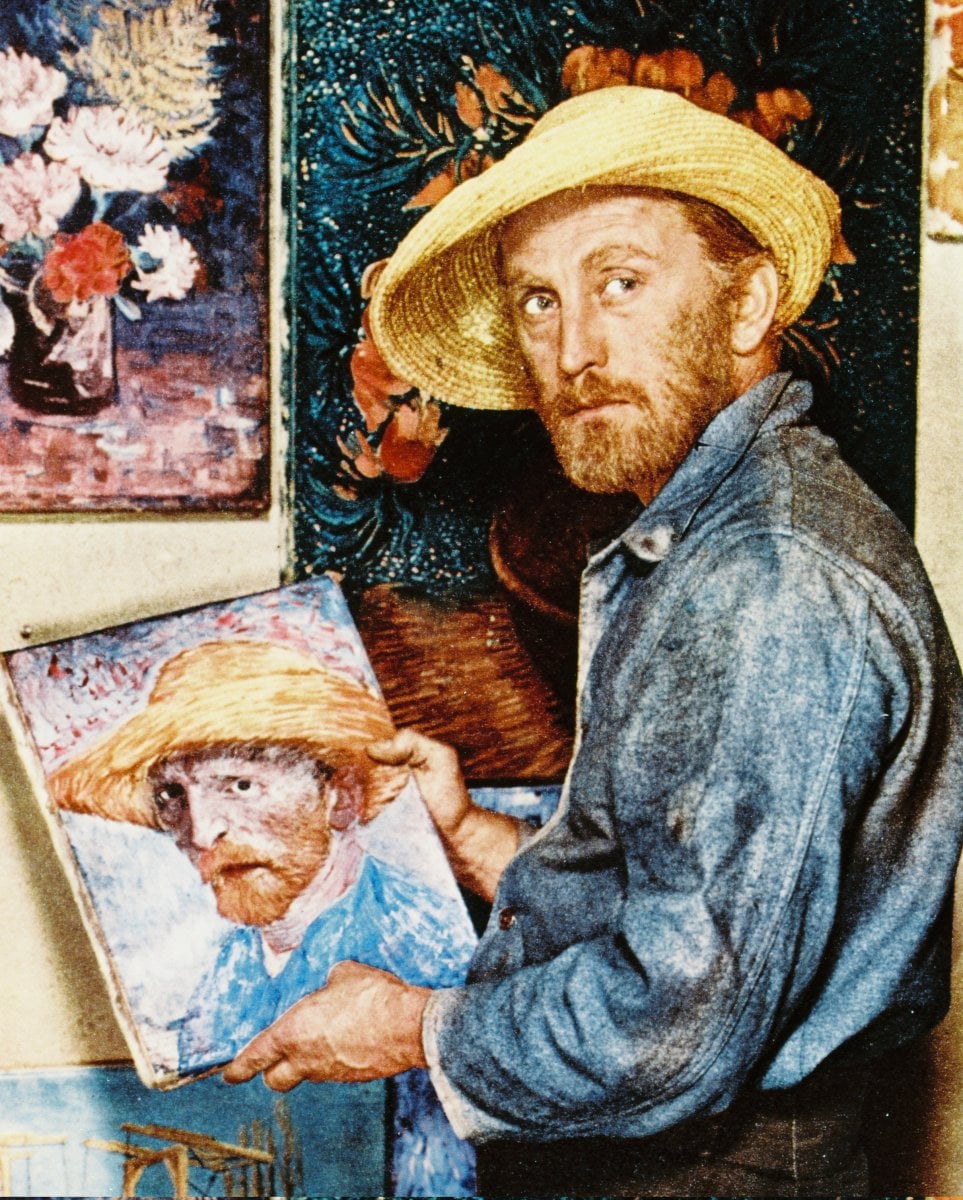
    Stone had another bestseller in “Lust for Life” (1956), about the tormented Vincent van Gogh. This time Kirk Douglas plays one of his most sympathetic roles – and looks remarkably like the artist. Anthony Quinn turns up as his “frenemy,” the painter Paul Gaugin, and earns an Academy Award for Best Supporting Actor. The great Miklós Rózsa wrote the music, softening up the edges of his brawny Hungarian sound with the softer palette of the French Impressionists.

    John Huston brought Pierre La Mure’s novel about Henri de Toulouse-Lautrec to the big screen as “Moulin Rouge” (1952) – not to be confused with the more recent Baz Luhrmann spectacle starring Nicole Kidman and Ewan McGregor, which relegated the artist to a supporting role. José Ferrer dominates the earlier version, spending most of the film walking through off-camera trenches and shuffling along on his knees. Georges Auric, one of the composers of Les Six (which also included Francis Poulenc and Darius Milhaud), captures the spirit of the titular cabaret. The score became one of Auric’s best-known, thanks to the waltz becoming a popular hit, “Where is Your Heart?”

    “The Picasso Summer” (1969) is a departure from the usual formula of focusing on the artist himself. Instead, a young couple (Albert Finney and Yvette Mimieux), admirers of Picasso’s work, take off on a European adventure in an attempt to track him down. Originally Picasso had agreed to appear, but he was driven off by some off-screen drama involving a matador friend and Yul Brynner’s wife! The film was based on a short story by Ray Bradbury. Bradbury hated the adaptation, as did the studio, and “The Picasso Summer,” after being heavily cut and patched with new footage, was never released theatrically in the United States. The film is striking for its extended animation sequences inspired by Picasso’s paintings, and for its score by Michel Legrand.

    I hope you’ll join me for brushes with the great artists, on “Picture Perfect,” music for the movies, this Saturday evening at 6:00 EDT, on WWFM – The Classical Network and wwfm.org.

Tag Cloud

Aaron Copland (92) Beethoven (95) Composer (114) Film Music (120) Film Score (143) Film Scores (255) Halloween (94) John Williams (185) KWAX (229) Leonard Bernstein (100) Marlboro Music Festival (125) Movie Music (135) Opera (198) Philadelphia Orchestra (88) Picture Perfect (174) Princeton Symphony Orchestra (106) Radio (87) Ralph Vaughan Williams (85) Ross Amico (244) Roy's Tie-Dye Sci-Fi Corner (290) The Classical Network (101) The Lost Chord (268) Vaughan Williams (103) WPRB (396) WWFM (881)

DON’T MISS A BEAT

Receive a weekly digest every Sunday at noon by signing up here


RECENT POSTS