Tag: Movie Soundtracks

  • Spring Renewal Music from the Movies

    Spring Renewal Music from the Movies

    Spring is a time of hope and renewal. This week on “Picture Perfect,” on the First of May, enjoy music from movies about fresh growth, new beginnings, and second chances.

    You can’t get much more spring-like than “The Secret Garden,” after the novel of Frances Hodgson Burnett. A spoiled orphan raised in India returns to England and her aloof uncle’s gloomy mansion on the Yorkshire moors. Gradually, she is drawn outside of herself by a cantankerous gardener, a saucy robin, and a fey lad named Dickon, who has a particular affinity with wild creatures. Her transformation, signified by the titular garden, the maintenance of which teaches her to nurture, improves the lives of all around her.

    The story has been adapted numerous times, including a classic version with Margaret O’Brien, in 1949. In 1993, Francis Ford Coppola’s American Zoetrope backed a lovely adaptation directed by Agnieszka Holland. The music was by Zbigniew Preisner.

    “The Best Years of Our Lives,” from 1946, is one of the most beautiful films to treat the subject of American soldiers readjusting to civilian life following World War II. A trio of veterans returns from overseas to find their lives irrevocably changed. It isn’t easy, but they rise to meet all challenges with the help of family and friends. The film is all the more moving and inspirational for its characters’ integrity and tenacity.

    The cast includes Frederic March, Dana Andrews and real-life veteran Harold Russell. Russell was awarded a special Academy Award for “bringing hope and courage to his fellow veterans through his appearance.” Russell had lost both his hands in an explosion. Honored also with an award for Best Supporting Actor, he is the only figure ever to win two Oscars for the same performance.

    The film won nine Oscars in all, among them Best Picture, Best Director (William Wyler), Best Actor (March), Best Screenplay (Robert E. Sherwood), and Best Music (Hugo Friedhofer).

    Based on a novel of Anne Tyler, “The Accidental Tourist,” from 1988, stars William Hurt as a travel writer, the loss of whose son leads to emotional sterility and estrangement from his wife, played by Kathleen Turner. He is eventually brought around by a quirky dog-trainer (Geena Davis, in an Academy Award-winning performance). It’s a movie about letting go, and having the courage to move forward. The understated score is by John Williams.

    Finally, sports movies have always been a popular genre through which to tell stories of resurrection and redemption. “The Natural,” Barry Levinson’s 1984 adaptation of the novel of Bernard Malamud, tells the tale of a baseball player (played by Robert Redford), who is struck down in his prime, only to be reborn in mythic triumph. The inspiring music is by Randy Newman.

    Put some “spring” back into your step, with music from movies about new beginnings and second chances, on “Picture Perfect,” this Saturday evening at 6:00 EDT, on WWFM – The Classical Network and wwfm.org.
  • Dance Movie Music to Beat the Winter Blues

    Dance Movie Music to Beat the Winter Blues

    Slip on your dancing shoes and chase away the winter blues. This week on “Picture Perfect,” get those toes tapping with music from movies that include a prominent role for the dance.

    “The Tales of Beatrix Potter” (1971) was inspired by the popular children’s stories, with anthropomorphized animals in hounds-tooth vests and that sort of thing. Conceived for film by Frederick Ashton, it features a buoyant pastiche score by John Lanchery, drawn from various sources, including works of Sir Arthur Sullivan, Michael Balfe, Leon Minkus and Jacques Offenbach.

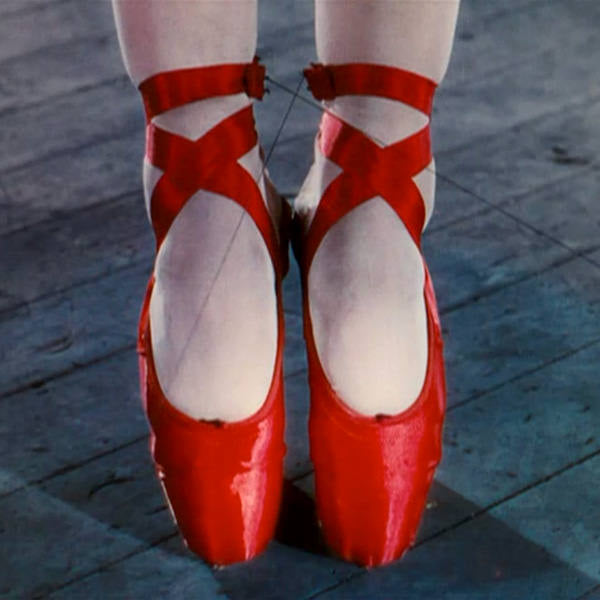
    Then relive the nightmare vision of “The Red Shoes” (1948). Written, directed and produced by the team of Michael Powell and Emeric Pressburger, this feverish dance film stars Scottish ballerina Moira Shearer. At its center is a story within the story, inspired by the Hans Christian Anderson tale about a girl whose vanity lends demonic power to her ruby footwear, with tragic consequences.

    The music is by Brian Easdale, who conducted his own score. However, for the film’s ballet sequence, Easdale specifically requested the services of Sir Thomas Beecham, who leads the Royal Philharmonic Orchestra.

    Screenwriter Ben Hecht worked on an astonishing number of Hollywood classics, including “Scarface,” “The Front Page,” “Nothing Sacred,” “His Girl Friday,” and Alfred Hitchcock’s “Spellbound.” Alongside his dozens of screen credits are uncredited contributions for work on films like “Stagecoach,” “Gone with the Wind,” “The Shop Around the Corner,” and “The Thing from Another World.” Because of his versatility, speed, and reliability, he became known as “the Shakespeare of Hollywood.”

    Twice, he was given free rein to direct his own projects. One of these was a quirky ballet-noir, called “Specter of the Rose” (1946). The plot concerns an unbalanced ballet superstar, played by Ivan Kirov – who looks all the world like Steve Martin – who is suspected of murdering his first wife, his former dance partner. If so, will history repeat itself, with his new bride? With dialogue stylized to the point of absurdity, It’s a film that has to be seen to be believed. The music is by Trenton-born “Bad Boy of Music” George Antheil.

    Much more considered is Luchino Visconti’s adaptation of Giuseppe di Lampedusa’s novel, “The Leopard” (1963). Burt Lancaster stars as a fading aristocrat around the time of Italian unification. The film’s memorable ballroom sequence occupies the last third of its three-hour running time. Nino Rota supplied the music.

    Finally, no show which purports to be about dance in the movies would be complete without music representative of Fred Astaire. Therefore, we’ll conclude with the funhouse dance sequence from “A Damsel in Distress” (1937). No Ginger Rogers in this one – rather Joan Fontaine, George Burns, and Gracie Allen. The energetic score is by George Gershwin.

    Regain your tone with tunes from these movies about the dance, on “Picture Perfect,” music for the movies, this Saturday evening at 6:00 EST, on WWFM – The Classical Network and wwfm.org.
  • Poets in the Movies: Picture Perfect

    Poets in the Movies: Picture Perfect

    A jug of Wine, a Loaf of Bread—and Thou
    Beside me singing in the Wilderness.

    Well, we’ve got the wilderness anyway.

    Grab your quill and laudanum. This week on “Picture Perfect,” the focus will be on poets in the movies.

    We’ll hear music from “Dead Poets Society” (1989), Peter Weir’s beautiful-but-vacuous take on the transformative power of poetry, its “Goodbye, Mr. Chips” story arc made all the more poignant (and less cheap) by the passing of its beloved star, Robin Williams. Maurice Jarre, a long, long way from his Oscar-winning work on “Lawrence of Arabia,” wrote the music, which blends dulcimer and bagpipes (!) with electronics.

    At least “Dead Poets Society” found a place in the hearts of the public. “Lady Caroline Lamb” (1973) did not. Sarah Miles plays Byron’s jilted lover, the wife of future prime minister William Lamb. Despite an impressive cast, which includes Jon Finch, Laurence Olivier, Ralph Richardson, and Richard Chamberlain (as Lord Byron, no less), and direction by venerable playwright and screenwriter Robert Bolt (“A Man for All Seasons”), the film received mixed reviews and tanked at the box office. The always fine Richard Rodney Bennett provided the atmospheric score.

    “Il Postino” (1994) tells the story of a simple postman whose prosaic life is transformed through the power of metaphor. His model is the exiled Chilean poet Pablo Neruda, played by Philippe Noiret. The film’s writer and star, Massimo Troisi, died of a heart attack twelve hours after shooting was completed, having postponed surgery until he finished work. He was 41 years-old. Argentinian-Italian composer Luis Bacalov’s bandoneon-tinged score was honored with an Academy Award for Best Music.

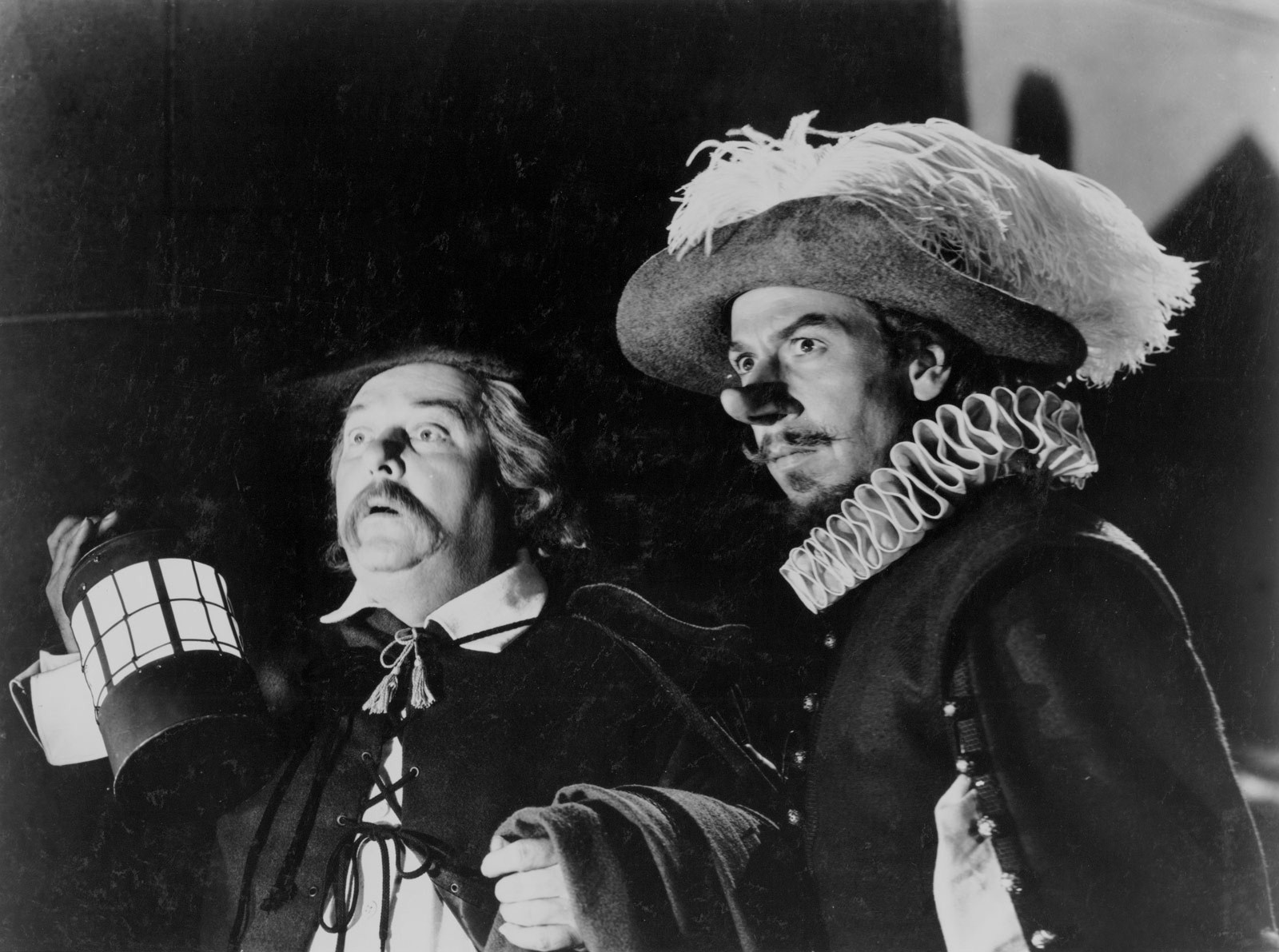
    Finally, we put a point on things with the rapier wit of “Cyrano de Bergerac” (1950). José Ferrer struts his stuff as the warrior-poet with the prominent proboscis, who never wants for words, save in the presence of his beautiful cousin Roxane. Ferrer elocuted – and fenced – his way to an Academy Award for Best Actor. The score is one of Dimitri Tiomkin’s finest, and we’ll hear a recording taken from the film’s original elements, under the crisp direction of the composer.

    It could be verse. Poetry warms the soul this week. It’s poetry in motion, on “Picture Perfect,” music for the movies, this Saturday evening at 6:00 EST, on WWFM – The Classical Network and wwfm.org.

  • Toy Movie Soundtracks Citizen Kane to Toy Story

    Toy Movie Soundtracks Citizen Kane to Toy Story

    With the grand cacophony of Christmas still fresh in everyone’s ears, I thought it only appropriate this week on “Picture Perfect” to focus on music from movies about toys.

    Without giving anything away, in the unlikely event you don’t already know the story’s big pay-off, “Citizen Kane” (1941) is a film flanked by toys. There’s even a snow globe in the film’s opening montage. A certain memory of Kane’s childhood provides a poignant glimpse of the larger-than-life newspaper magnate’s lost innocence. “Kane” is often cited as one of the greatest films ever made. Orson Welles triumphed in his debut as writer-director-star, even if, ultimately, his creation proved to be a bottle rocket that blew up in his face. The film also marked the Hollywood debut of composer Bernard Herrmann.

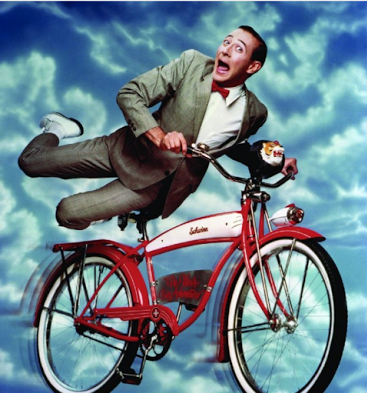
    I’m not sure that “Pee-Wee’s Big Adventure” (1985) could be described as the “Citizen Kane” of the ‘80s, exactly, but this endearingly goofy sojourn into the surreal does revolve around the recovery of a lost toy, as Pee-Wee, the eternal boy, determines to make his way to “the basement of the Alamo” in an attempt to reclaim his stolen bike. The feature was director Tim Burton’s first. It was also his first collaboration with Danny Elfman, who is obviously a big fan of Nino Rota.

    The husband-and-wife team of Charles and Ray Eames are better known for their contributions to architecture, industrial design, and manufacturing, but they also made short films. “Toccata for Toy Trains” (1957) was inspired by the Eames’ passion for vintage toys. The score was provided by their go-to composer, Elmer Bernstein.

    Finally, in acknowledgement of the greatest toy series of our day, we’ll conclude with music from “Toy Story” (1995), the first full-length computer animated feature. The quality of the film propelled it beyond mere novelty status into the realm of instant classic, and the beloved “Toy Story” franchise has raked in hundreds of millions of dollars. Early on, it was decided by the filmmakers that they did not want “Toy Story” to be a musical, but that songs could be used to underline its emotional content. Randy Newman has provided the music for all the “Toy Story” films so far. He was recognized with an Academy Award for his work on “Toy Story 3,” for the song, “We Belong Together.”

    Keep popping those aspirin. It’s “Toys Everywhere” this week, on “Picture Perfect,” music for the movies, this Saturday evening at 6:00 EST, on WWFM – The Classical Network and wwfm.org.

  • Circus Movie Music Picture Perfect on WWFM

    Circus Movie Music Picture Perfect on WWFM

    Ladies and gentlemen! Boys and girls! Children of all ages! May I have your attention, please?

    Step right up! This week on “Picture Perfect,” it’s music from movies about the circus!

    In 1964, George Pal produced and directed an adaptation of Charles G. Finney’s dark fantasy novel, “The Circus of Dr. Lao.” “7 Faces of Dr. Lao” was envisaged as a real showcase for its star, Tony Randall, who plays not only the mysterious proprietor of an itinerant Old West circus, but also Merlin the Magician, the great god Pan, a Serpent, the fabled monster Medusa, the blind fortune-teller Appolonius of Tyana, and the Abominable Snowman!

    The unusual score is by Leigh Harline, who freshens up tropes of the American Western by applying some Eastern spice. We’ll hear selections from the film’s original elements, remastered for the Film Score Monthly label.

    We’ll also have music from two Academy Award winners: Cecil B. DeMille’s “The Greatest Show on Earth,” voted Best Picture of 1952, with a score by Victor Young, and Federico Fellini’s “La Strada,” Best Foreign Language Film of 1956, with music by Nino Rota.

    Malcom Arnold wrote the music for “Trapeze,” Carol Reed’s 1956 love triangle on high (with Burt Lancaster, Tony Curtis, and Gina Lollobrigada), and Danny Elfman understands that every day’s a circus for Paul Reubens in “Big Top Pee-Wee,” from 1988. I know you are, but what am I?

    Finally, with Halloween right around the corner, I couldn’t resist including a suite from Hammer Film Productions’ “Vampire Circus,” from 1972. The composer is David Whitaker, of “The Sword and the Sorcerer” cult status.

    Music for the circus takes center ring, on “Picture Perfect,” music for the movies, now at its new time, this SATURDAY EVENING AT 6:00 EDT, on WWFM – The Classical Network and wwfm.org.

Tag Cloud

Aaron Copland (92) Beethoven (95) Composer (114) Film Music (120) Film Score (143) Film Scores (255) Halloween (94) John Williams (185) KWAX (229) Leonard Bernstein (100) Marlboro Music Festival (125) Movie Music (135) Opera (198) Philadelphia Orchestra (88) Picture Perfect (174) Princeton Symphony Orchestra (106) Radio (87) Ralph Vaughan Williams (85) Ross Amico (244) Roy's Tie-Dye Sci-Fi Corner (290) The Classical Network (101) The Lost Chord (268) Vaughan Williams (103) WPRB (396) WWFM (881)

DON’T MISS A BEAT

Receive a weekly digest every Sunday at noon by signing up here


RECENT POSTS