Tag: Movie Soundtracks

  • Vampire Movie Soundtracks & Adaptations

    Vampire Movie Soundtracks & Adaptations

    This week on “Picture Perfect,” it’s all widow’s peaks and plastic fangs, as we listen to music from film adaptations of novels about vampires.

    “Interview with the Vampire” (1994), based on the novel by Anne Rice, featured some pretty counterintuitive casting, including Tom Cruise as Lestat (Rice would have preferred Rutger Hauer), but thanks largely to director Neil Jordan the film still managed to deliver the goods. Elliot Goldenthal’s music was nominated for an Academy Award. Interestingly, The American Boychoir sings the opening “Libera me.”

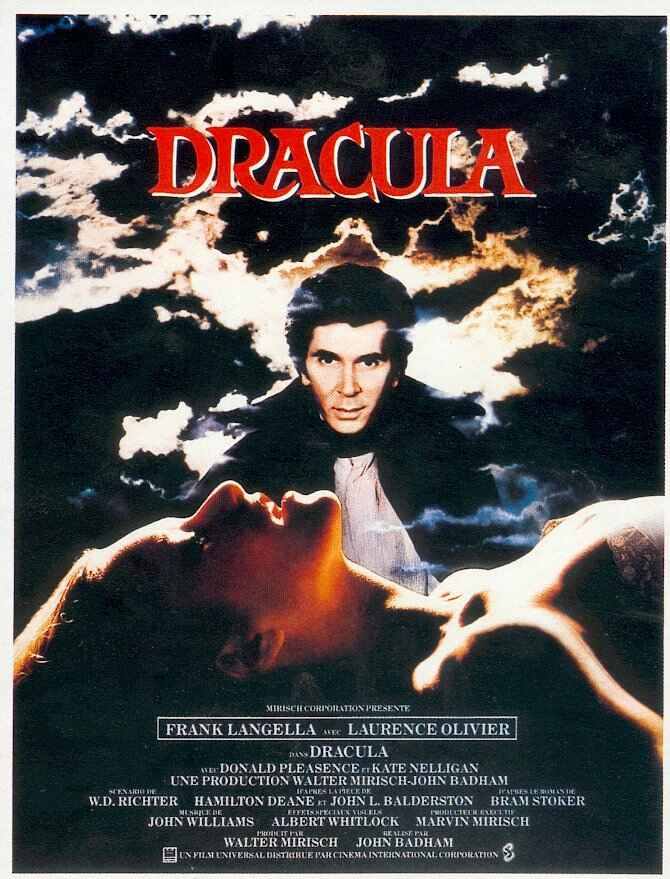
    Frank Langella’s characterization of Bram Stoker’s Dracula drove the critics wild when the play by Hamilton Deane and John L. Balderston was revived on Broadway in 1977. (It was the same adaptation that launched Bela Lugosi on his big screen career.) But when the film “Dracula” (1979) was released a couple of years later, reviews were mixed. Langella retained his dreamy magnetism, and the producers managed to secure Sir Laurence Olivier and Kate Nelligan for the parts of Van Helsing and Mina, respectively, but I wonder if John Badham was the best choice for director. Badham had just come off the enormous box office success of “Saturday Night Fever,” and it looks as if his Dracula retains John Travolta’s hair. You know, just for luck.

    I remember being so excited to see this when I saw the trailer at the movies. The sight of Langella leaping through a window and transforming into a wolf in mid-flight to John Williams anticipatory music was almost more than I could bear. Watch the trailer here:

    How could a film called “Abraham Lincoln: Vampire Hunter” (2012) ever live up to its title? The answer is, it can’t, but the adaptation of Seth Grahame-Smith’s supernatural-historical mash-up wasn’t as terrible as everyone says it was. Sure, I would have preferred it had Daniel Day-Lewis played Lincoln, but put anybody in a stove-pipe to fight vampires with an axe, and I would have been happy. I probably wouldn’t have been so permissive had I seen it in the theater, where the noise and effects would have pushed me over the edge, but it was a diverting rental, with a gothic score by Henry Jackman that ping-ponged between Americana lyricism and an orchestra bolstered by electronics and heavy metal guitars. But what are you going to listen to when you’re fighting vampires, a string quartet?

    James Bernard’s music for Hammer Studios’ “Dracula,” released in the United States as “Horror of Dracula” (1958), is one of his best-known efforts. His Dracula theme, with its clashing harmonies, laid the groundwork for the sound of the film’s numerous sequels, most of which featured Christopher Lee in his most iconic role. Bernard became so closely associated with Hammer and vampires that he was approached late in life to provide a score for the silent classic “Nosferatu.”

    Finally, “Bram Stoker’s Dracula” (1992), despite the claims of fidelity in its very title, was not a faithful adaptation of Stoker’s book. Why? WHY??? The film was lovely to look at, with eye-popping costumes and production design that combined Universal Studios in-the-camera trickery and honest-to-goodness miniatures with a few more Jean Cocteau references than perhaps was for its own good. This could have been THE Dracula film. Alas, it wasn’t. However, for me, it had THE Dracula score. It was a stroke of genius to hire Polish composer Wojciech Kilar to give the film just the right Eastern European sound.

    I hope you’ll join me for page-to-screen vampires this week on “Picture Perfect,” tomorrow night at 6:00 ET, with a repeat Saturday morning at 6; or that you’ll listen to it later as a webcast at wwfm.org.

    NOTE TO FILMMAKERS: “Dracula” is NOT a love story. And it is not about disco.
  • Real Horror Behind the Screen Movie Soundtracks

    Real Horror Behind the Screen Movie Soundtracks

    I’ve been so busy the past two days that I haven’t even been able to type up a description of this week’s “Picture Perfect,” which is slated to air in just a few minutes. Nothing too in-depth, then. Suffice it to say, I’ll be featuring music from movies inspired by real-life horror and science fiction icons.

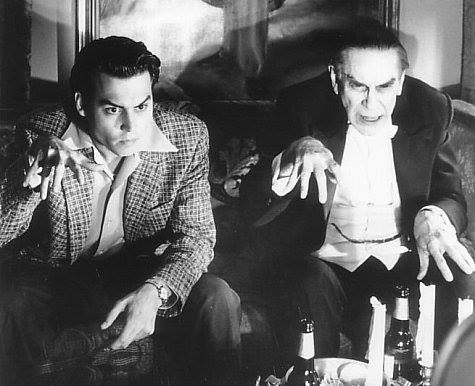
    We’ll be listening to selections from “Hitchcock” (2012), a behind-the-scenes look at the making of “Psycho,” with music by Danny Elfman; “Matinee” (1993), with John Goodman as a William Castle-type filmmaker, promoting his latest B-masterpiece against the backdrop of the Cuban Missile Crisis, with music by Jerry Goldsmith; “Gods and Monsters” (1998), set during the final days of James Whale, the director of “Frankenstein” and “The Invisible Man,” with music by Carter Burwell; and “Ed Wood” (1994), Tim Burton’s love-letter to the director notorious for having helmed some of the worst films ever made, including “Plan 9 from Outer Space,” with bongo- and theremin-laden music by Howard Shore.

    I hope you’ll join me for an hour of behind-the-scenes horrors this week, on “Picture Perfect,” tonight at 6 ET, with a repeat tomorrow morning at 6; or that you’ll listen to it later as a webcast at wwfm.org.

  • Yo-Yo Ma at the Movies Celebrating 60 Years

    Yo-Yo Ma at the Movies Celebrating 60 Years

    It’s very hard to believe, but the eternally youthful Yo-Yo Ma will be 60 on October 7. This week on “Picture Perfect,” we honor one of the most famous classical musicians in the world with music from three of his film projects.

    Ma played cello solos in two scores by John Williams – those for “Seven Years in Tibet” (1997) and “Memoirs of a Geisha” (2005). Of course, Williams being Williams, both scores were nominated for Academy Awards.

    Ma actually hit pay dirt with “Crouching Tiger, Hidden Dragon” (2000). Tan Dun’s music contributed to what could be termed “The Year of the Dragon,” as Ang Lee’s film accumulated 10 Academy Award nominations, including one for Best Picture. In the end, “Crouching Tiger” was honored with awards for Best Foreign Language Film, Best Art Direction, Best Cinematography, and of course Best Original Score.

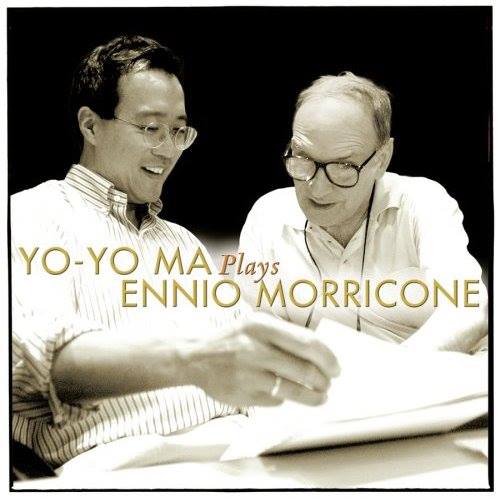
    In 2004, Ma recorded a very popular album of arrangements for cello and orchestra from the film scores of Ennio Morricone, with the composer conducting. We’ll round out the hour with some of Morricone’s beloved music from “The Mission” (1986).

    I hope you’ll join me, as we salute Yo-Yo Ma at the movies, tomorrow evening at 6 ET, with a repeat Saturday morning at 6; or that you’ll listen to it later as a webcast at wwfm.org.

  • Vatican Movie Music Pope Visit Philadelphia

    Vatican Movie Music Pope Visit Philadelphia

    “POPE IN PHILADELPHIA THIS WEEKEND… PLAN AHEAD… EXPECT DELAYS,” warn the flashing signs all up and down I-95, 295, and Route 1.

    The Ben Franklin Bridge will be shut down until Monday. Access to I-676 will be no more. All Center City exits will be sealed. The Pope Fence is up, mailboxes have been removed, and the car carrier trailers are full of impounded vehicles, bound for who-knows-where. Are we having fun yet?

    This week on “Picture Perfect,” we tap into the zeitgeist and celebrate what’s become a Pope cultural phenomenon with music from movies set in the Vatican.

    It would appear that Alex North (born just south of Philadelphia, by the way, in Chester, Pa.) was Hollywood’s “go to” composer for Vatican movies, with scores for two major films about the Pope.

    In “The Shoes of the Fisherman” (1968), Anthony Quinn plays Kiril Pavlovich Lakota, an archbishop who serves 20 years in a Siberian labor camp. He is released and sent to Rome where is promoted to the cardinalate. When the Pope dies, suddenly, Lakota, a dark horse candidate, is elected as his replacement. The story balances Lokata’s internal struggles and personal torments with mounting global turmoil. North juxtaposes the melancholy lyricism of Russian folksong with the steely grandeur of his music for the Vatican.

    “The Agony and the Ecstasy” (1965), about the war of wills between Michelangelo (played by Charlton Heston) and the warrior-pope Julius II (played by Rex Harrison) over the painting of the ceiling of the Sistine Chapel, suggested a completely different approach. North’s other Vatican score is rich in allusions to authentic music of the era – and of the Church – which is most impressive when we think that the Early Music Movement was, at the time, in its very infancy, and the music of the pre-Baroque would not have been particularly well known.

    Otto Preminger’s “The Cardinal” (1963) follows a fictional Boston Irish Catholic priest from his ordination in 1917 to his appointment as cardinal on the eve of World War II. Tom Tryon played the lead. Tryon later became a best-selling author (as THOMAS Tryon), with books like “The Other” and “Harvest Home.” An interesting factoid: The Vatican’s liaison officer for the production was none other than Joseph Ratzinger, later Pope Benedict XVI.

    The composer was Jerome Moross. The producers of the recording we’ll be sampling incorporate the sound of the actual bell of St. Paul’s Cathedral into the opening of the suite.

    Christopher Reeve may have been trying just a bit too hard to shake his “Superman” image when he signed on to “Monsignor” (1982). Reeve stars as a Roman Catholic priest whose ascent through the ranks at the Vatican parallels his underhanded dealings with a mafia don and an affair with a woman in the postulant stage of becoming a nun.

    Likewise, composer John Williams received his only nomination from the Golden Raspberry Awards for Worst Original Score. Tune in for this rare opportunity to hear music from Williams’ first project after his Academy Award-winning contribution to “E.T.”

    I hope you’ll join me for music from movies set in the Vatican this week, on “Picture Perfect,” Friday evening at 6 ET, with a repeat tomorrow morning at 6; or that you’ll listen to it later as a webcast at wwfm.org.

  • Memorial Day Movie Music Valor and Sacrifice

    Memorial Day Movie Music Valor and Sacrifice

    It’s all about valor and sacrifice this week on “Picture Perfect,” as we anticipate Memorial Day.

    Memorial Day has its roots in Decoration Day, established in 1868 to honor the Civil War dead. We’ll hear music from “Glory” (1989), inspired by the extraordinary courage of Colonel Robert Gould Shaw’s 54th Massachusetts Voluntary Regiment, an all African American outfit that distinguished itself in an impossible assault on Fort Wagner, near Charleston, South Carolina. The outstanding cast features Morgan Freeman, Matthew Broderick, and Cary Elwes, with an Oscar-winning performance by Denzel Washington. The poignant score is by James Horner.

    (Incidentally, the movie will be shown on Turner Classic Movies: TCM tomorrow night at 10:30 ET, as part of its annual Memorial Day marathon.)

    Gary Cooper had one of his best roles as “Sergeant York” (1941), based on the true story of Alvin C. York, who went from backwoods hell-raiser to devout pacifist. After a period of soul-searching, York was able to reconcile his strong moral convictions with the unfortunate reality that sometimes it really is necessary to fight. He went on to distinguish himself on the battlefield and become one of the most-decorated soldiers of the First World War. The folksy score, evocative of York’s Tennessee roots, is by Max Steiner.

    In director Michael Cimino’s “The Deer Hunter” (1978), three men from a small Pennsylvania steel town serve in Vietnam, then struggle to cope with the war’s psychological impact. The harrowing film, especially memorable for its scenes of Russian roulette in a P.O.W. camp, won five Academy Awards, including Best Picture and Best Director. Christopher Walken was honored with the award for Best Supporting Actor. Stanley Myers wrote the music. We’ll hear his famous “Cavatina,” performed by guitarist John Williams, not to be confused with…

    … composer John Williams, who provided one of his sparser scores for “Saving Private Ryan” (1998). Steven Spielberg’s war-is-hell narrative yet manages to honor the sacrifice of the fighting men of World War II. The opening – a sustained “you-are-there” battle sequence on Omaha Beach – is unforgettable. Remarkably, it is presented wholly without music, Williams preferring to allow the tension of the mise-en-scène to speak for itself. Spielberg picked up his second Academy Award for Best Director. The film, however, inexplicably, lost to “Shakespeare in Love.”

    I hope you’ll join me for music from these cinematic meditations on the costs and consequences of war, as we honor the sacrifice of soldiers who died while serving in America’s armed forces, this evening at 6 ET, with a repeat Saturday morning at 6; or that you’ll listen to it later as a webcast, at http://www.wwfm.org.

Tag Cloud

Aaron Copland (92) Beethoven (95) Composer (114) Film Music (120) Film Score (143) Film Scores (255) Halloween (94) John Williams (185) KWAX (229) Leonard Bernstein (100) Marlboro Music Festival (125) Movie Music (135) Opera (198) Philadelphia Orchestra (88) Picture Perfect (174) Princeton Symphony Orchestra (106) Radio (87) Ralph Vaughan Williams (85) Ross Amico (244) Roy's Tie-Dye Sci-Fi Corner (290) The Classical Network (101) The Lost Chord (268) Vaughan Williams (103) WPRB (396) WWFM (881)

DON’T MISS A BEAT

Receive a weekly digest every Sunday at noon by signing up here


RECENT POSTS