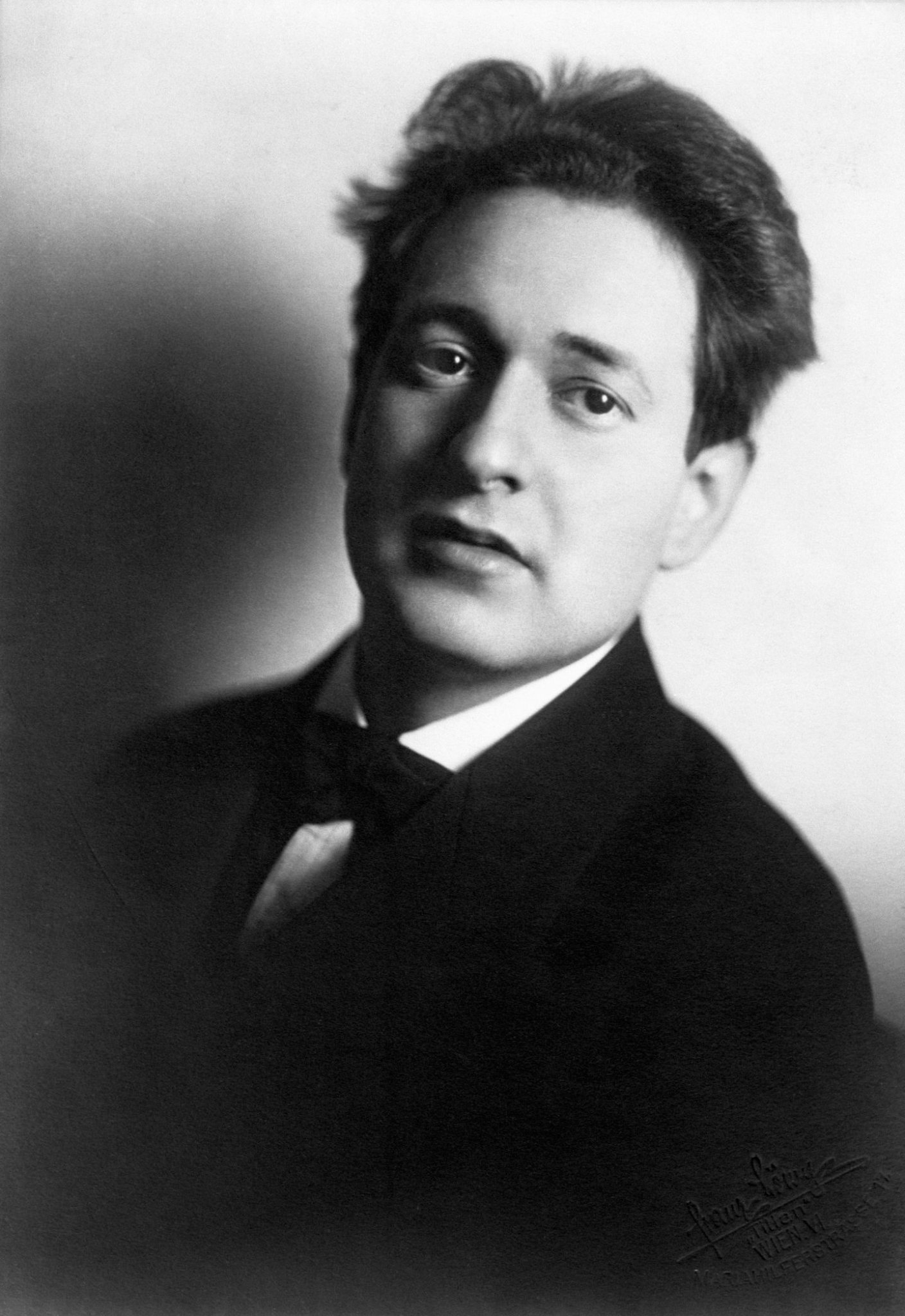
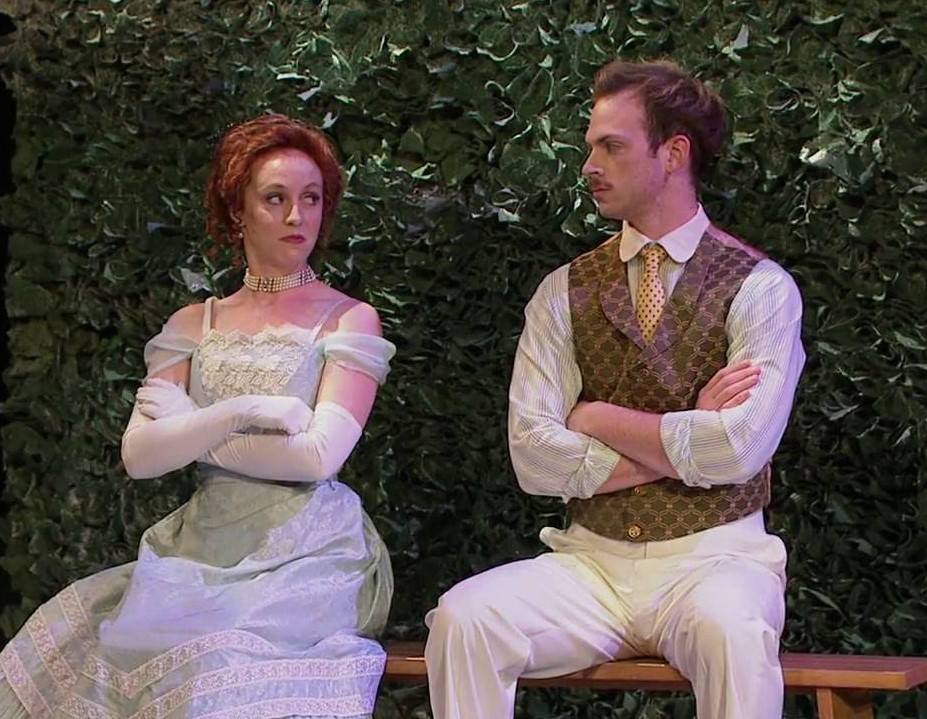
This Sunday night on “The Lost Chord,” on Erich Wolfgang Korngold’s birthday, enjoy highlights from the world premiere recording of his complete incidental music for the 1920 Max Reinhardt production of Shakespeare’s “Much Ado About Nothing.”
Formerly one of Vienna’s most astounding prodigies, Korngold went on to achieve international celebrity as a composer for Warner Bros. in the 1930s and ’40s. His introduction to Hollywood was by way of Reinhardt’s 1935 film of “A Midsummer Night’s Dream.”
For this recording, a 2013 Toccata Classics release, the music for “Much Ado” was performed for the first time in its entirety since 1933. Musicians of the University of North Carolina School of the Arts are conducted John Mauceri.
To quote the Bard, “Is it not strange that sheep’s guts could hail souls out of men’s bodies?” Strike up, pipers! It’s “Much Ado About Korngold,” this Sunday night at 10:00 EDT, on WWFM – The Classical Network and wwfm.org.
“Is it not strange that sheep’s guts should hale souls out of men’s bodies?”
This week on “Picture Perfect,” on the presumed birthday of William Shakespeare (April 23, 1564), we’ll make much ado about Patrick Doyle, with selections from his scores written for the films of Kenneth Branagh.
In 1987, Doyle joined Branagh’s Renaissance Theatre Company, for which he provided incidental music. Two years later, Branagh – and by extension, Doyle – made a leap to the big screen, where they achieved a remarkable feat, rethinking Shakespeare’s “Henry V.” Remember, this is the play that propelled Laurence Olivier to worldwide fame in 1944, both as a filmmaker and the Bard’s most celebrated interpreter, and William Walton’s score is regarded as one of the best of all time.
Branagh’s version is quite different. Though equally rousing, it doesn’t shy away from Henry’s more complicated nature and the grittier aspects of what it means to go to war. It was a bold gamble, but one that paid off. Not only did this revisionist “Henry” receive nearly universal acclaim, the film was a box office success, and Branagh would be nominated for two Academy Awards, like his predecessor, in the categories of Best Actor and Best Director. Certainly, the film’s score deserved to be recognized – but in the year of “The Little Mermaid,” it failed even to secure an Academy Award nomination.
An interesting footnote: Doyle himself is the baritone who introduces “Non nobis Domine,” a prayer of thanksgiving, following the Battle of Agincourt.
In 2006, Branagh directed an adaptation of “As You Like It.” As has become his custom, he took a celebrity approach to its casting, although perhaps not so widely uneven as some of the cameos in his big screen “Hamlet.” Kevin Kline plays Jacques; Alfred Molina the fool, Touchstone; and Branagh regulars, Brian Blessed and Richard Briers appear, as well.
The most radical liberty taken with the play is that Branagh transplants the action to 19th century Japan. The language remains firmly rooted in Shakespeare’s text, although there are striking cross-cultural elements, including ample kimonos, kabuki theatre, ninjas, and a sumo wrestler. Still, it’s a long way off from the astounding bomb that was Branagh’s American Songbook-interpolated “Love’s Labour’s Lost.”
While Olivier’s “Hamlet” won four Academy Awards in 1948, including those for Best Picture and Best Actor, Branagh’s 1996 version is cinema’s first adaptation of the complete text. It is, perhaps, an uneven interpretation, with some puzzling casting choices – including walk-ons by Jack Lemmon, Robin Williams, and Gerard Depardieu – but there are enough merits, certainly, to make the four-hour trek worthwhile.
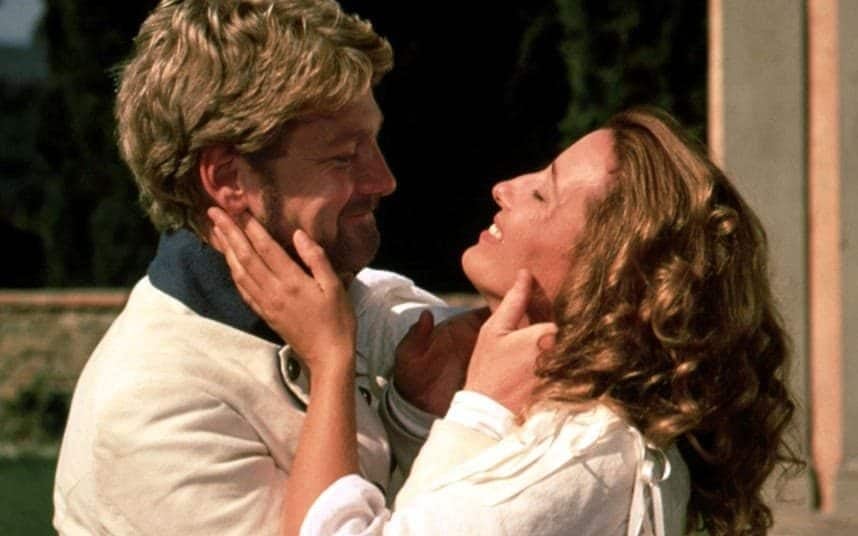
Finally, Branagh teamed with his then-wife, Emma Thompson, for a “merry war” of wits, as Benedick and Beatrice, in his 1993 adaptation of “Much Ado About Nothing.” Again, the film features an eclectic supporting cast of classically trained actors and pop Hollywood phenomena. Briers, Blessed, and Imelda Staunton share screen time with Denzel Washington, Michael Keaton, and Keanu Reeves. Yet, somehow, despite the different nationalities, ethnicities, and accents, the entire enterprise works. There is an exuberance to the over-the-top opening sequence which sets up a momentum that carries through the rest of the film.
Sigh no more, but join me for the Shakespeare scores of Patrick Doyle on “Picture Perfect,” music for the movies, this Saturday evening at 6:00 EDT, on WWFM – The Classical Network and wwfm.org.
How could you not love this opening?
Faith and sheep’s guts in “Much Ado About Nothing”
“Is it not strange that sheep’s guts could hail souls out of men’s bodies?”
– William Shakespeare, “Much Ado About Nothing”
On the eve of the observation of Shakespeare’s birthday (April 23, 1564), hang on to your soul, this Sunday night on “The Lost Chord,” as we enjoy highlights from the world premiere recording of the complete incidental music to a 1920 Max Reinhardt production of “Much Ado About Nothing.”
The music is by Erich Wolfgang Korngold, one of Vienna’s most astounding prodigies, who went on to achieve international celebrity as a composer of film scores. Korngold’s introduction to Hollywood was by way of Reinhardt’s 1935 film version of “A Midsummer Night’s Dream.”
The performance, with the music performed for the first time in its entirety since 1933, was recorded at the University of North Carolina School of the Arts. John Mauceri conducts, on this 2013 Toccata Classics release. You can check out the complete Regional Emmy Award-winning broadcast here:
We start counting out candles for the Bard, with Korngold’s “Much Ado About Korngold,” this Sunday night at 10:00 EDT, on WWFM – The Classical Network and wwfm.org.
For the first edition of “The Lost Chord” for 2016, we revisit the music of Erich Wolfgang Korngold. Korngold, of course, was one of the great film composers. A two-time Academy Award winner, he provided music for such classics as “Captain Blood,” “The Prince and the Pauper,” “The Adventures of Robin Hood,” “The Sea Hawk” and “Kings Row.”
But before he settled in Hollywood, Korngold was the toast of Vienna, one of the most lauded of contemporary composers, and the city’s brightest hope for maintaining its fin de siècle supremacy in music.
Korngold was a child prodigy who had amazed audiences with such works as the ballet-pantomime “Der Schneemann” (or “The Snowman”), composed at the tender age of 11 (first performed at the Vienna Court Opera in the presence of Emperor Franz Josef); his Piano Trio, composed at the age of 13 (given its premiere by Arthur Schnabel and members of the Vienna Philharmonic); and the “Sinfonietta,” a symphony-in-all-but-name, composed at the age of 15 (first conducted by Felix Weingartner, Korngold sharing a box at that performance with an admiring Richard Strauss).
With the premiere of his opera “Die tote Stadt,” in 1920, at age 23, Korngold’s reputation seemed assured. He wrote a piano concerto for Paul Wittgenstein, undertook a revival of the operettas of Johann Strauss II, and was publicly honored by the president of Austria.
However, the trajectory of his career took an unexpected turn with the rise of Hitler. To escape the creep of fascism, Korngold embarked on a second career, settling in Hollywood to write film scores for Warner Brothers.
The first of these was composed at the invitation of famed impresario Max Reinhardt, with whom Korngold had collaborated on the Strauss revivals. Reinhardt was in the process of adapting Shakespeare’s “A Midsummer Night’s Dream” for the big screen, and he enlisted Korngold to rework Felix Mendelssohn’s famous incidental music.
In true Korngoldian fashion, the composer went well beyond what was expected, weaving in passages from Mendelssohn’s symphonies and “Songs Without Words,” writing his own connective material, and sprinkling the whole with fairy dust.
Korngold’s work on “A Midsummer Night’s Dream” led to an exclusive contract at Warner’s, where the composer revolutionized the language of film music, applying the kind of opulence, pageantry and romance characteristic of his operas to silver screen historical dramas and swashbucklers.
The result was kind of a pop cultural immortality, but to the detriment of his reputation as a serious composer. The center of European musical culture was off-limits, indeed severely limited by Nazi strictures, and the language of musical modernism, as exemplified by the output of his contemporary and compatriot Arnold Schoenberg, made Korngold seem positively old-fashioned. It would be decades before his reputation would recover, and unfortunately by then he was long dead.
From the same year as his greatest triumph, “Die tote Stadt,” 1920, comes an earlier foray into Shakespeare, written for a stage production of “Much Ado About Nothing.” “Much Ado” contains some of Korngold’s most charming music. A concert suite of some 20 minutes has been in circulation for decades.
However, what we have for you this evening is the first COMPLETE recording of the score, with spoken dialogue. A 2013 release, on the Toccata Classics label, it features actors and musicians of the University of North Carolina School of the Arts, conducted by John Mauceri.
I hope you’ll join me for “Much Ado About Korngold,” tonight at 10 ET, with a repeat Wednesday evening at 6; or that you’ll listen to it later as a webcast at wwfm.org.