Tag: Mussorgsky

  • Disney’s “Fantasia” Wrong About Walpurgis Night

    Disney’s “Fantasia” Wrong About Walpurgis Night

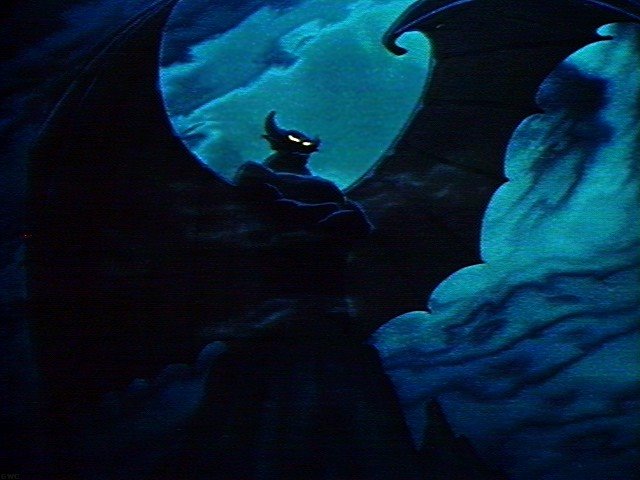
    In Walt Disney’s “Fantasia,” the narrator, Deems Taylor, sets the film’s childhood-scarring climax on Walpurgis Night. Deems Taylor was wrong!

    It’s actually tonight, St. John’s Eve, that the Slavic demon Chernobog emerges from the “Bare Mountain” (the translation preferred by Leopold Stokowski). For sure, there should be plenty of nudity on a good old-fashioned St. John’s Eve. And Disney obliges with bare-breasted harpies!

    St. John’s Day holds a place on the Christian calendar akin to that of Christmas, in that it coincides, roughly (thanks to miscalculation by the Romans), with solstice time. For the pagan North, summer began on May Day. Midsummer was originally a pagan festival, which was co-opted by the Church into the observance of the birth of John the Baptist, which St. Luke implies took place six months before that of Jesus.

    So while the actual summer solstice might occur anytime between June 20 and June 22, depending on the year, June 24 was designated the Feast Day of St. John.

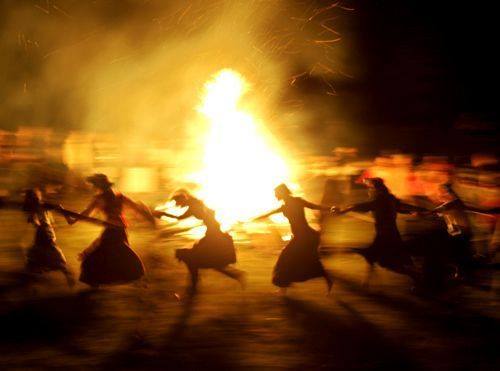
    St. John’s Eve is a time for leaping over bonfires. Doing so was believed to ensure prosperity and good luck. The bigger the fire, the further at bay were kept evil spirits. The further the evil spirits, the better the guarantee of a good harvest. If you didn’t light a bonfire… well, it was as good as tempting fate to burn your house down. It’s a time when dragons roam the earth, as the sun again pursues a southerly course. And it’s a time when witches are believed to rendezvous with powerful forces, such as Chernobog.

    The idea for Modest Mussorgsky’s famous musical picture “A Night on Bald Mountain” haunted him for his entire creative life. In 1858, while still in his teens, he planned to write an opera on the subject of Nikolai Gogol’s short story, “St. John’s Eve.” A couple of years later, in 1860, he toyed with another projected opera called “The Witch.” Not long after, according to Nikolai Rimsky-Korsakov, he wrote a diabolical piece for piano and orchestra under the influence of Franz Liszt’s “Totentanz.” If it was so, it has not survived.

    It wasn’t until 1867 that Mussorgsky reconfigured the idea as an orchestral piece, “St. John’s Eve on Bald Mountain.” He began to compose it on June 12. He finished it on June 23 – ACTUALLY ON ST. JOHN’S EVE. Mussorgsky was ecstatic finally to have completed it. Then he showed it to his mentor, Mily Balakirev, who savaged it. The composer, no doubt ashamed, put it aside. This version of “A Night on Bald Mountain” would not be published until 1968.

    Mussorgsky may have been cowed by Balakirev, but he was not done with his dream of a witches’ sabbath. In 1872, he revised and recast the material for vocal soloists, chorus, and orchestra, as part of Act III of the opera-ballet “Mlada,” a collaborative effort undertaken with his “Mighty Handful” fellows, Rimsky-Korsakov, Alexander Borodin, and César Cui. In this new version the music was to form the basis of the “Night on Mount Triglav” scene. Mussorgsky now referred to the piece as “Glorification of Chernobog.”

    Unfortunately, the “Mlada” project foundered, and again “Bald Mountain” sank into oblivion. “Glorification of Chernobog” was never published or performed and this version is now lost.

    Mussorgsky took one more crack at it, as “Dream Vision of the Peasant Lad,” designed to serve as an intermezzo in his opera “Sorochyntsi Fair,” begun in 1874. He went back to the short story “St. John’s Eve,” from Gogol’s book “Evenings on a Farm Near Dikanka.” The collection, steeped in Ukrainian lore, also proved to be a fount of inspiration for Tchaikovsky, Rimsky-Korsakov, and others. If you can find an edition coupled with Gogol’s “Mirgorod” (which includes “Taras Bulba” and “Vij”), all the better.

    Alas, the opera was left incomplete when Mussorgsky drank himself to death in 1881. There are at least five performing editions of the work, completed by other hands. Sadly, Mussorgsky NEVER HEARD “A Night on Bald Mountain,” in any of its versions, in his lifetime. How’s that for a sucker punch?

    I’ve got the Sorochyntsi incarnation all cued up to the relevant passage at the link. If you’re interested in hearing the rest of the opera, you can drag the audio bar back to the beginning with your cursor.

    For many years, this was the standard version, edited and orchestrated by Rimsky-Korsakov.

    Disney is notoriously vigilant about guarding its content, but you can view the “Fantasia” segment here, the video posted for educational purposes. In the film, Mussorgsky’s music is heard in Stokowski’s orchestration.

    https://www.cornel1801.com/disney/Fantasia-1940/film8.html?fbclid=IwY2xjawLGnrtleHRuA2FlbQIxMABicmlkETFyZUhBelZRbVlEb2xwakp6AR6RyrHTzwvPj_8ByfsR_SY_Oml0TI5XF29OYqaXYSWYtvvOwIpKqVs2sau8HQ_aem_XkVs1_XeDcNgZzNshtoE5g

    With heat index values around here projected to push 110 through Wednesday, the idea of dancing around a bonfire is not exactly at the top of my list. On the other hand, at least I wouldn’t have to worry about catching a chill on the Bare Mountain.
  • Mussorgsky Flees Bach Birthday Escape

    Mussorgsky Flees Bach Birthday Escape

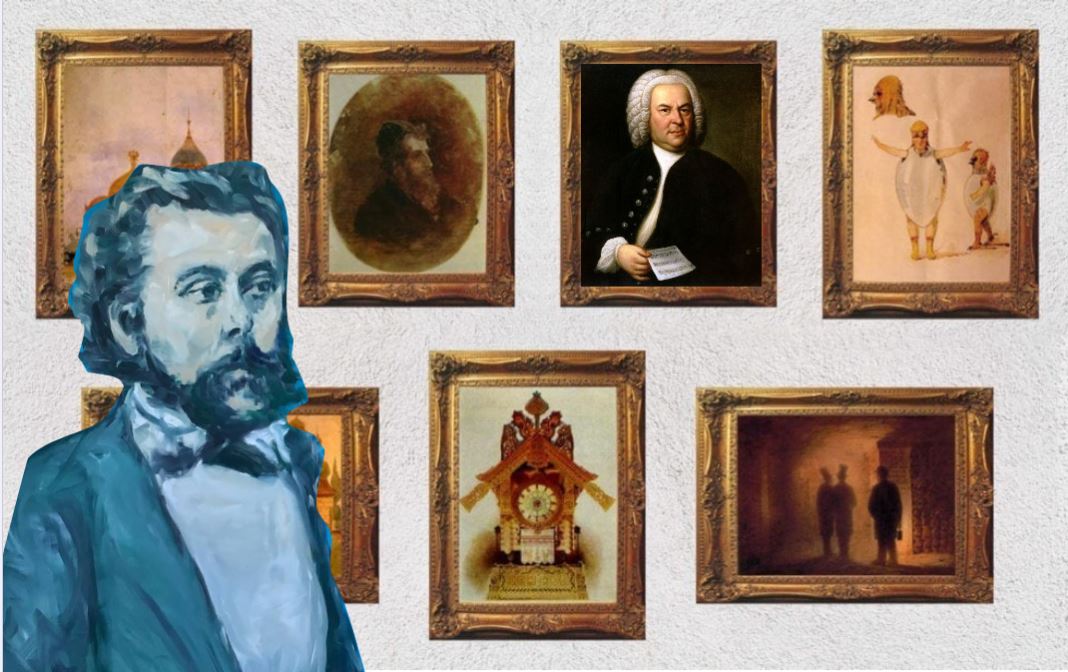
    Blue Mussorgsky tries to escape Bach on their shared birthday.

  • Capital Philharmonic NJ Anniversary

    Capital Philharmonic NJ Anniversary

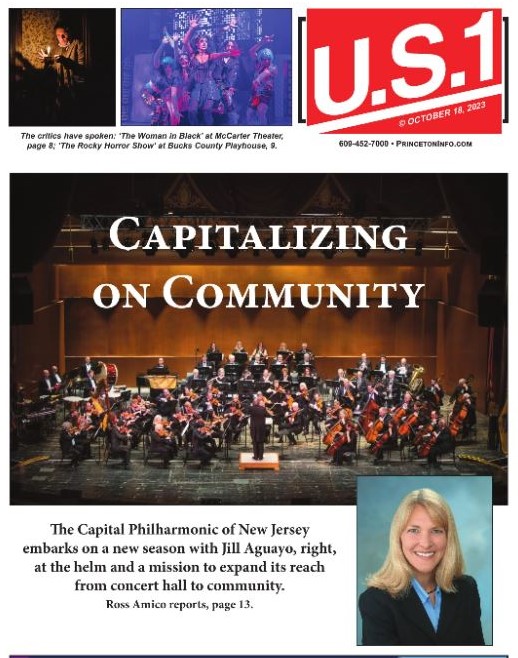
    Speaking of the Princeton weekly U.S. 1 (see yesterday’s post about Dan Aubrey’s article that reveals a surprising connection between magicians Penn & Teller and composer Othmar Schoeck), I’ve scored this week’s cover story.

    The Capital Philharmonic of New Jersey embarks on its tenth anniversary season with Rachmaninoff’s Piano Concerto No. 3, with Maja Rajković the soloist, and Mussorgsky’s “Picture at an Exhibition.” The latter will be accompanied by projections of works by local artists inspired by the music.

    It’s one way in which the Capital Phil will be expanding its reach from concert hall to community in what promises to be the orchestra’s most adventurous season yet. Keep an eye out for George Antheil’s “Ballet Mecanique” at the Roebling Machine Shop this spring!

    Thanks to executive director Jill Aguayo for taking the time to chat and to fill me in on some of the orchestra’s plans.

    Read all about it in this week’s U.S. 1 Newspaper – PrincetonInfo, available in area vending machines and at local businesses through Tuesday, or access it online here:

    https://www.communitynews.org/princetoninfo/eeditions/page-page-13/page_2649a030-52e5-5c95-9ab0-657c616207b1.html

    New Jersey Capital Philharmonic Orchestra

  • COVID Shift Rimsky to Mussorgsky

    COVID Shift Rimsky to Mussorgsky

    Six months into COVID: I was shooting for Rimsky-Korsakov, but wound up at Mussorgsky.

  • Midsummer Music Bonfires Witches and More

    Midsummer Music Bonfires Witches and More

    Thank the Romans. They’re the ones who marked the summer solstice for June 24 – hence, the discrepancy between the longest day (June 21) and Midsummer. But the Romans liked nothing if not a good party, so why split hairs? Let the good times roll!

    The Church, though fashionably late, was quick to comprehend it would probably be best to divert the stream of paganism rather than attempt to dam(n) everything outright. To this end, June 24 was designated the Feast Day of St. John. This worked out very nicely, since St. Luke implies the birth of John the Baptist took place six months before that of Jesus.

    On the eve of this blessed anniversary, the night of June 23, good Christians celebrate as only reformed pagans can, in the understanding that everyone will be up to fulfill their religious obligations on the morrow.

    This Sunday night on “The Lost Chord,” we’ll have music for St. John’s Eve.

    The eve of St. John is a time for the harvesting of St. John’s Wort, with its miraculous healing powers. It’s a time to seek the fern flower, which can bring good fortune, wealth, and the ability to understand animal speech. It’s a time for the lighting of bonfires against evil spirits, and even dragons, which roam the earth, as the sun again pursues a southerly course. And it’s a time when witches are believed to rendezvous with powerful forces, such as the demon Chernobog, who emerges from the Bald Mountain on St. John’s Eve at the climax of Disney’s “Fantasia.”

    Leaping over a bonfire is seen as a surety of prosperity and good luck. Not to light a bonfire is seen as offering up one’s own house for destruction by fire. The bigger the fire, the further at bay are kept evil spirits. The further the evil spirits, the better the guarantee of a good harvest.

    We’ll have music inspired by some of these Midsummer customs, as we listen to Modest Mussorgsky’s “St. John’s Night,” an earlier, less-familiar incarnation of his popular musical picture “A Night on Bald Mountain,” as heard in his opera, “Sorochinsky Fair.”

    Also featured will be Alfred Schnittke’s impish rondo, “(K)ein Sommernachtstraum.” The root of the title is German for “A Midsummer Night’s Dream,” but the postmodern inclusion of the “K” in parentheses modifies the meaning to “NOT a Midsummer Night’s Dream.” Indeed! Schnittke sets up the listener with a soothing notturno in the style of Mozart or Schubert, but very soon the atmosphere begins to shift.

    Finally, we’ll hear selections from the ballet, “St. John’s Eve,” by the Swedish composer Gunnar de Frumerie. Not surprisingly, after a long, hard winter, the Scandinavian countries are crazy for Midsummer. The allegorical ballet features appearances by John the Baptist, Salome, the Seven Deadly Sins, Angels, and the Devil, all tied up in Swedish Midsummer traditions.

    Leap high, friends, and join me for “Midsummer Night’s Fiends,” this Sunday night at 10:00 EDT, on WWFM – The Classical Network and wwfm.org.

Tag Cloud

Aaron Copland (92) Beethoven (95) Composer (114) Film Music (123) Film Score (143) Film Scores (255) Halloween (94) John Williams (187) KWAX (229) Leonard Bernstein (101) Marlboro Music Festival (125) Movie Music (138) Opera (202) Philadelphia Orchestra (89) Picture Perfect (174) Princeton Symphony Orchestra (106) Radio (87) Ralph Vaughan Williams (85) Ross Amico (244) Roy's Tie-Dye Sci-Fi Corner (290) The Classical Network (101) The Lost Chord (268) Vaughan Williams (103) WPRB (396) WWFM (881)

DON’T MISS A BEAT

Receive a weekly digest every Sunday at noon by signing up here


RECENT POSTS