Tag: Nadia Boulanger

  • Remembering Skrowaczewski: A Life in Music

    Remembering Skrowaczewski: A Life in Music

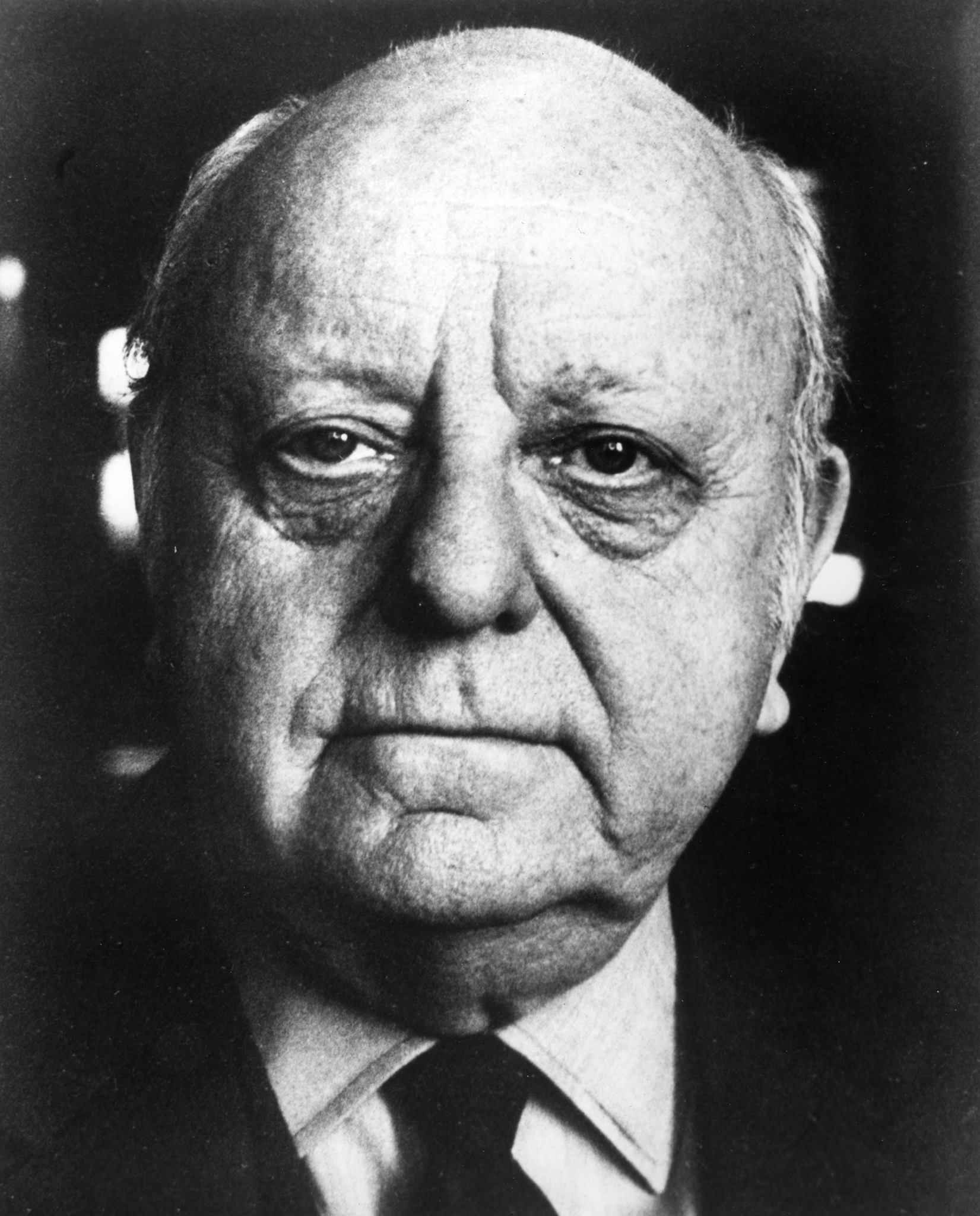
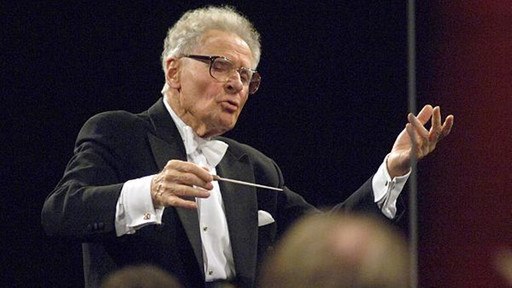
    Stanisław Skrowaczewski has been part of my life for over 30 years. The conductor and composer died yesterday at the age of 93.

    Skrowaczewski, born in Lwów (then in Poland), was forced to abandon his dream to become a concert pianist after sustaining a hand injury during World War II. Nevertheless, music served him well. By 1946, he had already begun his conquest of the great Polish orchestras, becoming music director in turn of the Wrocław, Katowice, and Krakow Philharmonics. He also studied composition in Paris with Nadia Boulanger.

    He made his American debut conducting the Cleveland Orchestra at the invitation of George Szell. This led to a music directorship with the Minneapolis Symphony, beginning in 1960 (the organization was rebranded the Minnesota Orchestra during his tenure, against his protests). After 1979, he maintained a long relationship with the orchestra as conductor laureate. For many, it would have been considered an honorary title, but Skrowaczewski really did return just about every season to conduct.

    He was also principal conductor of the Hallé Orchestra from 1983 to 1992. He served as artistic adviser to the Milwaukee Symphony Orchestra from 1995 to 1997, and in 1988 he was composer-in-residence for the Philadelphia Orchestra’s summer season at Saratoga. His composition, “Passacaglia Immaginaria,” was nominated for the Pulitzer Prize for Music in 1997.

    As a budding record collector, I cut my teeth on a number of Skrowaczewski’s recordings that were issued on the Vox label. I still find his Ravel to be particularly fine. I am also partial to his recordings for Mercury, including an “Italian Symphony” framed by some unusually fleet outer movements. In concertos, he accompanied the label’s most distinguished soloists, artists such as Gina Bachauer, Byron Janis, and János Starker.

    Later, I discovered his Bruckner recordings with the Deutsche Radio Philharmonie Saarbrücken Kaiserslautern (now on Oehms Classics), interpretations that render the composer’s student symphonies with as much logic and dignity as his mature works.

    Skrowaczewski lived a long and productive life. He conducted his last concert (in Minnesota) in October. I will do my best to honor him today, from 4 to 7 p.m. EST, on WWFM – The Classical Network and at wwfm.org.


    Skrowaczewski conducts Bruckner’s 9th in Frankfurt:

  • Nadia Boulanger Meets Conan Music Today

    Nadia Boulanger Meets Conan Music Today

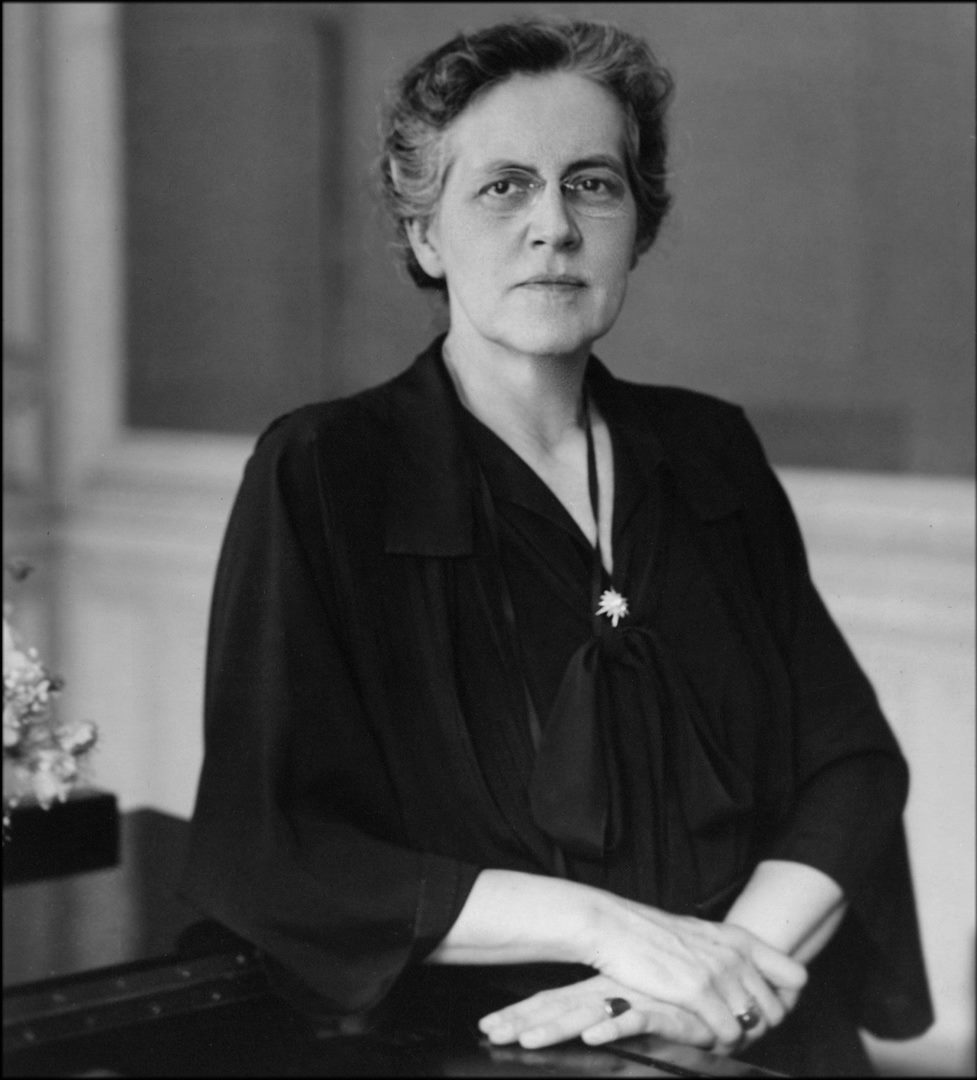
    What did Nadia Boulanger and Conan the Barbarian have in common? A lot, apparently, at least from what may be deduced from anecdotes by her pupils. Boulanger’s strong will, cold objectivity and blunt assessments made her perhaps the greatest – and certainly the most influential – musical pedagogue of the 20th century.

    Her influence on American music, in particular, is incalculable, having taught composers from Aaron Copland and Virgil Thomson through Elliot Carter and Philip Glass. It was Thomson who quipped, “She was a one-woman graduate school, so powerful and so permeating that legend credits every United States town with two things: a five and dime and a Boulanger pupil.”

    Join me this afternoon, beginning at 4 p.m., as I celebrate this remarkable figure on her birthday, with two hours of music and music-making by but a handful of her hundreds of remarkable students, including Copland, Igor Markevitch, Dinu Lipatti and Lili Boulanger.

    Then stick around at 6 p.m. for “Picture Perfect,” as I introduce music from movies inspired by the writings of pulp master Robert E. Howard. Howard is certainly best-known as the creator of Conan. While an hour of scores for barbarian movies may not seem like everyone’s cup of tea, I can guarantee that most of the music is thrilling and inventive, in ways one would be unlikely to encounter at a theater today.

    “Conan the Barbarian” (1982) was released at a time when even the most embarrassing movies could have knockout scores, and composer Basil Poledouris really outdid himself in transcending the violent, silly visuals with a viscerally thrilling soundtrack. I know, I was skeptical myself, until I heard it. “Conan” has long been held by collectors of film music as one of the great scores of the decade, and it’s hard not to be pummeled into submission by its grandeur.

    The hour will also feature music by Ennio Morricone, who has made a career out of spinning gold from garbage. Morricone recently received a much-overdue Academy Award for his work on Quentin Tarantino’s “The Hateful Eight.” We’ll hear some of his score to “Red Sonja” (1985), which also featured Arnold Schwarzenegger, though in a supporting role. In addition, there will be music by Joel Goldsmith, the son of Jerry Goldsmith, for “Kull the Conqueror” (1997).

    It’s a brains-and-brawn double feature today, from 4 to 7 p.m. EDT, on WWFM – The Classical Network and at wwfm.org.
  • Roy Harris Neglected Genius of American Symphony

    Roy Harris Neglected Genius of American Symphony

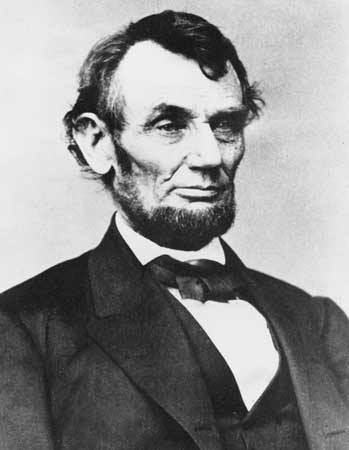
    Roy Harris was born on Lincoln’s birthday, in a log cabin in Lincoln County, Oklahoma. Did he let it go to his head? Maybe. He went on to become one of America’s greatest composers.

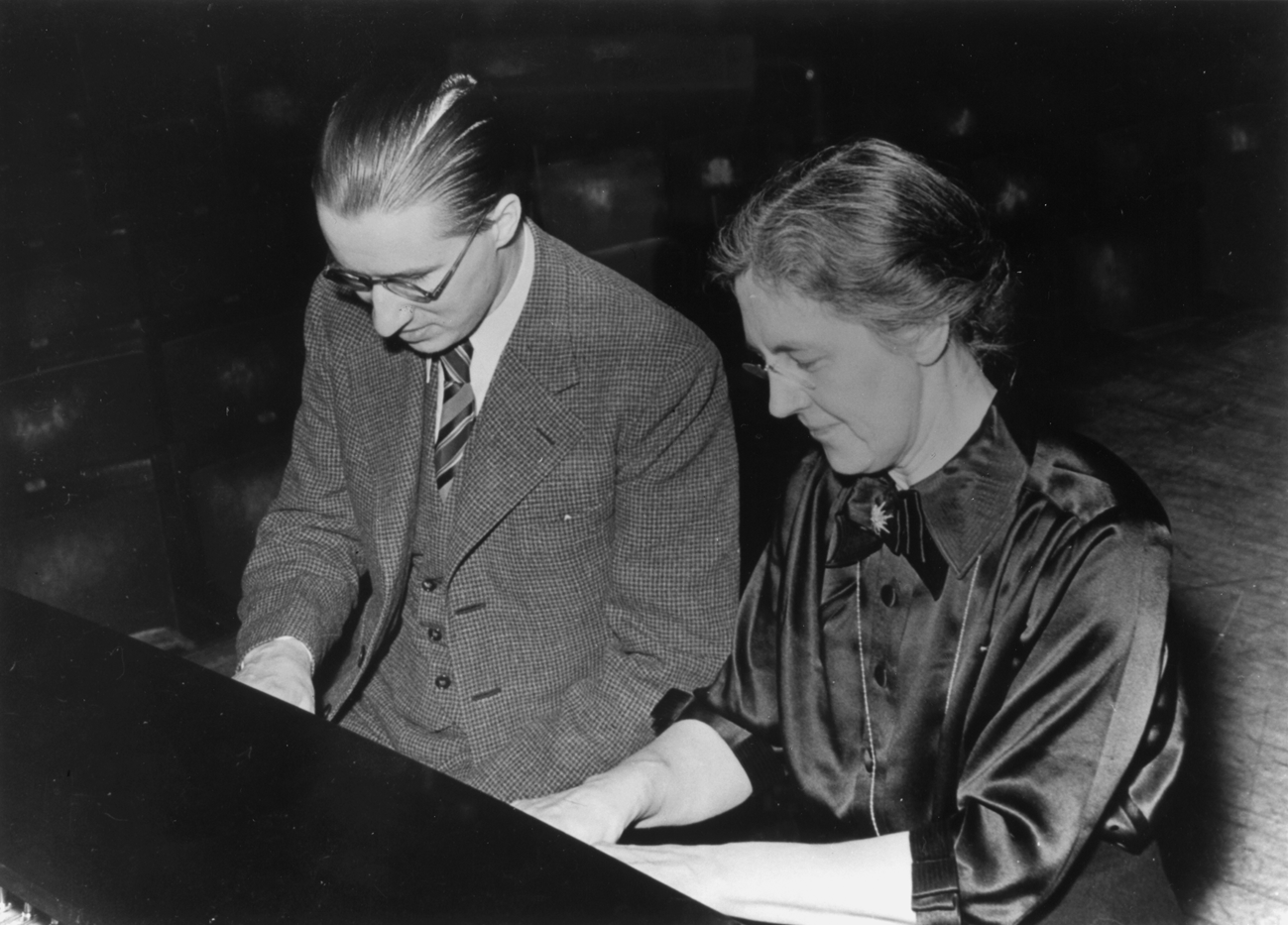
    He basically drove a milk truck while studying with “American Indianist” composer Arthur Farwell. Contacts in the East got him touch with Aaron Copland, who put in a good word with Nadia Boulanger. Harris was one of the legions of composers who studied with Boulanger in Paris.

    Back home, he attracted the attention of Serge Koussevitzky, then music director of the Boston Symphony Orchestra. It was Kouss who first performed Harris’ “Symphony 1933.” But the real pay dirt came with Harris’ Symphony No. 3, regarded then, as now, as one of the finest American symphonies. Its tightly-argued, single-movement structure manages to recall Renaissance polyphony, Jean Sibelius, and the American prairie. It was the perfect work for its time, with the world teetering at the brink of war and the country starting to emerge from the Great Depression.

    Yet, for some reason, the composer of this most-revered symphony is also one of our most neglected. In fact a number of his symphonies have yet to be recorded. Why?

    Tune in at 8:30 this morning to enjoy Harris’ Symphony No. 6, “Gettysburg,” which takes its impetus from the Gettysburg Address. It’s all music honoring the presidents, on this, Lincoln’s birthday, until 11:00 this morning on WPRB 103.3 FM and at wprb.com

  • Virgil Thomson: Americana and French Flair

    Virgil Thomson: Americana and French Flair

    I am sure there are those who are resistant to the art of Virgil Thomson – Thomson the composer, I mean. His brand of Americana-tinged simplicity could easily be reduced to “faux naïve.”

    Personally, I find the blend of French and American elements fascinating. Thomson, like Aaron Copland and so many others, studied in Paris with the legendary pedagogue Nadia Boulanger. The next time you listen to “Appalachian Spring,” or anything by Copland, note the French influence – the uncluttered textures, the neoclassical winds. It’s inescapable. If anything, these qualities are even more evident in Thomson’s music, and he adhered to a French sensibility for the rest of his life.

    Thomson was equally renowned (and feared) as critic for the New York Herald-Tribune. As a critic, he certainly was not afraid to speak his mind. He was also more vocal than most in his conviction that the alleged rarefied aesthetics of music, at least in his case, were secondary to the needs of the bank account. Fortunately for Thomson, the two were not necessarily incompatible.

    His most famous work, perhaps – other than the film scores he wrote for the documentaries “The Plow That Broke the Plains,” “The River,” and “Louisiana Story” (the only film score to date to be awarded a Pulitzer Prize) – is the “Symphony on a Hymn Tune.”

    The symphony, composed during his years in Paris, was inspired by Thomson’s memories of his Kansas City boyhood. The “Sunday best” of the church hymns occasionally gets tangled up in a few modernistic burrs – the exchanges between the violin, cello, trombone and piccolo at the end of the first movement, for instance – but in 1928, it was a landmark in establishing a distinctly American idiom.

    This is perfect Thanksgiving music.

    Happy birthday, Virgil Thomson!

    PHOTO: Loved him in “The Addams Family”

Tag Cloud

Aaron Copland (92) Beethoven (95) Composer (114) Film Music (119) Film Score (143) Film Scores (255) Halloween (94) John Williams (185) KWAX (229) Leonard Bernstein (99) Marlboro Music Festival (125) Movie Music (134) Opera (198) Philadelphia Orchestra (86) Picture Perfect (174) Princeton Symphony Orchestra (106) Radio (87) Ralph Vaughan Williams (85) Ross Amico (244) Roy's Tie-Dye Sci-Fi Corner (290) The Classical Network (101) The Lost Chord (268) Vaughan Williams (102) WPRB (396) WWFM (881)

DON’T MISS A BEAT

Receive a weekly digest every Sunday at noon by signing up here


RECENT POSTS